


fixwing FixWing simplifies chaotic IV insertion for paramedics and patients through an integrated, one-step needle and tape fixation design


- Nationality
- Korea, Republic of
- Group
- FIND
About Project
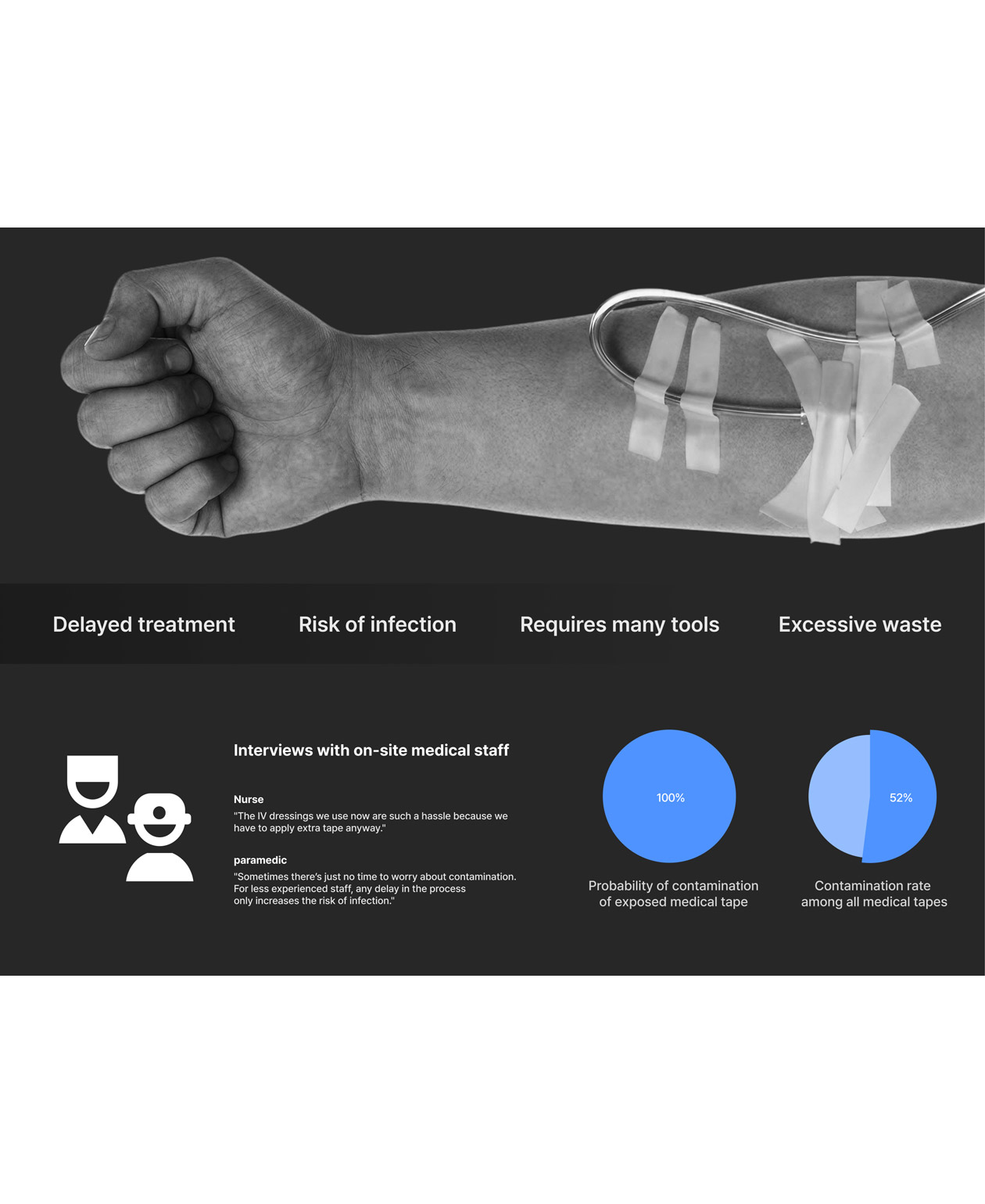
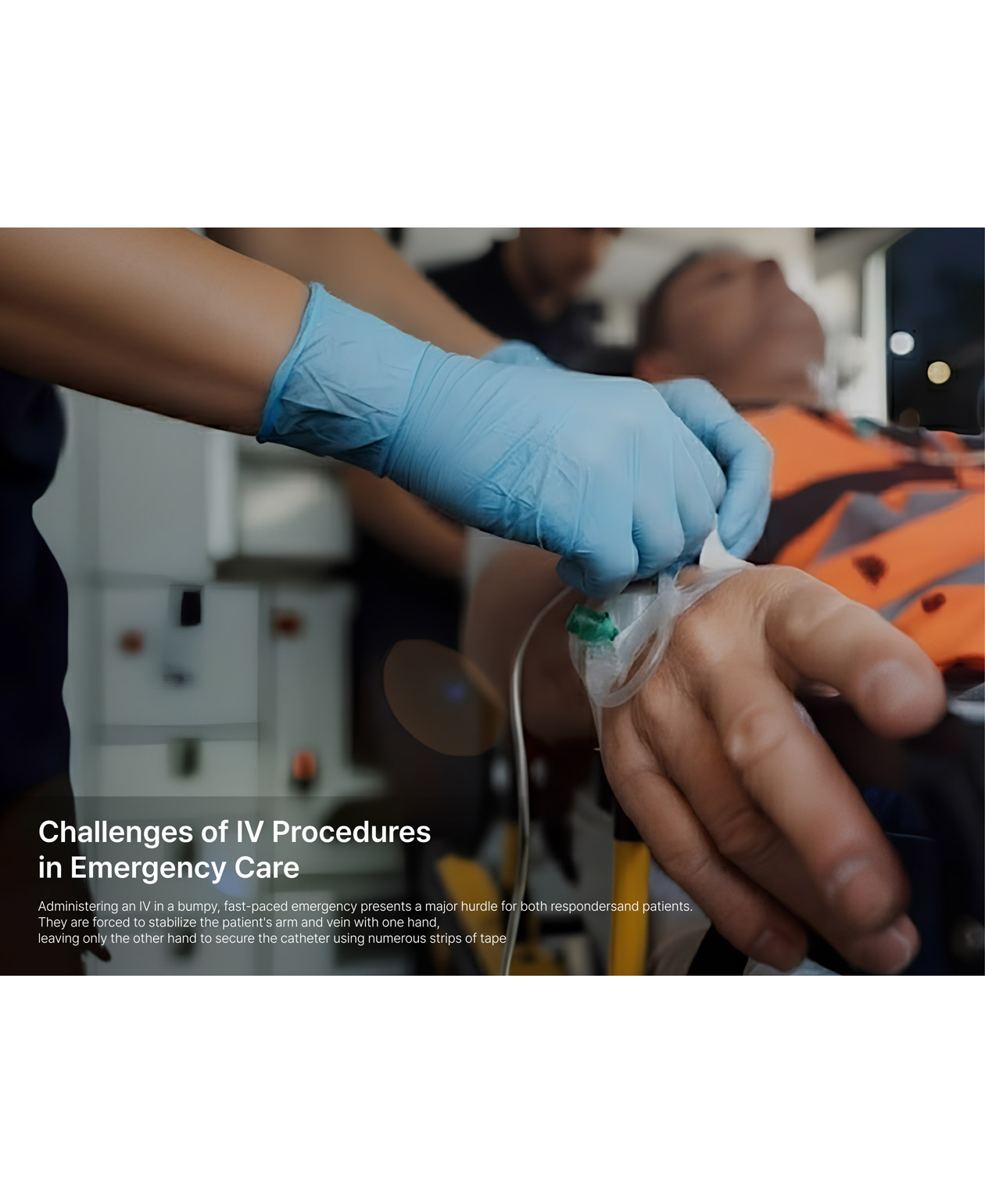
FixWing is an all-in-one medical device developed to secure an intravenous (IV) catheter more quickly and stably in emergency situations. Traditionally, after inserting the catheter, multiple medical tapes had to be attached to secure it, but in emergency fields treating moving patients, medical staff face the difficulty of having to handle tape with one hand while holding the patient and catheter with the other. FixWing started from simplifying this field usage process.
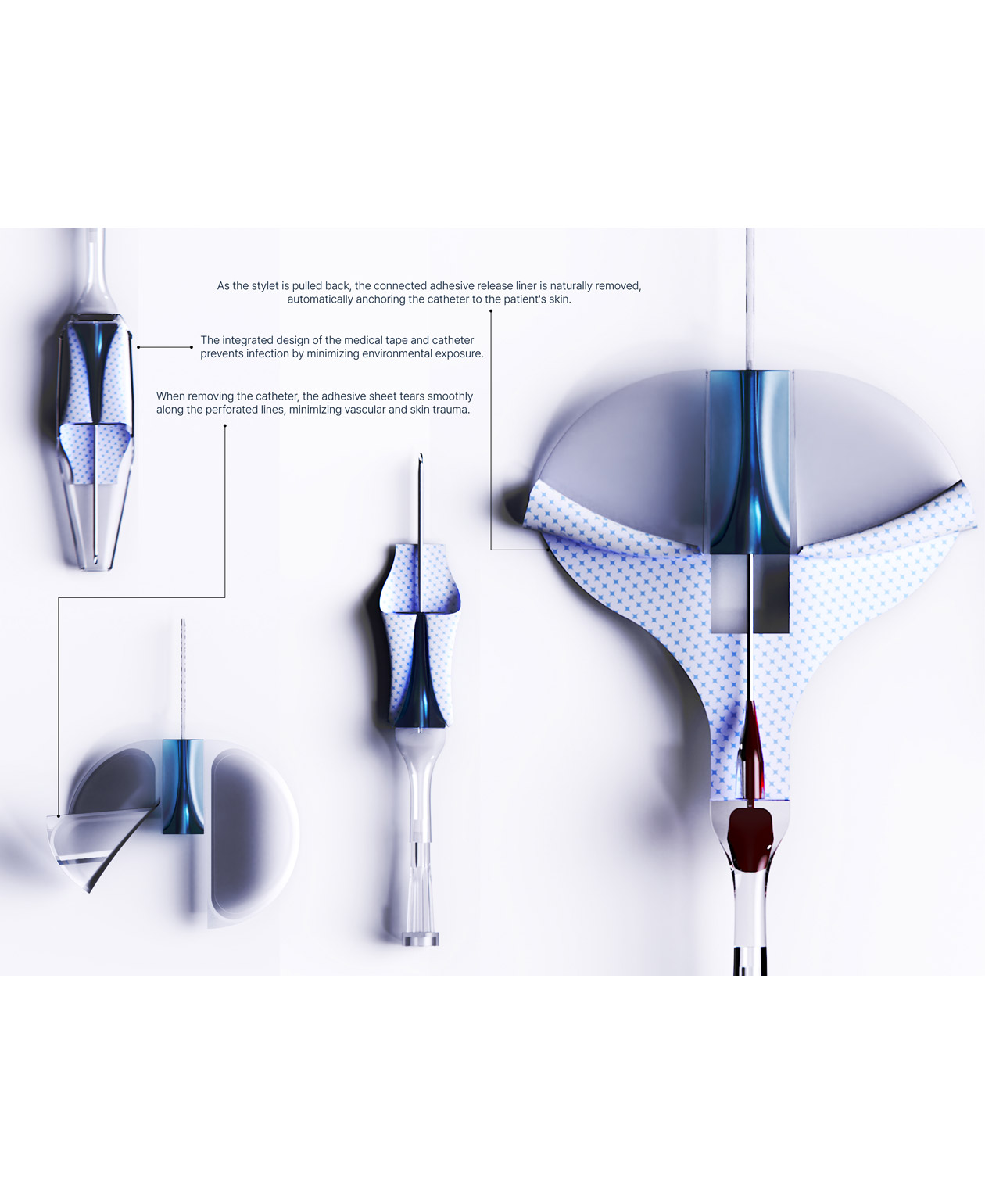
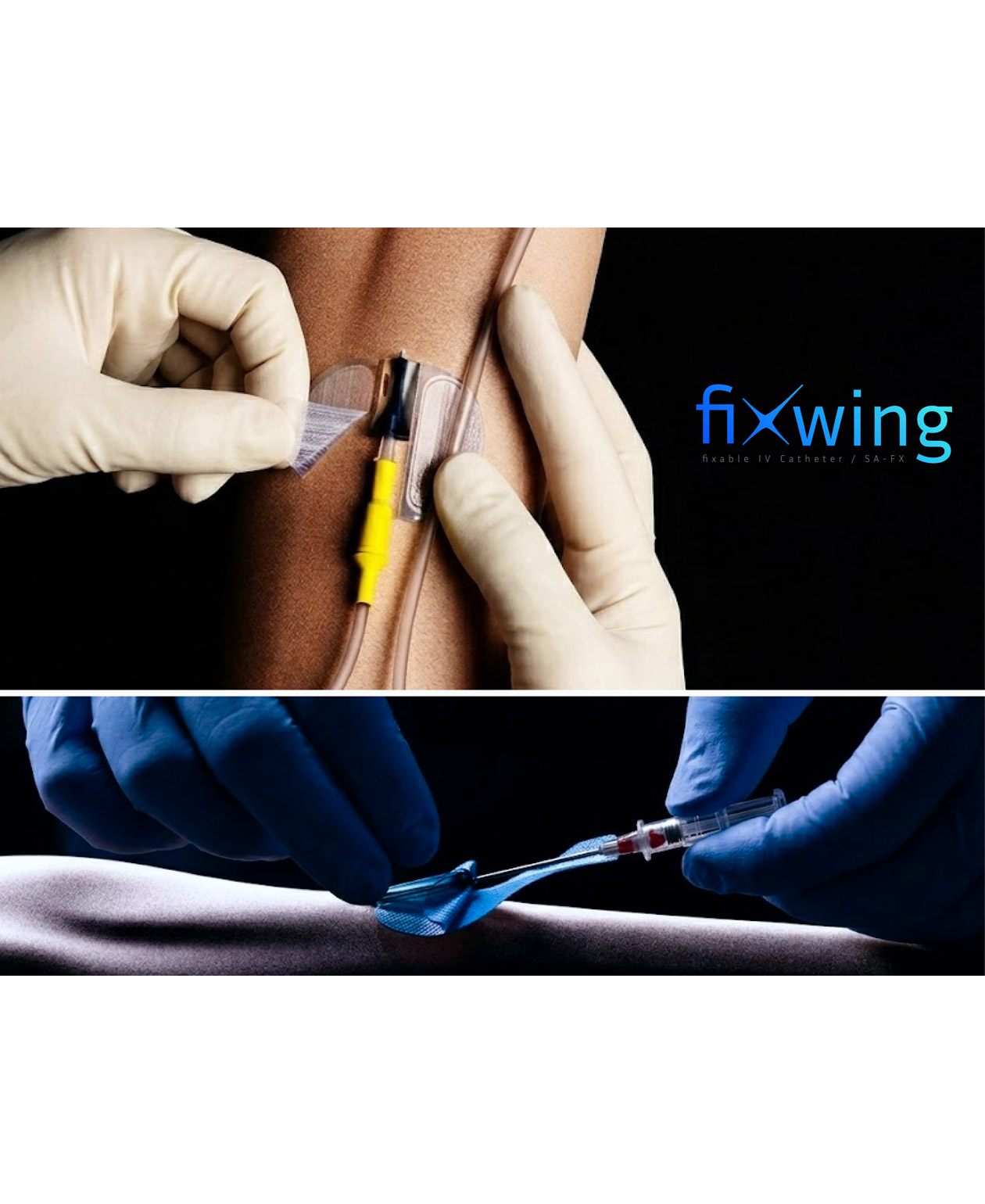
The core is a 'One-Step' structure that integrates catheter fixation and tape attachment into a single action. It is designed so that wings with adhesive functions are integrally combined with the catheter, allowing fixation with one hand without applying separate tape multiple times. It reduces the existing treatment process, which required multiple tools and actions, into a single product and action so that it can be used intuitively even in urgent situations.
This structure is connected not only to the convenience of use for medical staff but also to patient safety. It reduces the time required for IV fixation by shortening treatment steps and lowers the risk of cross-contamination that can occur in the process of repeatedly handling multiple tapes and medical supplies. In particular, it supports more stable treatment in situations where patients move or medical staff's movements are restricted, such as ambulances or disaster sites.
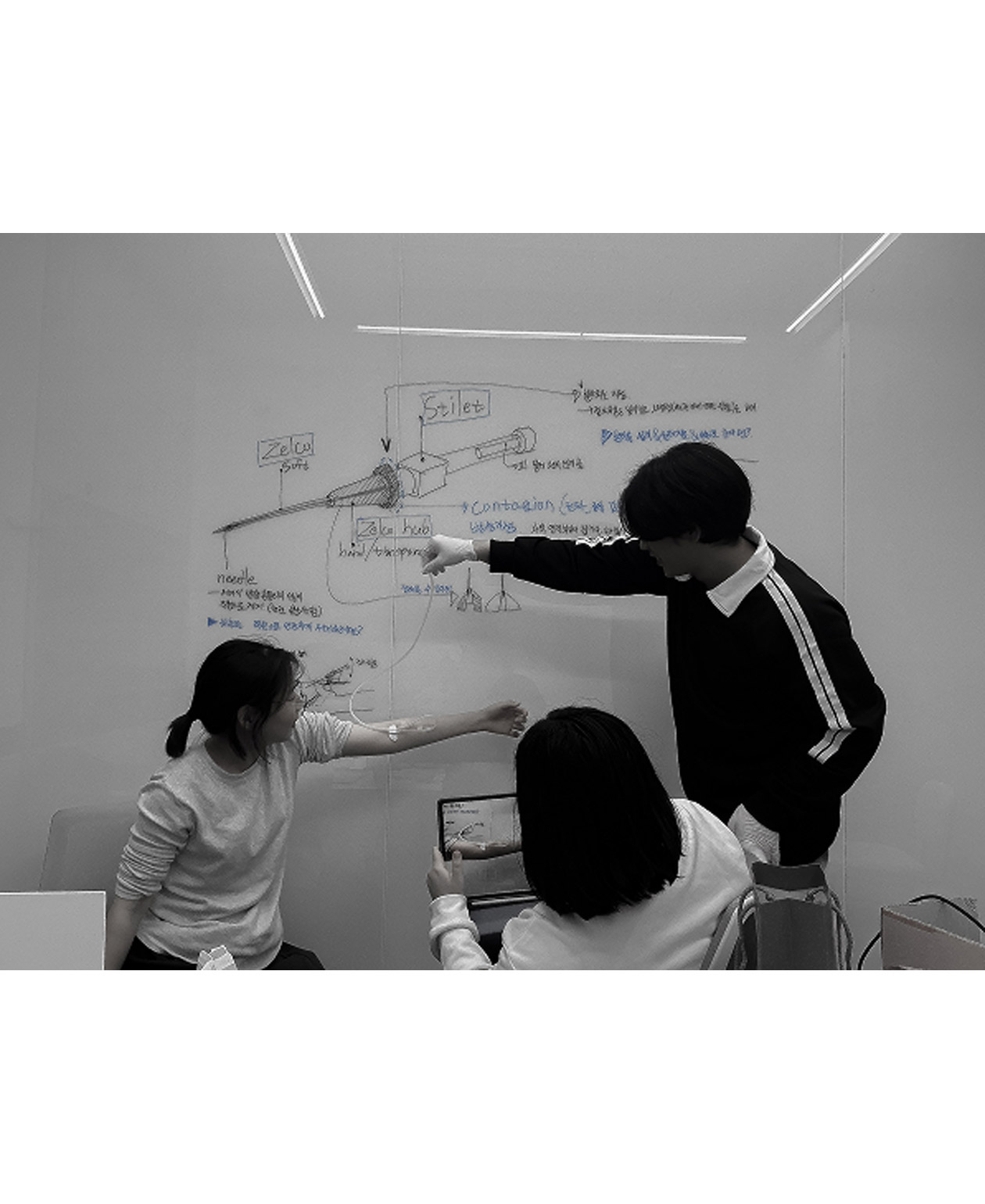
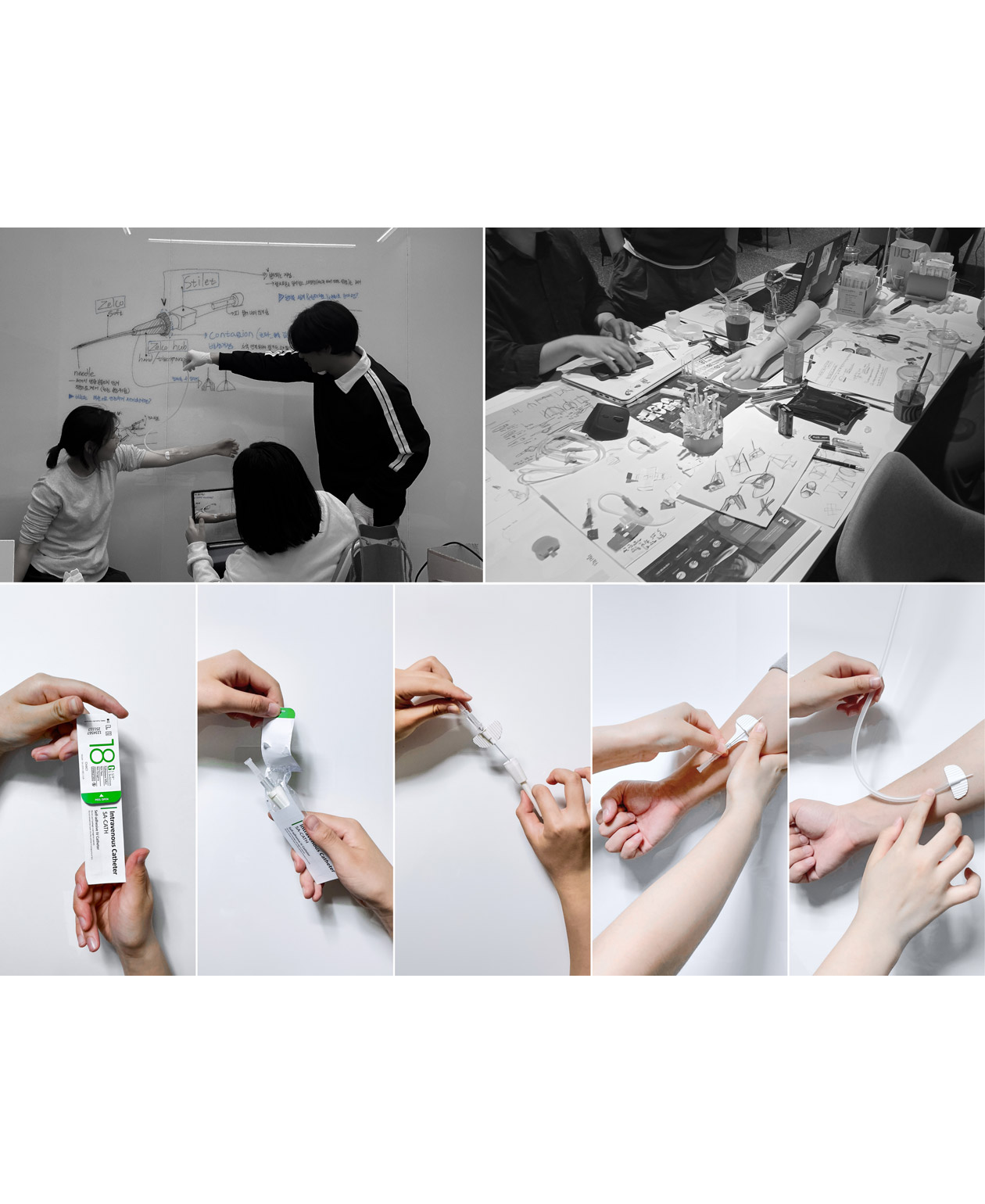
In the product design process, the actual workflow of medical staff and the one-handed use environment were considered. Rather than adding new features, it integrates the existing catheter and fixing material into a single structure to reduce the procedures themselves that users must remember and perform. It is characterized by redesigning not only the form of the medical device but also the emergency treatment process and user experience together.
From an environmental perspective, it replaces multiple disposable medical tapes with a single integrated adhesive wing, reducing the amount of plastic and adhesive materials generated during the IV treatment process. By reducing consumables that repeatedly occur in medical fields within the product structure itself, it improves both treatment efficiency and resource use.
Although FixWing started from specific problems in emergency medical fields, it also holds the meaning of social design in that it addresses the workload of medical staff, patient safety, and medical waste problems together in a single product. It is a method that provides a more concise working process for medical staff, supports prompt and stable treatment for patients, and simultaneously reduces unnecessary single-use item usage.
Because it is based on standard medical-grade materials and an intuitive structure, it also has the potential to expand into various medical environments. It can be applied to environments requiring prompt IV treatment, such as disaster relief sites, wartime medicine, and home caregiving, as well as emergency rooms and ambulances. Rather than adding new medical technology, FixWing proposes a product design that enhances the efficiency and safety of emergency medical care by reducing repetitive inconveniences and waste in the existing treatment process.