


EVAPOT An eco-friendly, low-power medical storage system using traditional evaporative cooling and hydrogels for infrastructure-vulnerable regions


- Nationality
- Korea, Republic of
- Individual
- YONG WON KIM
About Project
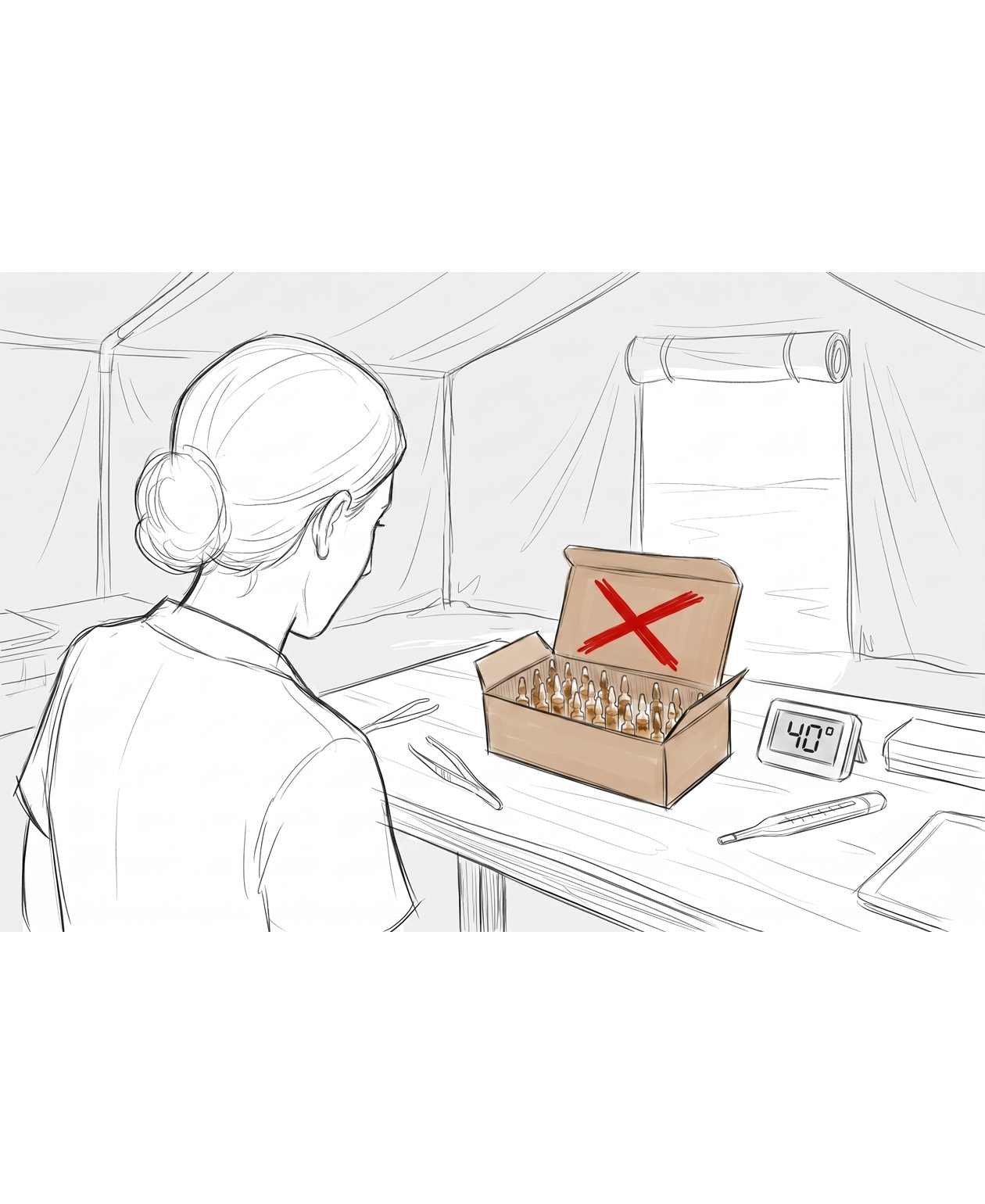
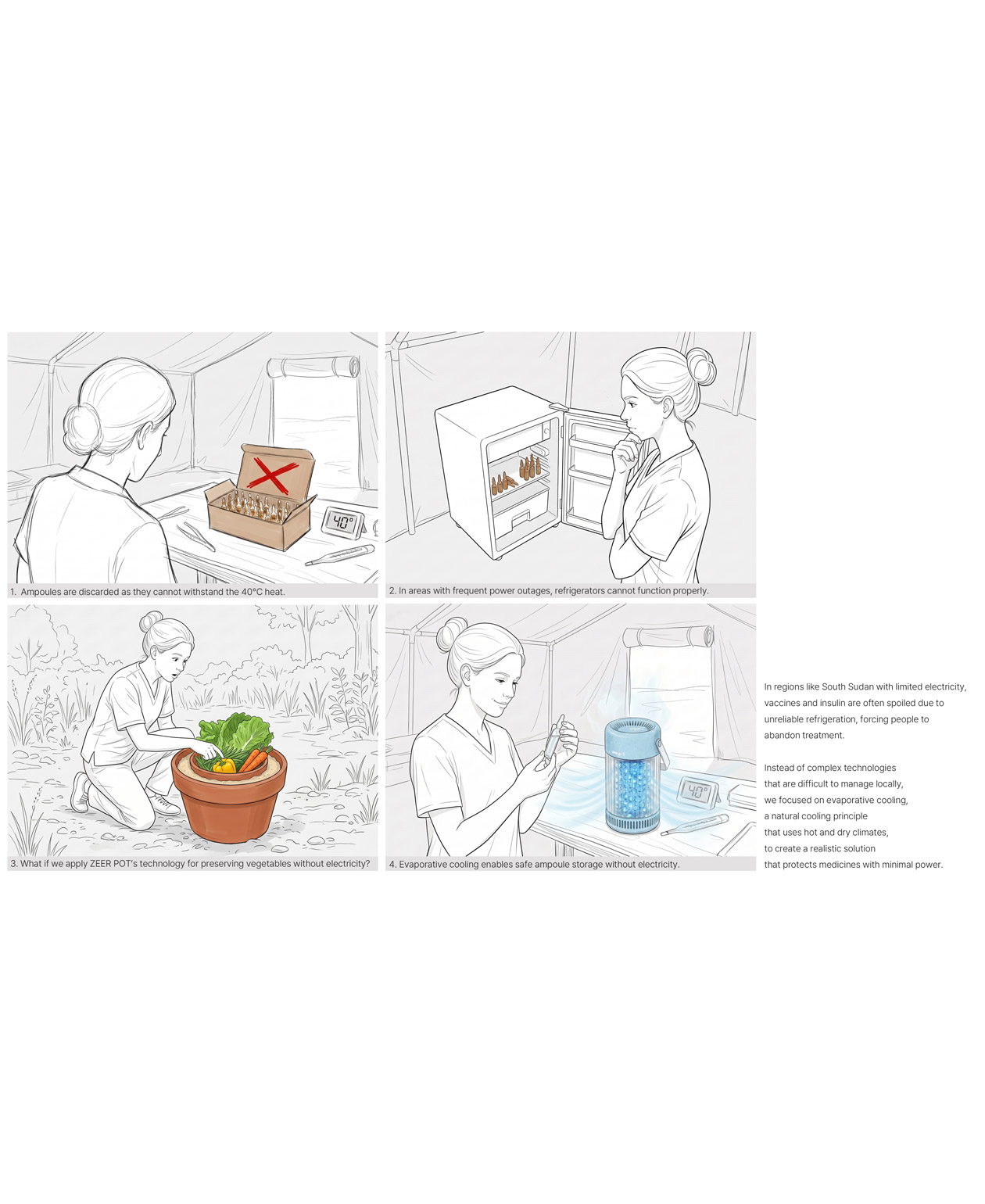
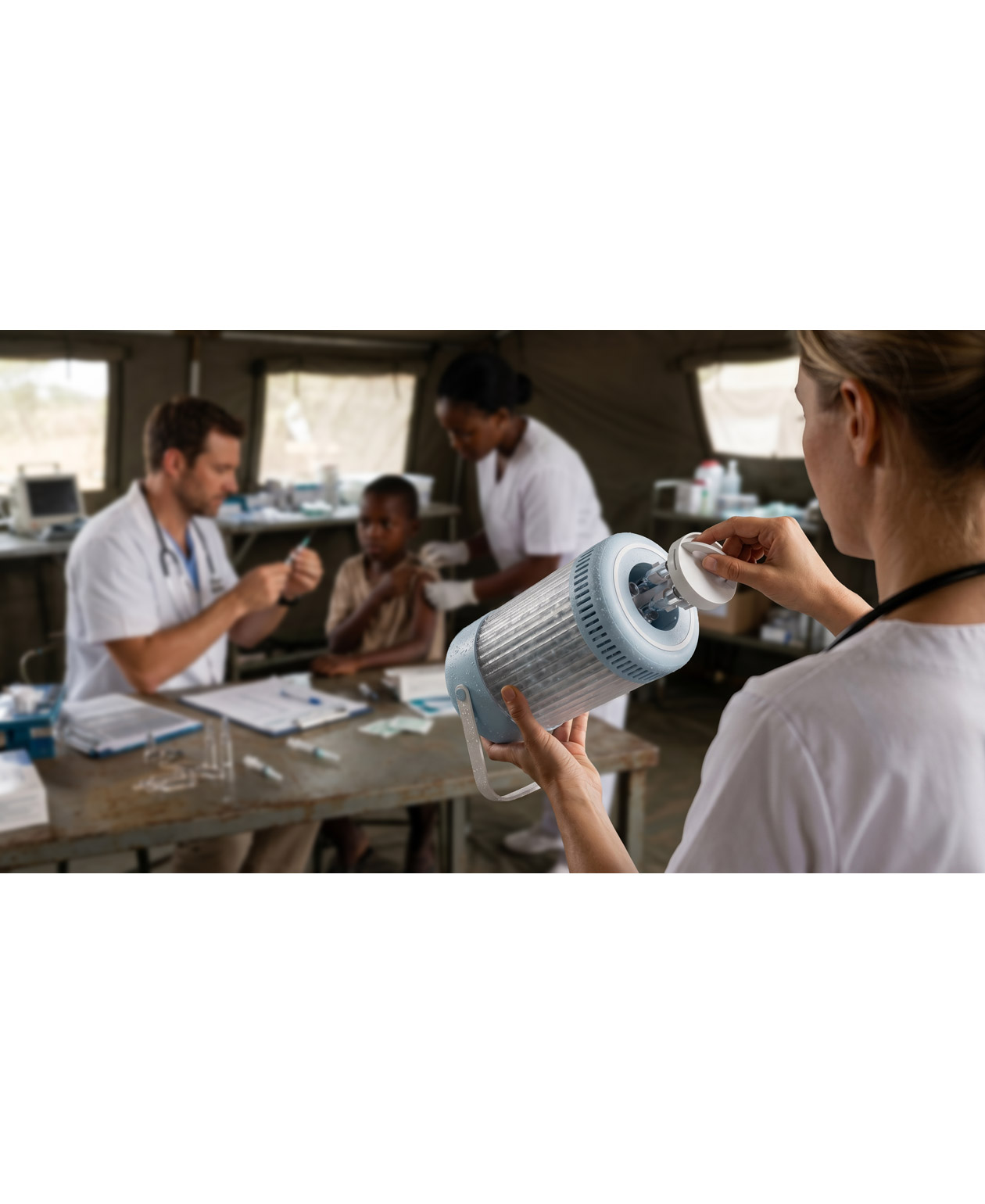
EVAPOT is an evaporative cooling storage system developed to store medicines such as vaccines and insulin in arid regions where power infrastructure is lacking. In regions like South Sudan where it is difficult to secure stable power supply and refrigeration facilities, maintaining the proper storage temperature of medicines is a critical issue that determines healthcare accessibility. EVAPOT responds to this by utilizing natural evaporative cooling principles without relying on large-scale power or refrigeration equipment.
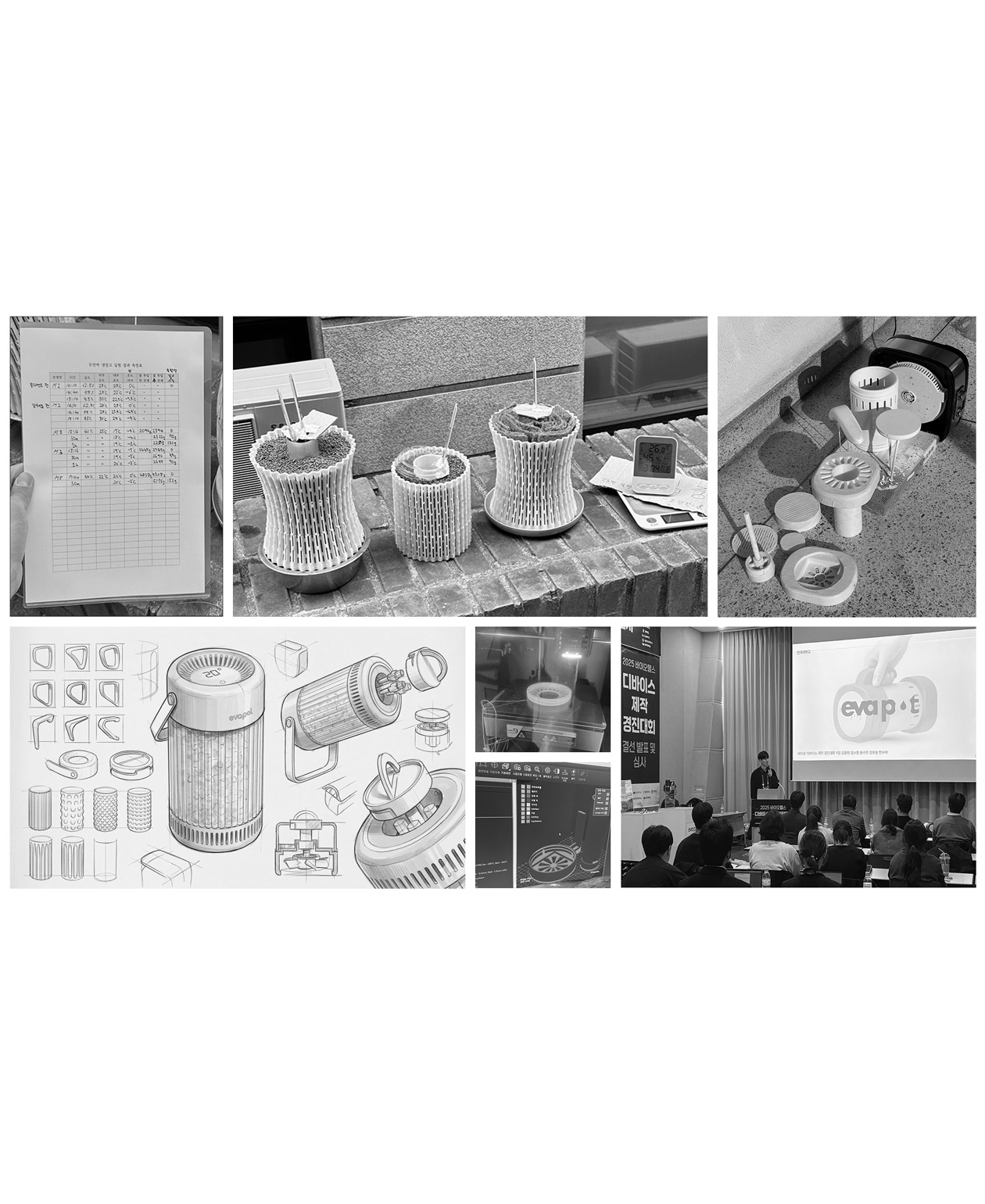
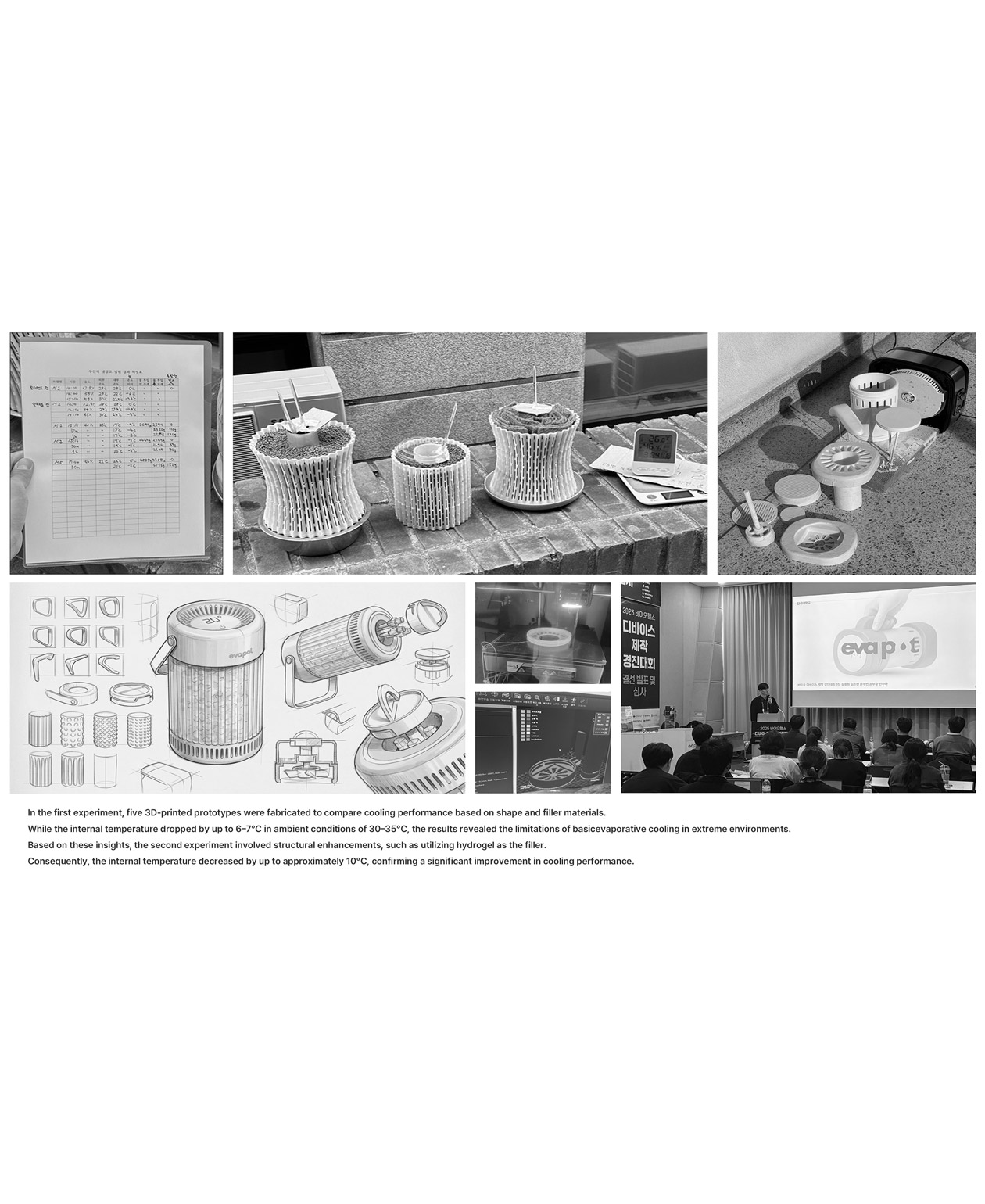
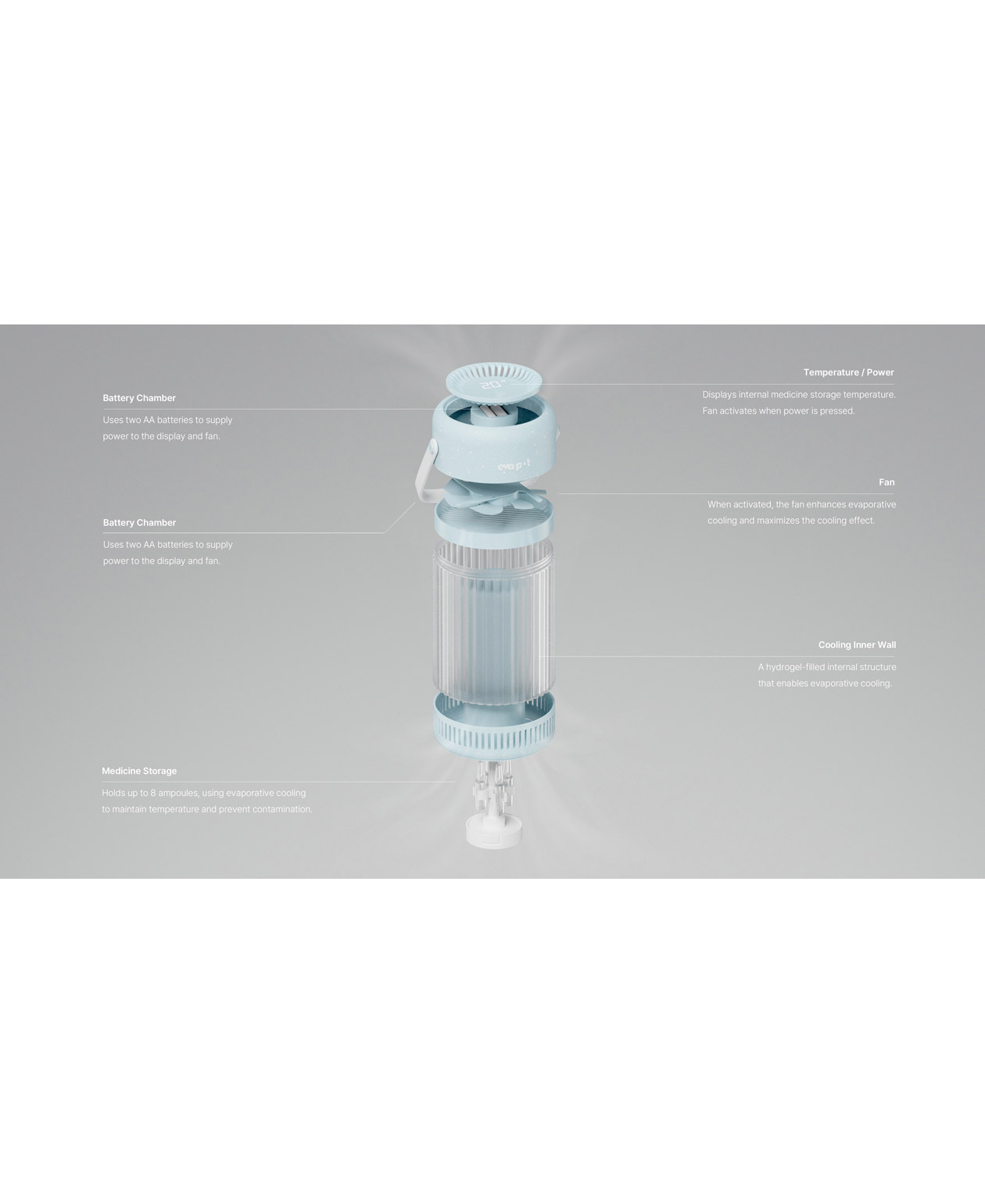
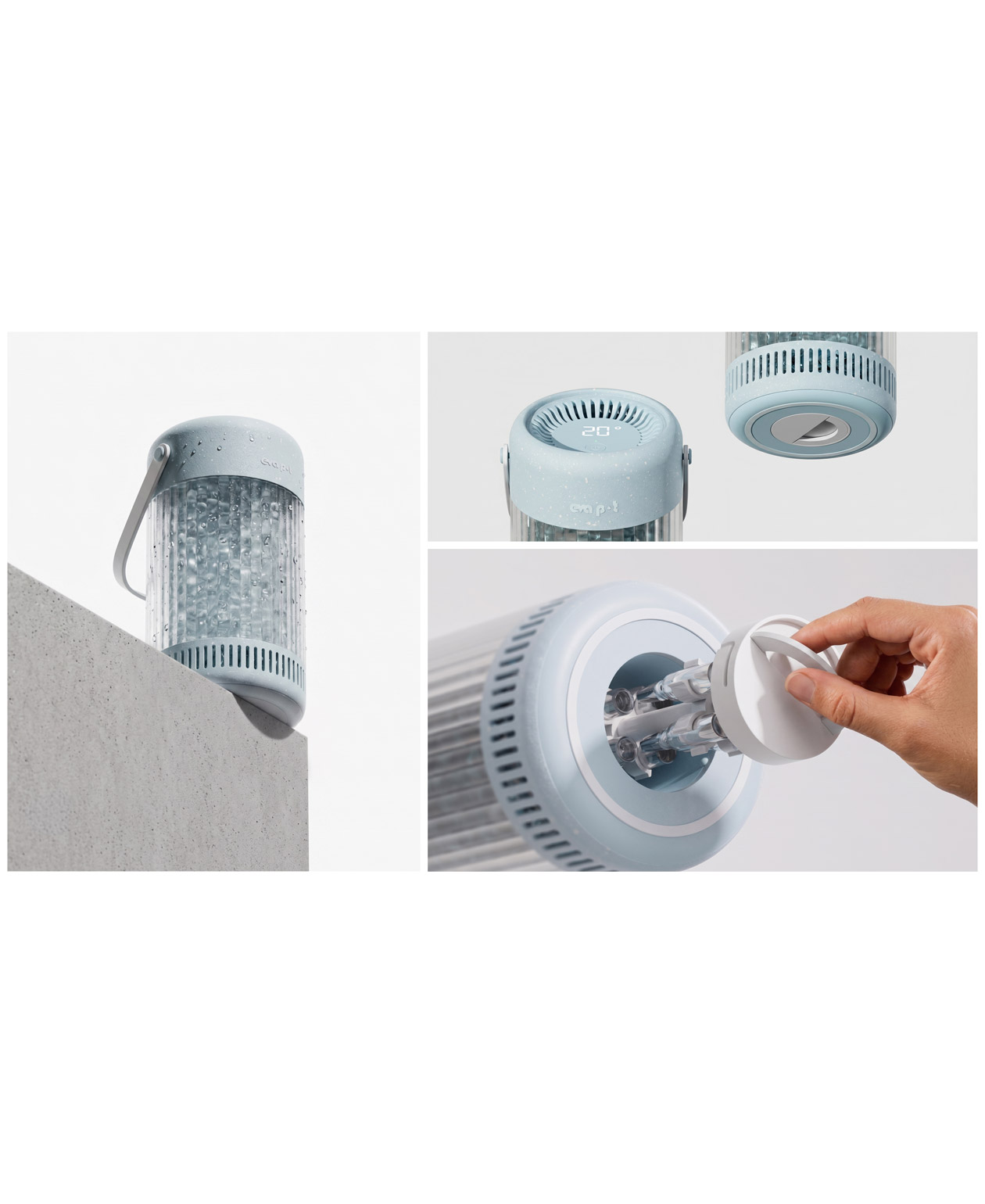
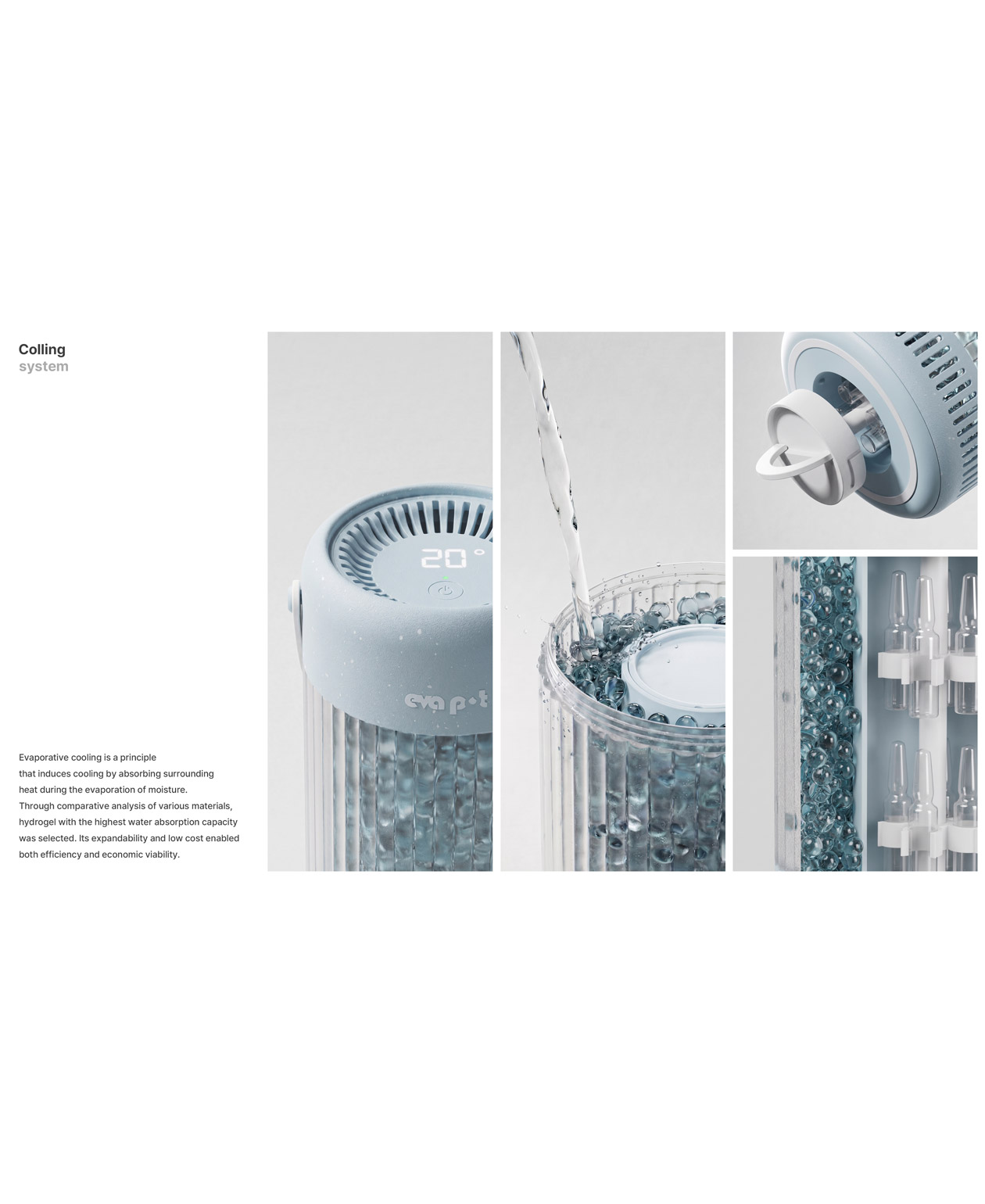
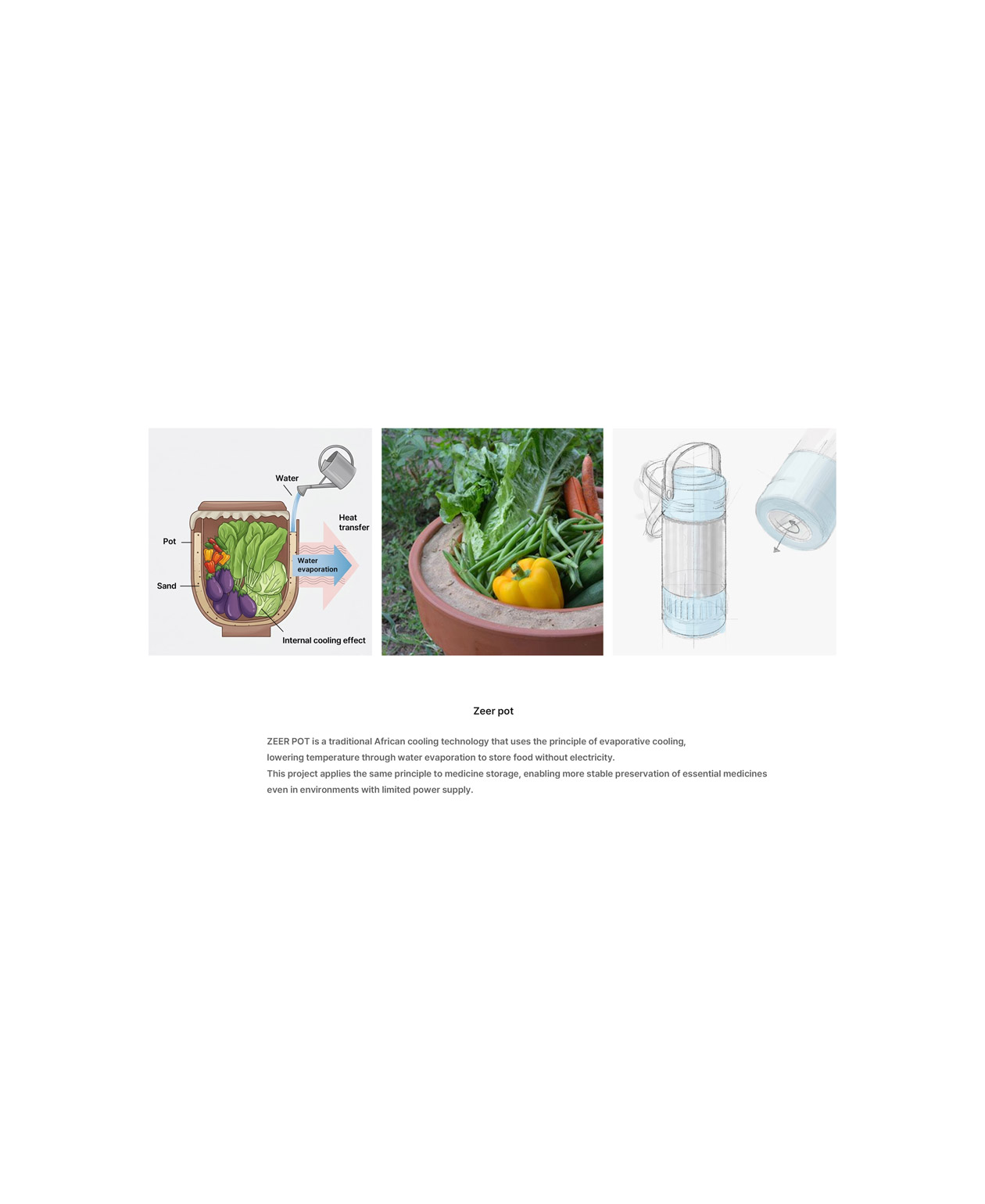
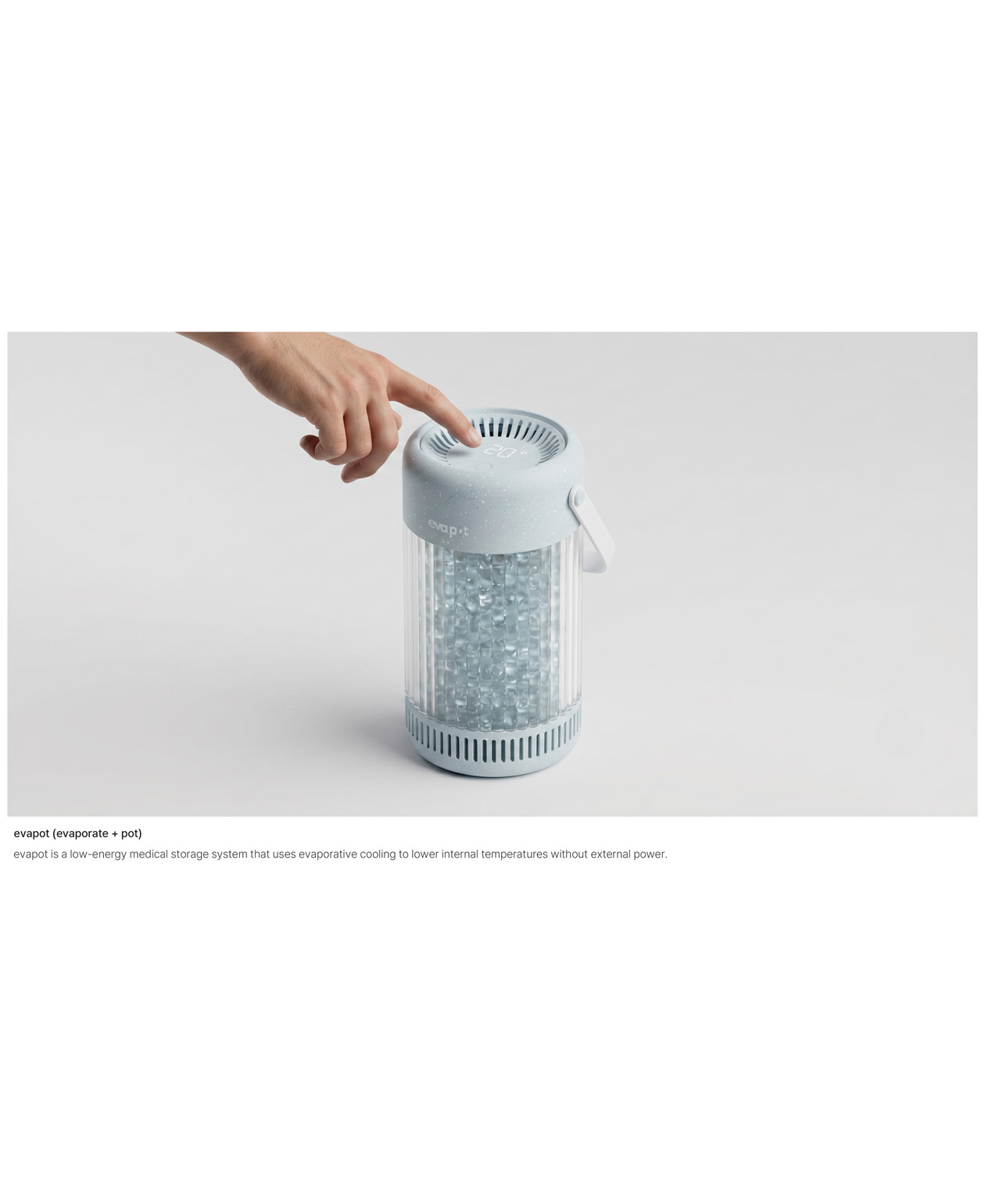
The basic principle was taken from the 'Zeer Pot,' a traditional African earthen pot refrigeration method. The principle of absorbing surrounding heat as water evaporates was applied to modern medicine storage containers, and cooling efficiency was increased by using hydrogel, which can absorb a lot of water and retain it longer, instead of the conventionally used sand. A vertical rib structure was applied to the outside of the product. This expands the surface area to make water evaporation more active, and the core of the design is enhancing cooling performance by utilizing both material characteristics and product form together. A fan to promote evaporation and a digital display to check temperature, etc., were applied to the top, and it operates with just two AA batteries so it can be used without a separate power grid.
Instead of adding high-tech cooling devices, EVAPOT chose simple principles and structures that can operate in the local climate and living environment. It is an appropriate technology-based product design that combines traditional evaporative cooling methods with hydrogel and rib structures so that medicines can be stored with low energy and cost. By lowering dependence on complex facilities or professional maintenance, it was designed to be usable even in areas lacking power and medical infrastructure.
This approach also has the meaning of social design in that it responds to the health problems of people alienated from technology and medical infrastructure. By providing a way to store essential medicines like vaccines and insulin even in environments where it is difficult to build new medical facilities, it aims to reduce the gap in healthcare accessibility according to region and economic conditions. In addition, because the structure is simple and relatively inexpensive materials are used, it is advantageous for mass production and local procurement. Since it does not require large-scale refrigeration facilities and continuous power supply, the resource and energy burden required during the operation process can also be reduced. Rather than overcoming regional environmental constraints with separate technology, it is a method of utilizing the principles of nature operating in that environment for the product.
The application scope of EVAPOT is not limited to power-vulnerable regions in Africa. It can also be utilized in disaster areas where power and refrigeration facilities are cut off due to climate crises or natural disasters, or in remote areas where access to medical facilities is difficult. In the future, the goal is to expand the application scope to various medicines and foods that must be kept at a constant temperature, as well as vaccines and insulin. EVAPOT combines traditional living wisdom with modern material and structural design to implement necessary functions with minimal energy. By configuring technology according to the climate and economic conditions of the actual use area without assuming advanced infrastructure, it shows the possibility of appropriate technology being utilized as a product design that improves healthcare accessibility and living environments.