


FLOW – Early detection of oil pollution in surface waters An autonomous water monitoring system project that continuously detects petroleum-based pollutants in rivers and lakes


- Nationality
- Poland
- Individual
- Oliwia Śnieg
About Project
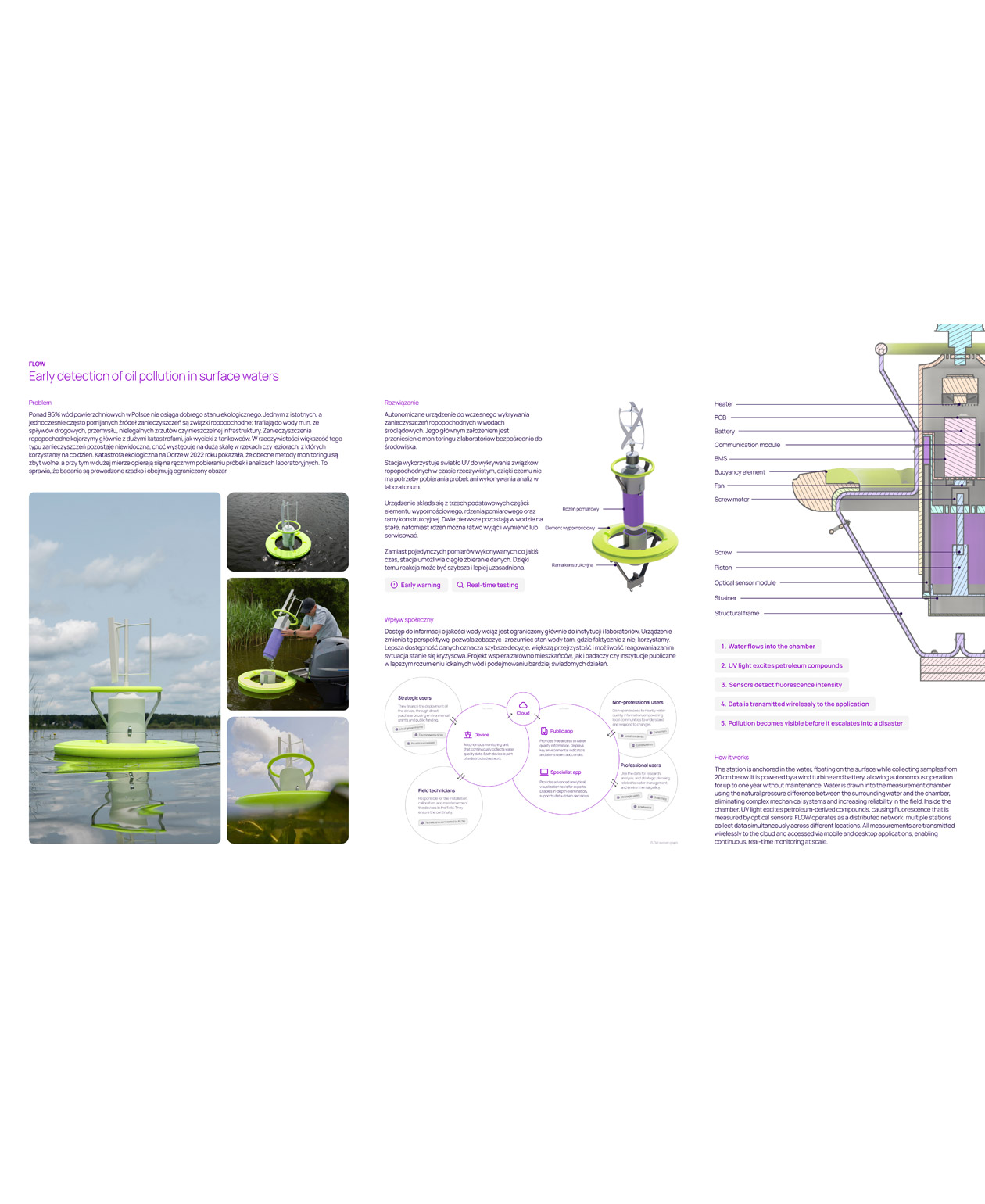
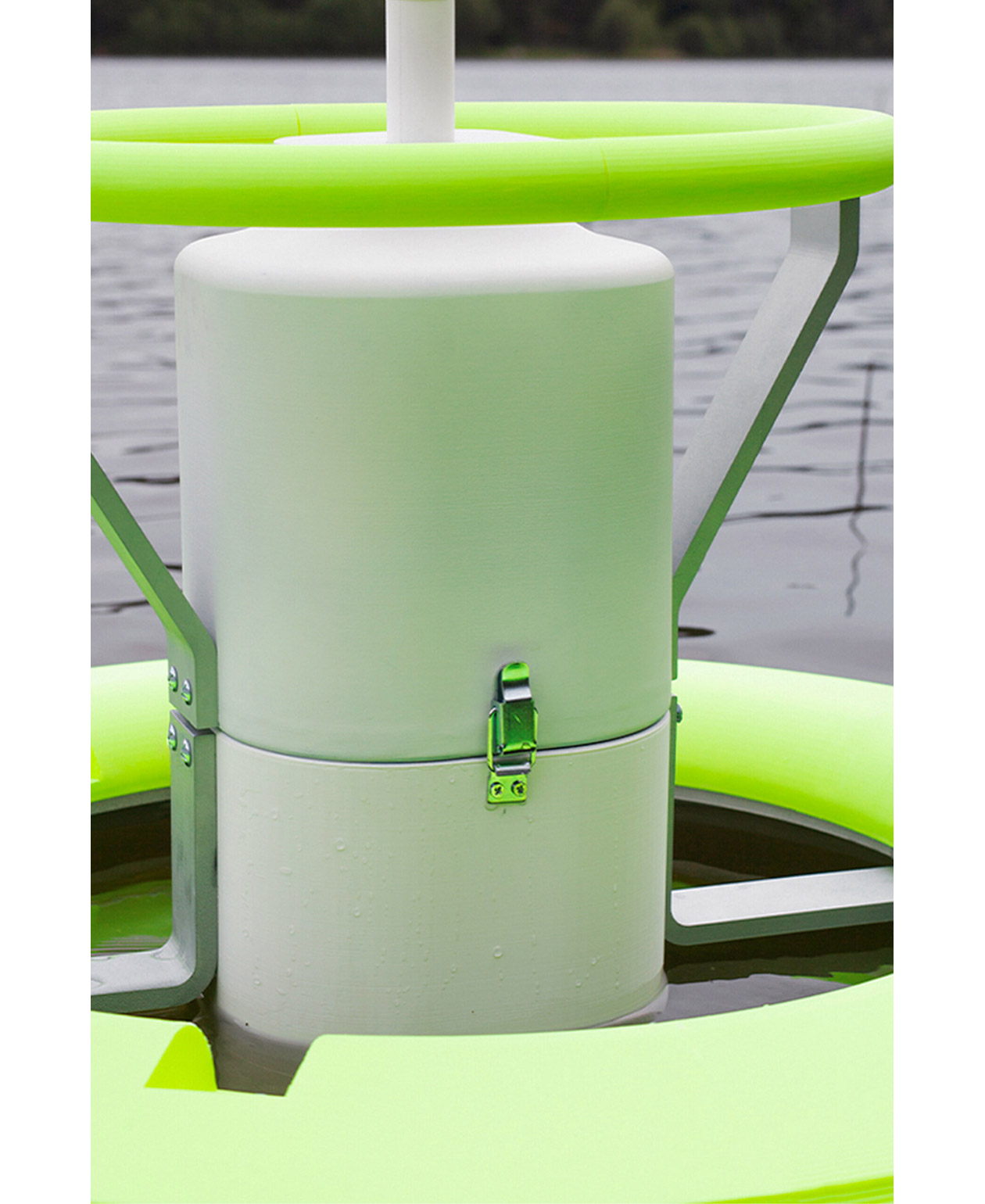
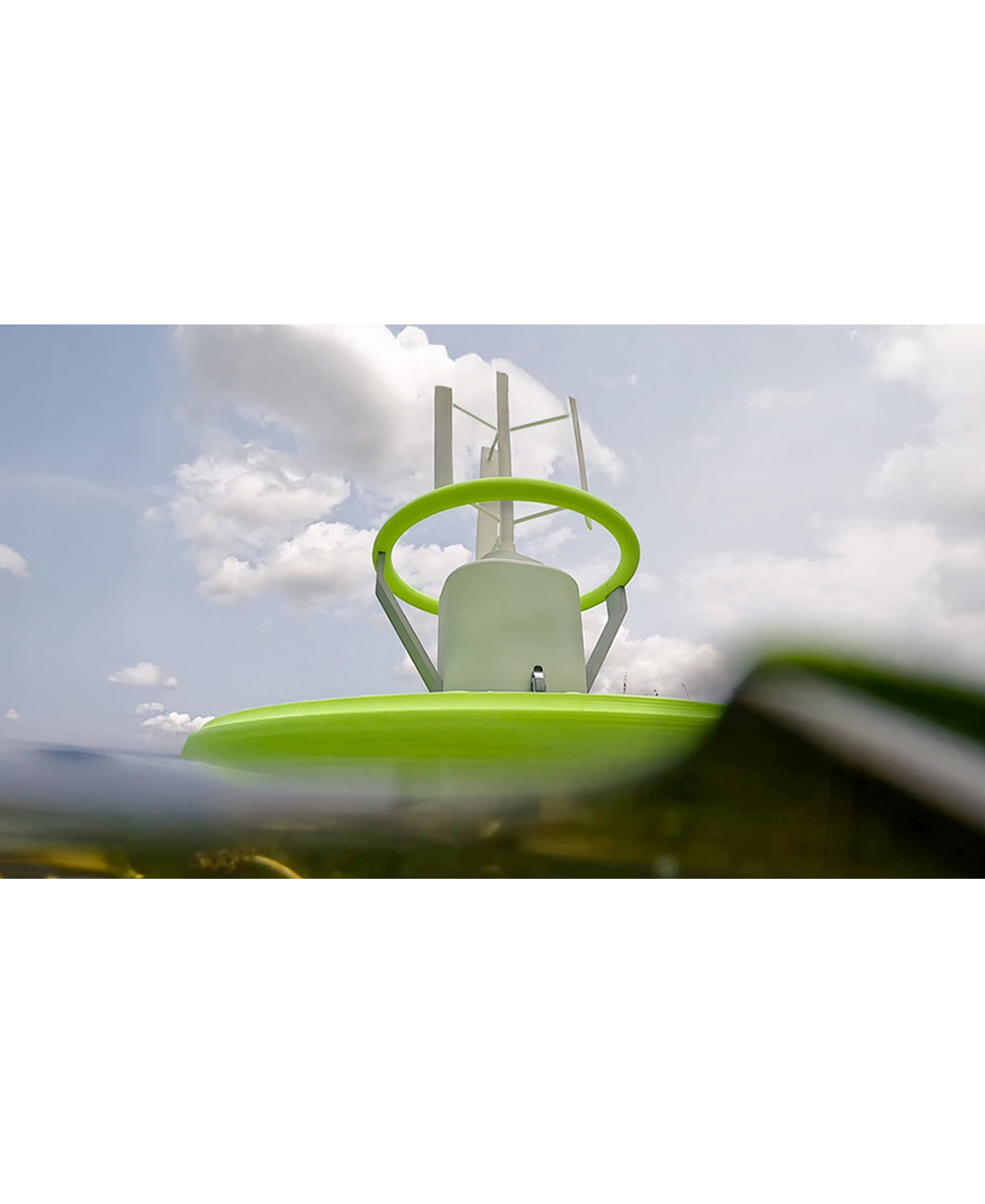
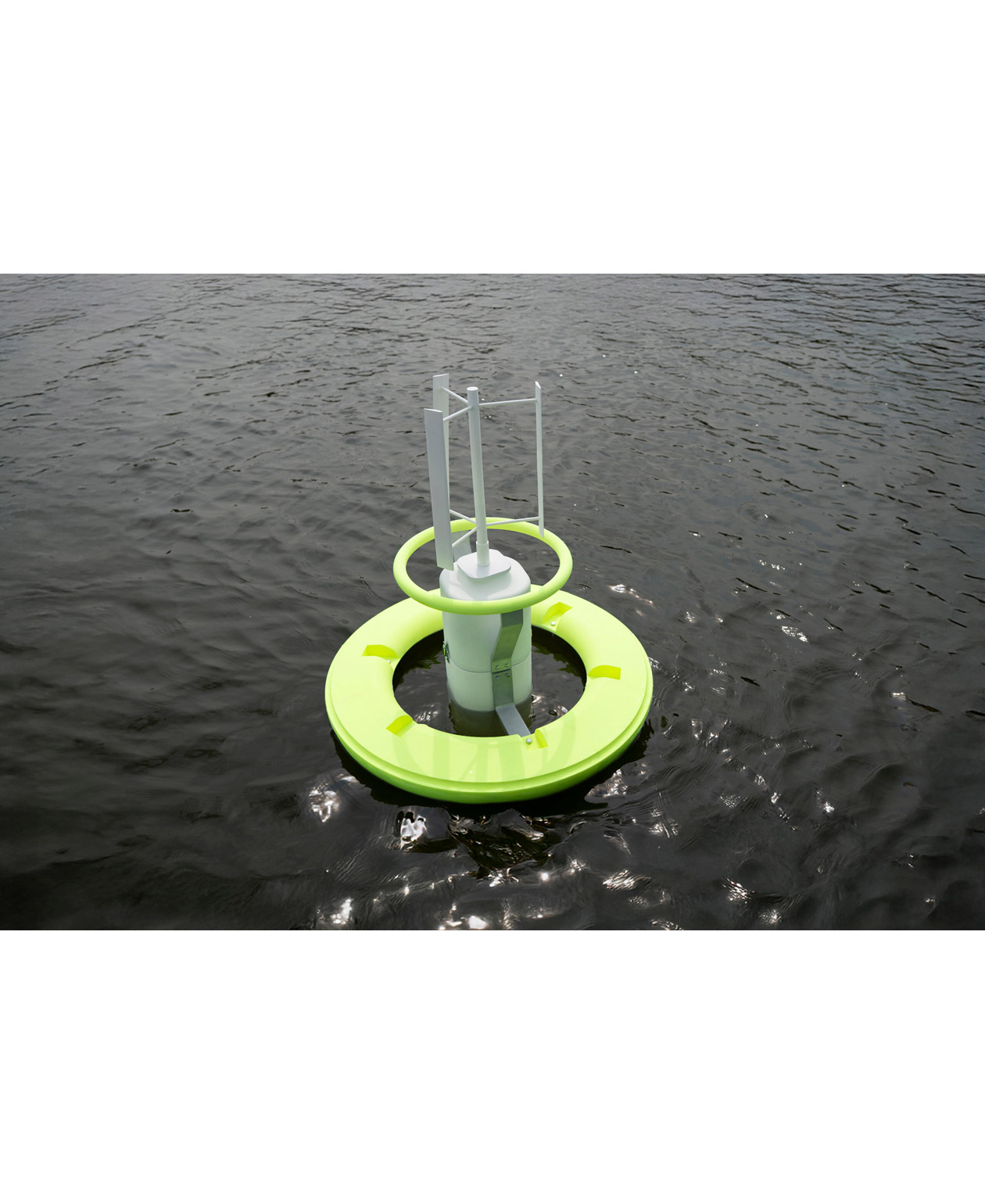
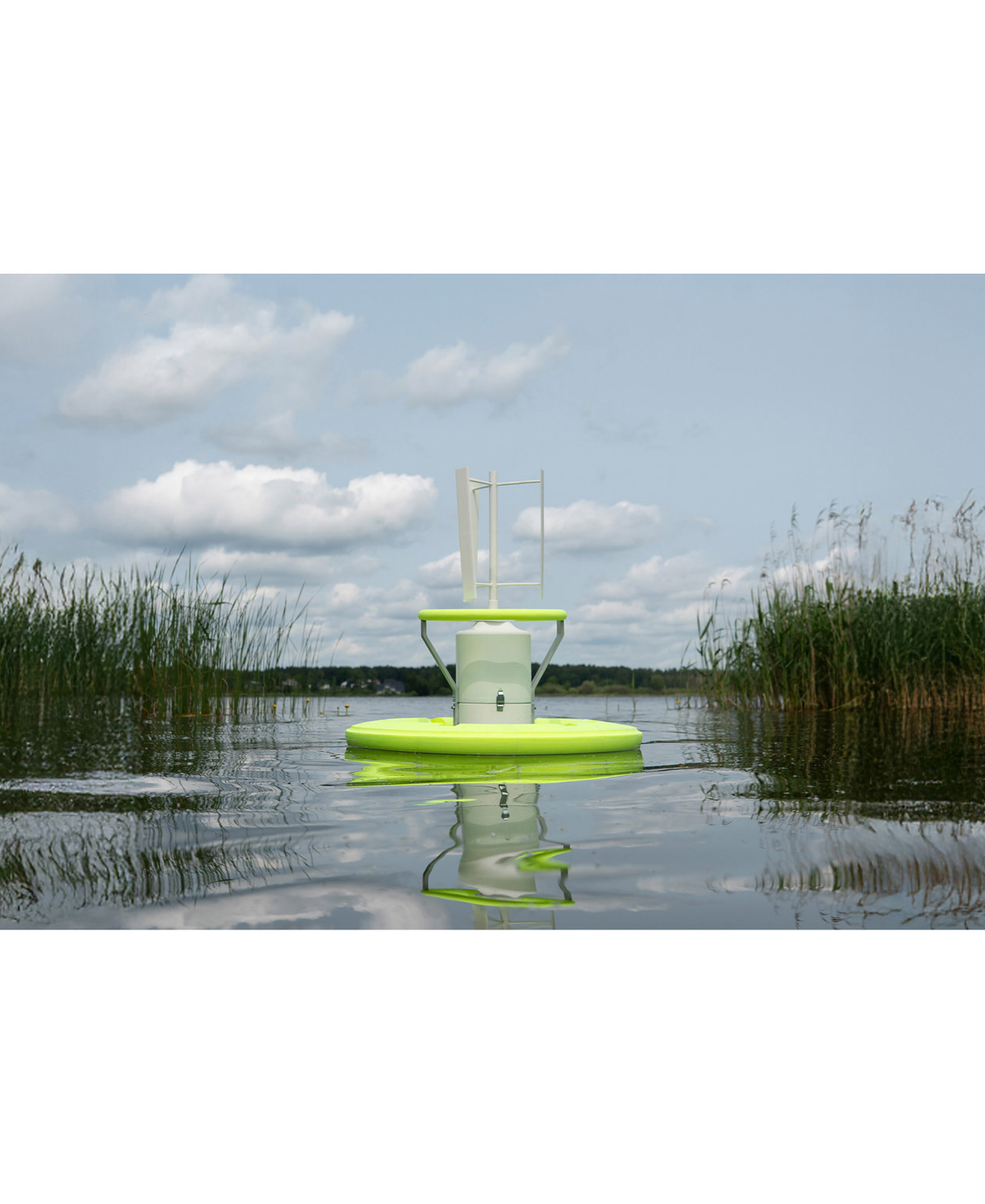
FLOW - Early detection of oil pollution in surface waters is an autonomous water quality monitoring system that continuously detects petroleum-based pollutants in rivers and lakes in the field. Conventional water monitoring periodically collects samples and tests them in laboratories, so by the time contamination is discovered, environmental damage may have already occurred. In particular, water can contain invisible pollutants even if it looks clean on the outside. FLOW detects such pollution early in the field for faster response and reduces the need for repeated sample collection and laboratory transport.
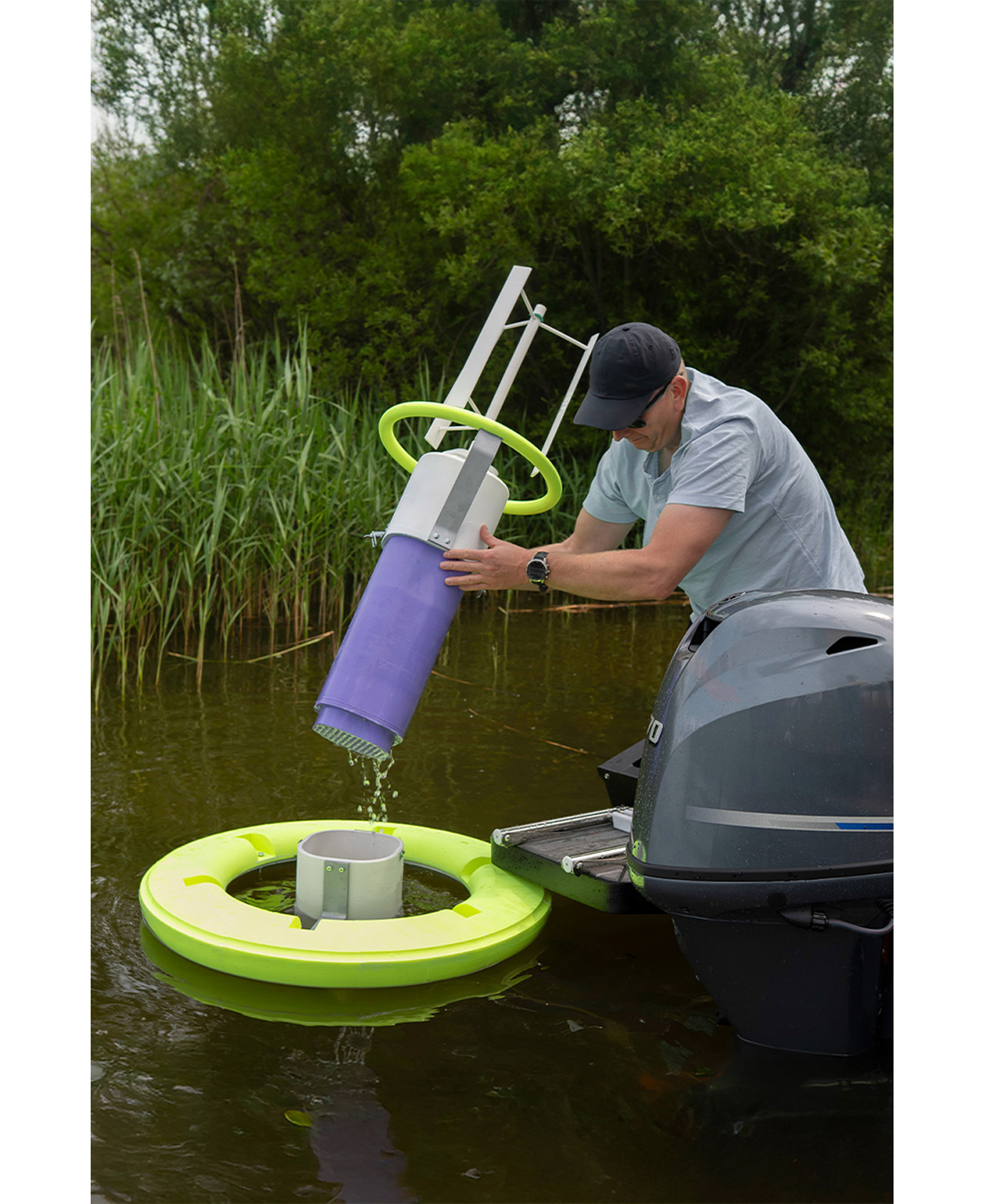
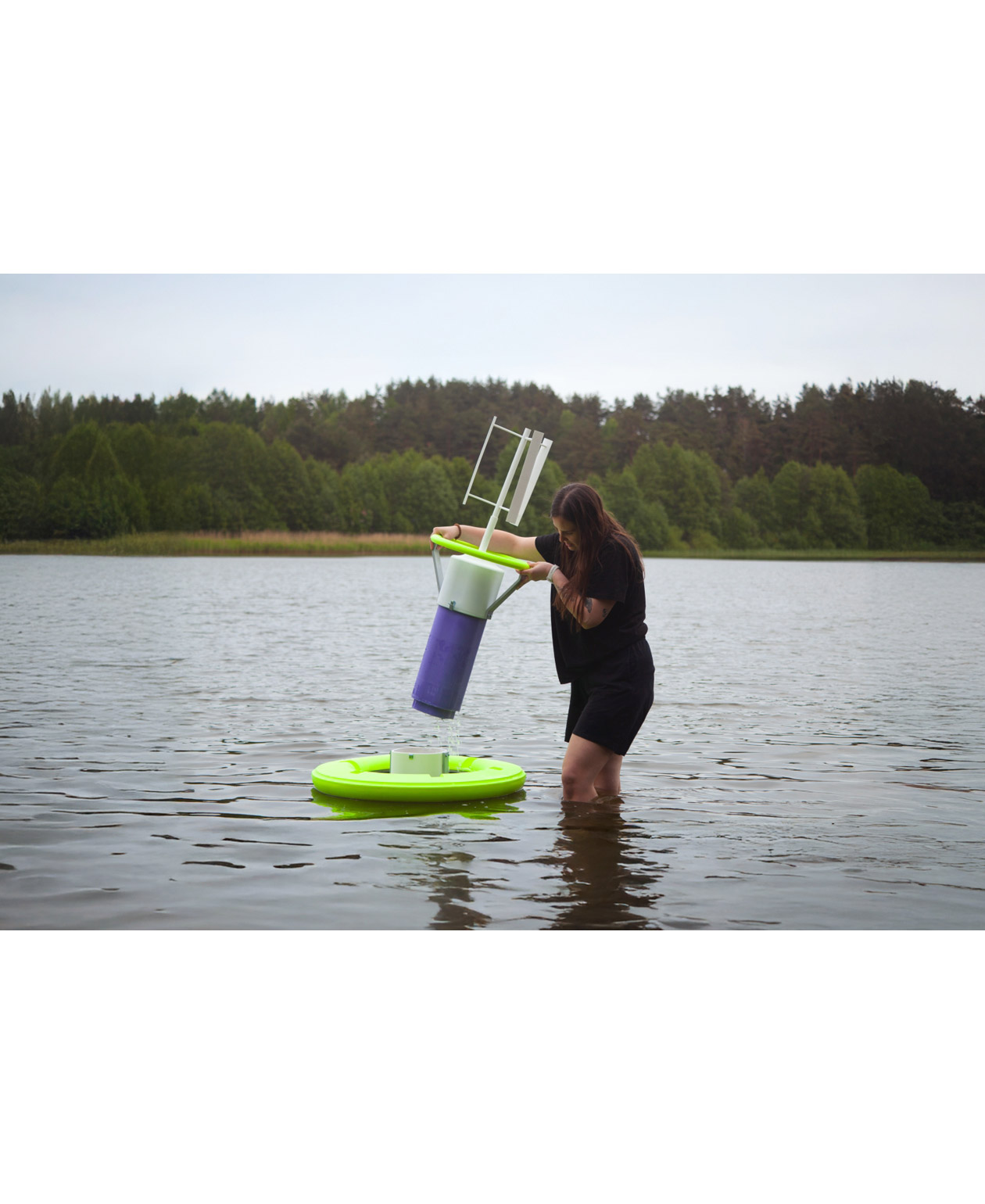
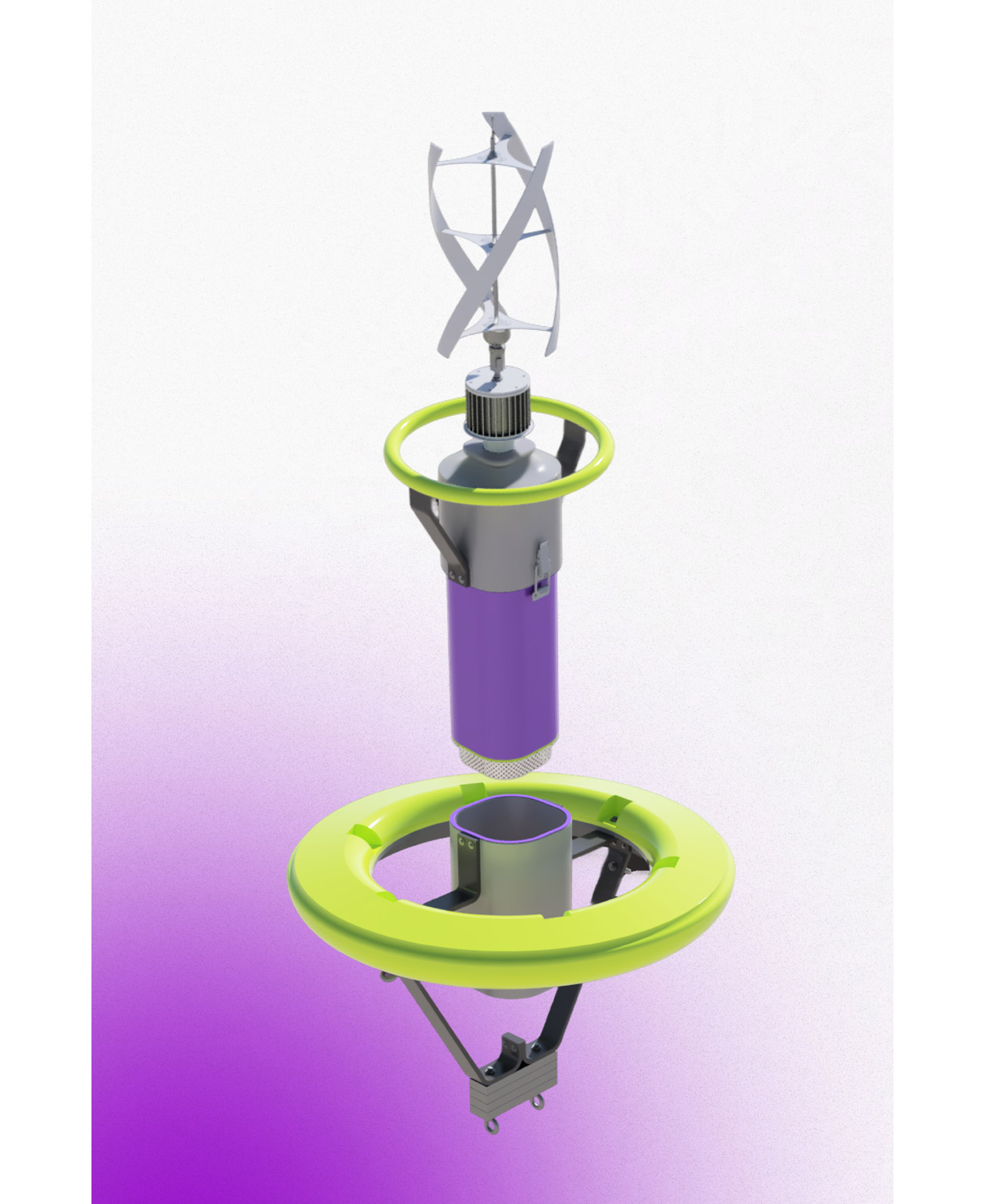
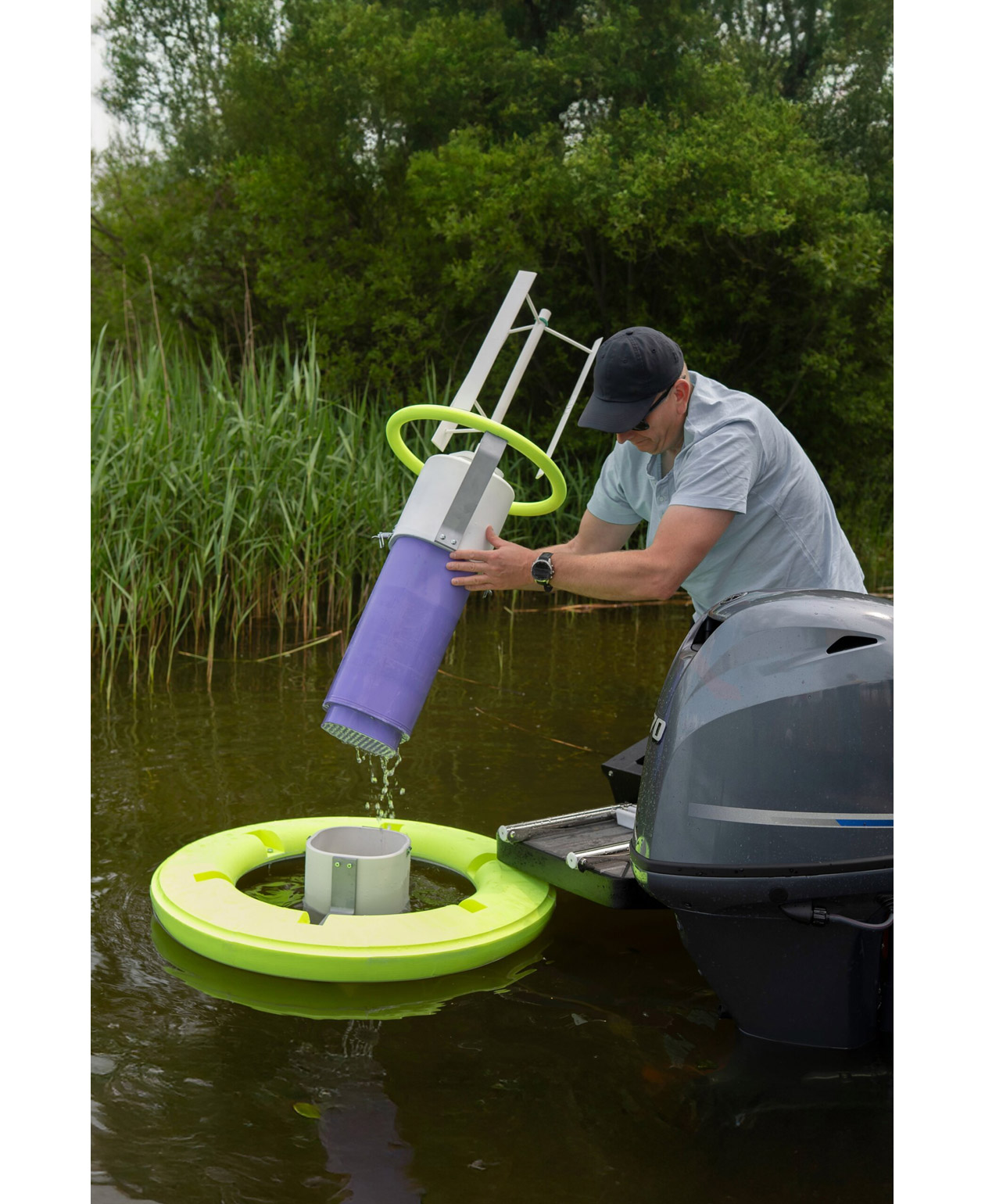
The core is connecting water quality measurement and data transmission into a single system. When the station is installed on the water surface, it automatically collects samples using the natural pressure difference between the surrounding water and the measurement chamber, and detects petroleum-based compounds through UV-induced fluorescence. By combining renewable energy supply, wireless data transmission, and a cloud platform, it continuously accumulates and transmits information collected in the field.
A network structure that allows multiple stations to operate simultaneously in different locations has also been applied. Rather than just checking whether individual points are contaminated, it connects data from multiple points so that the water quality status and changes of the entire region can be grasped. It transforms the conventional monitoring method centered on 'sample collection-transport-laboratory analysis' into a water quality monitoring network that operates continuously at multiple points.
The collected information can be checked by researchers, public institutions, environmental organizations, and local communities through a cloud platform and mobile application. By visualizing invisible pollution as data and increasing the accessibility of environmental information, it allows people to more easily understand water quality status and judge necessary responses. By connecting water quality measuring devices and data sharing systems, environmental monitoring has been expanded into a process where diverse entities share and utilize information.
This information accessibility also contributes to narrowing the gap between environmental research and citizens' daily experiences. Just as people routinely check air quality information, checking the status of rivers and lakes with real-time data allows local residents to recognize changes in the environment where they live. Through this, interest and shared responsibility for water resources are increased, and a foundation is established to respond before pollution-induced damage grows.
In the long term, FLOW aims for a scalable water quality information network that connects autonomous monitoring stations across multiple regions. As currently less than 60% of Europe's surface waters achieve good ecological status, the need for continuous water monitoring is growing. The accumulated long-term data can be utilized to identify pollution changes and patterns and build predictive models. Through this, it presents an environmental monitoring model that can shift water management from a reactive approach after environmental damage occurs to a method of early identification and prevention of pollution.