


Quantum Hydroinformatics A Smart City NRW platform project for Uttarakhand using non-invasive rapid leak detection technology for efficient water loss reduction


- Nationality
- India
- Group
- Aumsat Technologies LLP
About Project
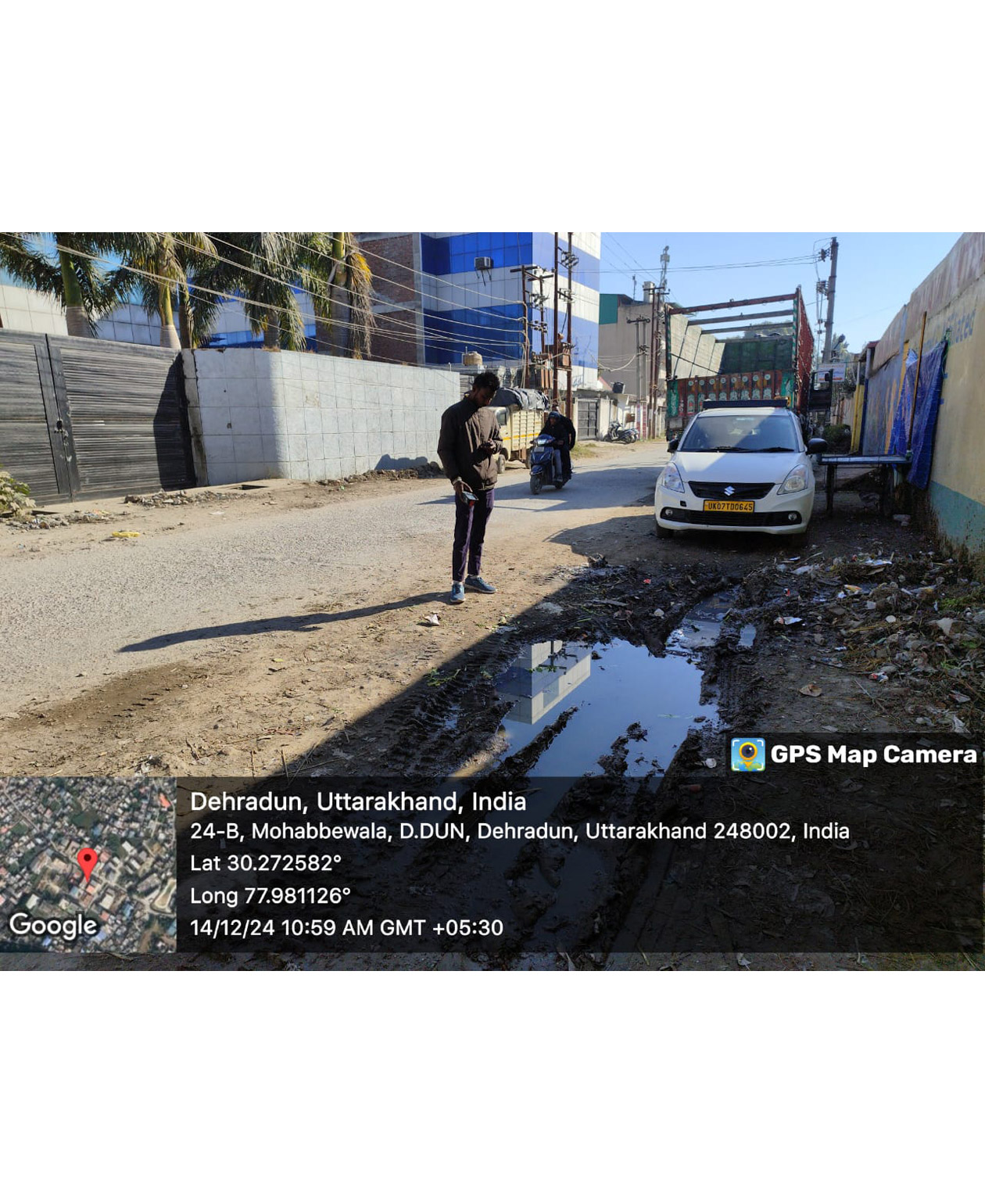
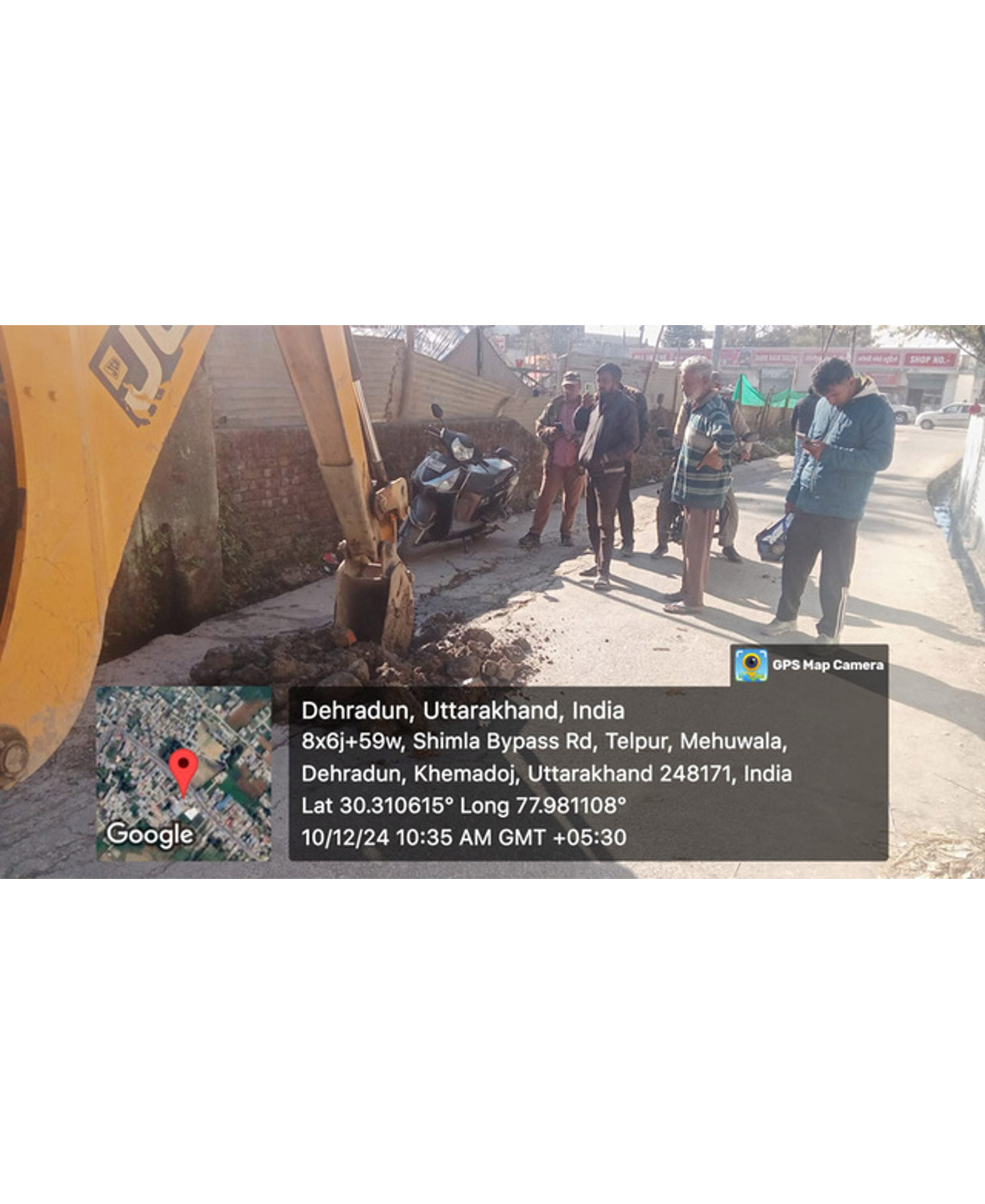
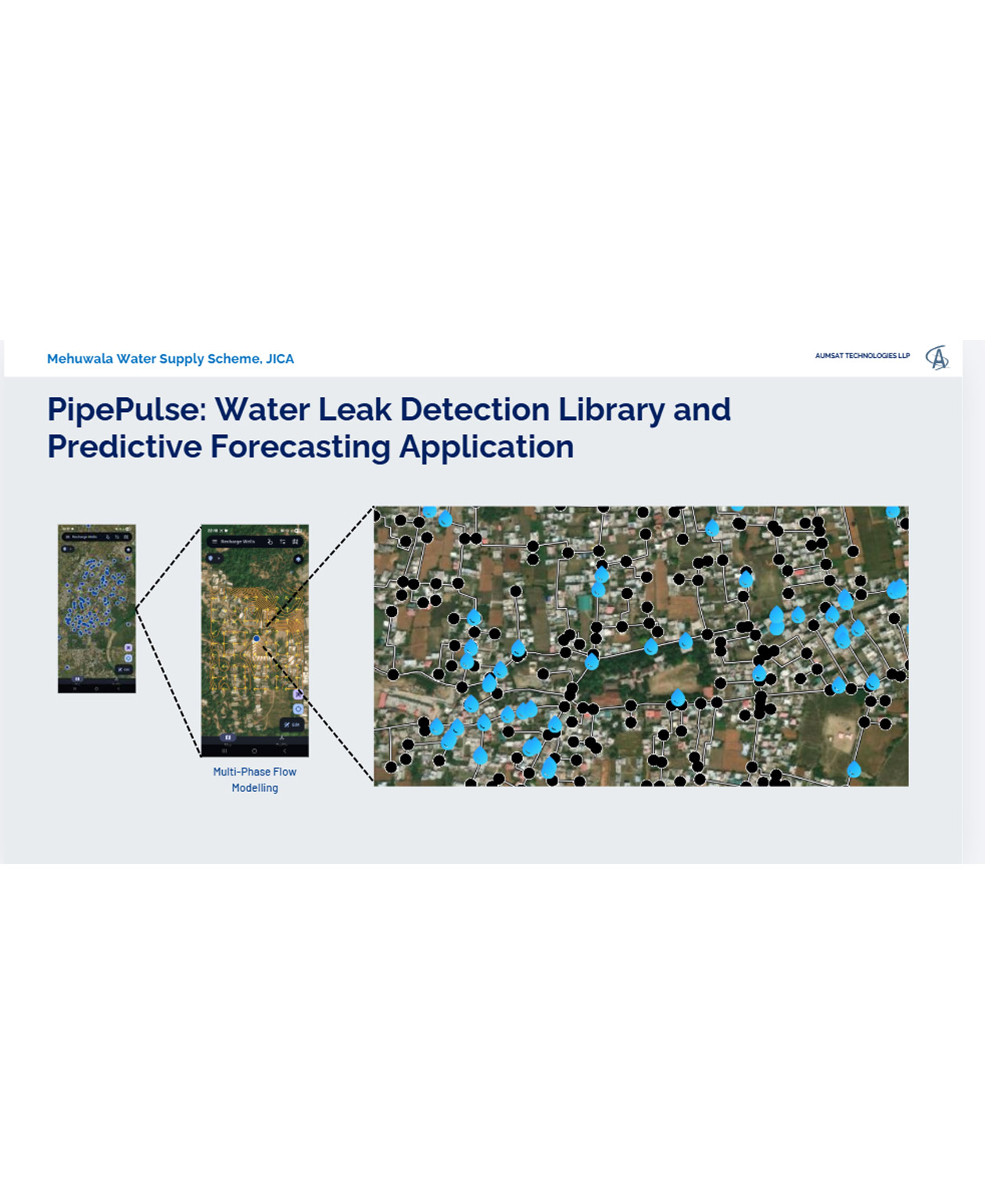
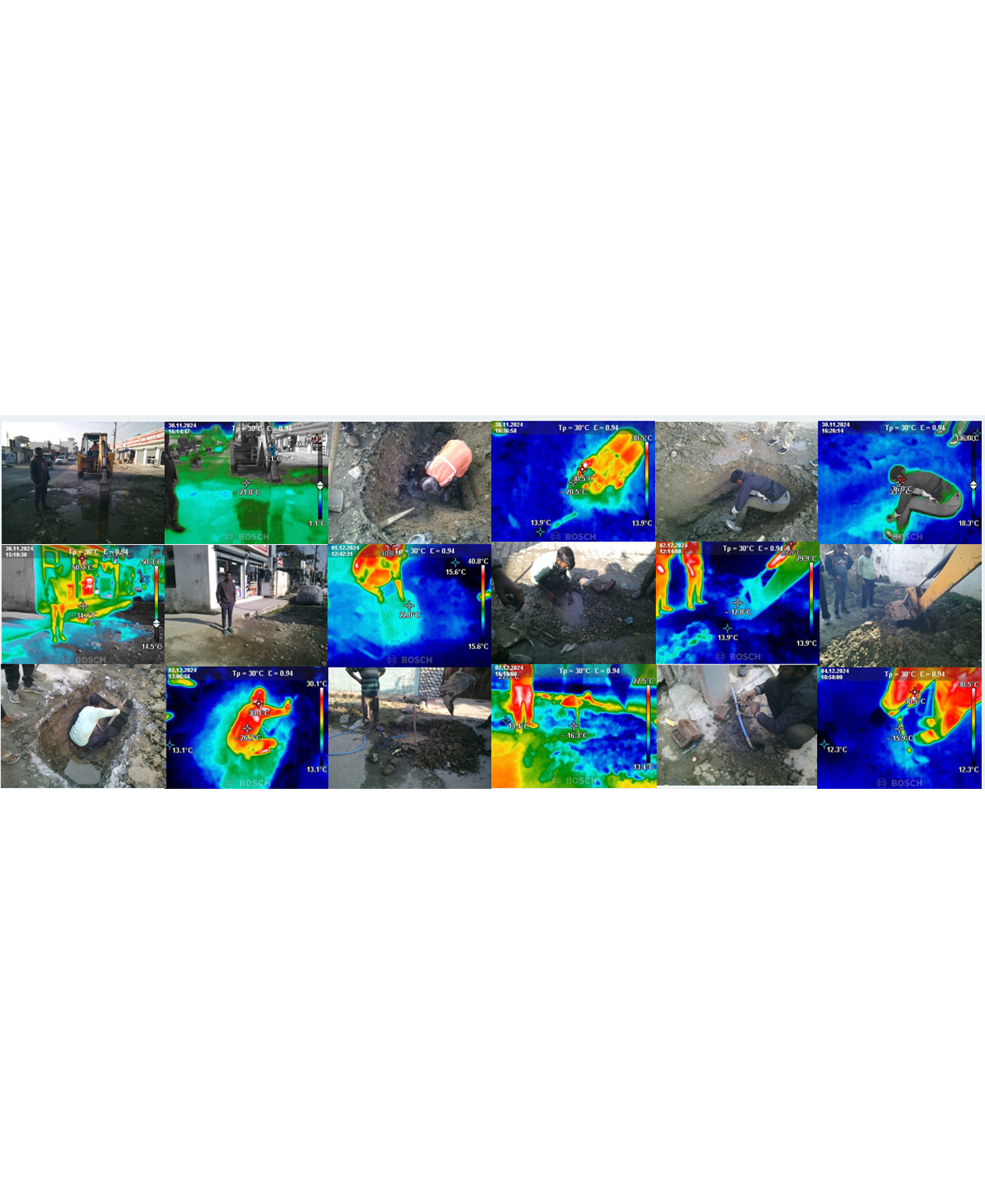
Developed by Aumsat Technologies LLP, the non-invasive Digital Transformation (DX) platform addresses the challenges of Non-Revenue Water (NRW), water scarcity, and energy losses in urban water distribution networks. By integrating Advanced Earth Observation, digital pipeline mapping, thermal field validation, patented in-pipe inspection technology, and Monitoring, Reporting and Verification (MRV), it rapidly detects and verifies hidden pipeline leaks underground without excavation. It is characterized by efficiently restructuring the city's water management approach by connecting previously separated processes—detection, field verification, pipeline inspection, and performance validation—into a single seamless workflow. Developed to support efficient and sustainable water infrastructure initiatives driven by Uttarakhand Peyjal Nigam and the Japan International Cooperation Agency (JICA), it is utilized not only for leak detection but also to enhance operational efficiency and asset management capabilities of water networks. Through this, it has achieved verified savings of around 117,000 kL of water per month, providing more stable water supply to approximately 120,000 people while reducing energy consumption, carbon emissions, and utility revenue losses. Furthermore, by converting verified water savings into 'water credits', it proposes a novel water management approach that links water-saving achievements with economic value. It is designed as an integrated system for overall water management in that it goes beyond simply finding leaks using technology to measuring water-saving outcomes and connecting them to manageable value.
This platform transforms conventional, labor-intensive leak detection methods into digital technology. By analyzing wide areas through Earth observation and linking digital pipeline mapping, thermal field validation, and in-pipe inspection technology, it rapidly finds hidden leaks throughout the city without excavation. It is structured to reduce unnecessary excavation and investigation scope through a phased approach of first analyzing wide urban areas, narrowing down required points, and validating them in the field. By applying the Monitoring, Reporting, and Verification (MRV) framework here to confirm actual water-saving effects, it reduces survey periods, operational costs, and water losses. The verified water savings can be converted into standardized water credits, which utilities can also utilize to measure and manage environmental and economic performance.
Through actual application, it has become possible to supply clean tap water more stably to approximately 120,000 residents. By analyzing the entire distribution network, it identified areas with insufficient water supply or low water pressure, sections with significant gaps between supply and actual consumption, and contamination-risk hotspots. As a result, it saved approximately 117,000 kL of water per month, reduced electricity consumption by about 70,000 kWh, and lowered carbon emissions as well as utility revenue losses caused by Non-Revenue Water. As more treated water reached actual households, it reduced dependence on borewells and groundwater extraction, lowered energy requirements for pumping and treating water, and enhanced long-term water supply security. Rather than replacing existing water facilities on a large scale, it demonstrates a problem-solving approach that jointly reduces water and energy waste by identifying and improving loss points within the current infrastructure.
The pilot project initiated in Uttarakhand confirmed its applicability to other regions, and it has since expanded to Indian smart cities such as Gandhinagar and Ratlam, as well as World Bank-supported projects in Haridwar, Roorkee, and Haldwani. Currently, applications are also expanding overseas to places such as Iloilo City in the Philippines and Morocco. By applying digital analysis and verification systems while maintaining existing water networks, it presents a scalable system model adaptable to diverse urban infrastructure environments.
Over the long term, the goal is to apply this system to more than 100 smart cities in Asia and Africa to reduce Non-Revenue Water, energy consumption, and carbon emissions. By collaborating with utilities, governments, international organizations, and relevant enterprises, we aim to build an urban water management system that saves water and energy together, and develop verified water credits into a framework usable for ESG, climate finance, and sustainable water infrastructure. By connecting technology, data, public infrastructure operations, and economic value systems, it demonstrates the potential of sustainable system design that comprehensively addresses urban water challenges.