


Bendera Pusaka Park A Bendera Pusaka Park project restoring ecological functions and uniting degraded parks into a climate-resilient area solving flooding issues


- Nationality
- Indonesia
- Group
- SIURA Studio
About Project
Bendera Pusaka Park is a project that newly reorganizes existing waterways and green spaces to create an urban park where people, society, and the environment live in harmony.
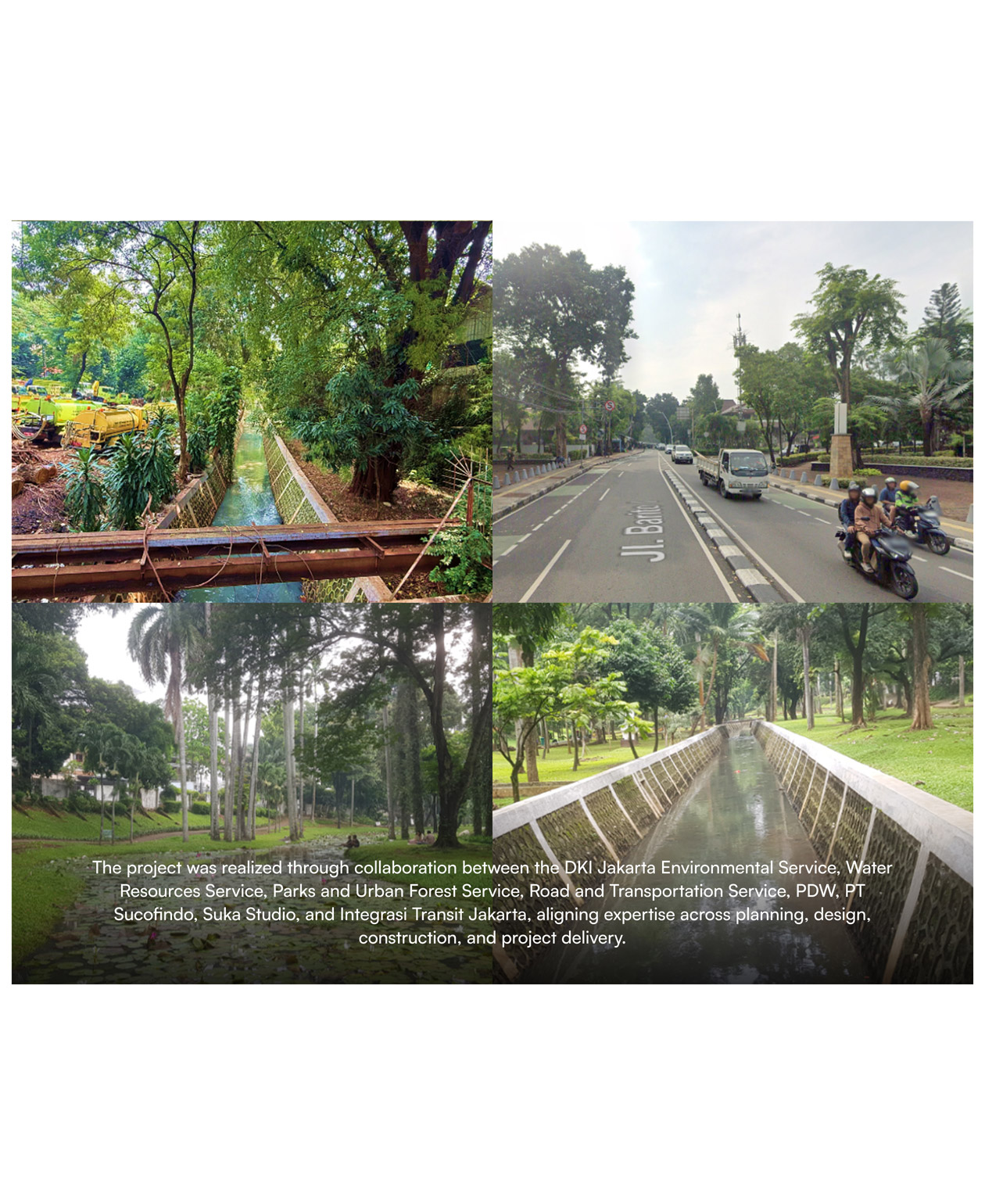
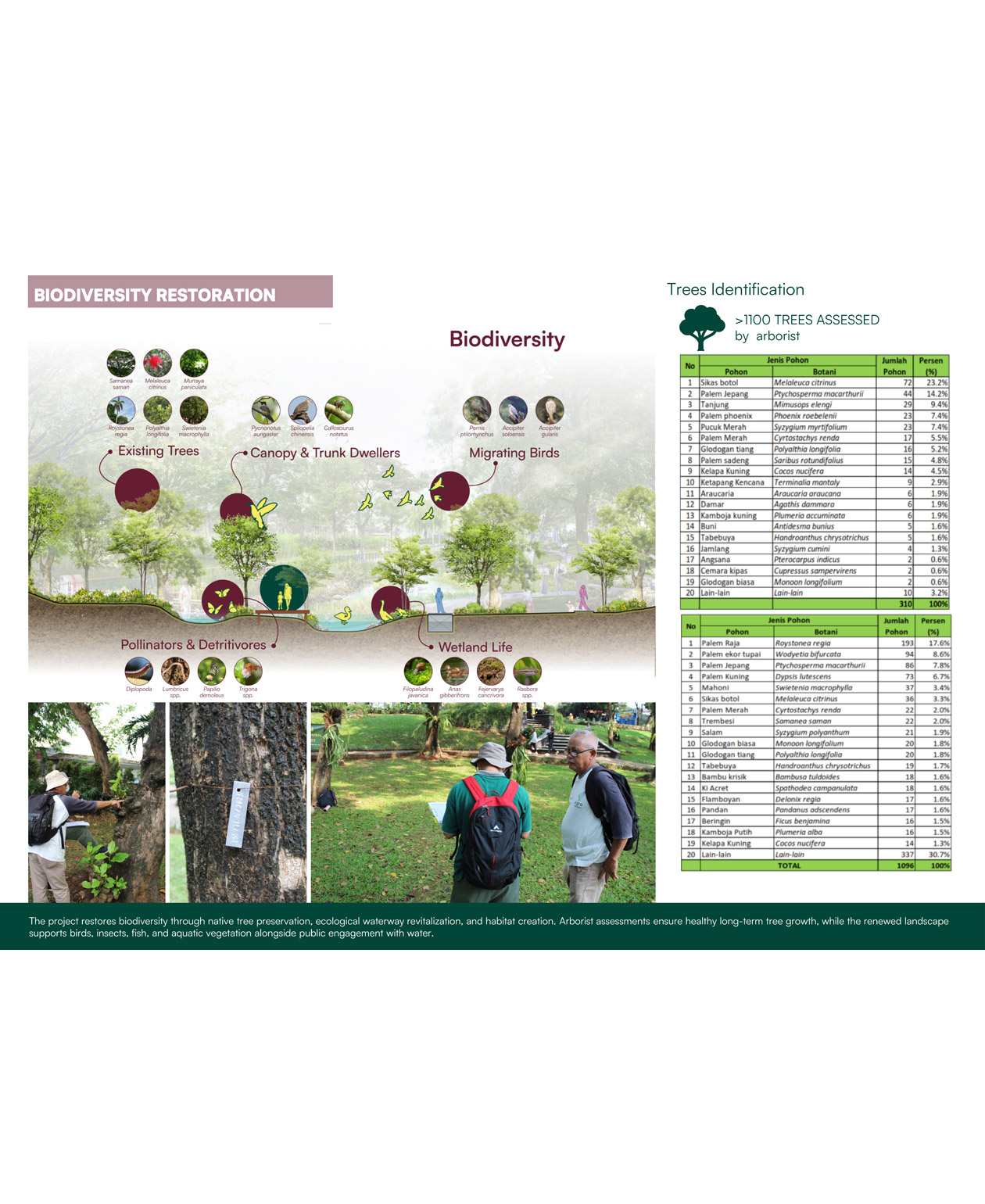
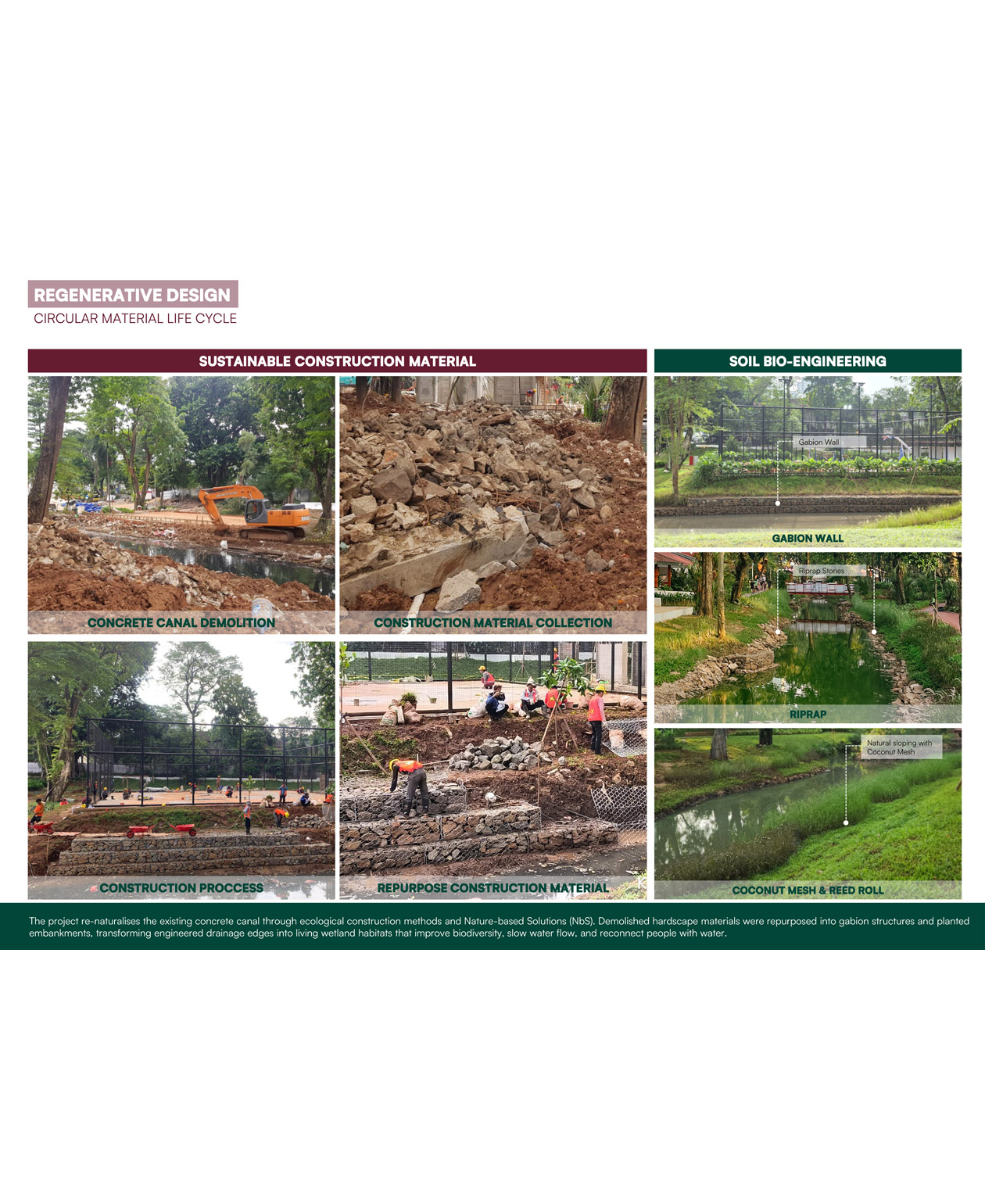
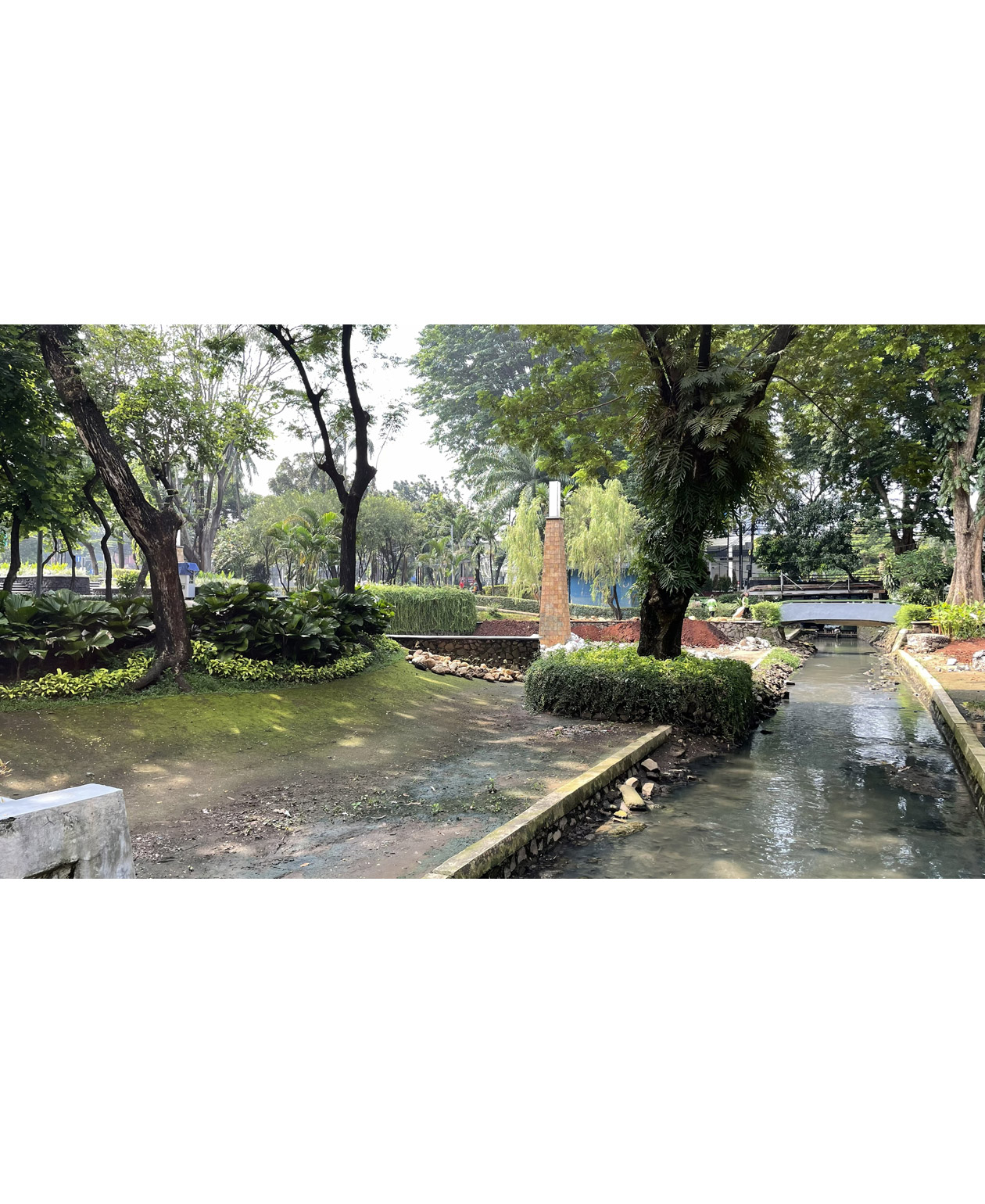
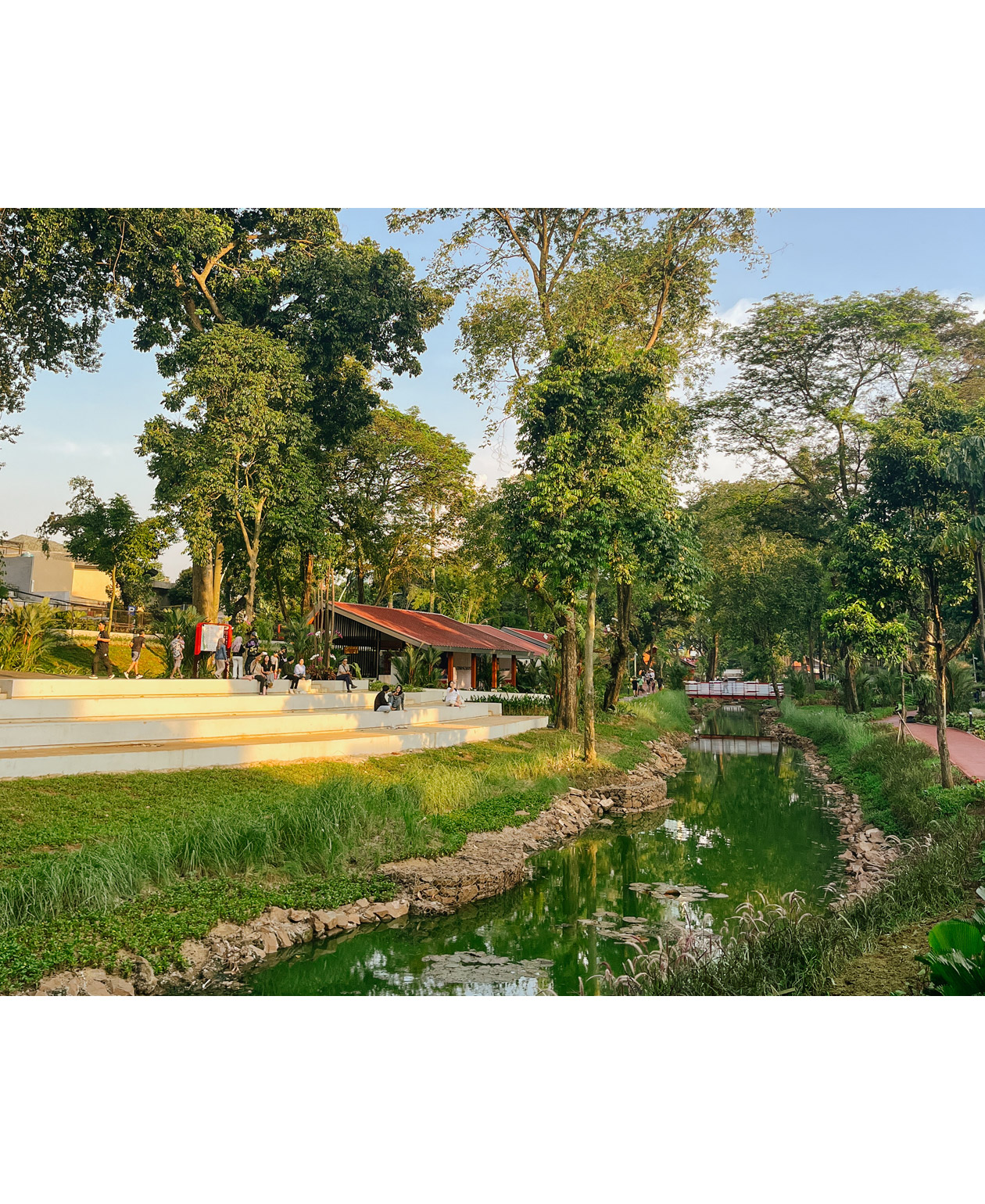
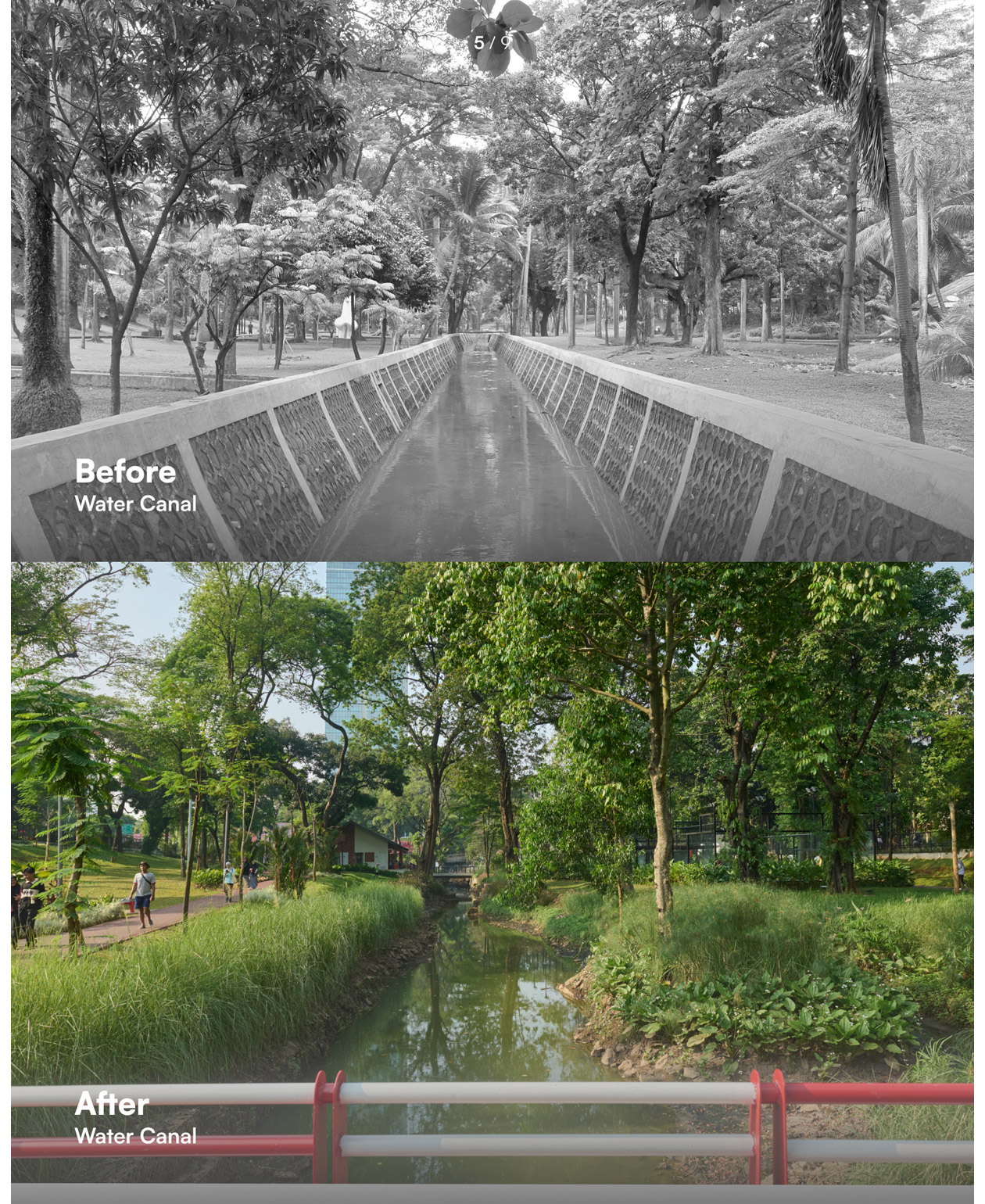
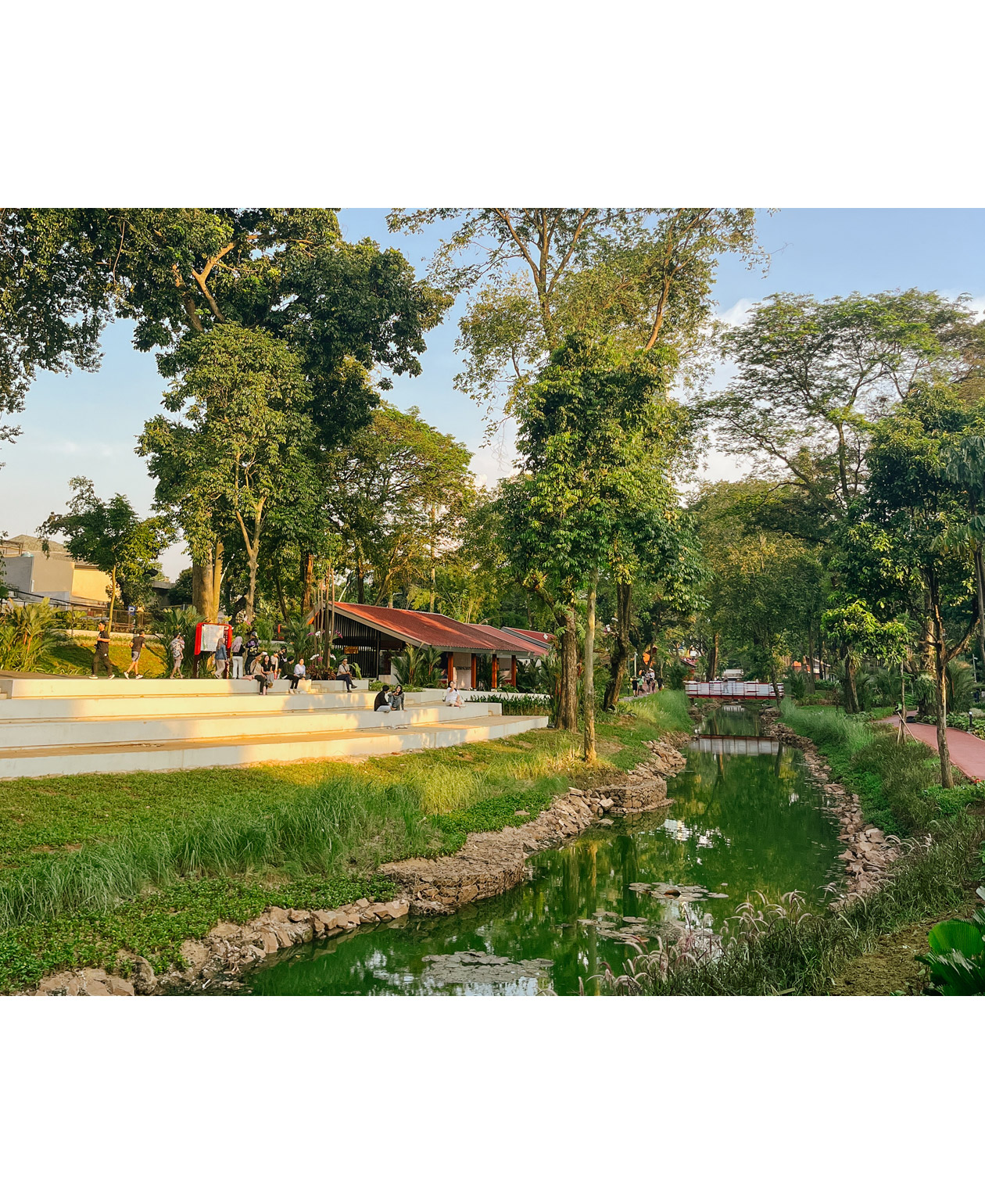
By demolishing concrete canals and creating naturalized, planted embankments and wetlands, the project restores the local ecosystem while transforming waterways that previously only served to drain water into public spaces shared by citizens.
Rather than artificially controlling natural changes, the park is designed to naturally accept seasonal water level fluctuations, plant growth, and sedimentation, allowing it to evolve alongside changes in climate and ecosystems.
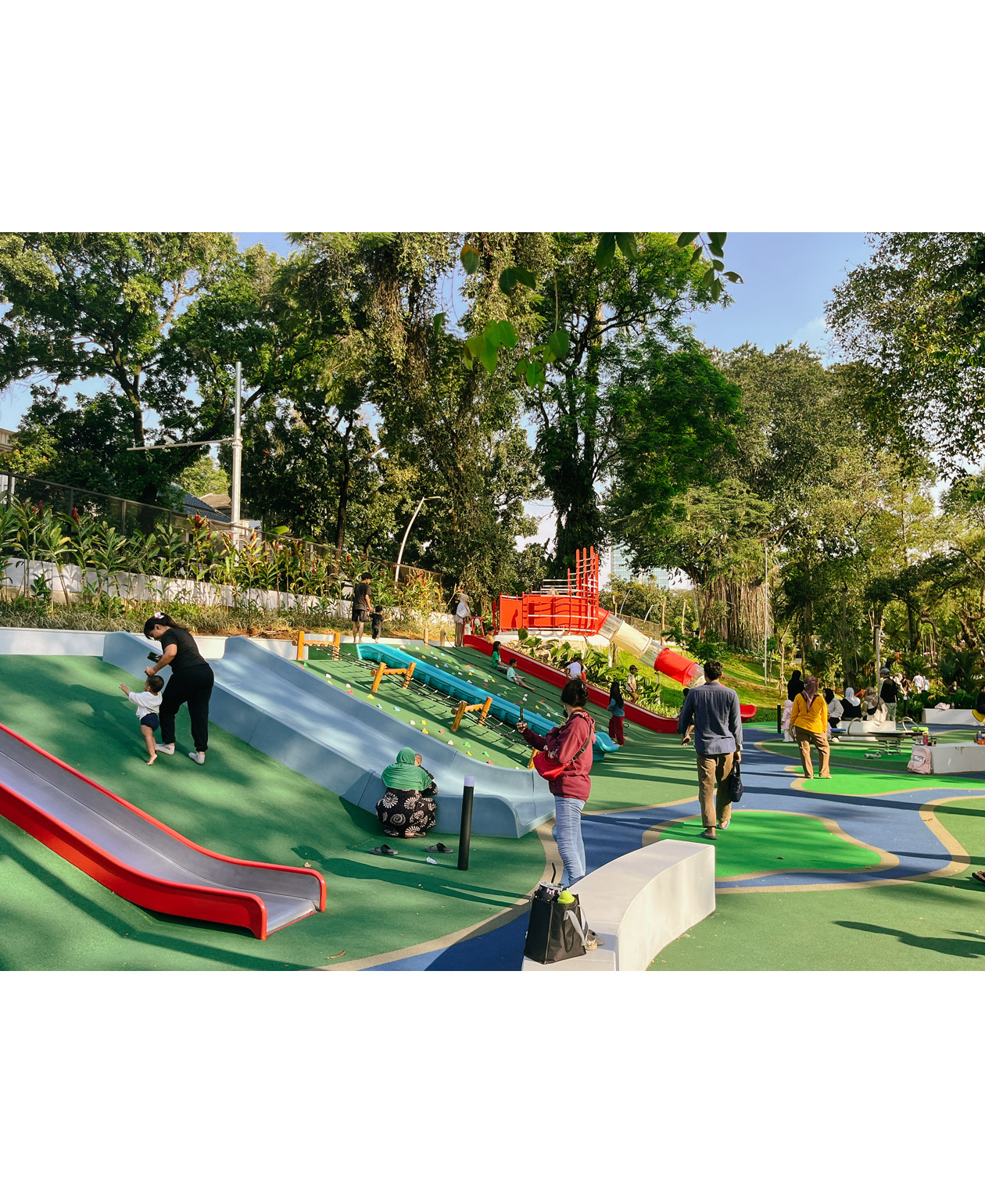
Throughout the park, various programs such as lawn plazas, play spaces, sports facilities, and community areas are arranged to blend harmoniously with the natural environment.
By configuring civic activities and ecological spaces together within a single park rather than separating them, everyday leisure and activities naturally coexist with the ecosystem.
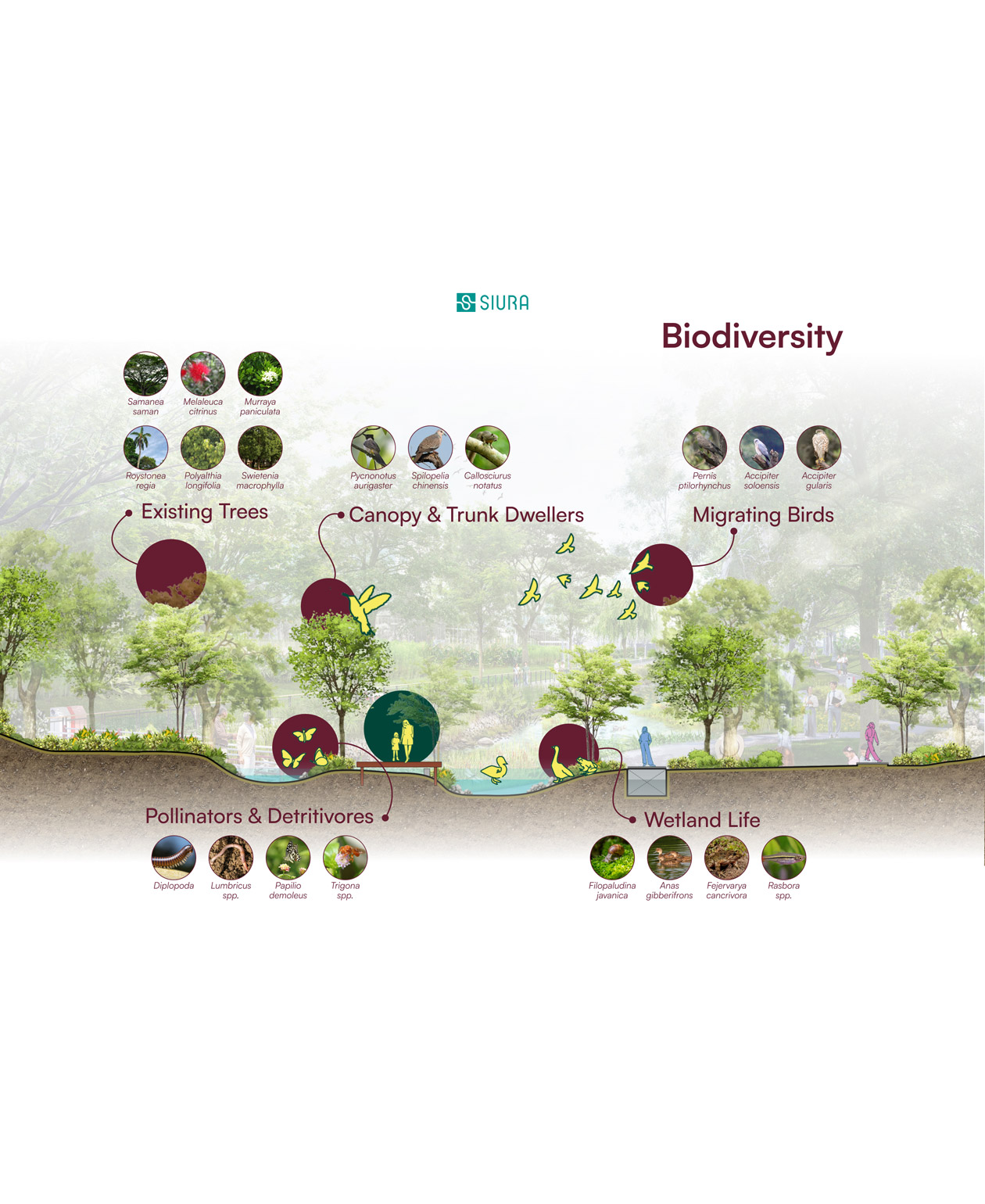
A key feature is that ecological functions are integrated into the spaces used by citizens, rather than dividing nature into a separate area that must be protected.
Through this, the project presents a new approach to sustainable urban parks where people's daily lives and nature's resilience are interconnected.
Flood response: Existing concrete canals were demolished and replaced with porous, planted embankments. By slowing water flow and expanding spaces where the park can naturally retain rainwater, flood response capacity was enhanced, converting drainage facilities into ecological infrastructure utilizing natural water cycles.
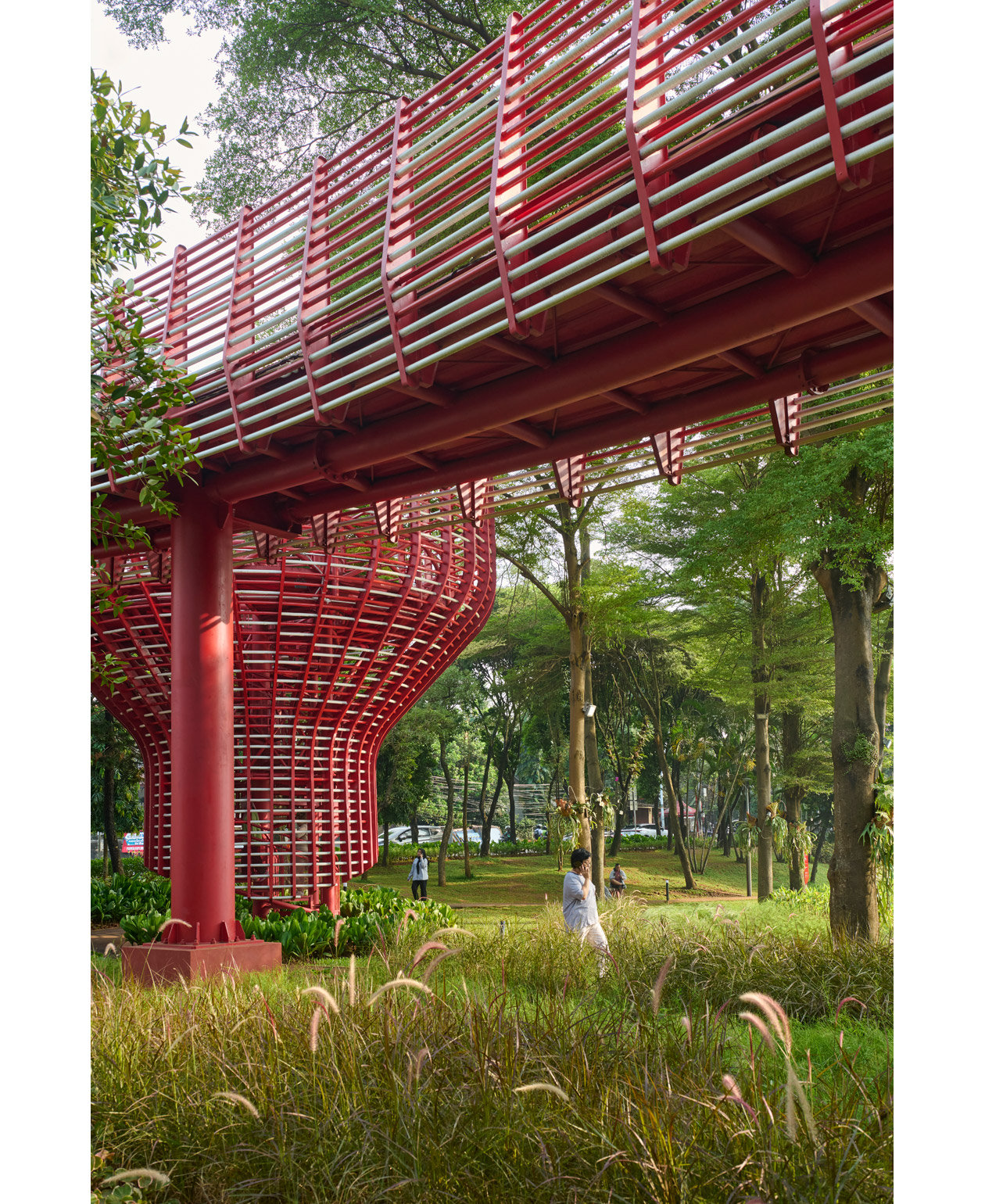
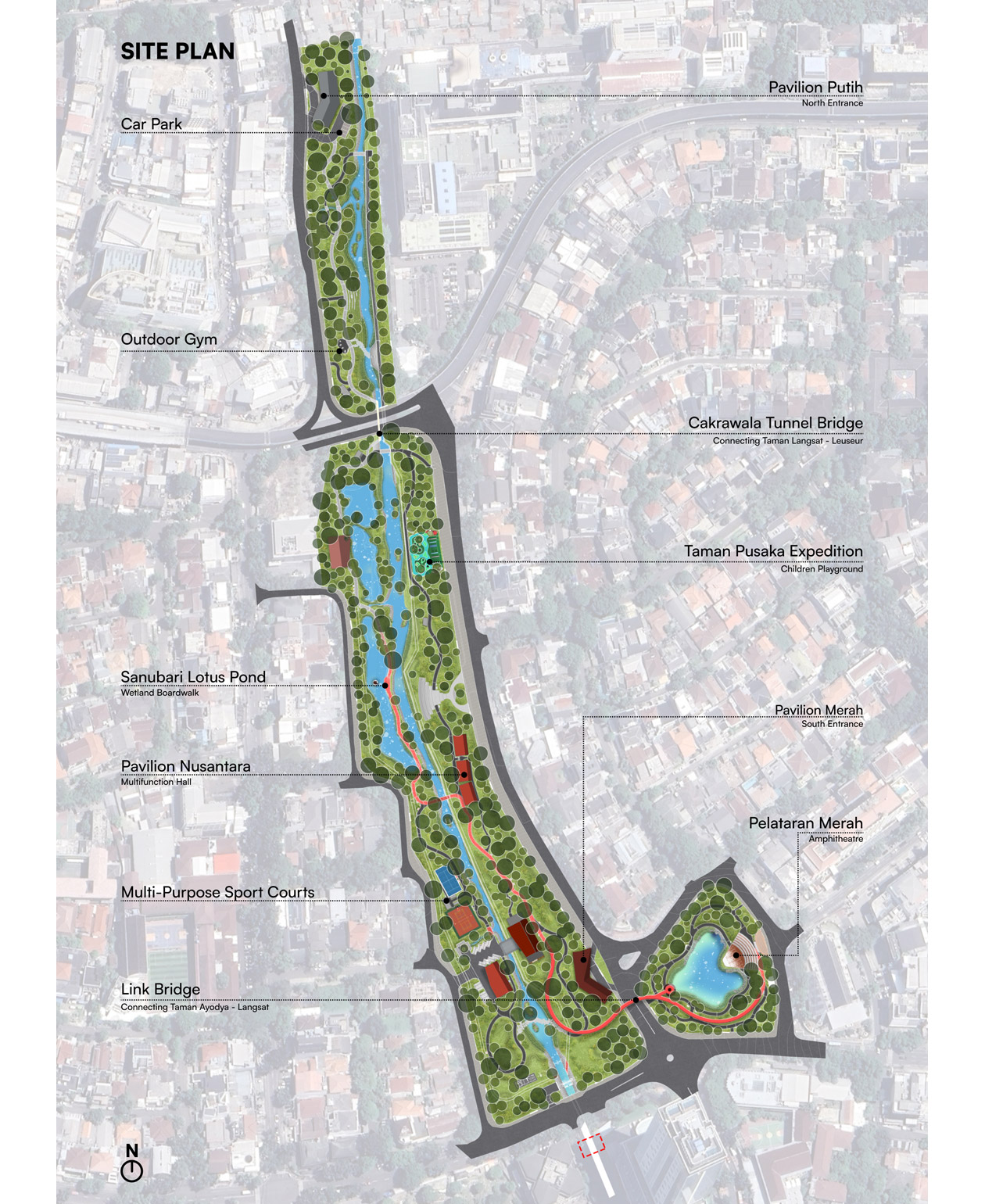
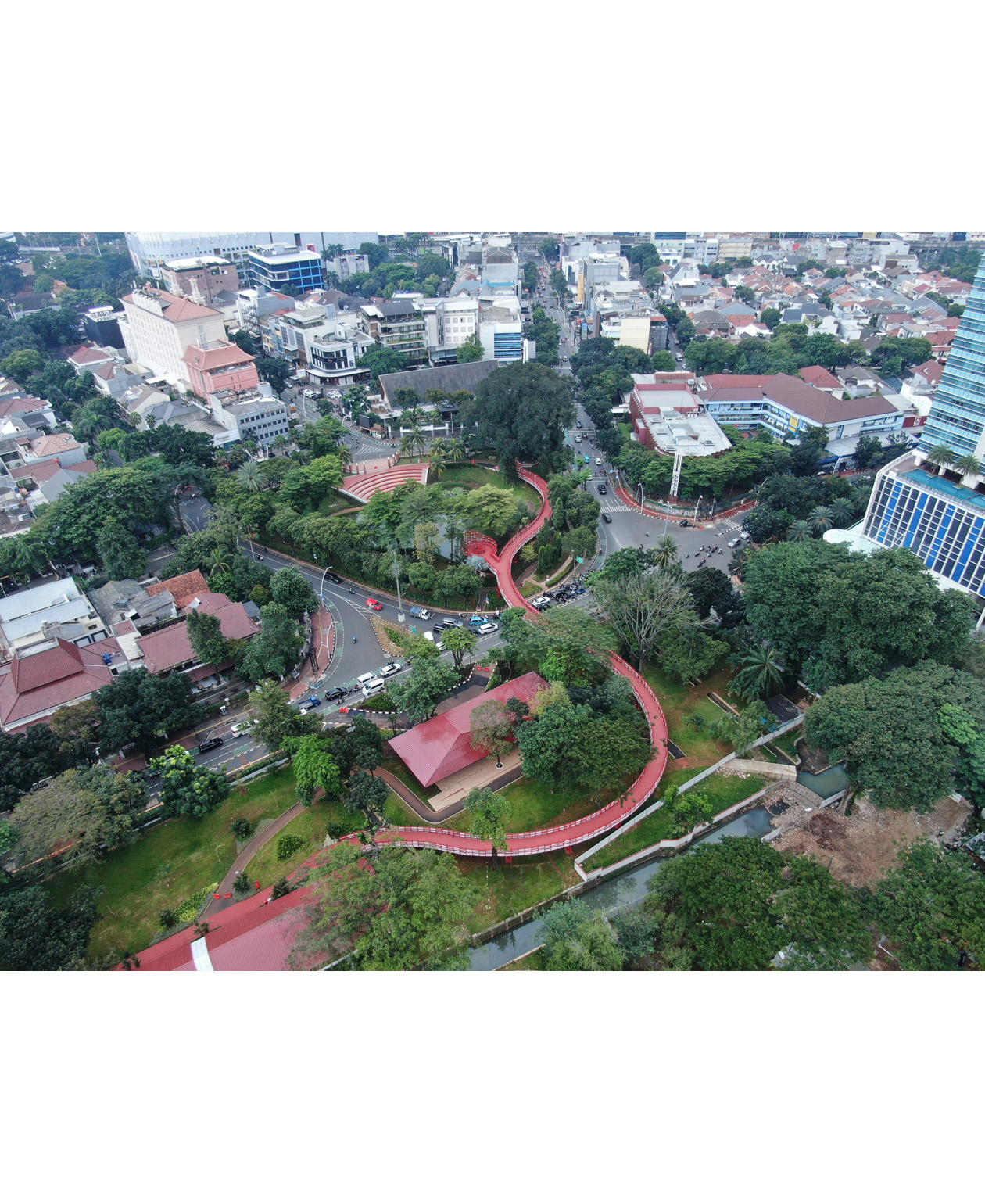
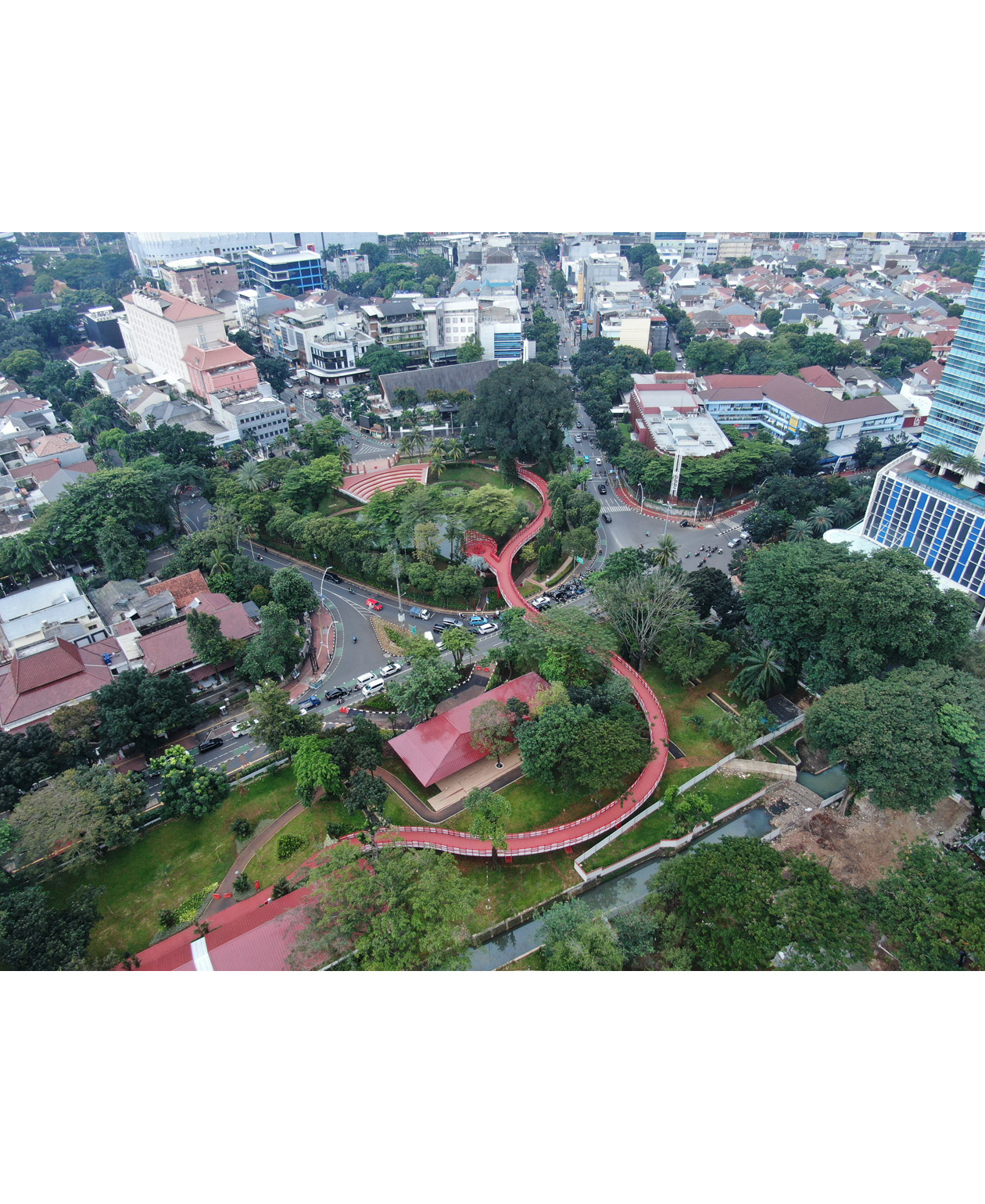
Accessibility improvement: Link bridges were installed to connect three previously separated parks into a single urban park. Fragmented green spaces were integrated into a unified pedestrian and public space system to enhance citizen accessibility and spatial utilization.
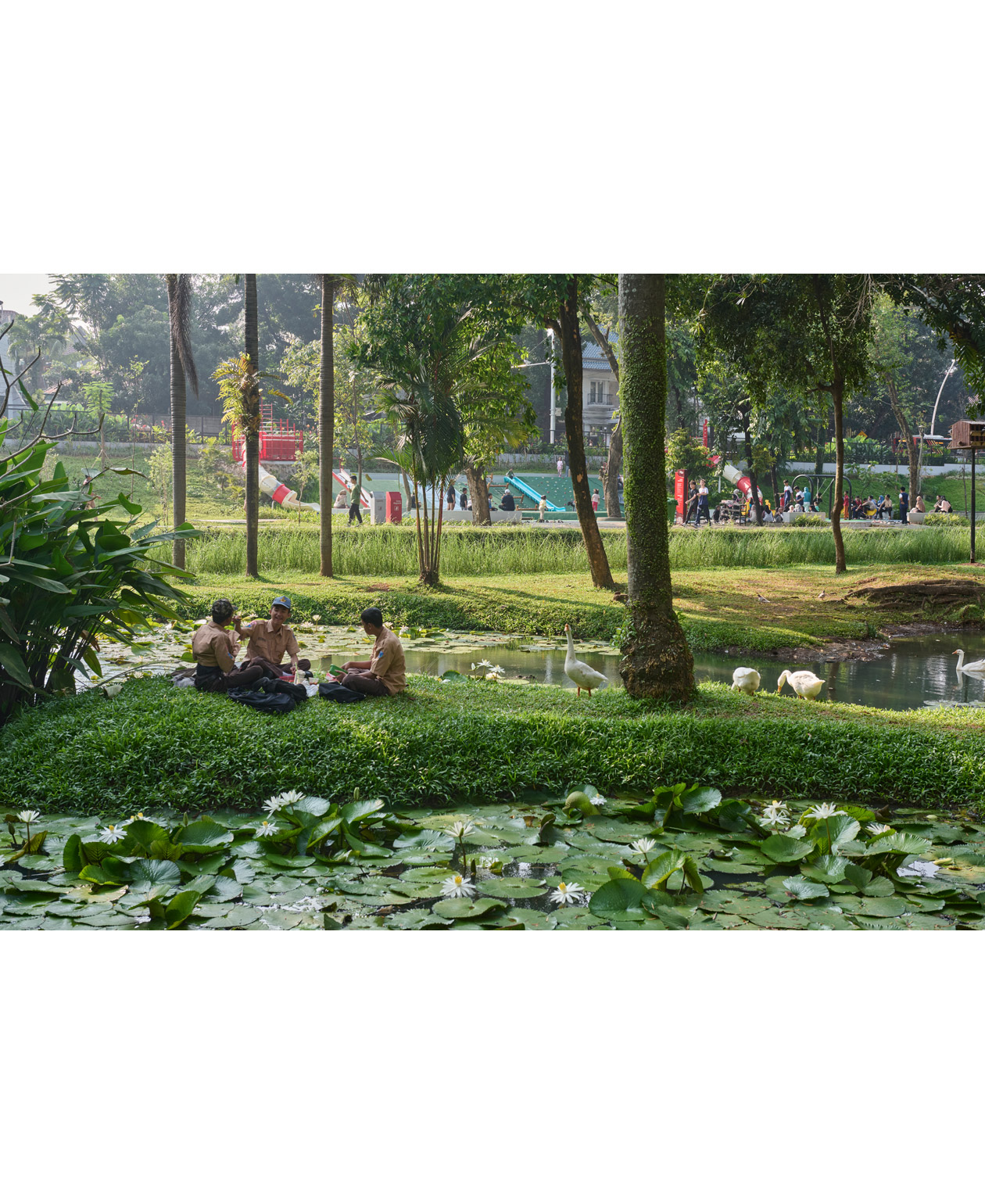
Water quality improvement: Wetland ponds applying Nature-based Solutions (NbS) were created to serve as environmental infrastructure utilizing nature's purification functions.
Public realm activation: By combining a public library and various community programs with green spaces, the park was transformed from a place where people simply stop by into an “urban living room” where citizens meet and interact. Ecological infrastructure and cultural-community functions were combined into a single space, expanding the park's role into an everyday social space.
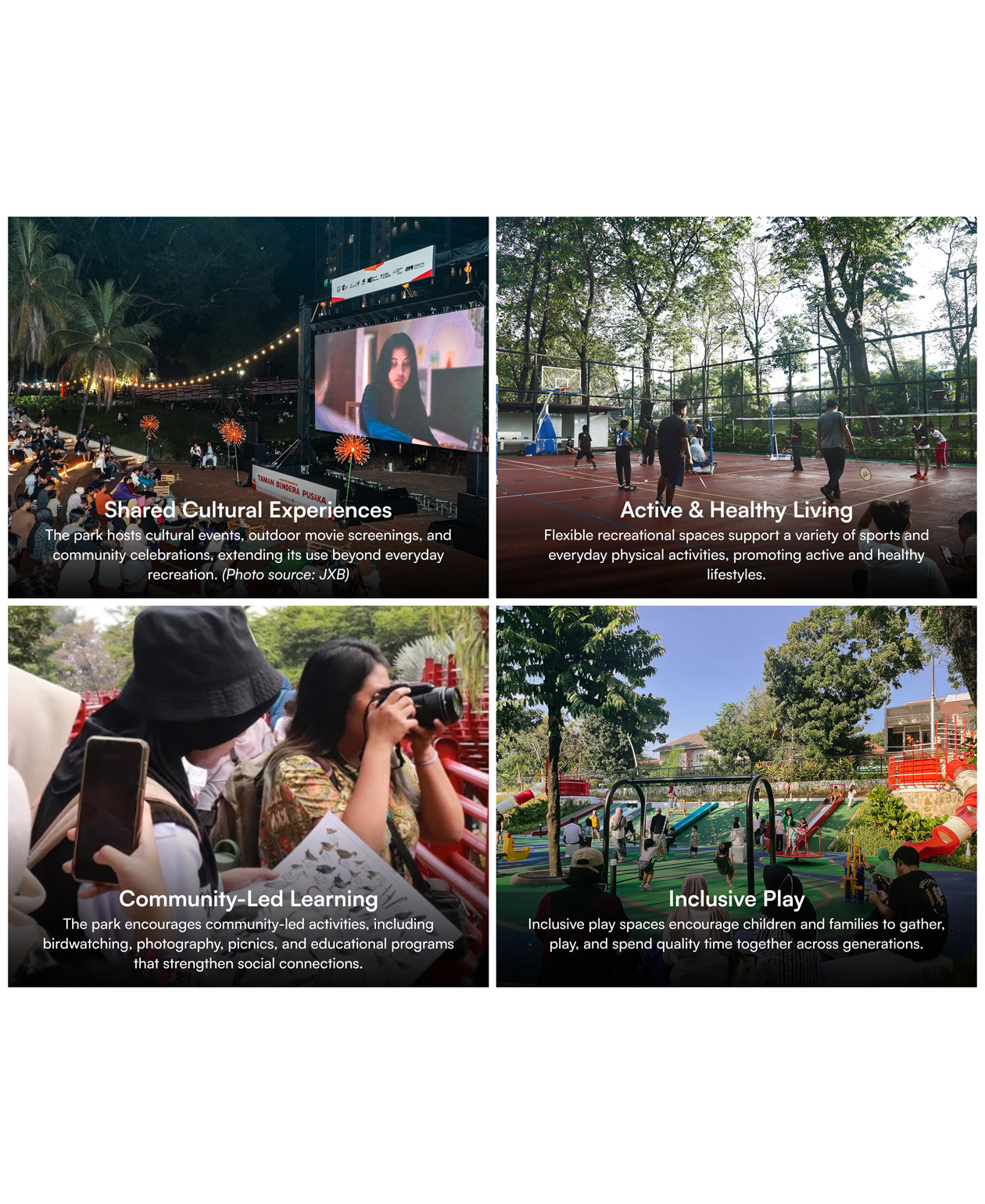
Health and well-being: By providing public facilities, green areas, and exercise spaces that anyone can freely use, citizens are enabled to enjoy physical activity and relaxation daily in the city center regardless of economic conditions.
Social interaction: By creating an environment where diverse citizens, from children to adults, can naturally meet and engage in activities, community exchange and a sense of belonging are enhanced.
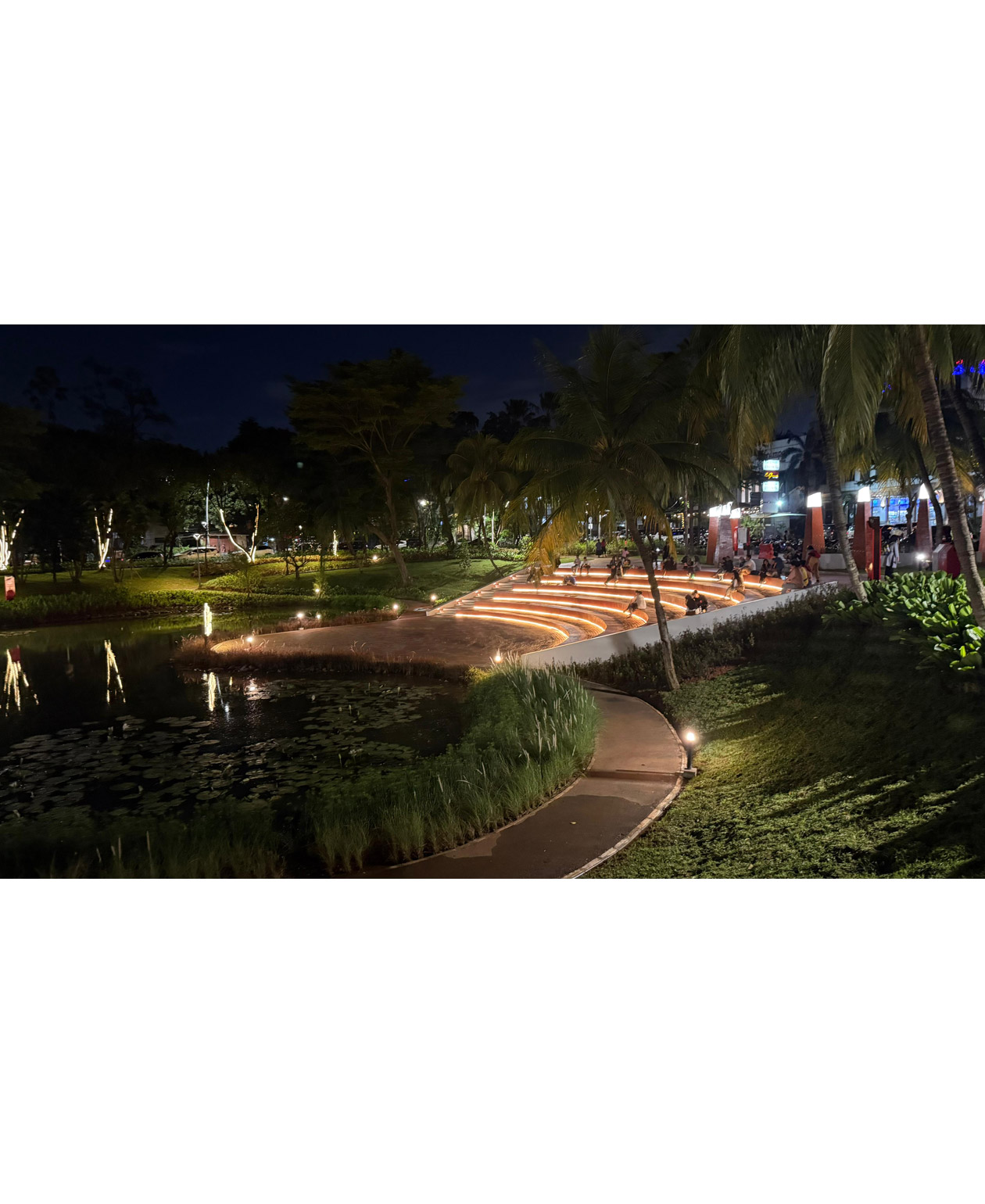
Event space: Spaces capable of hosting various public events and cultural programs were provided to ensure that not only civic activities but also creative cultural activities and local community programs take place continuously.
Bendera Pusaka Park responds collectively to various urban issues such as climate change, floods, and social isolation by connecting fragmented urban green spaces and turning existing concrete drainage facilities into ecological systems utilizing natural functions. By combining a library, amenities, and community programs with naturalized waterways, wetland ponds, and ecological spaces preserving existing trees, it demonstrates that ecosystem restoration and citizens' daily lives can coexist in a single space. In other words, it presents an integrated spatial design that simultaneously resolves water management, ecosystem restoration, mobility, leisure, culture, and community activities within a single park. This approach can be applied to cities worldwide as a model for transforming underutilized urban public spaces into public realms that anyone can use while flexibly responding to climate change.