


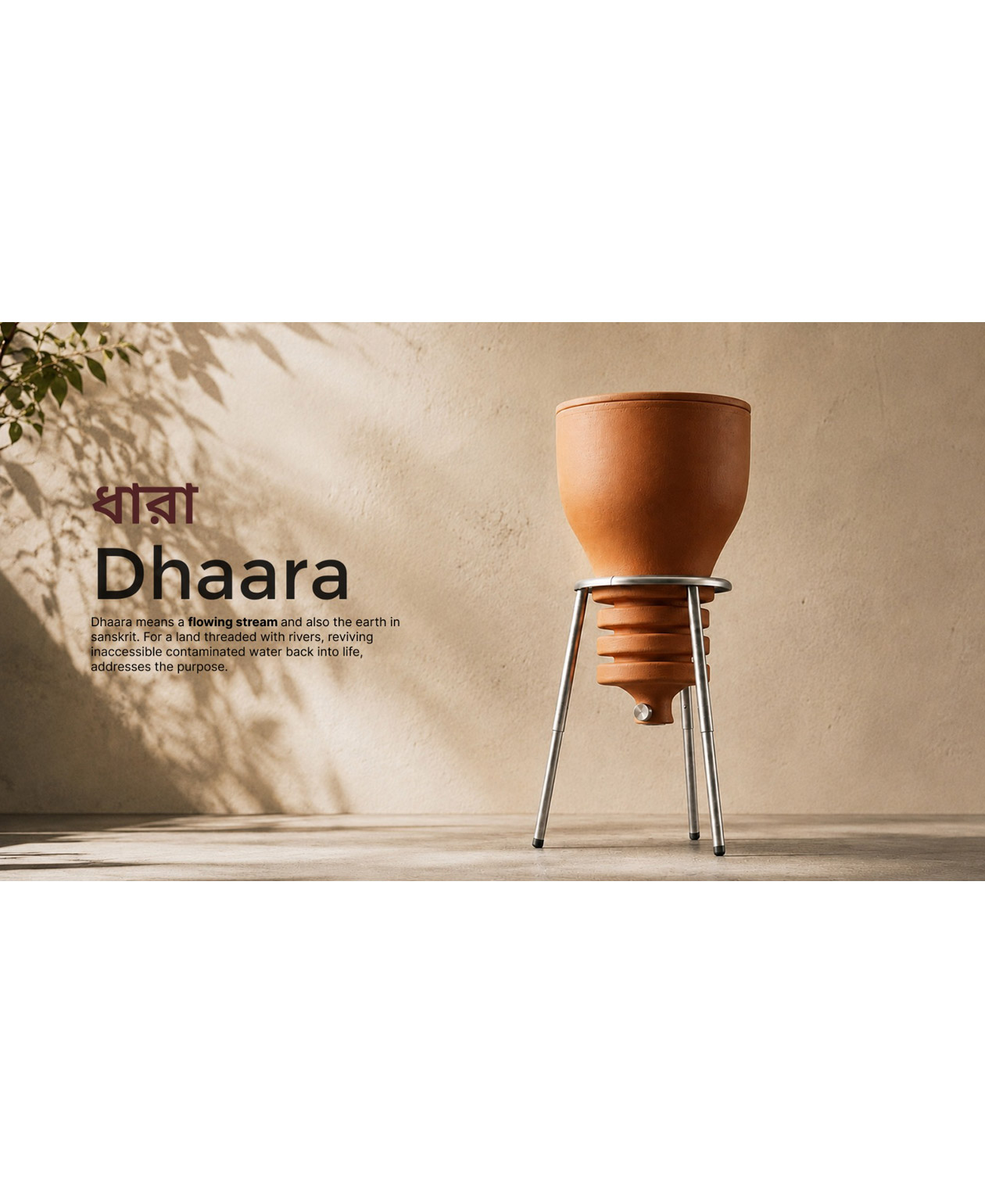
Dhaara Dhaara addresses arsenic contamination in coastal Bangladesh through a frugal, gravity-fed terracotta filter rooted in biomimicry and cultural familiarity



- Nationality
- Bangladesh
- Group
- Besign-Team Dhaara
About Project
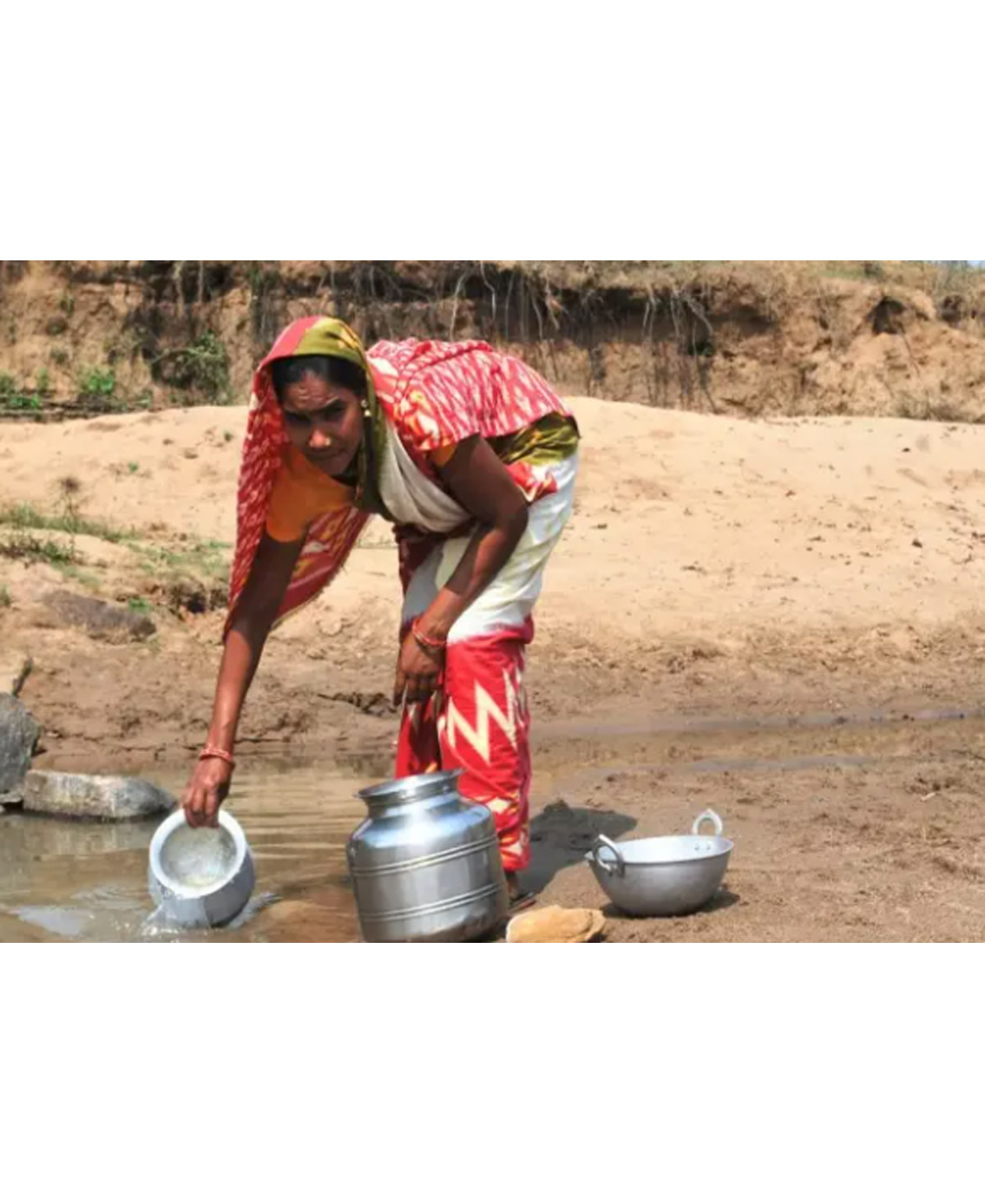
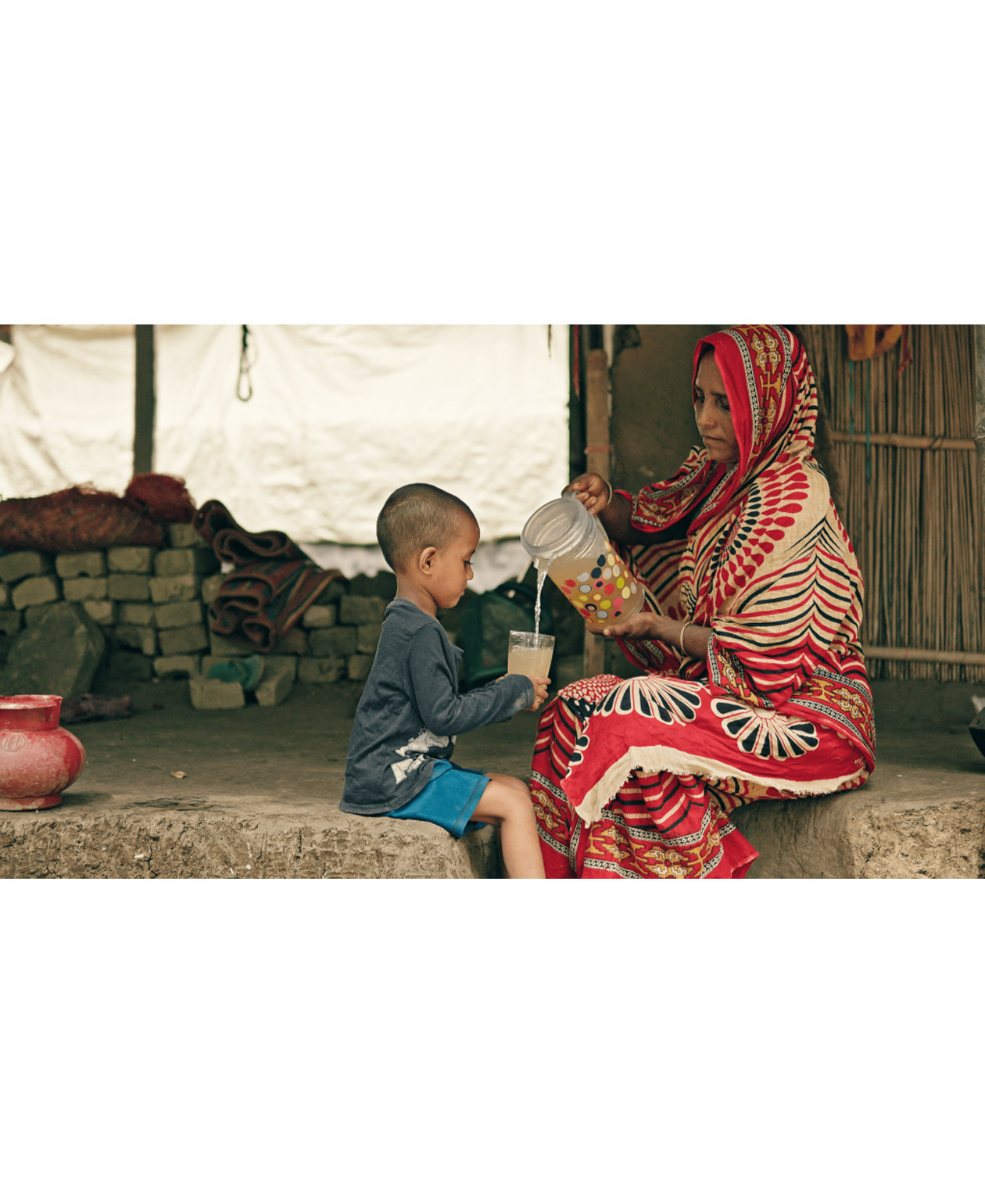
Dhaara is an unpowered household terracotta water filter developed for low-income families in the coastal region of Bangladesh, where safe drinking water is difficult to obtain. In this flood-prone region, securing clean water stably is difficult, but existing water purifiers have limitations for low-income families to use as they require electricity, specialized management, and ongoing costs. Dhaara proposes a low-cost water purification method that can be used routinely even in such environments.
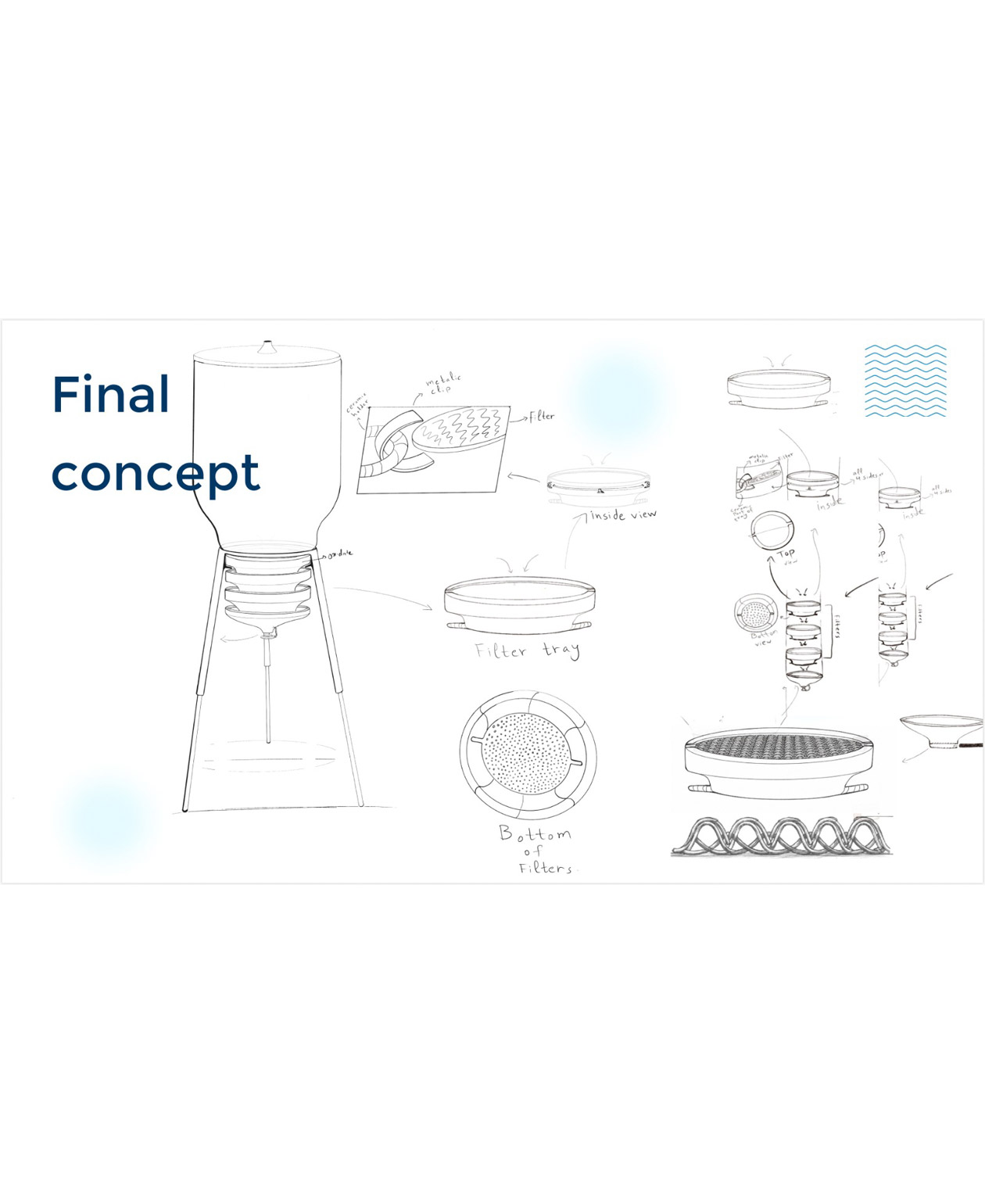
Meaning 'flowing stream' in Sanskrit, Dhaara operates by gravity without electricity and combines three biological principles and the region's traditional lifestyle into the product. It applied the particle-deflection structure of manta ray gills, the arsenic-adsorbing properties of rice husk, and the coagulant action of the 'clearing nut' (nirmali) long used in South Asia to clarify water into a single water purification system. The principle that the leaf-like gills of manta rays filter particles without being clogged by foreign substances was applied to the top filter of the water purifier. Rice husk, an abundant agricultural byproduct in Bangladesh, adsorbs arsenic in water through an iron-rich porous structure, and the clearing nut acts as a natural coagulant that settles impurities in water. By combining different natural principles and materials available in the region, it is designed to purify water without electricity or complex technology.
The shape of the product was taken from 'kolshi', a traditional clay pot routinely used in Bangladeshi households. Instead of demanding changes to existing lifestyle habits to use a new water purification method, it maintained the shape and usage method of a water storage container that is already familiar. A key feature of the design is lowering the barrier to entry for use by implementing biomimetic technology not in the form of an unfamiliar machine, but as a product familiar to the local living culture.
Dhaara is designed to be produced and managed locally. The materials used for the filter can be obtained locally, and pottery production and repair can be handled by local pottery artisans, allowing the economic value generated in the production, maintenance, and management processes to circulate within the community. It also proposes an operating structure that lowers the purchase burden for low-income groups by utilizing existing microcredit systems and reduces dependence on external support or subsidies by linking with the carbon credit system.
Environmentally, it not only operates without electricity but can also reduce carbon emissions by reducing firewood used to boil and disinfect water. It also shows new possibilities for resource utilization in that rice husk, a local agricultural byproduct, is used as a water purification material. By configuring the product's functions, materials, and production and repair methods to suit the local environment and living conditions, safe drinking water supply and environmental burden were considered together.
Dhaara aims to apply the product according to local resources and cultural conditions rather than distributing the finished product identically around the world. The application scope can be expanded to South and Southeast Asian regions such as India, Nepal, and Myanmar, where rice husk and clearing nuts are easily available and similar living cultures exist. At the same time, the biomimetic principles applied to the product have the potential to expand beyond the region. In particular, the clog-free particle separation method inspired by manta ray gills can be applied to industrial water purification devices, sediment separation, and disaster and relief water purification systems. Rather than distributing a single finished product identically to the world, it presents scalability in that the principles and biological thinking discovered in nature can be applied to various environments and uses.