


Eco&Eco A localized, off-grid infrastructure network synchronizing renewable energy with communal cold storage to break generational rural poverty cycles


- Nationality
- Philippines
- Individual
- Rey Francis Pacres
About Project
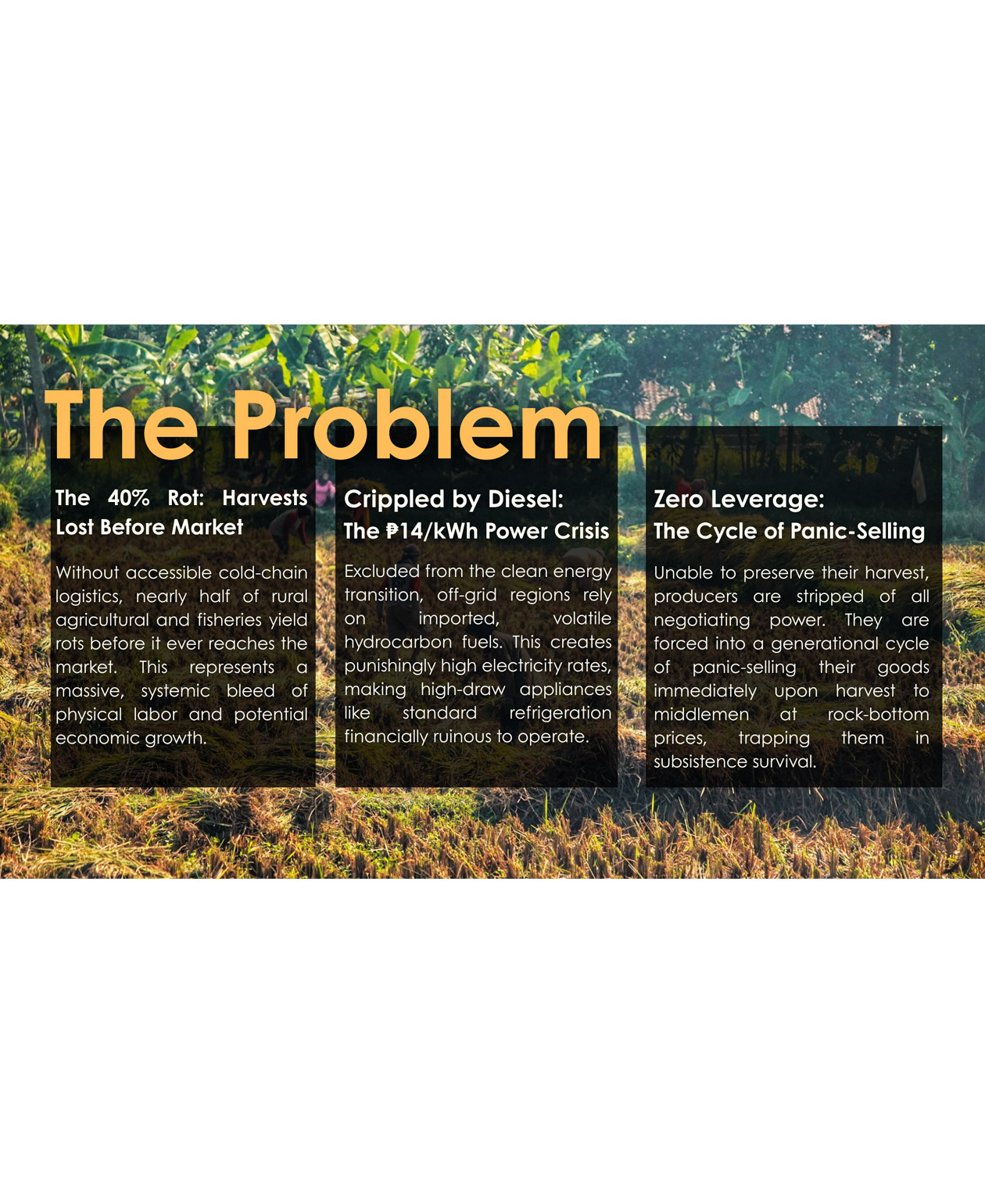
The majority of renewable energy investments target developed cities, bypassing unserved areas where these technologies are most applicable, while Eco&Eco is a decentralized energy system designed to jointly build renewable energy and production infrastructure in off-grid rural areas of the Philippines. Consequently, rural farmers and fisherfolk remain highly vulnerable to poverty and climate change, locked into a dependence on volatile hydrocarbon fuels amid exorbitant off-grid electricity costs. In the Philippines, this prevents the establishment of crucial cold chain logistics, triggering severe agricultural and fish losses that force smallholder producers into generational cycles of low-yield panic-selling.
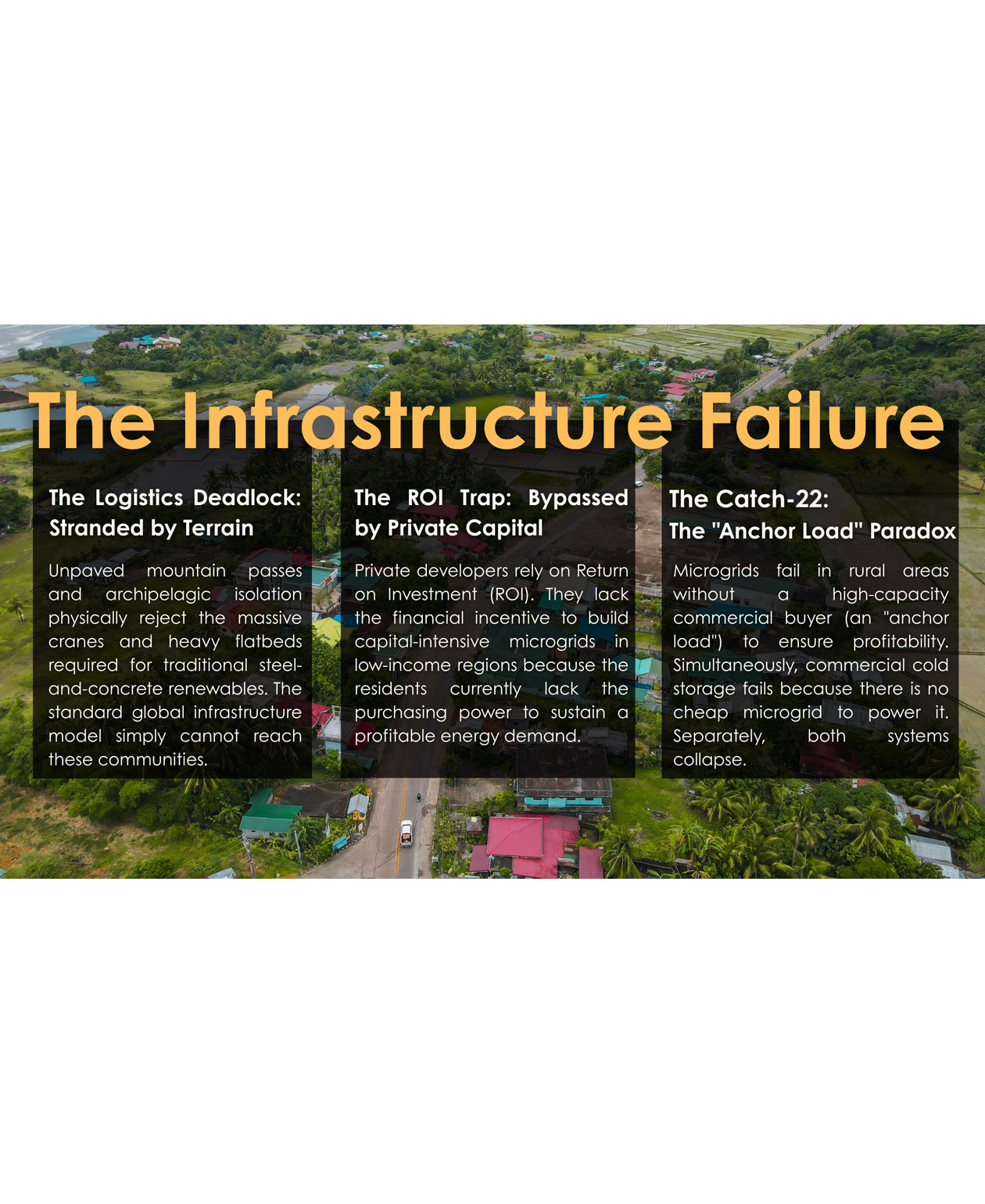
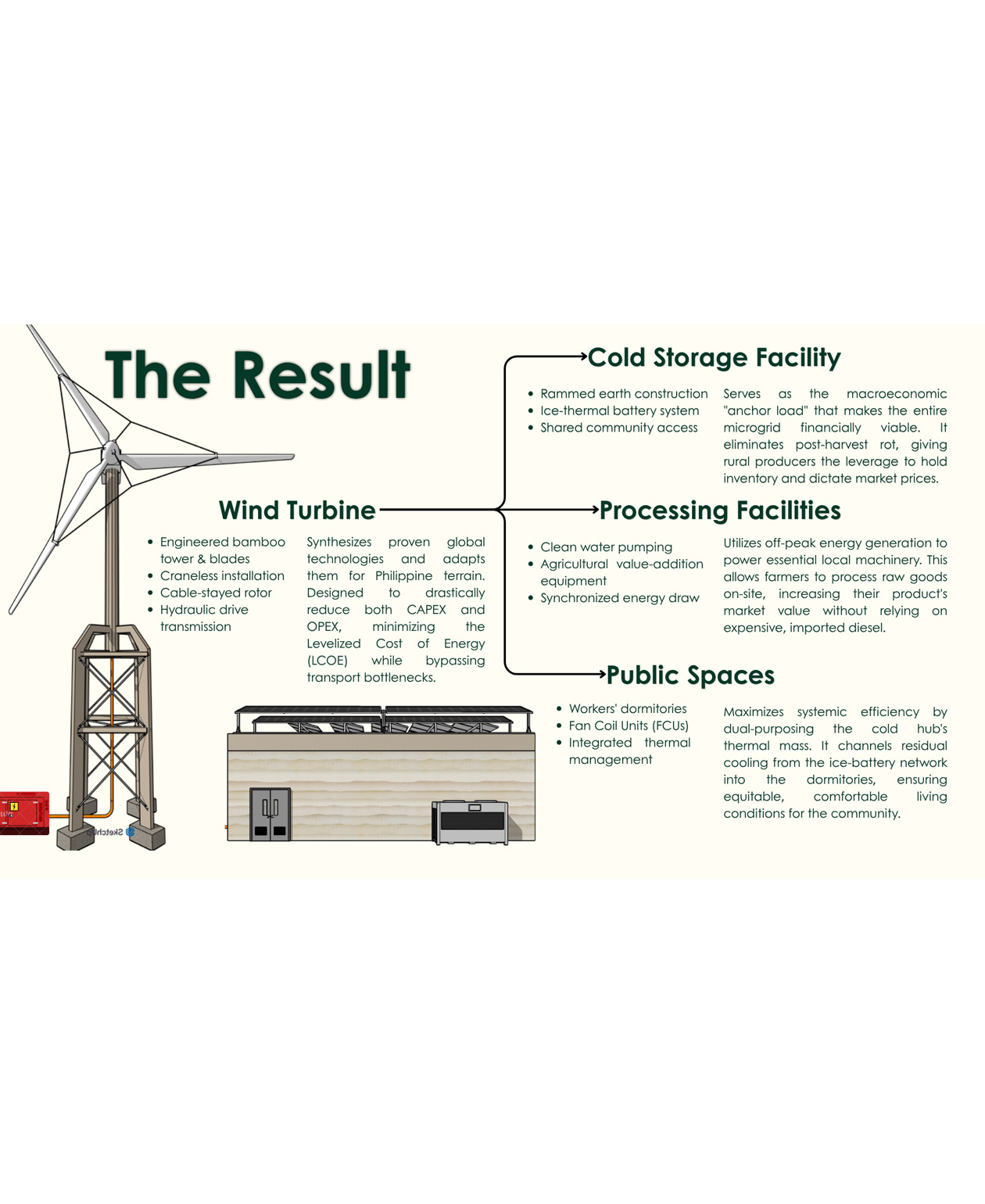
Resolving this requires overcoming physical and economic hurdles, as underdeveloped regions possess narrow, rugged roads that reject heavy machinery, while private developers lack financial incentives for low-income regions. Even if building infrastructure were physically possible, these communities are locked in a poverty trap where low energy demand fails to sustain investments from private developers. Eco&Eco approaches this not merely by supplying a single power generation facility, but by connecting energy production and local economic activities into a single, cohesive system. To achieve this, it applies the Productive Use of Renewable Energy (PURE) model. Rather than simply supplying electricity to homes, the PURE model links clean generation directly to revenue-generating community infrastructure such as cold storage hubs, water processing pumps, satellite internet, and workers' dormitories. This creates a guaranteed anchor load that secures regional energy demand and establishes an economic foundation to sustain investments in renewable energy facilities.
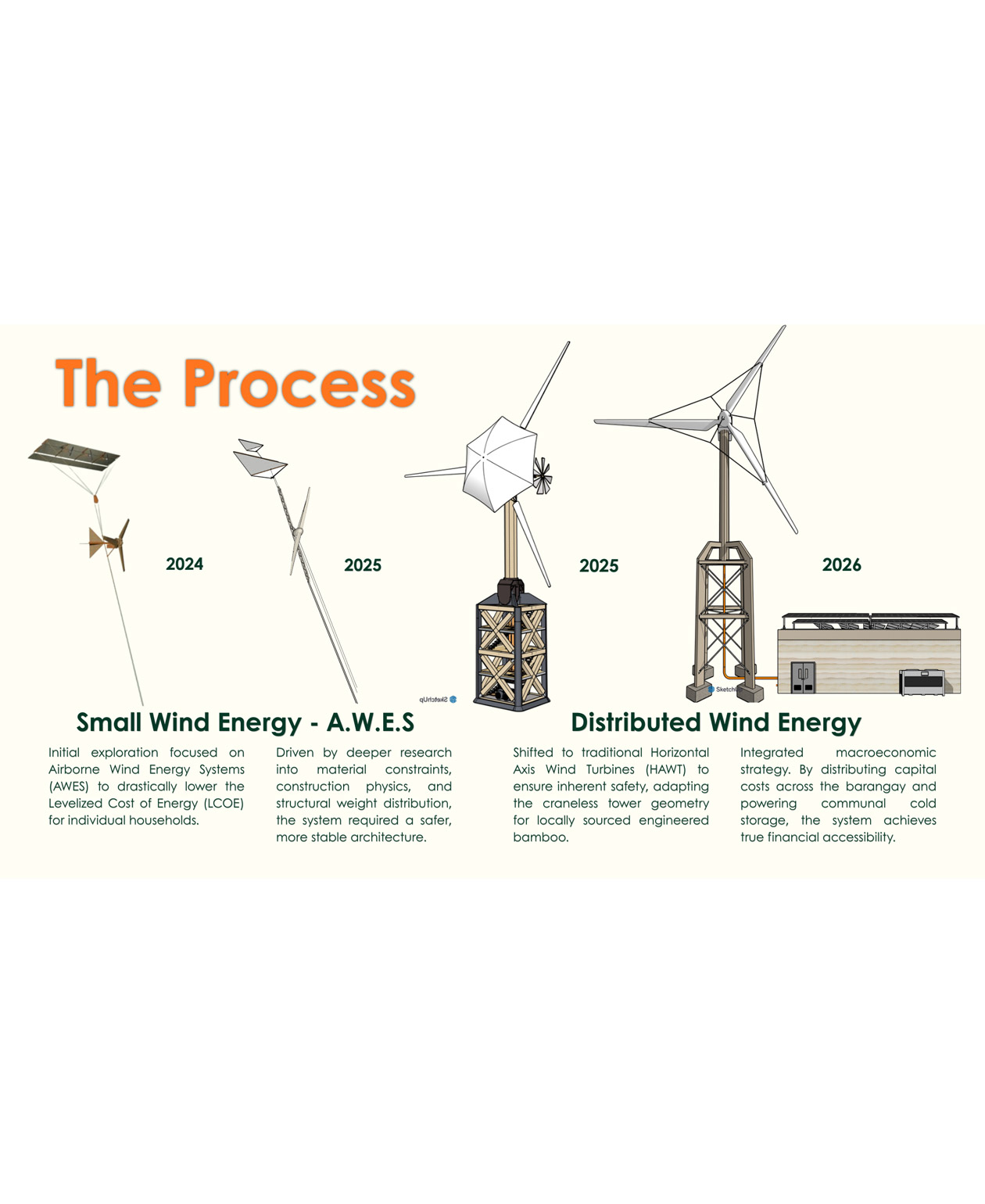
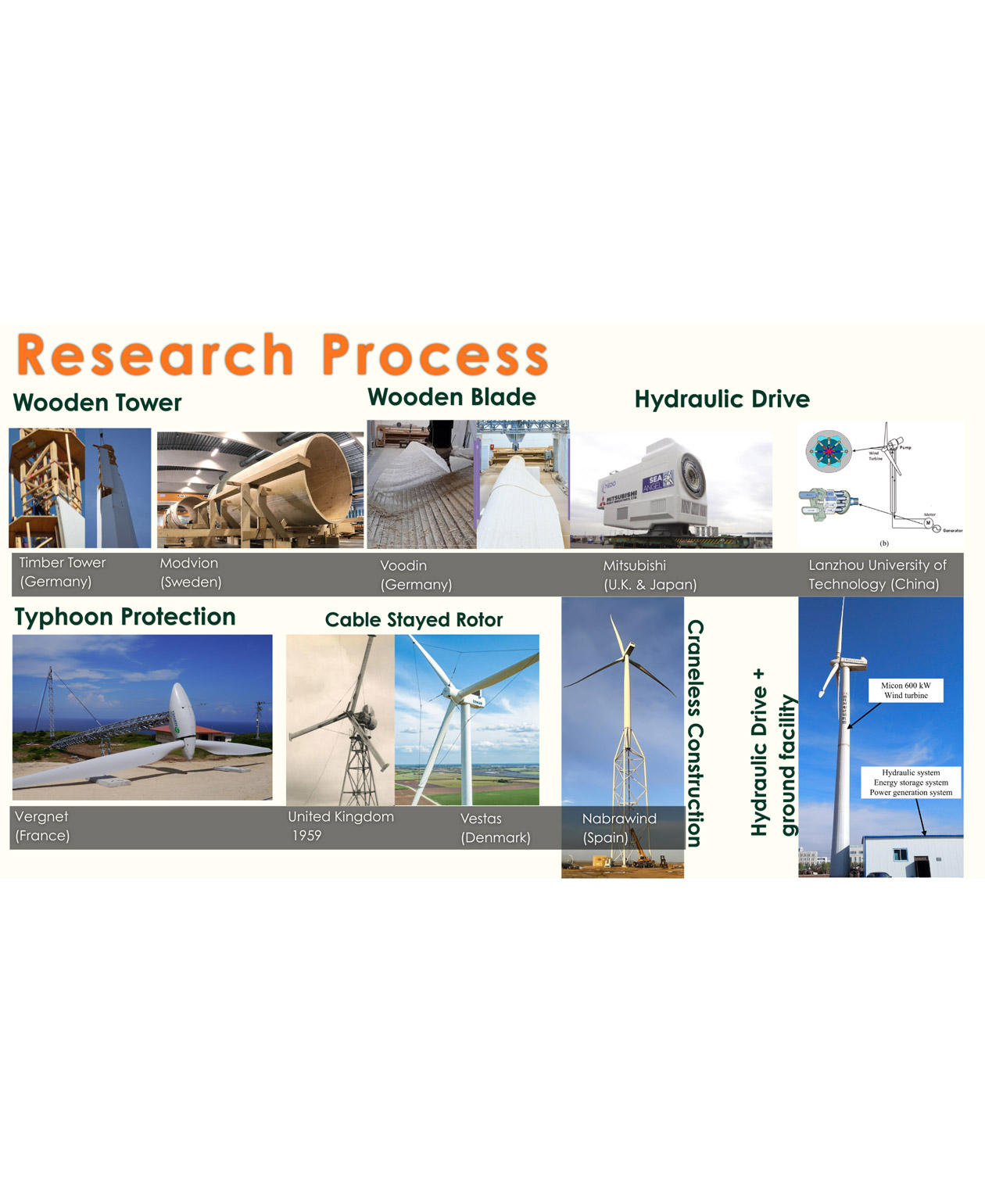
Physical installation limitations are resolved through a highly adaptable, craneless wind turbine system. Considering narrow and rugged roads where heavy machinery cannot enter, it is configured for easy transportation and installation to decentralizedly supply power to communal facilities. By making local environmental and infrastructural conditions the starting point of the design, it enables the utilization of renewable energy even in regions previously inaccessible to large-scale power facilities. The cold storage hub utilizes an innovative ice-thermal battery system that stores cooling energy using ice. Generated renewable energy makes ice to store cooling for agricultural and fish preservation, and this stored cooling can also be used to air-condition workers' dormitories via Fan Coil Units (FCUs). By allowing multiple facilities and functions to share a single energy source, limited power is utilized with high efficiency.
Such a system directly transforms vulnerable rural regions into resilient, self-sustaining production hubs, impacting the production and distribution environment of farmers and fisherfolk. Reliable access to off-grid cold storage drastically increases the shelf-life and market value of harvests, empowering producers to bypass middlemen, reduce immediate selling pressure, and flexibly choose distribution timing. Stable water supply through pumping stations and satellite internet further support local production and daily living environments, securing regional food security. By connecting energy infrastructure to the actual economic activities of local residents, Eco&Eco transcends technical solutions to take on the character of social design that builds a foundation for regional self-reliance. Furthermore, Eco&Eco is designed not as independent infrastructures, but as an interconnected ecosystem where renewable facilities and community structures enhance each other's sustainability. Facilities for storage, water supply, and communication provide essential services to residents while generating stable power demand, which in turn elevates the economic viability of the renewable energy equipment. It forms a circular structure where energy production and local productive activities mutually sustain one another.
While starting from the archipelagic and rural environment of the Philippines, Eco&Eco presents a scalable blueprint that can be applied to other regions with similar conditions. Utilizing localized materials and servitization models, it lowers initial setup costs and allows the configuration of energy and communal facilities to be adjusted according to regional scale and needs. It possesses broad applicability across ASEAN, Sub-Saharan Africa, and other investment-starved nations lacking power grids and cold chain infrastructure. What Eco&Eco proposes is not a method of solving regional problems merely by supplying renewable energy. It connects energy to the actual needs of residents—such as food storage, water, communication, and living environments—and uses this as a foundation to sustain local economic activity and renewable investments. By co-designing technology and regional production structures, it presents a self-reliant local energy model enabling electricity-deprived rural areas to produce and live more stably.