


For a Safer Quảng Trị A digital platform project navigating unexploded ordnance education challenges to protect community safety and livelihoods in Quảng Trị, Vietnam


- Nationality
- Viet Nam
- Group
- Behalf
About Project
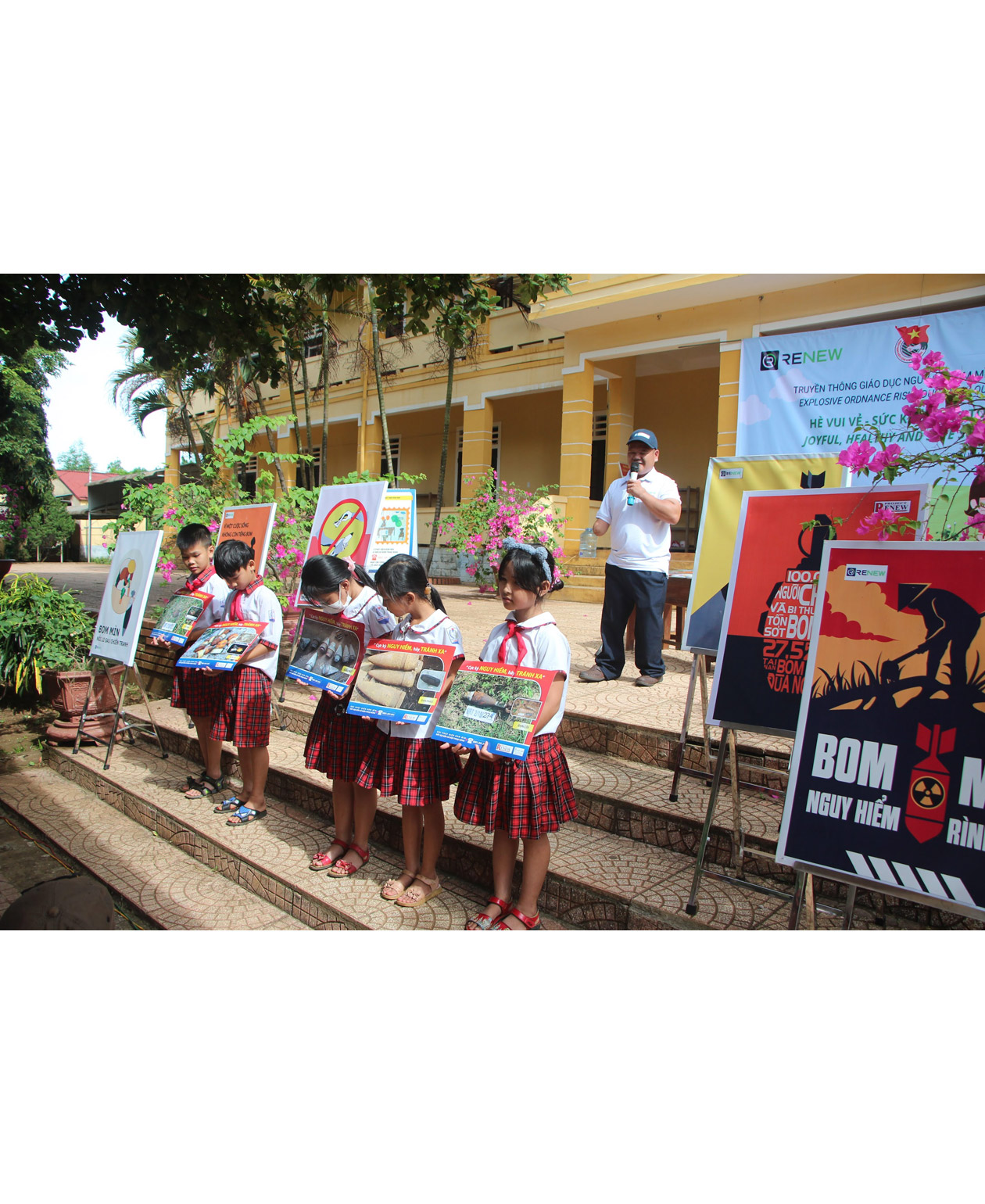
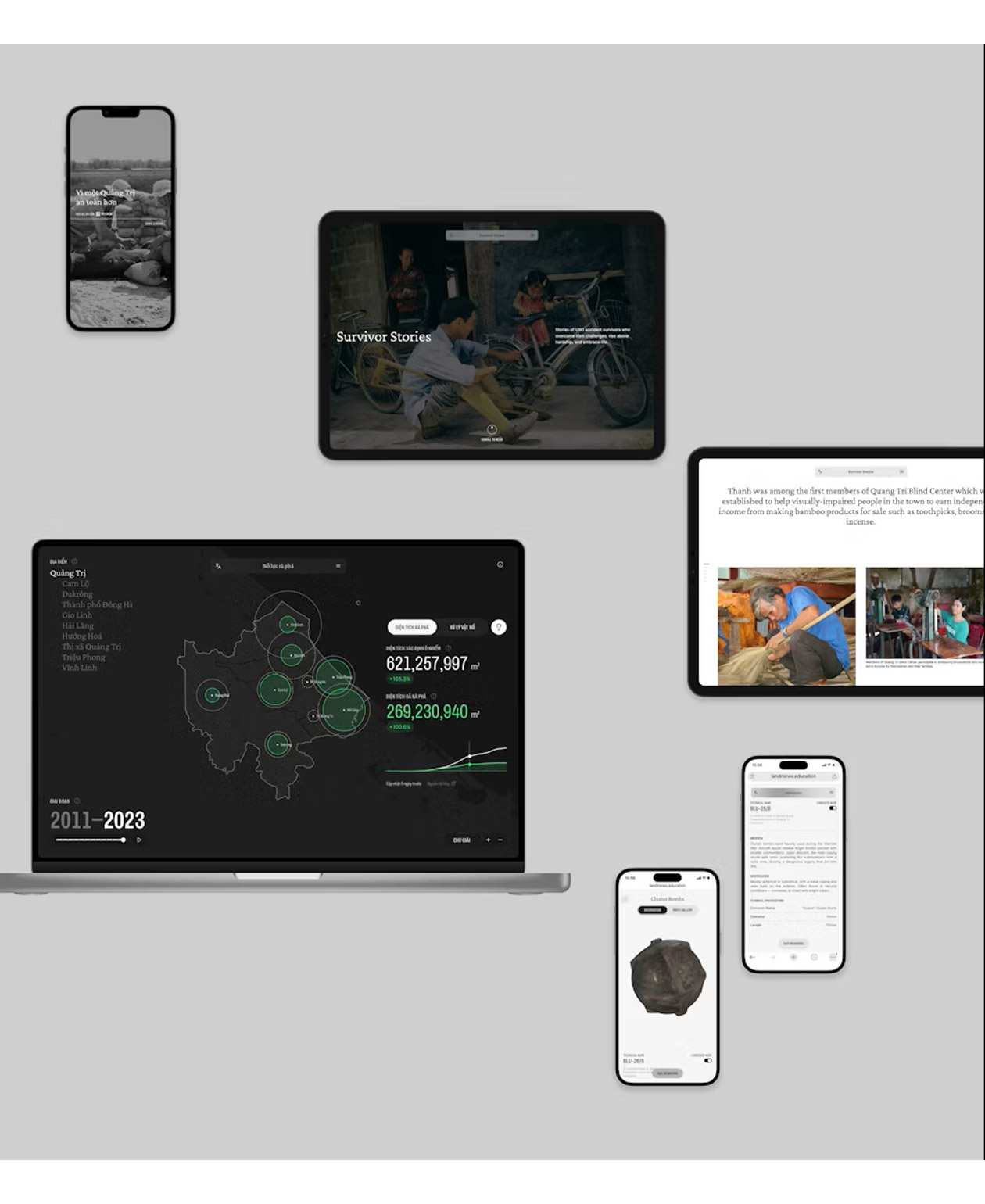
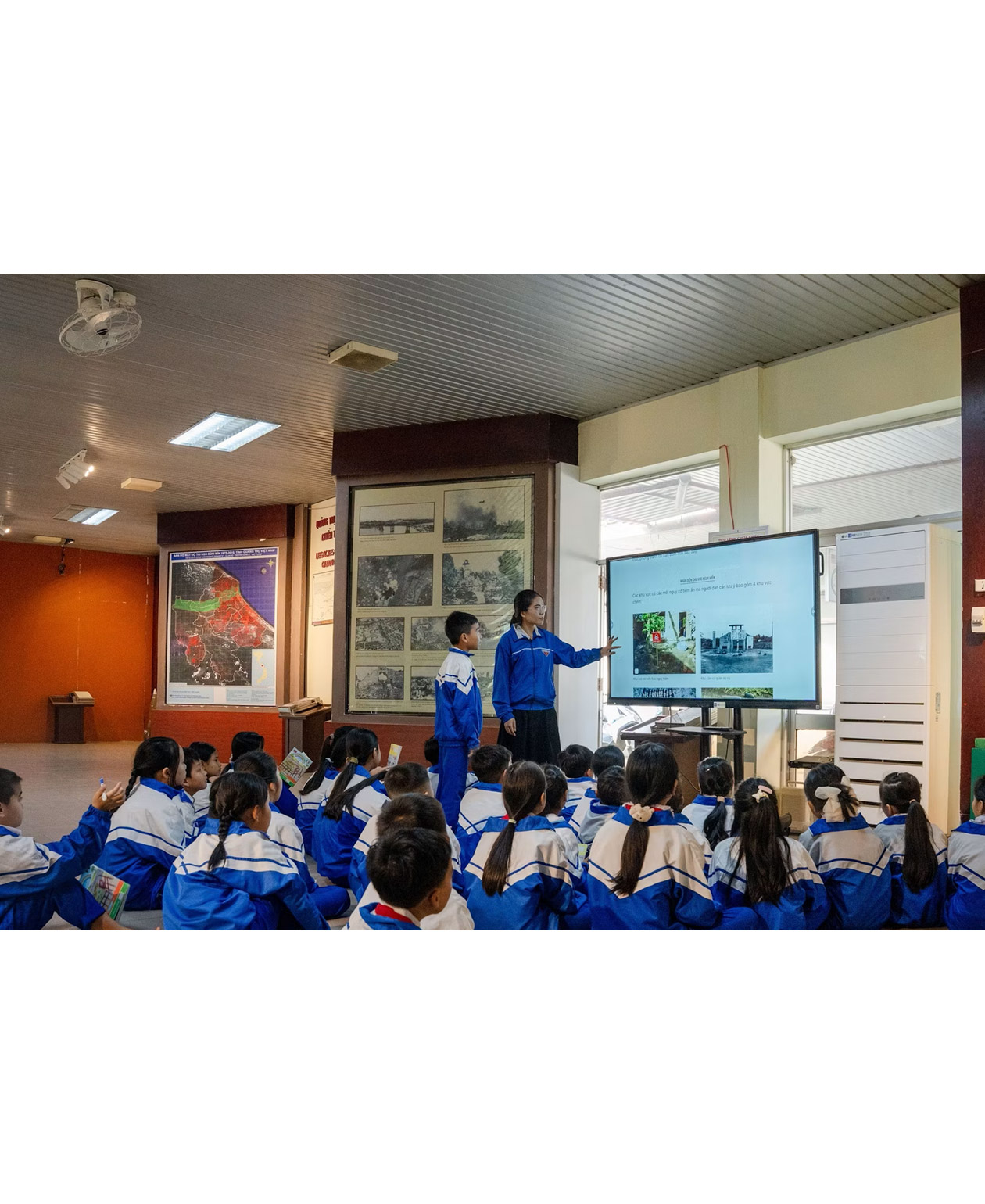
“For a Safer Quảng Trị” is a digital public education project created with Project RENEW to raise awareness of the risks of unexploded ordnance (UXO) remaining in Quảng Trị Province, Vietnam, and to help guide safe behaviors.
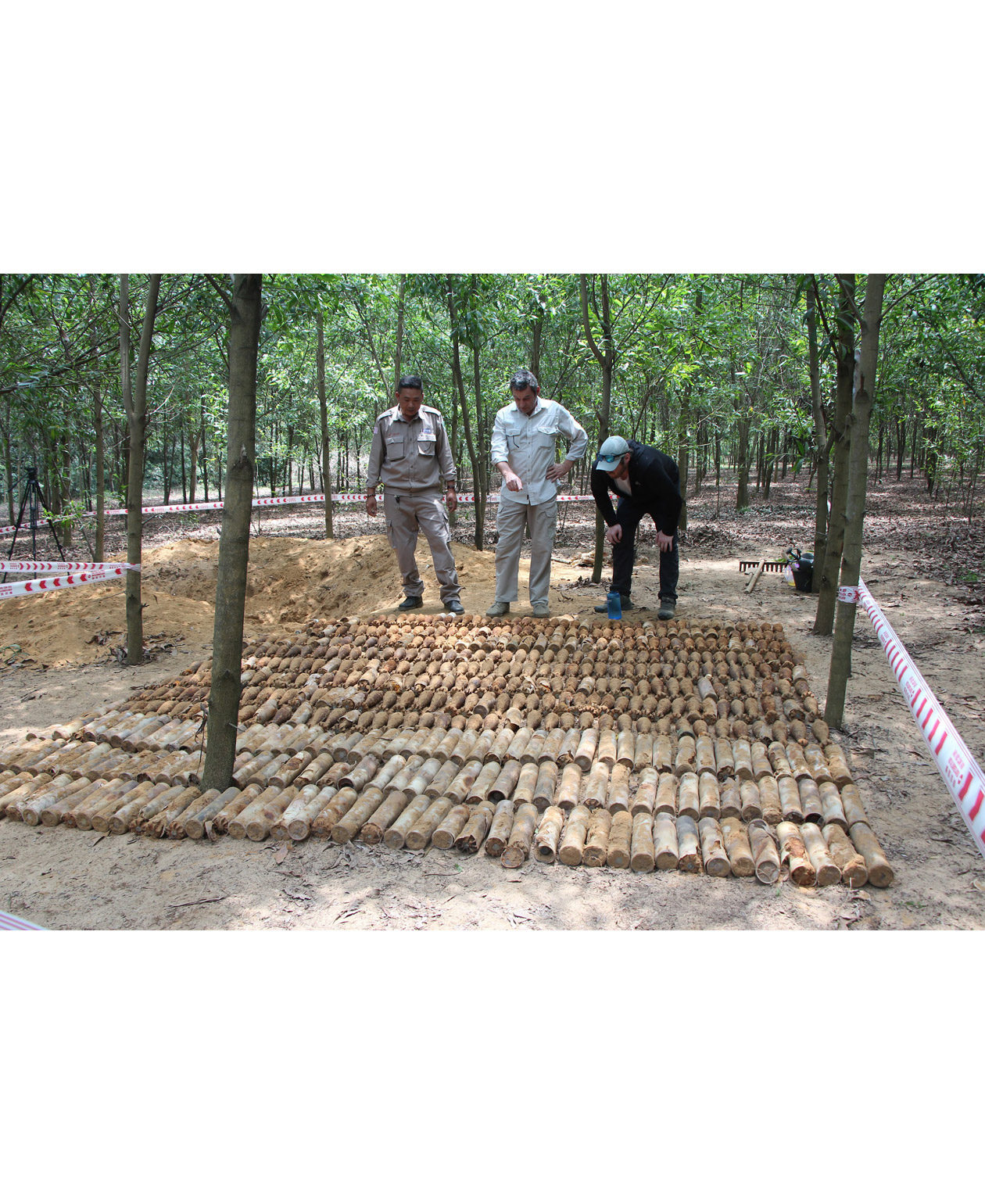
Vietnam marked 50 years since the end of the war in 2025, but the impact of the war still continues in Quảng Trị Province. Dividing the North and South during the Vietnam War, Quảng Trị Province was one of the most heavily bombed areas in the world. Since 1975, more than 100,000 people have lost their lives or suffered severe injuries due to unexploded ordnance.
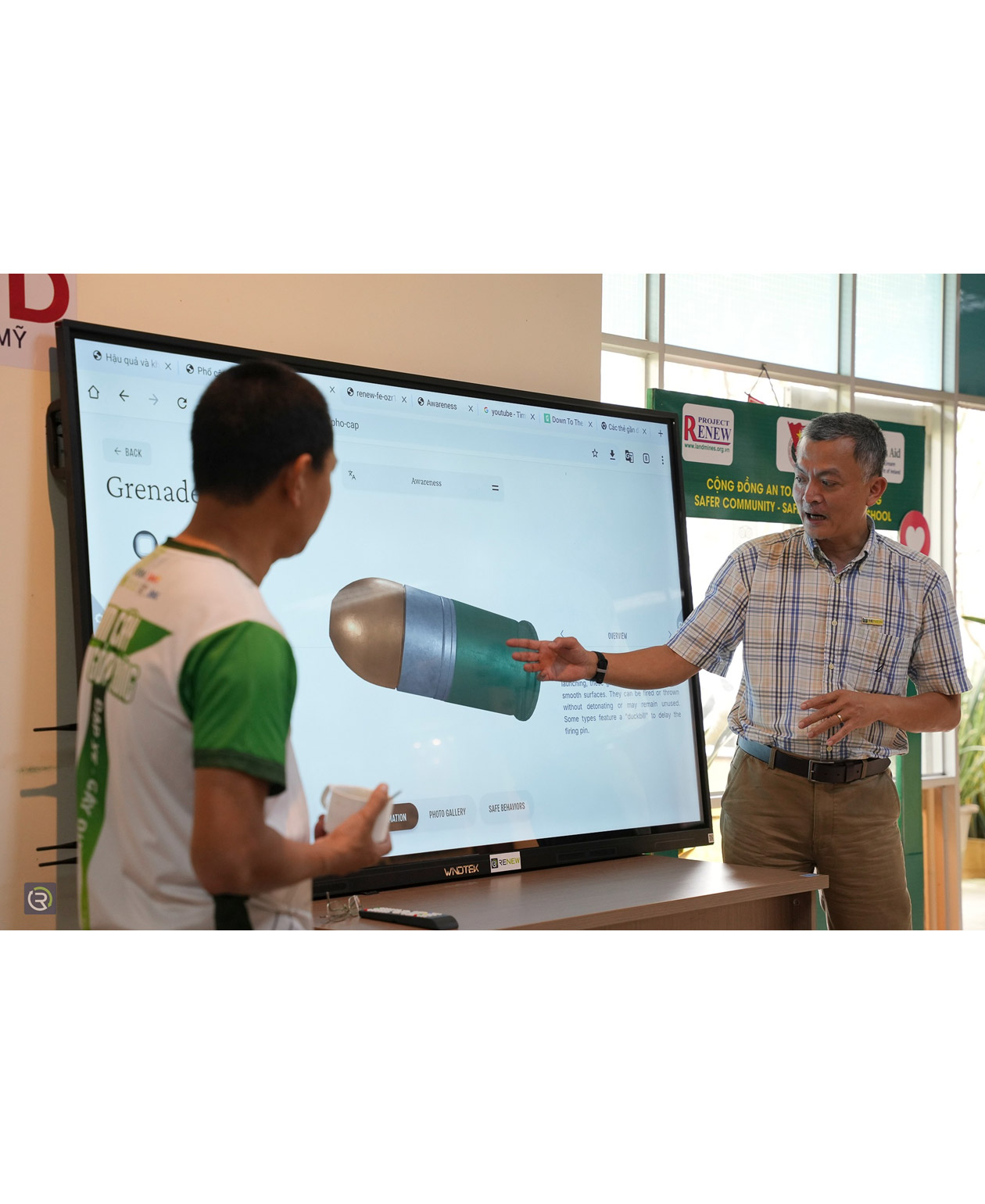
This project delivers the realities of UXO clearance and risk education to more people through digital technology. While providing practical safety information to local residents, it informs people inside and outside Vietnam about the UXO problem that persists long after the war. In particular, it aims to show the long-term impacts that weapons like cluster bombs leave on communities and the environment, and to broaden social interest in the remnants of war and peace. It is a project that focuses on the role of social design in transforming complex and heavy social issues into accessible information and experiences that people can understand.
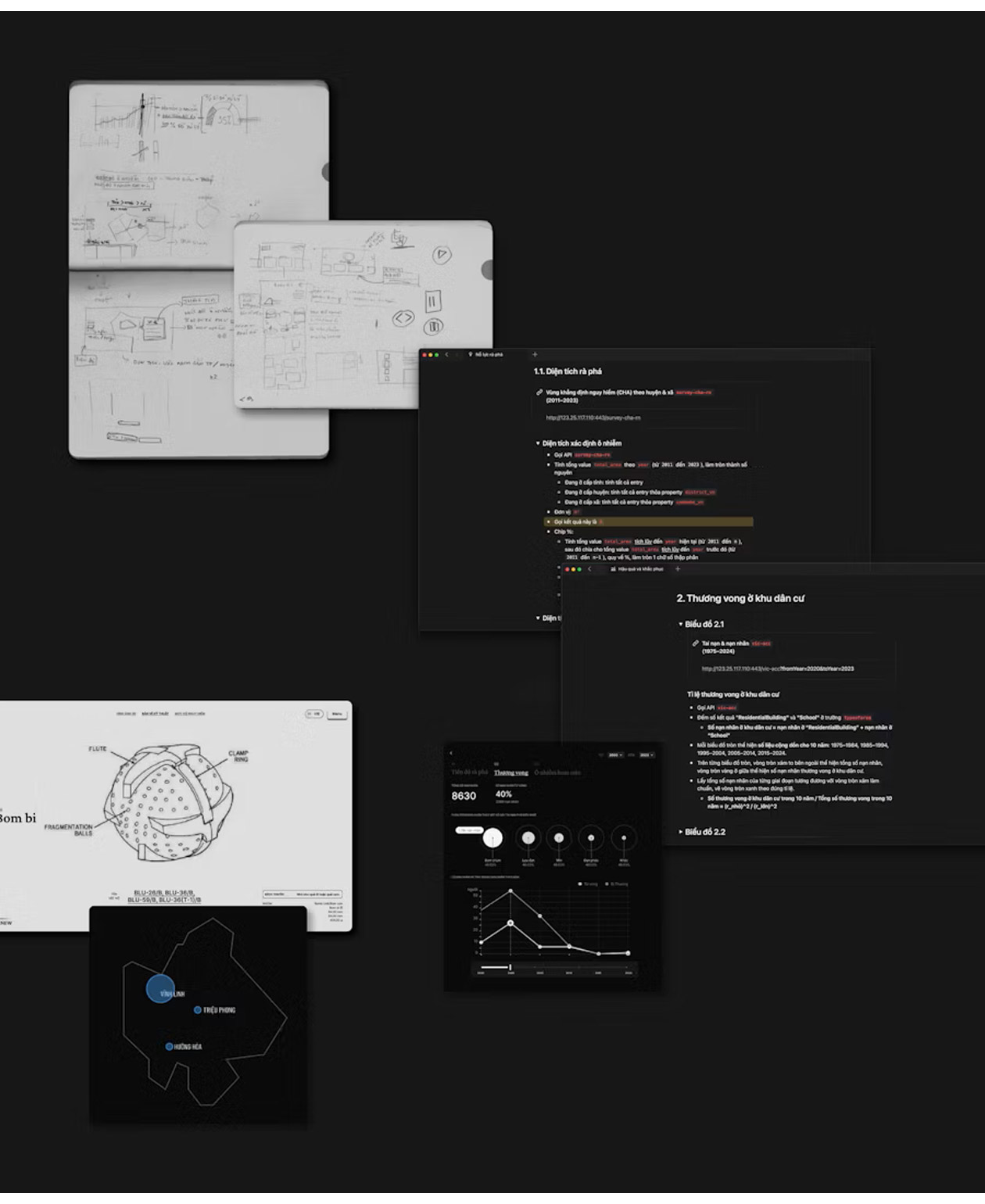
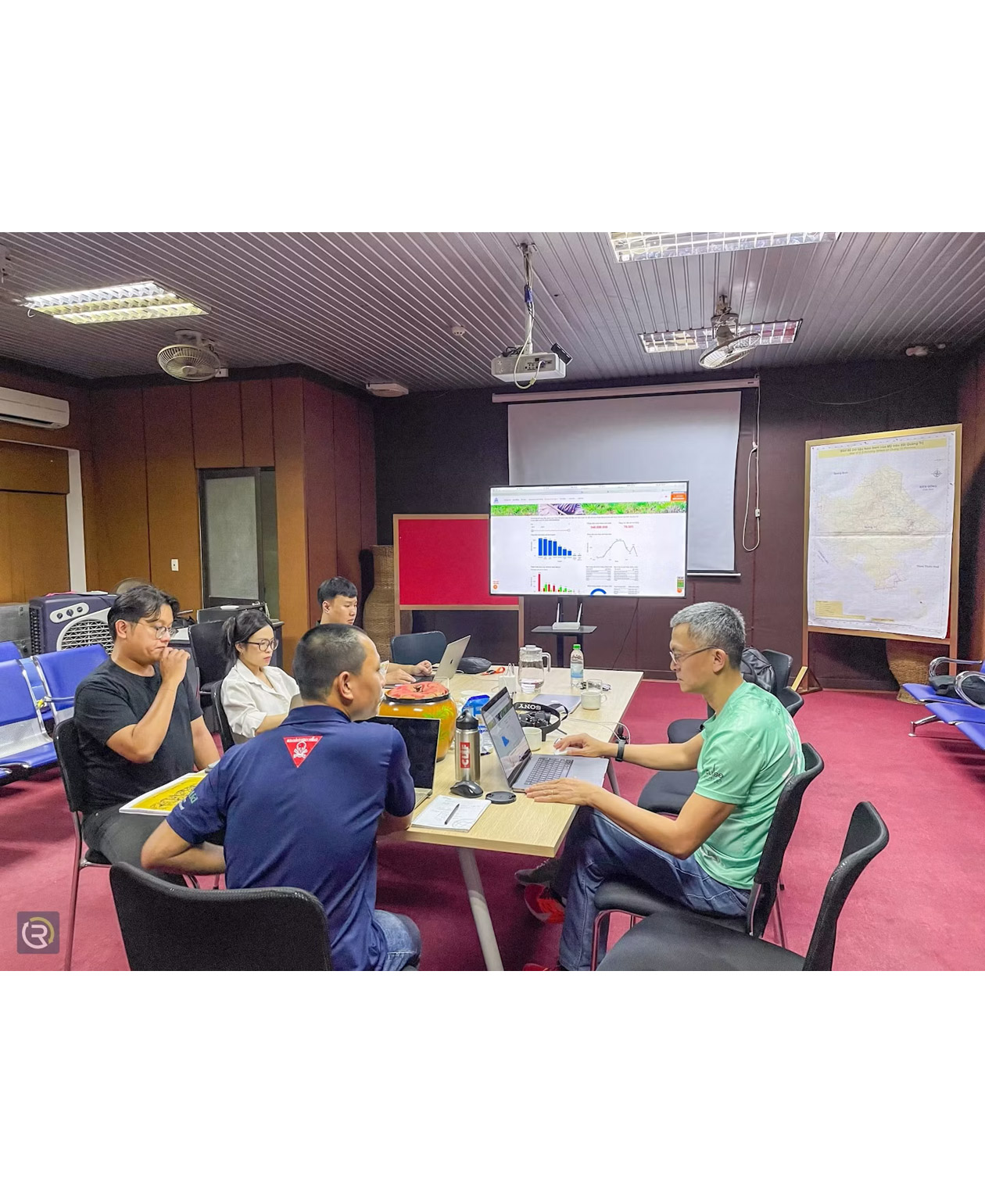
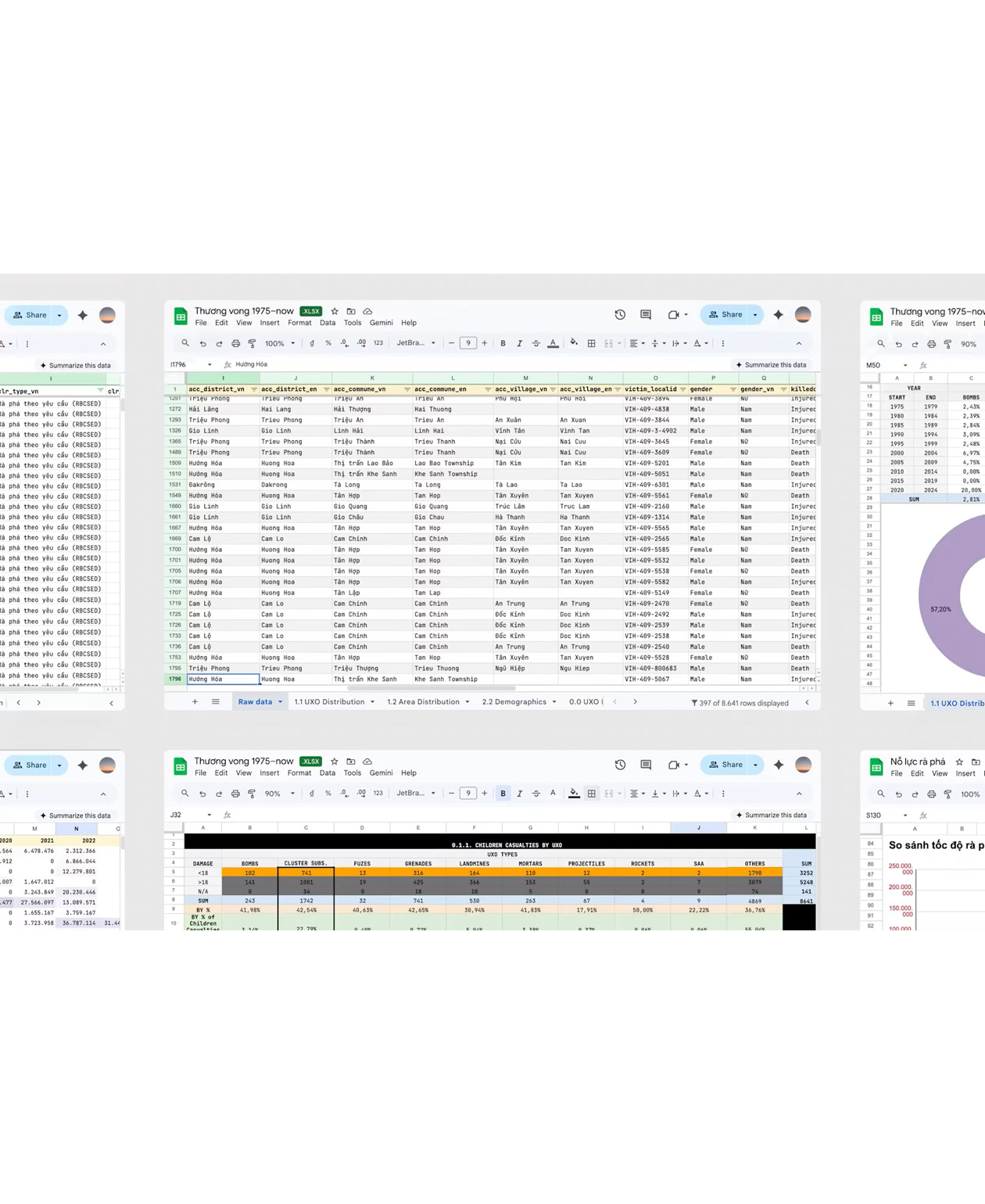
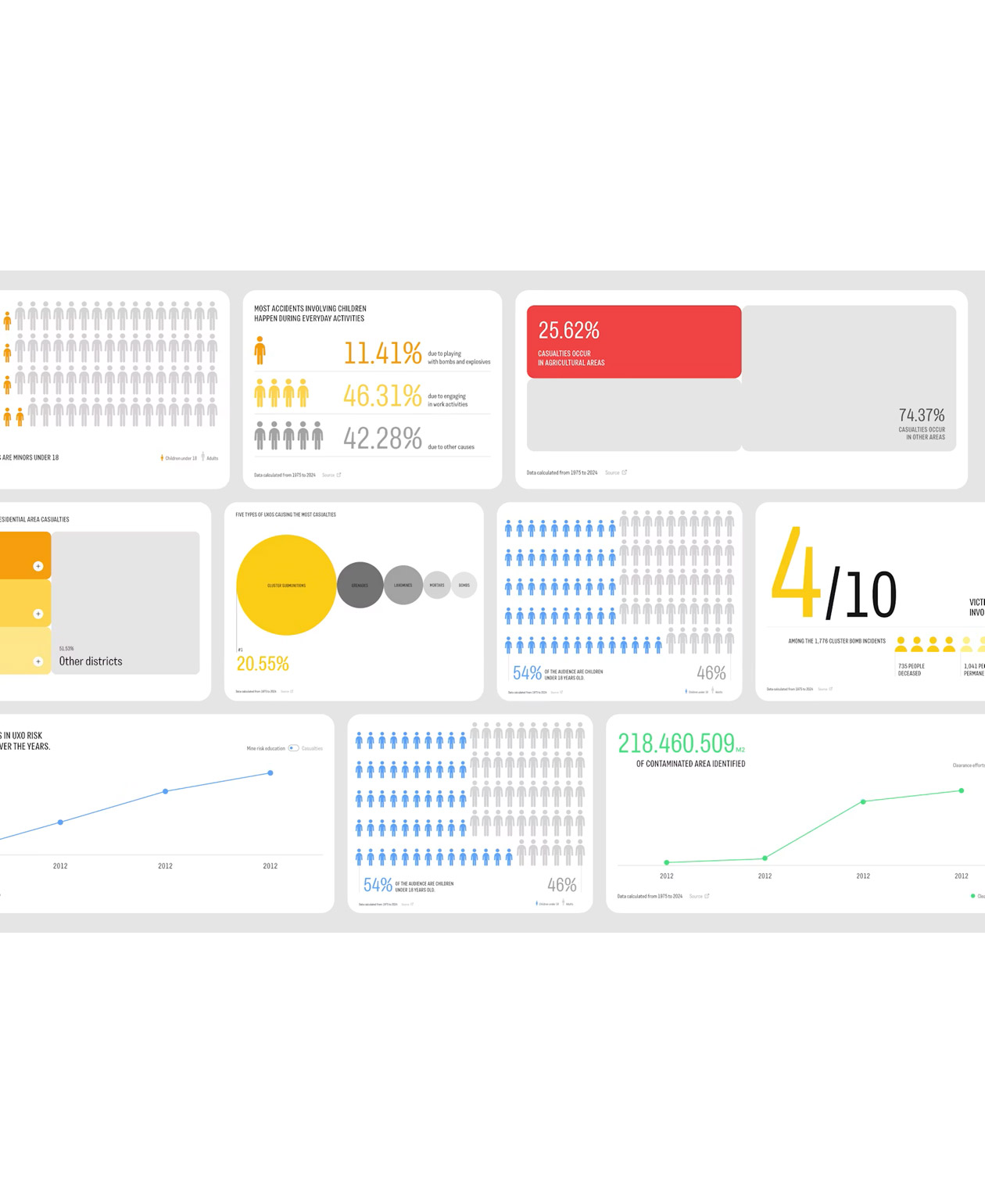
To this end, vast records and data related to UXO accumulated since 1975 were analyzed and reconstructed into data visualization, content, and UX/UI design. Instead of simply listing complex statistics and records, it systematically structured them according to the nature of the information and the user's browsing flow, transforming them into a digital experience where people can easily find and understand the information they need. By making data visually understandable and presenting actual survivors' stories together, numbers and personal experiences are connected within a single information structure.
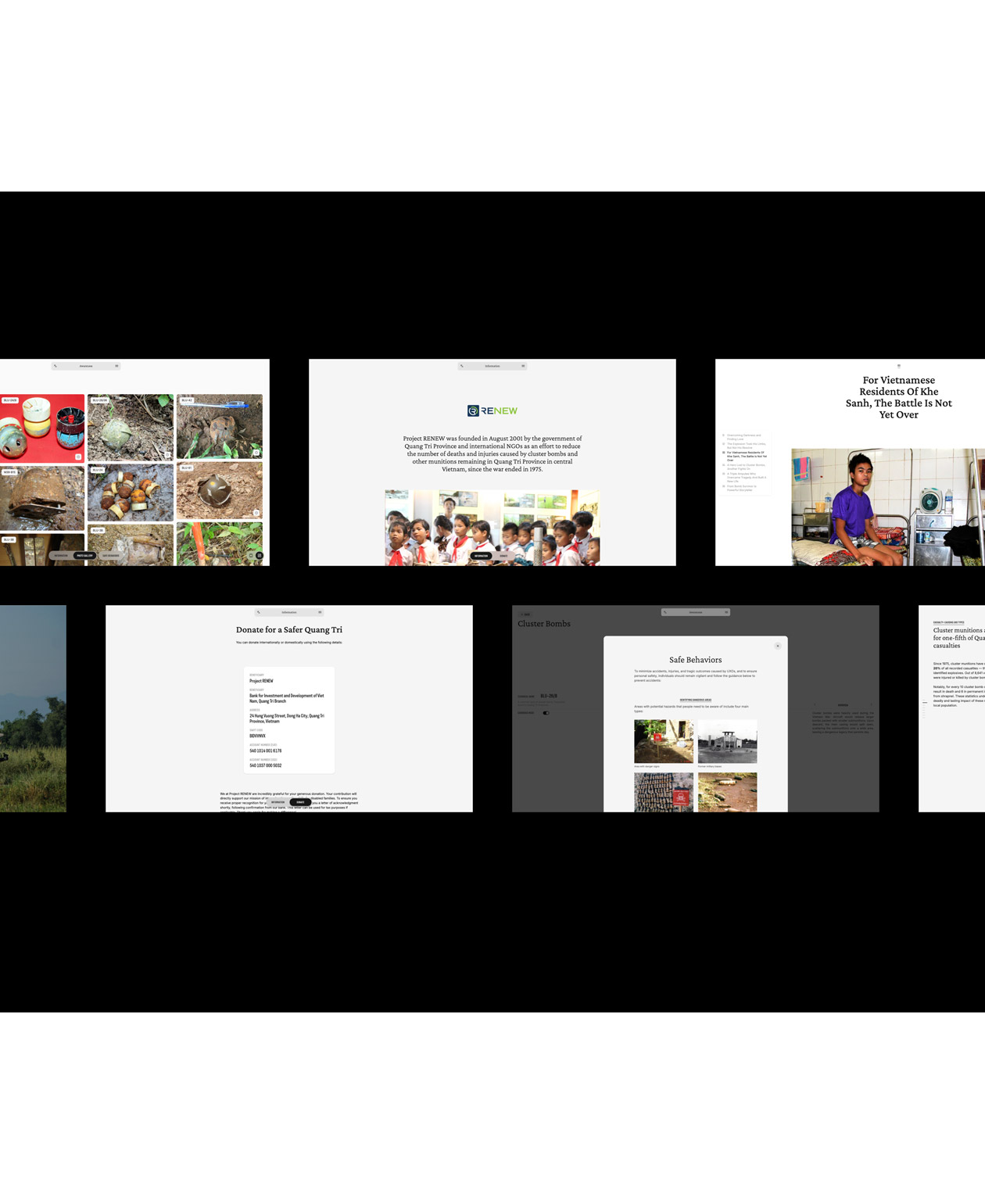
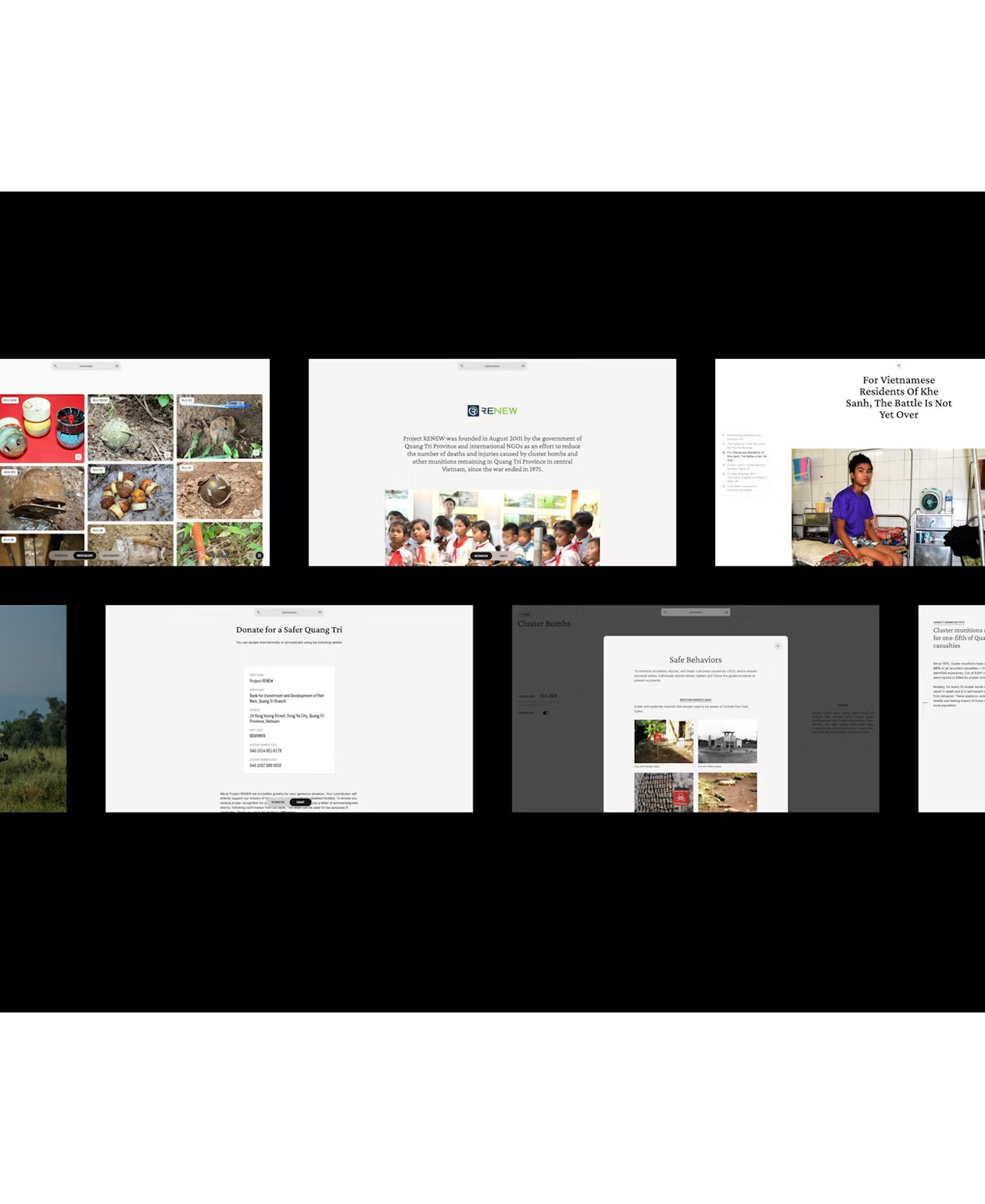
A key feature is that it expanded conventional UXO education beyond a warning campaign into a digital public education platform. Through contents such as “Demining Progress,” “Casualties,” “Awareness,” and “Survivor Stories,” it displays decades of accumulated materials alongside real people's experiences. Drawing inspiration from digital museum experience methods, rather than delivering heavy subjects unilaterally, it is structured so that users can actively explore and understand information themselves. Instead of users passively accepting warning messages, the information delivery method is designed so they can examine materials on their own and comprehend the scale and impact of the problem.
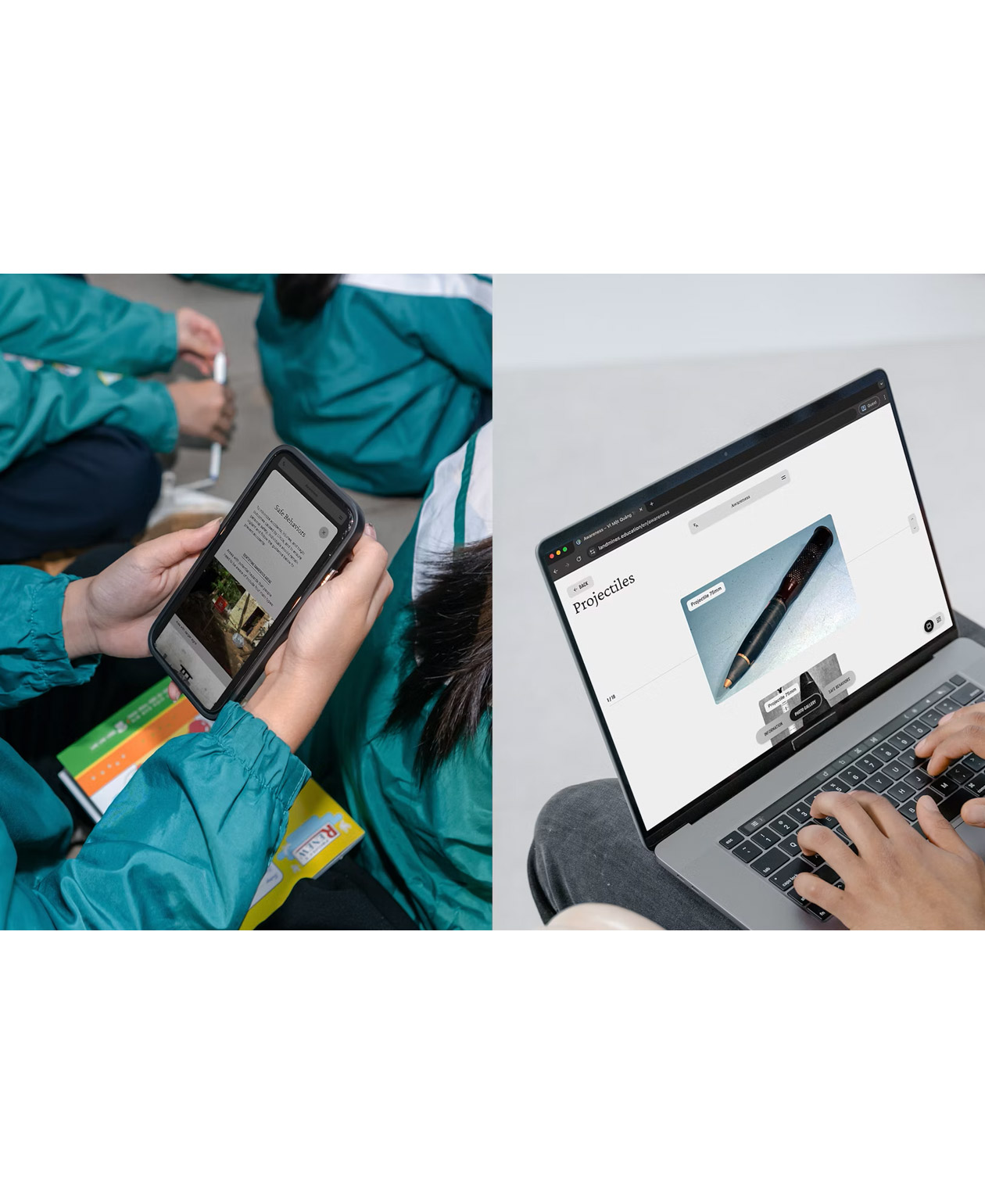
Residents living amidst UXO risks can understand what dangers remain in the land where they live and obtain necessary information to recognize hazards and act safely when discovering UXO. At the same time, it shows global users the realities that communities experience even after the war ends, conveying that continuous attention and responsibility for these issues are necessary for future generations. Enhancing accessibility to information leads to a public role that helps not only individual safety but also community risk awareness and response.
As Chi Mai notes in Disegno Journal, this project does not claim to fix the wounds left by long military conflict and colonialism, but rather offers an orientation to understand the past, read the ground one stands on, and move forward.
This project is part of design activities that transform conventional information-delivery methods dealing with post-war issues into digital experiences to guide wider understanding and engagement. By connecting records, data, and personal experiences in ways users can easily understand, it demonstrates that design can serve as an information-based public tool that communicates social risks and supports safe behaviors. Together with Project RENEW, we plan to secure additional support to broaden international attention on crises continuing long after the war and expand the project.
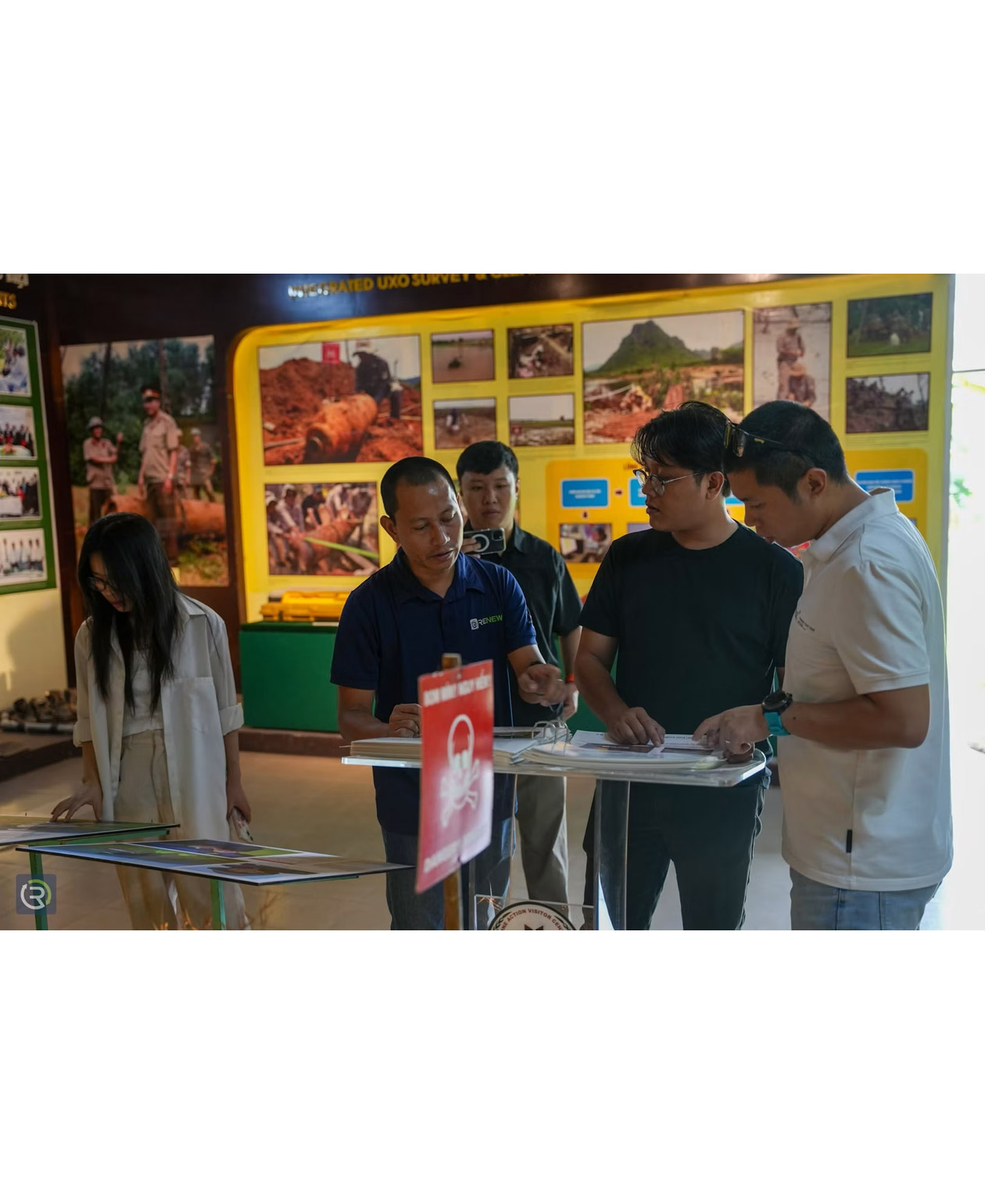
In the future, we plan to additionally develop various digital contents, offline installations, and educational programs, and long-termly connect current digital experiences with actual physical spaces and community programs. Through this, the goal is to expand into a museum-like space where records and educational contents accumulated online can be directly viewed and experienced. By linking information and experiences built on digital platforms to actual spaces and education, we aim to develop a public educational system that local communities can continuously utilize.