


Happy Table — Dementia Prevention through Digital Play A multiplayer smart table project turning dementia prevention into play where seniors train cognition together through joyful, touch-based games


- Nationality
- Korea, Republic of
- Group
- SPRINGSOFT Co., Ltd.
About Project
Happy Table — Dementia Prevention through Digital Play is a senior-customized smart table developed so that older adults can experience cognitive activities as play rather than study or training.
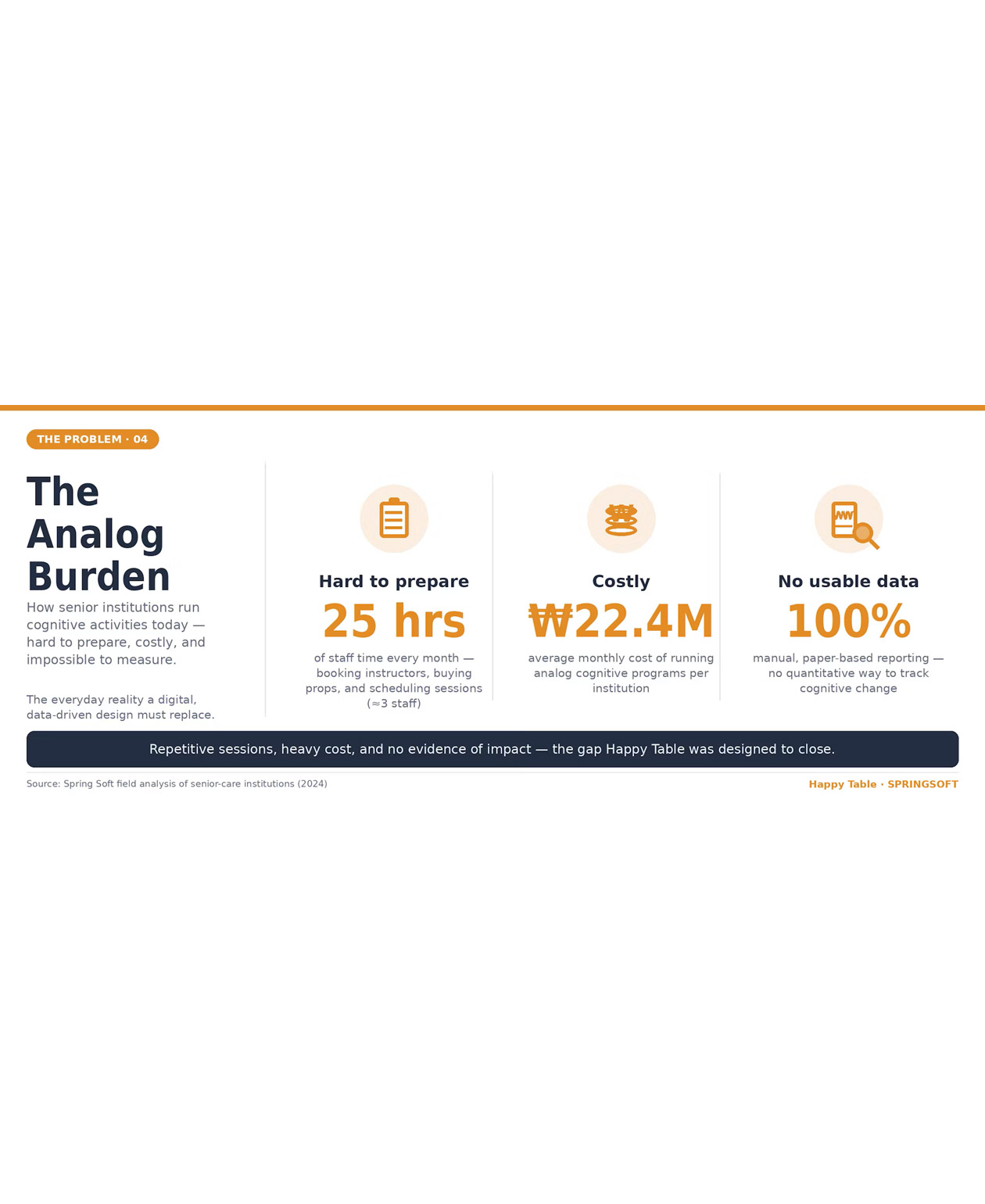
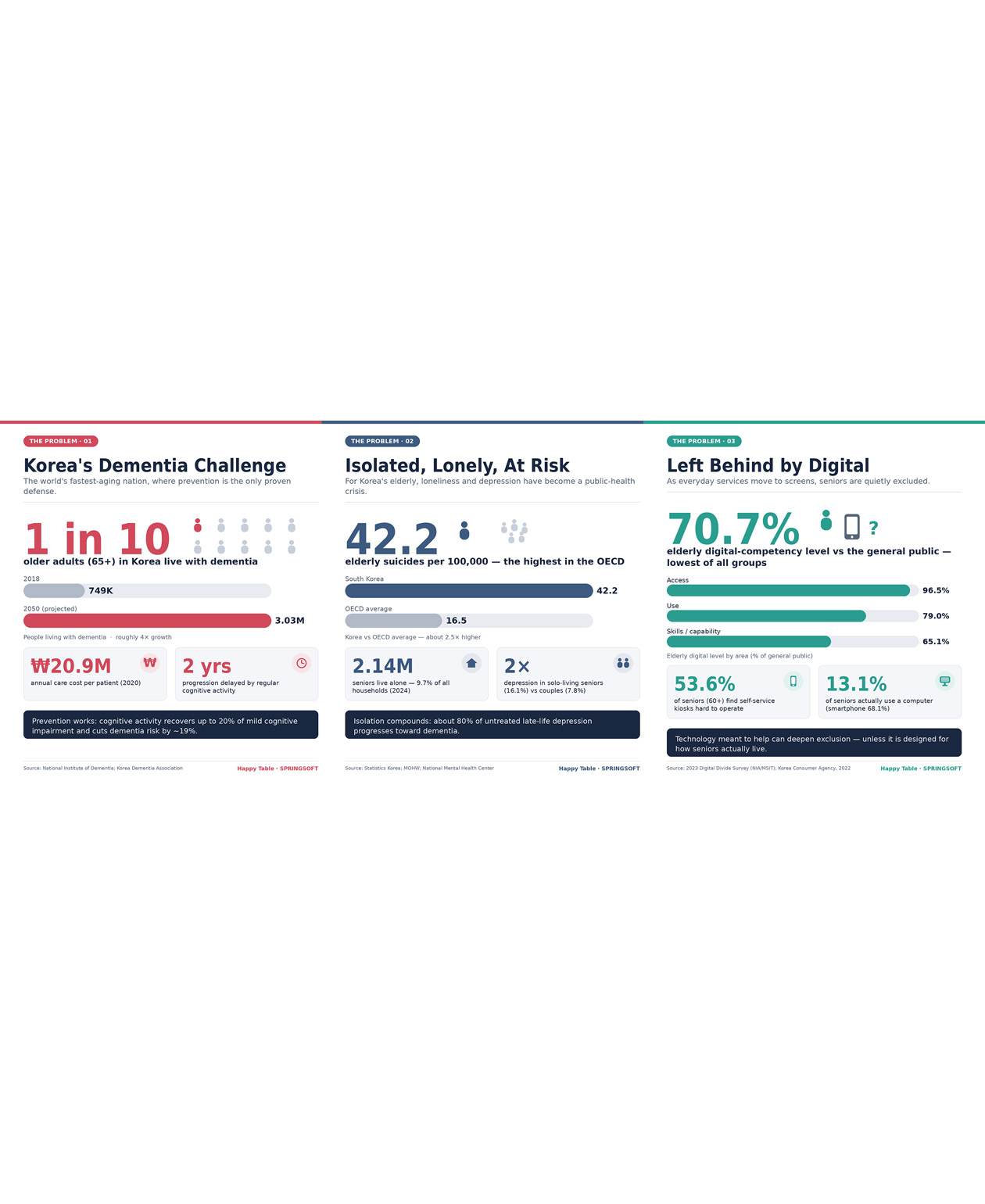
In Korea, where population aging is progressing rapidly, the importance of continuous cognitive activities for dementia prevention is growing. However, many senior welfare facilities still utilize professional instructors, paper worksheets, and analog teaching tools, which requires significant cost and operational time, and it is difficult to secure sufficient data to continuously record and manage activity results. In particular, programs that feel like learning or homework have limitations in drawing voluntary participation from older adults.
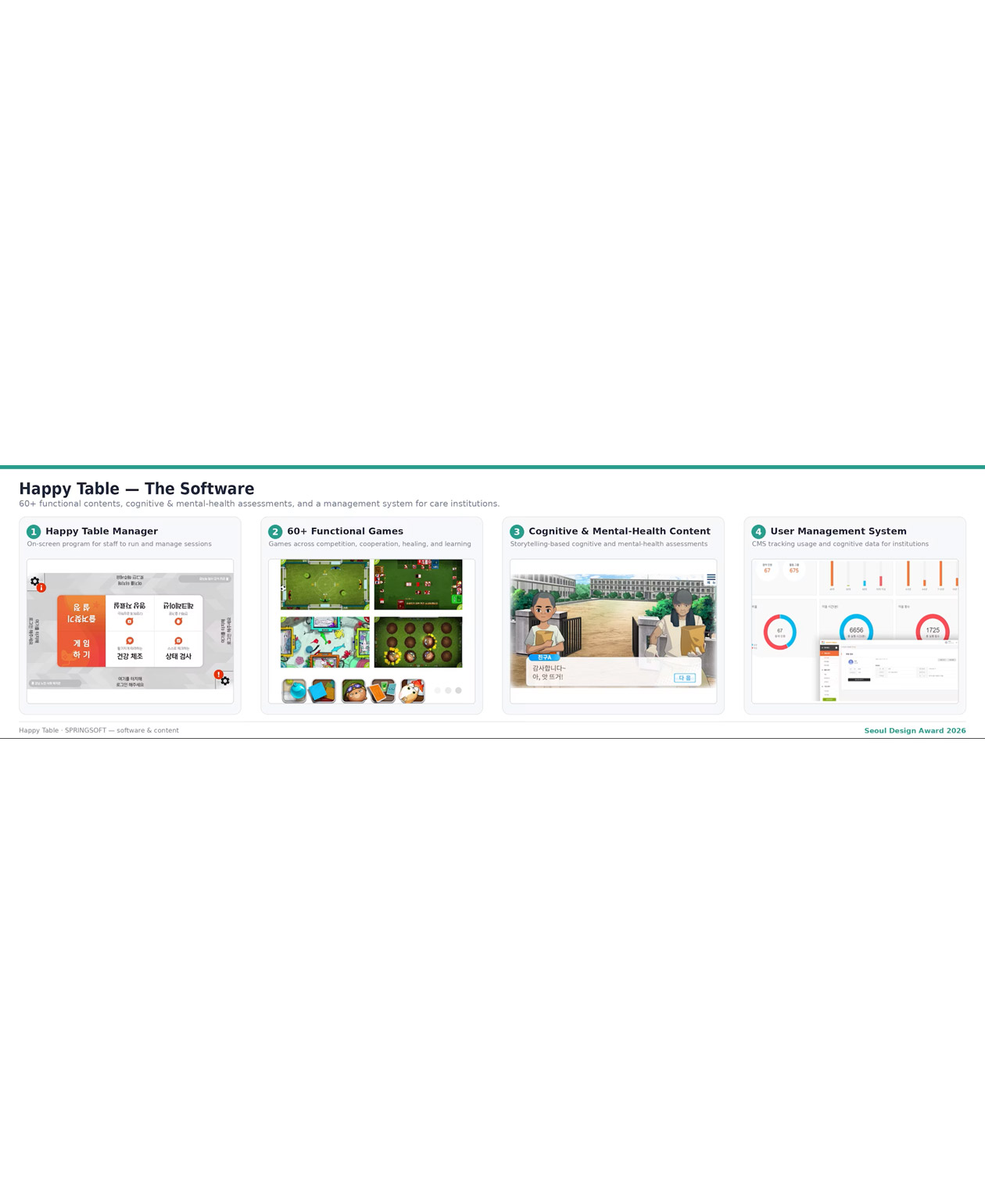
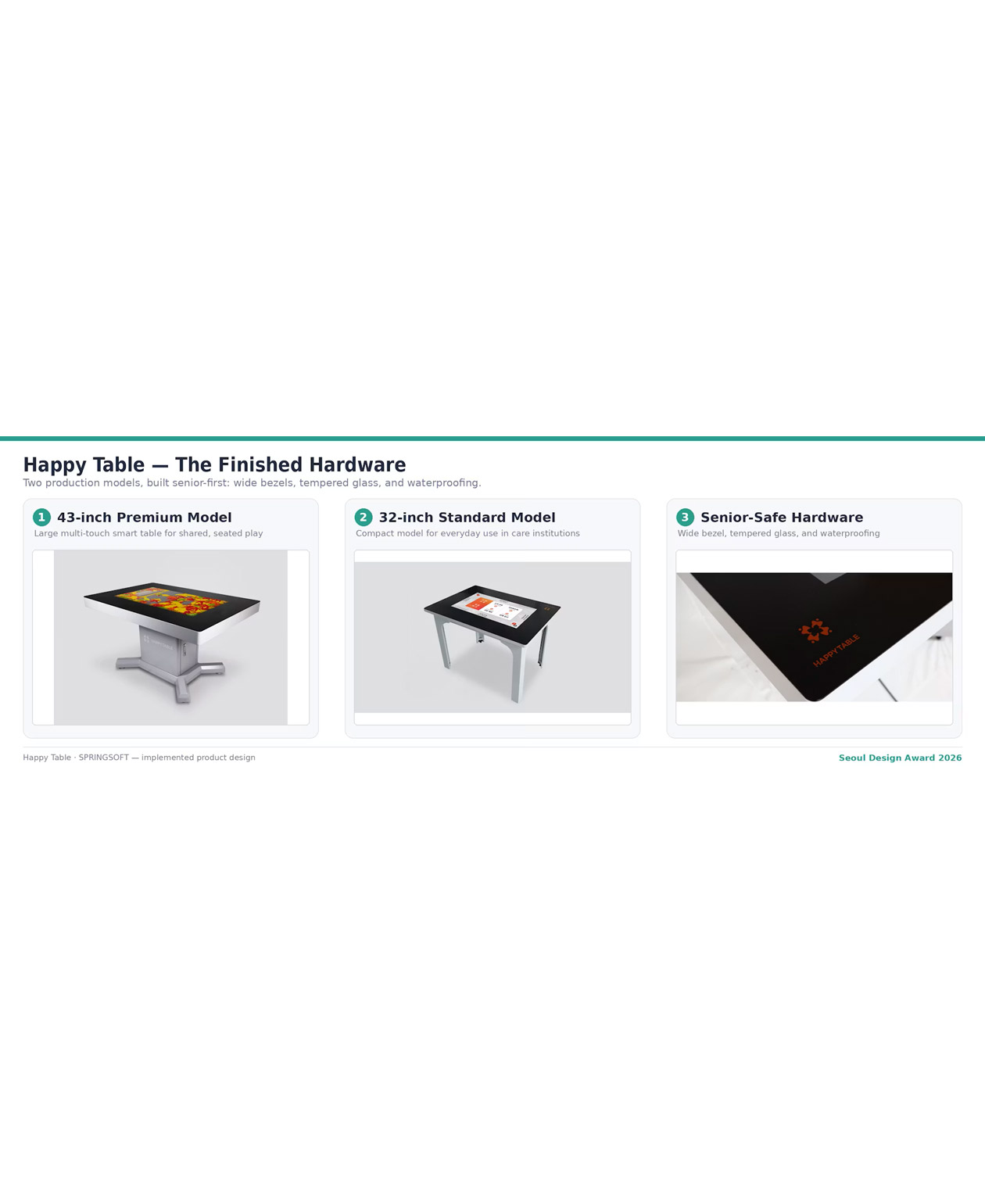
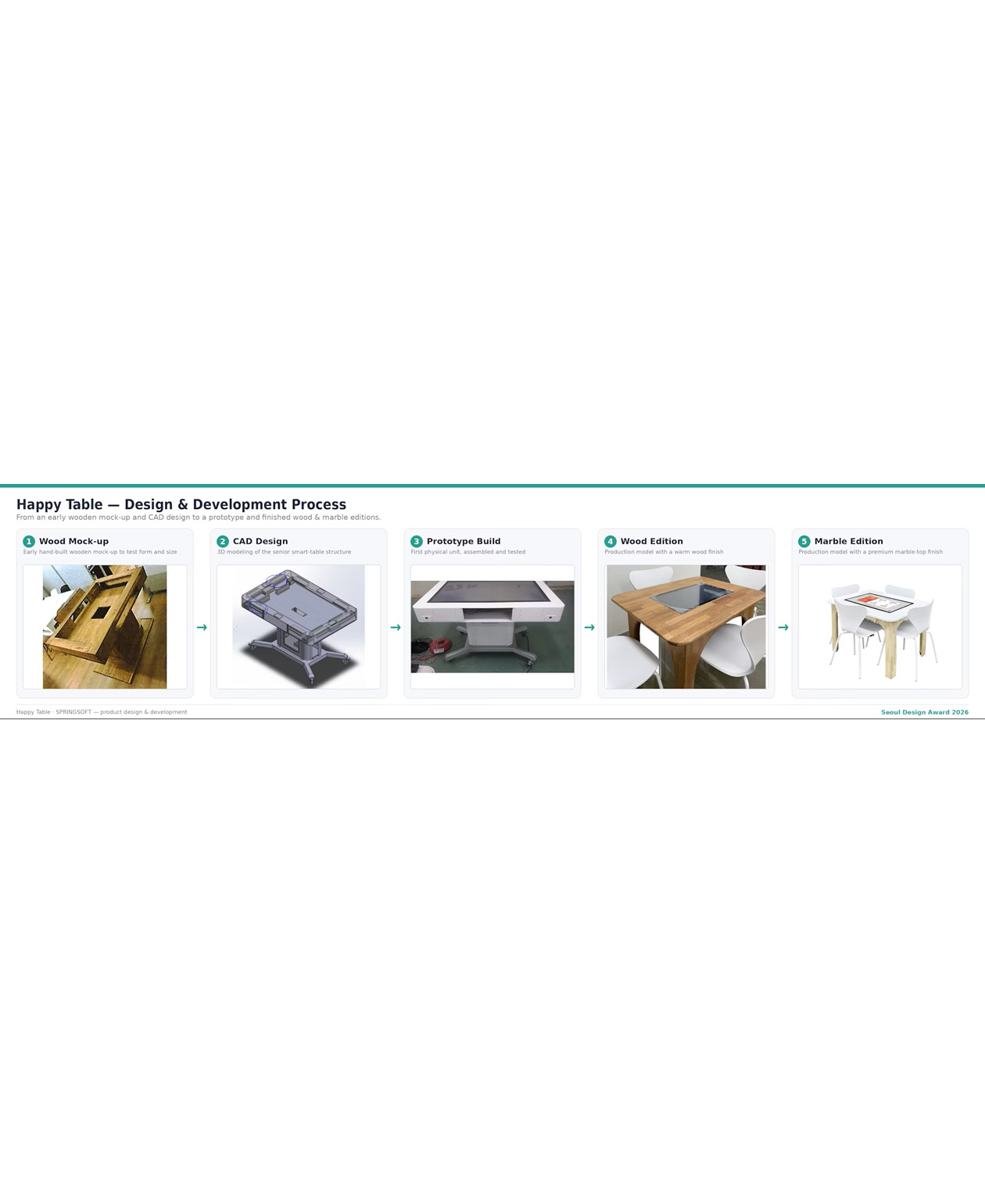
This project transformed these cognitive activities into a multi-person shared play experience. Designed in the form of a table considering the physical characteristics and usage environment of older adults—such as wide bezels, wheelchair-accessible height, and reinforced glass—it can be used by up to four people together. It provides about 60 types of contents composed of four modes—competition, cooperation, healing, and learning—along with evaluation contents to check cognitive and mental health conditions. The user's physical conditions, facility environments, and the situation of multiple people using it together were reflected in the product's form and usage method.
Choosing the familiar form of a 'table' where multiple people naturally sit around, instead of a device for studying alone while looking at a screen, is also an important feature. By combining a digital interface with a furniture form familiar in daily life, it lowered the entry barrier to new devices. Through multi-touch games allowing 1 to 4 participants, users can use it alone or naturally interact with others while competing or cooperating. With usage methods and simple game rules tailored for older adults, even users unfamiliar with digital devices can easily participate.
By using the online multiplayer function, users in different spaces can enjoy games together, enabling interaction beyond physical distances. Functions to check cognitive and mental health states are also included within game-type contents, reducing the burden of a separate test and allowing natural participation in the course of daily activities. Cognitive activities and status checks are not separated into distinct processes but configured within a single user experience. Through this, cognitive activities, social interaction, and status checks are connected into a play experience.
Records of users participating in contents are accumulated in the management system. Through this, facilities can visually check cognitive activity-related data and generate reports. Whereas it was previously difficult to continuously record effects after running programs, this system accumulates daily activities as data so they can be utilized for care and program operation. It is a dual service structure providing play experiences to users and management-required information to facility operators.
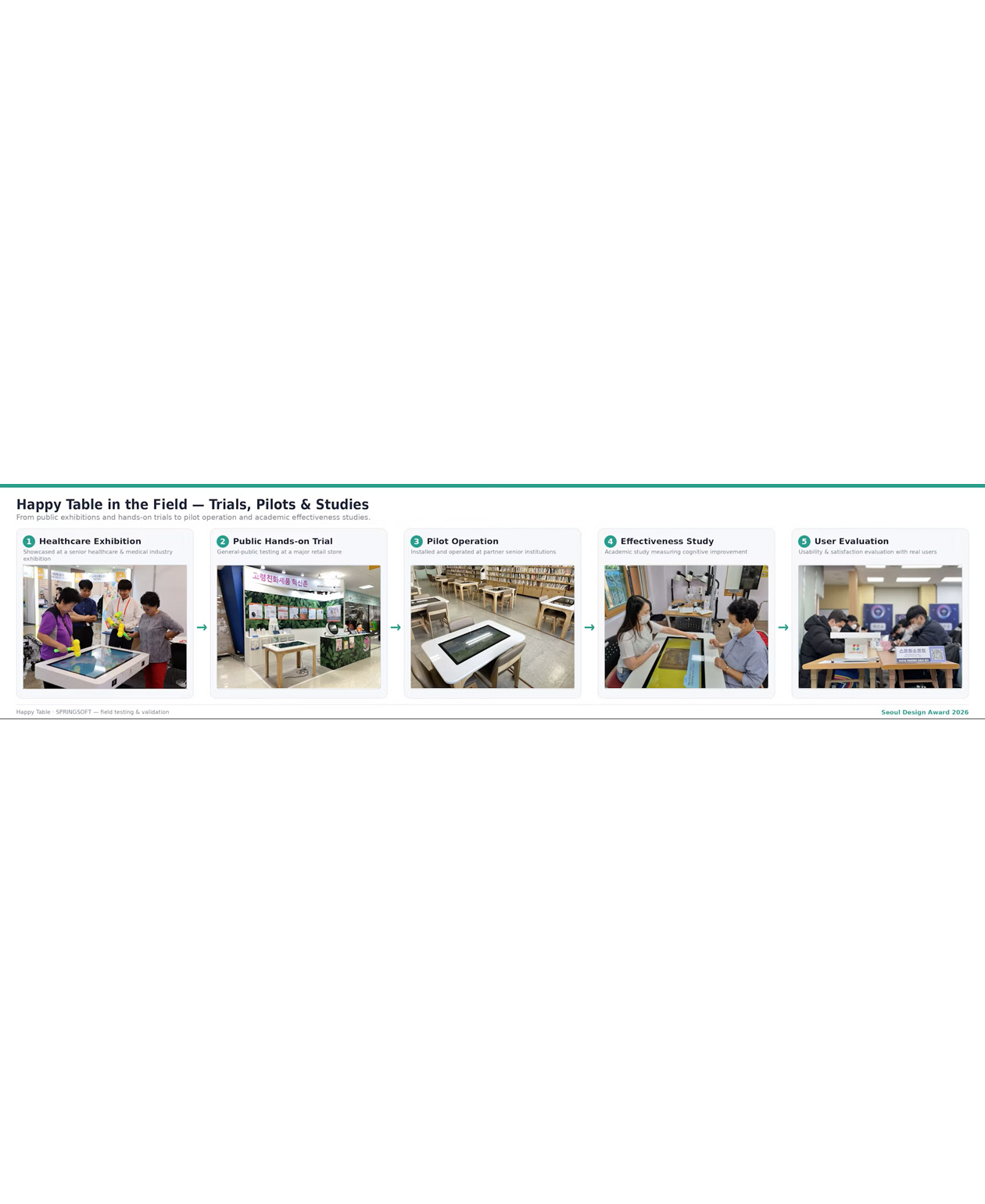
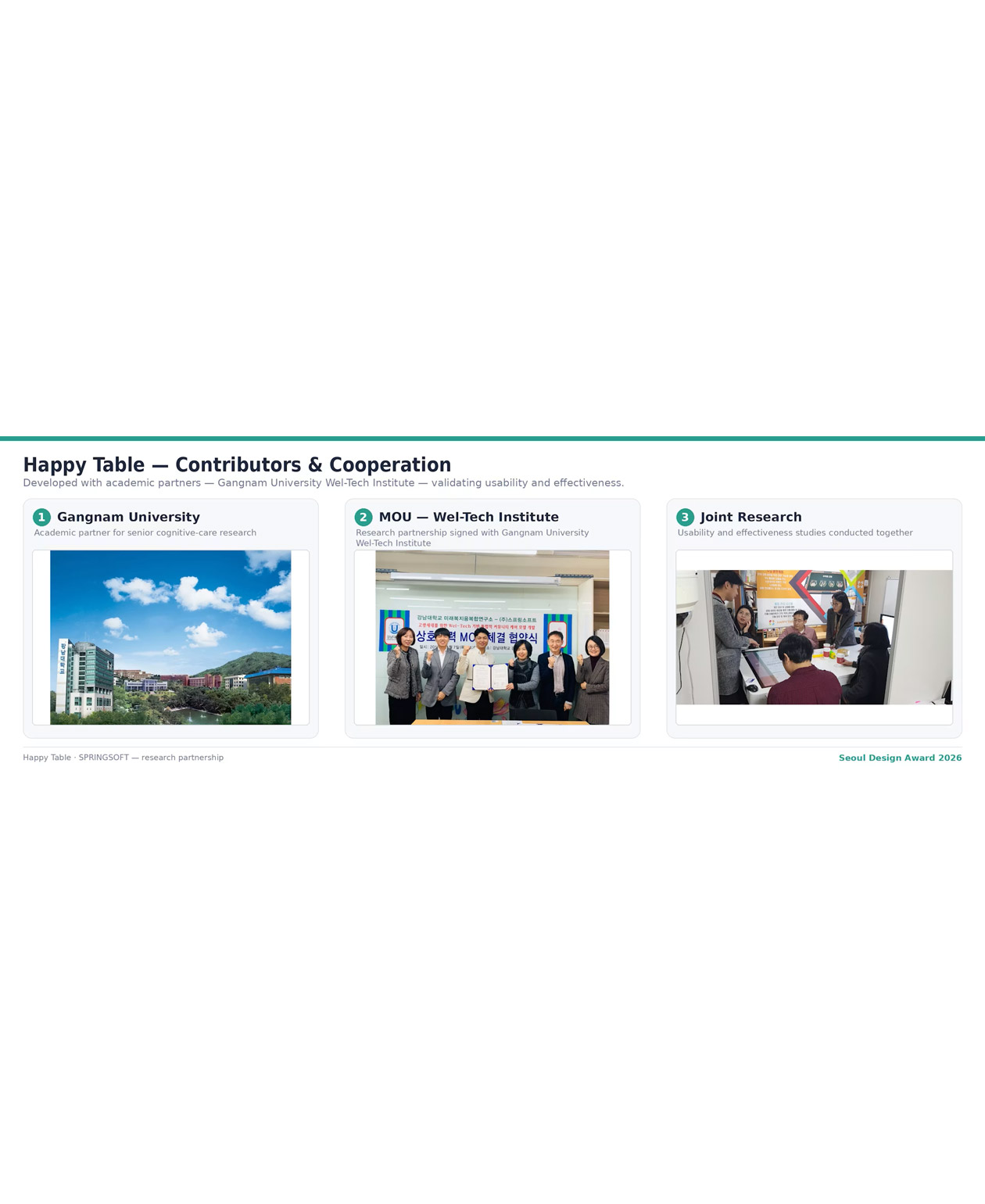
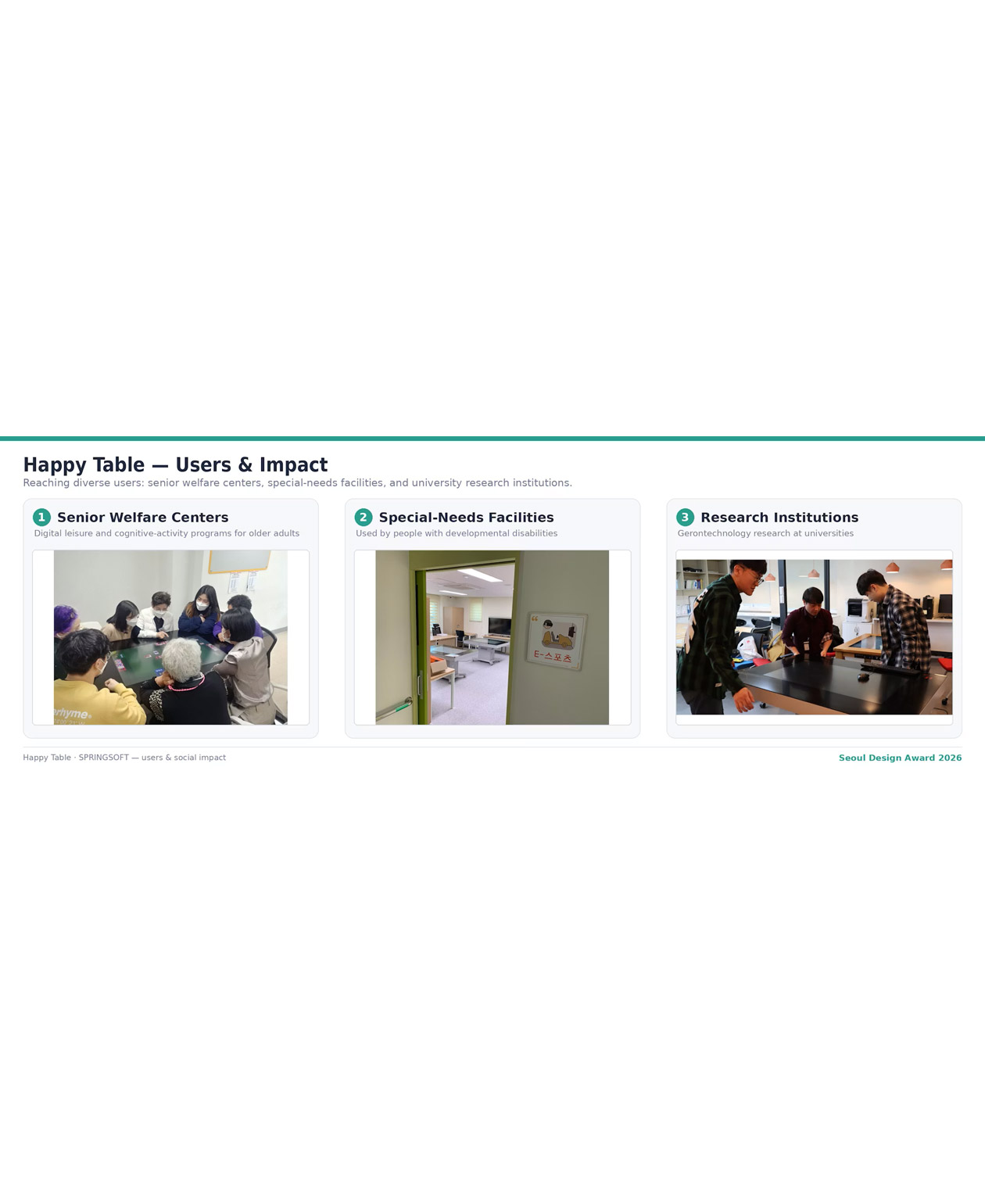
Currently, over 1,000 units have been distributed to more than 800 dementia-related organizations, senior welfare facilities, and nursing homes nationwide, with over 8,000 registered members and over 10,000 actual users. Research from Gangnam University recorded a user satisfaction score of 4.41 out of 5 and confirmed significant changes in cognitive function, and clinical trials at Samsung Medical Center also confirmed improvements in cognitive function and vitality.
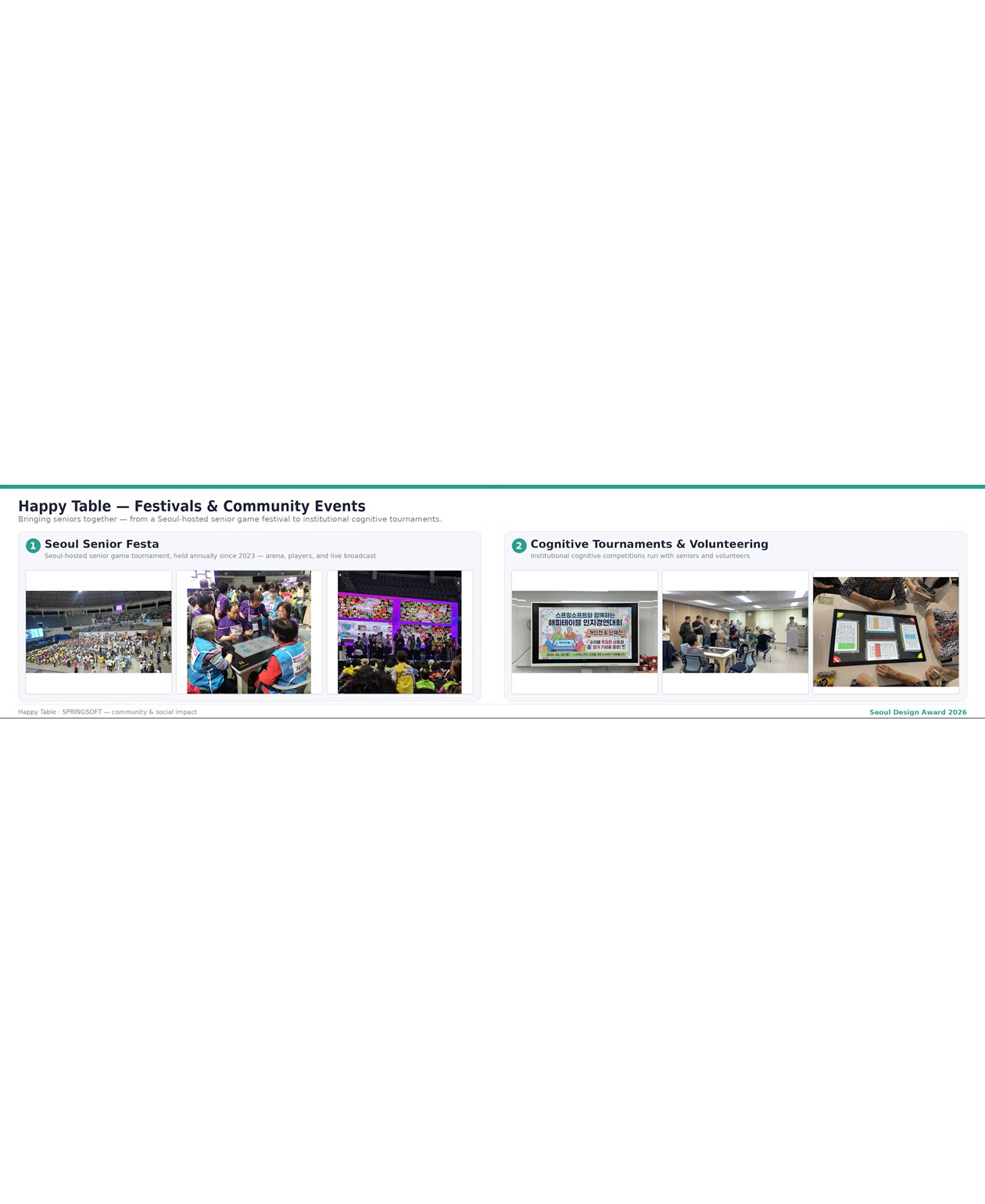
The process of multiple people playing games by touching the screen together helps older adults naturally become familiar with digital devices while creating opportunities to converse and engage with others. In addition, it converts traditional paper worksheet or props-centered programs into digital content and automatically accumulates activity data to enhance the efficiency of facility program operation and management. The social value evaluated by external institutions also appeared to exceed 900 million won.
This project aims to expand into a comprehensive digital care platform for aging societies in the future. The mobile service 'Happy Brain' currently under development is being built so that cognitive activities provided at facilities can be continued at home using AI-generated learning contents and subscription services. Through this, it aims to expand the service scope to 1.3 million people domestically who require cognitive support.
In the future, localization tailored to each country's environment, linkage with external contents, and connection with health-related devices are also planned. It is a structure that increases social interaction and reduces isolation among older adults through multi-person play and continuous cognitive activities, while utilizing daily activity data for care. Through a user-centered approach setting older adults not as objects of treatment but as actively participating 'players', it connects joy, social relationships, cognitive activities, and data-driven management into a single digital care experience.