


Harvesting Climate Action A civic participatory and experiential project embedding climate science into daily life through food culture, data objects, and collective deliberation


- Nationality
- United Kingdom
- Group
- Ling Tan
About Project
Developed with Hackney Council, climate scientists, an economist, designers, urban farmers and local communities, Harvesting Climate Action (HCA) is a district-wide participatory design project that translates climate science into legible, accessible and embodied public experience through the cultural lens of East and Southeast Asian food and the universal daily experience of shared meals. Instead of delivering scientific information unilaterally, the project connects food, furniture, exhibitions, dialogue, and participation into a single experience, shifting climate action into an issue close to citizens' daily lives. HCA embeds sustainability into both the design and experience, making climate science accessible to make behaviour change lasting.
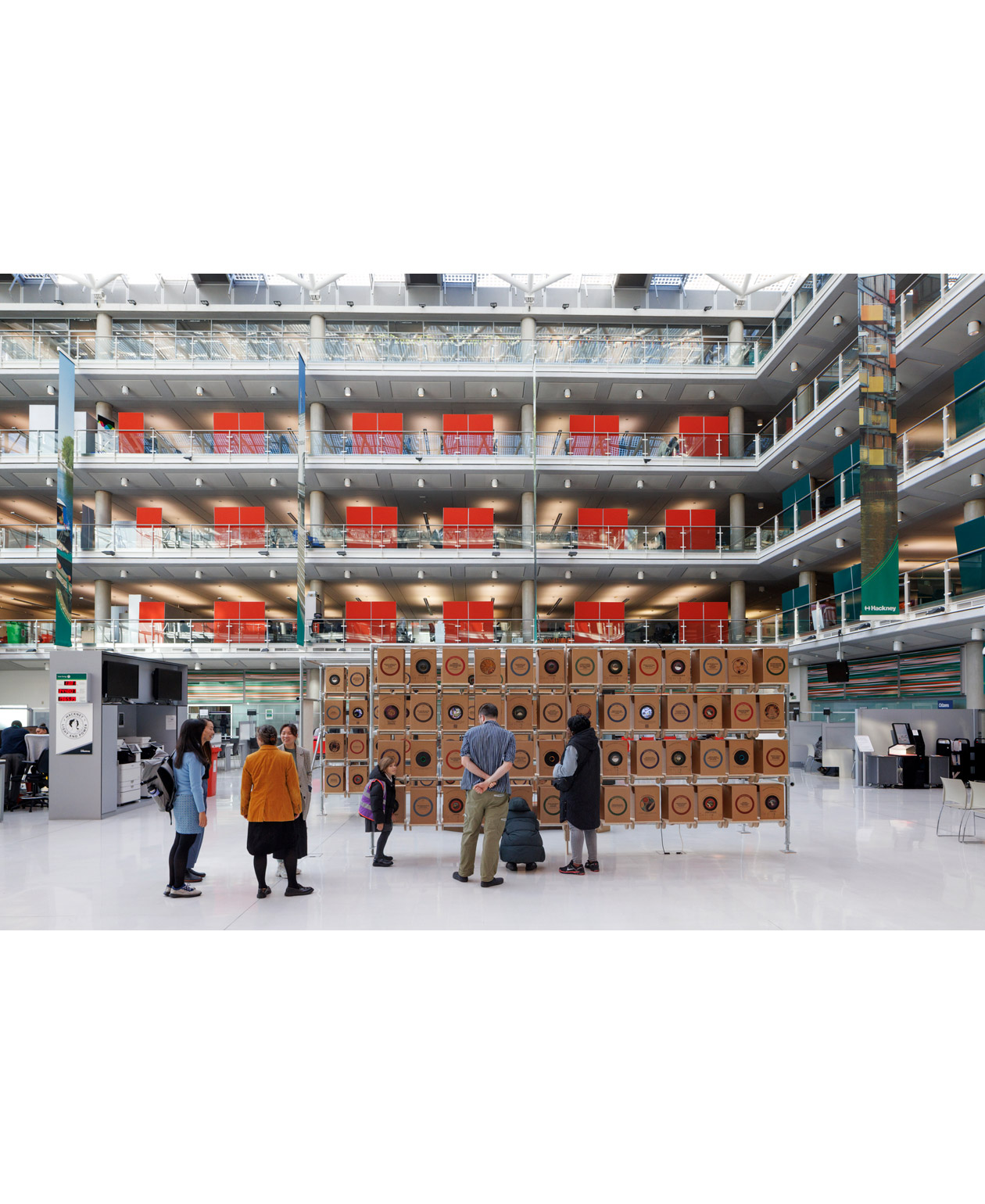
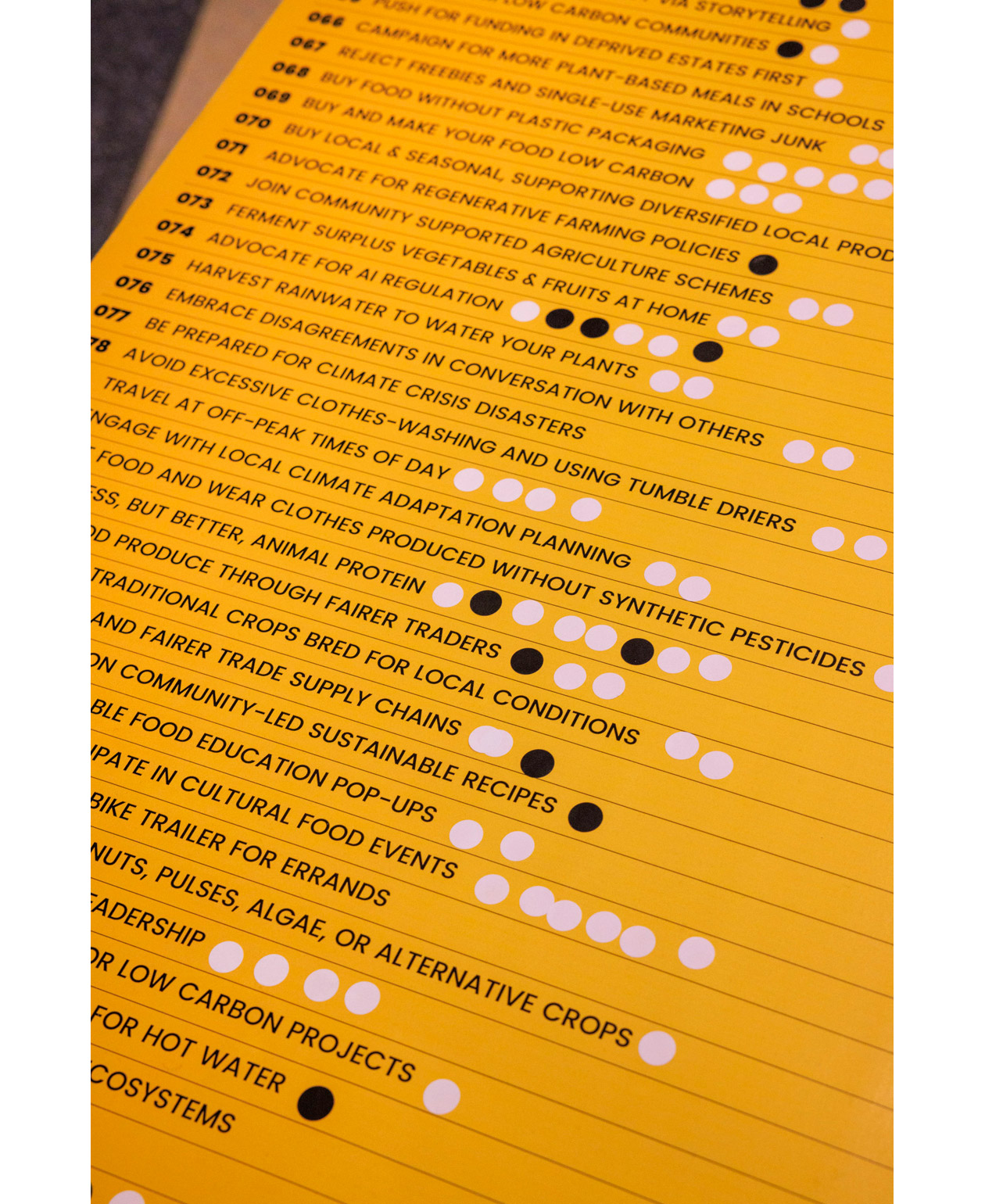
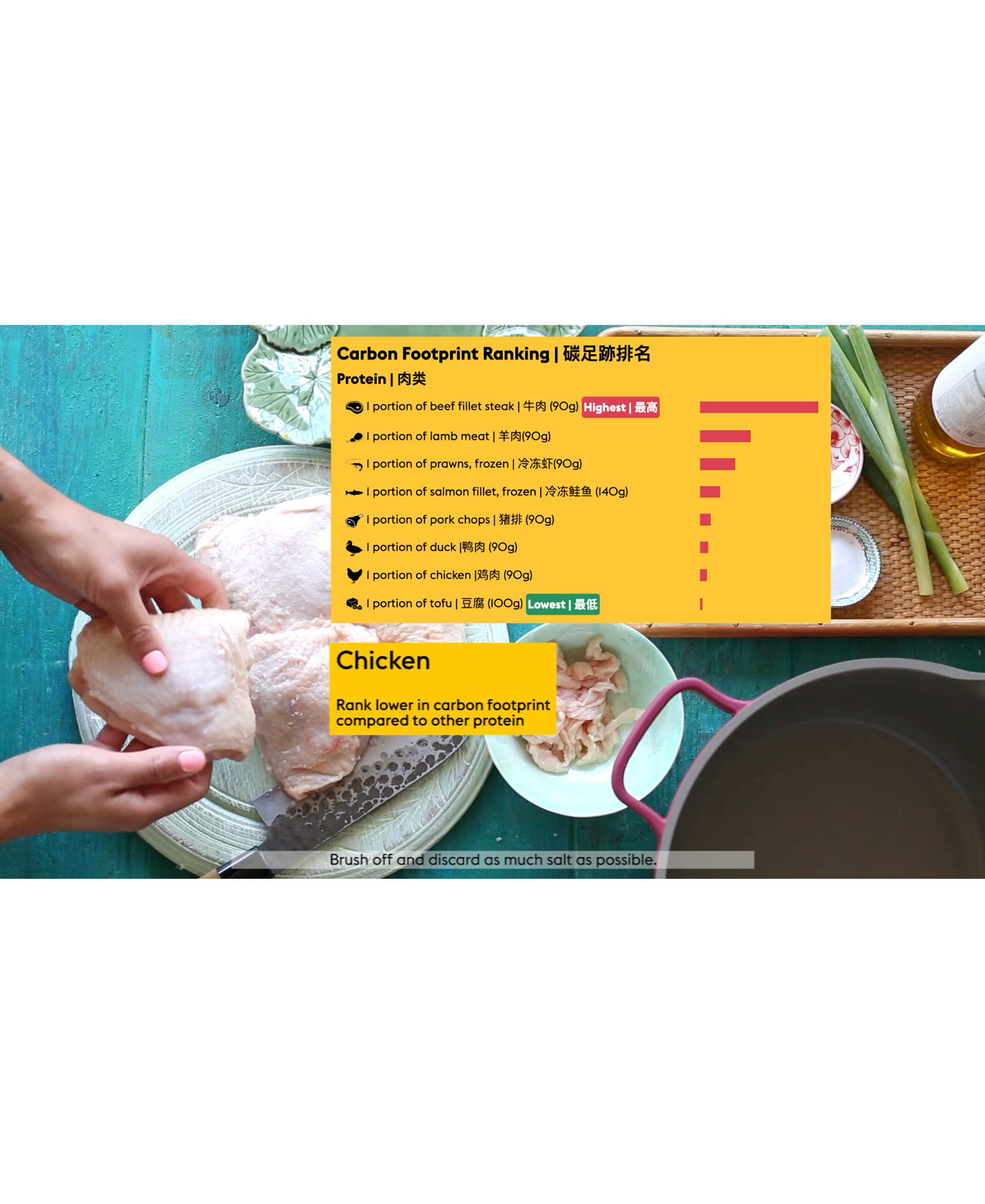
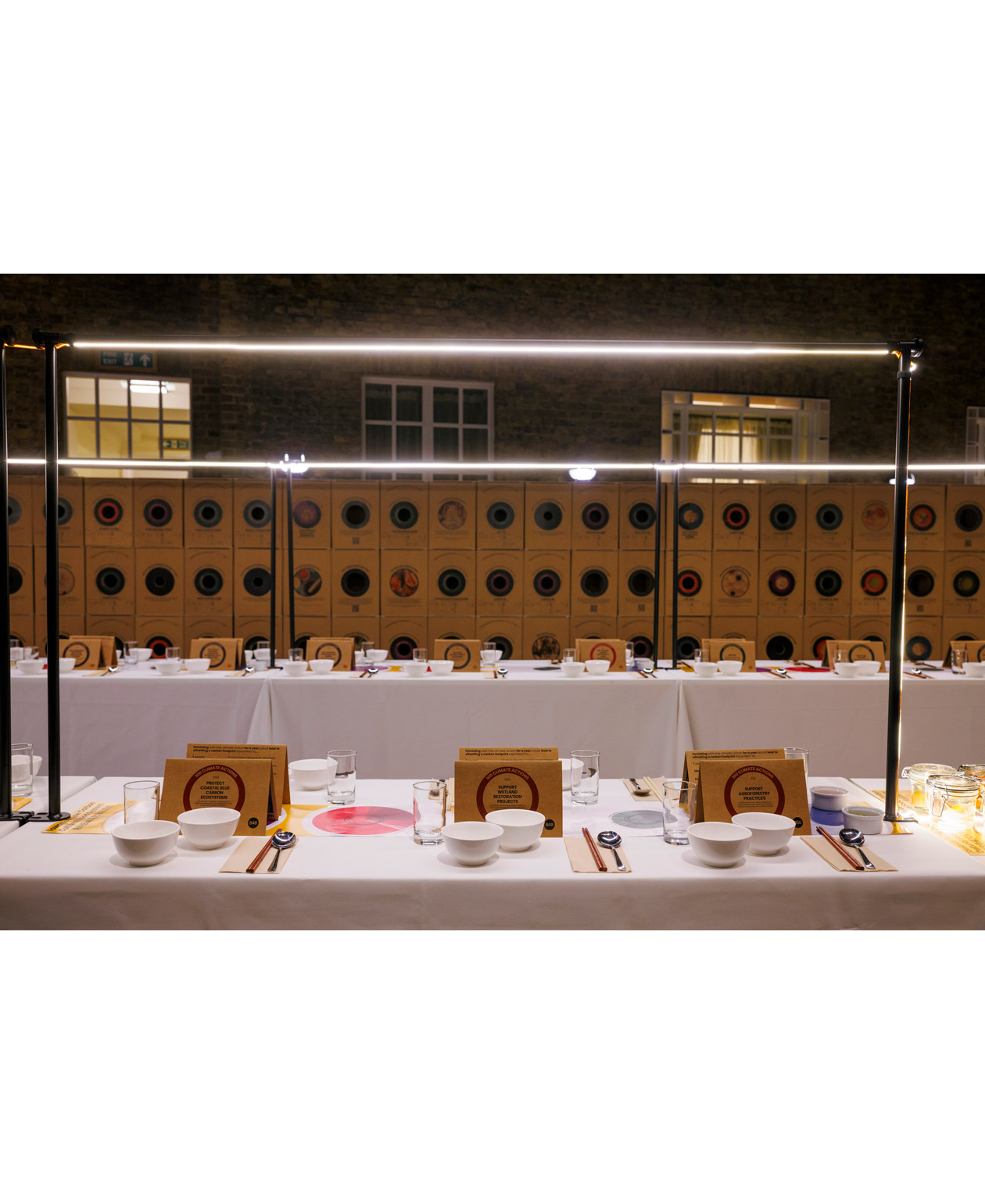
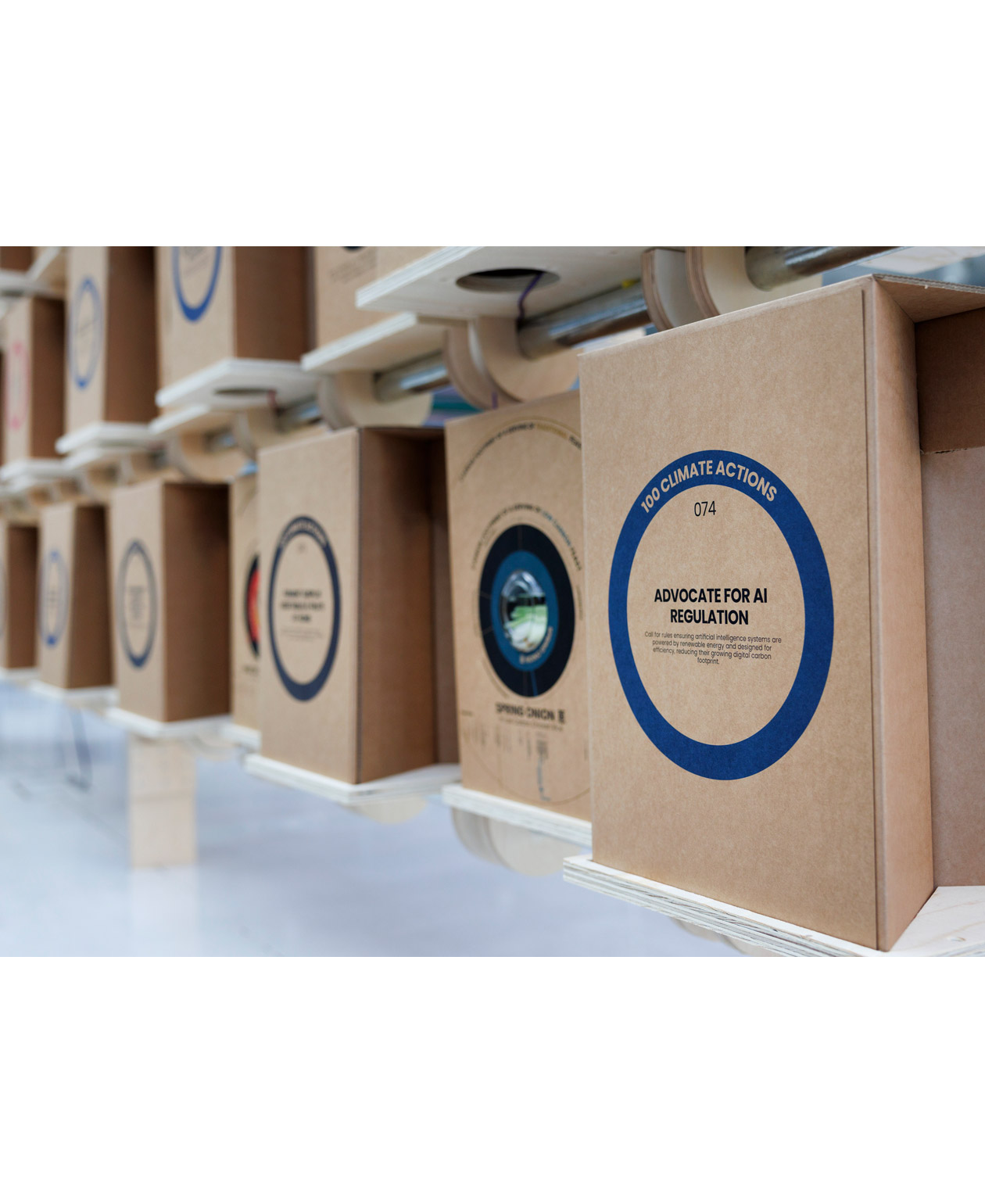
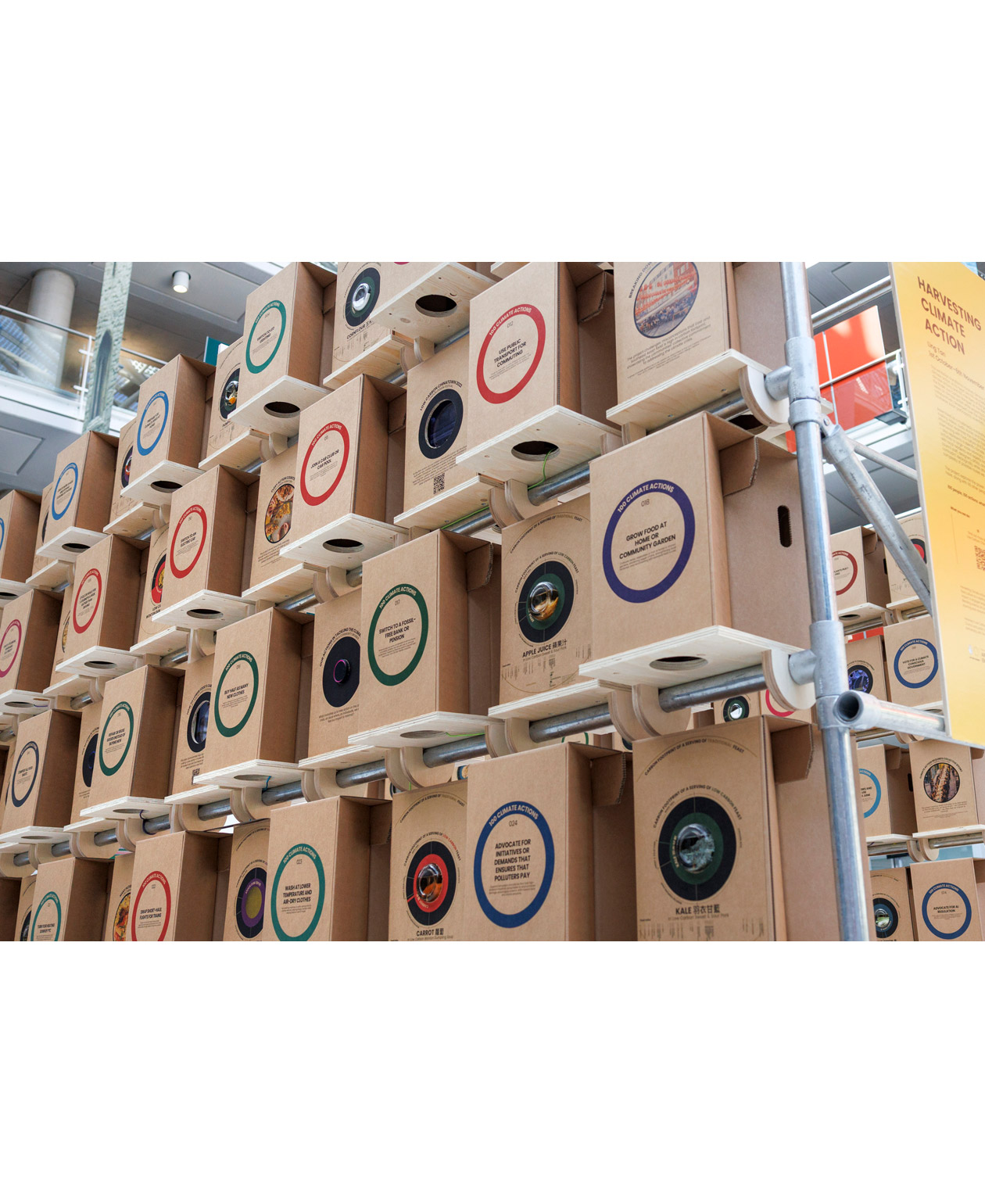
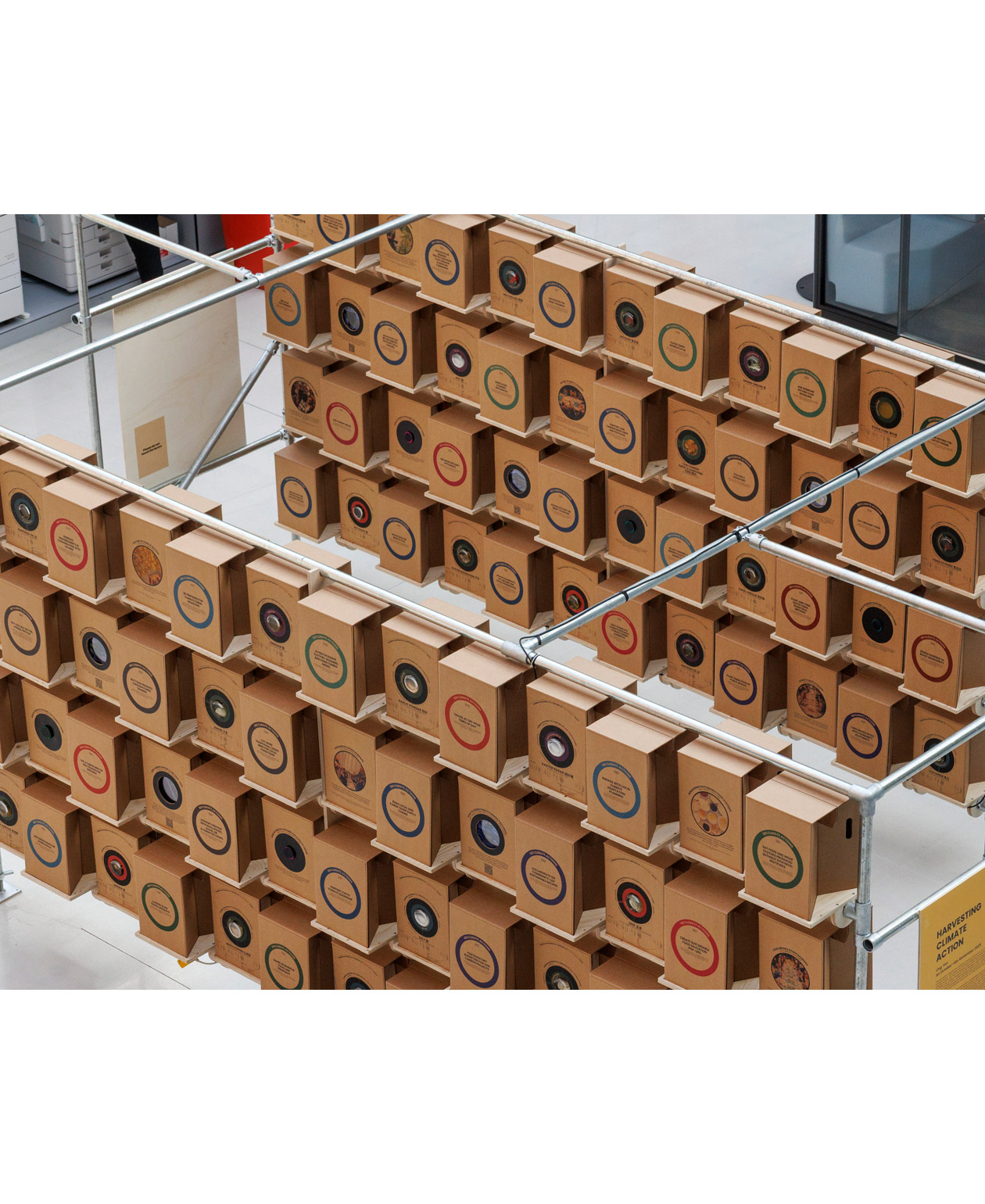
At its core are 100 recyclable cardboard stools, each a dual-interface object: one side presents one of “100 Climate Actions” modelled at individual, collective, and district scale; the other traces the carbon footprint of a meal ingredient through life cycle analysis and geospatial mapping, embedded alongside preserved produce, audio interviews, and recipe videos. By utilizing stools as both seating tools and information-delivering media, the project is structured so that abstract carbon data can be encountered through everyday objects and experiences. The 100 stools are multipurpose low carbon objects designed to maximise longevity so nothing produced is wasted, serving as an information medium that shows the changes climate actions across food, energy, transport, technology, and consumption can bring when scaled from an individual to all 265,000 Hackney residents. By placing different actions and data on 100 identical stools, it spatially illustrates how small individual practices accumulate into district-wide changes.
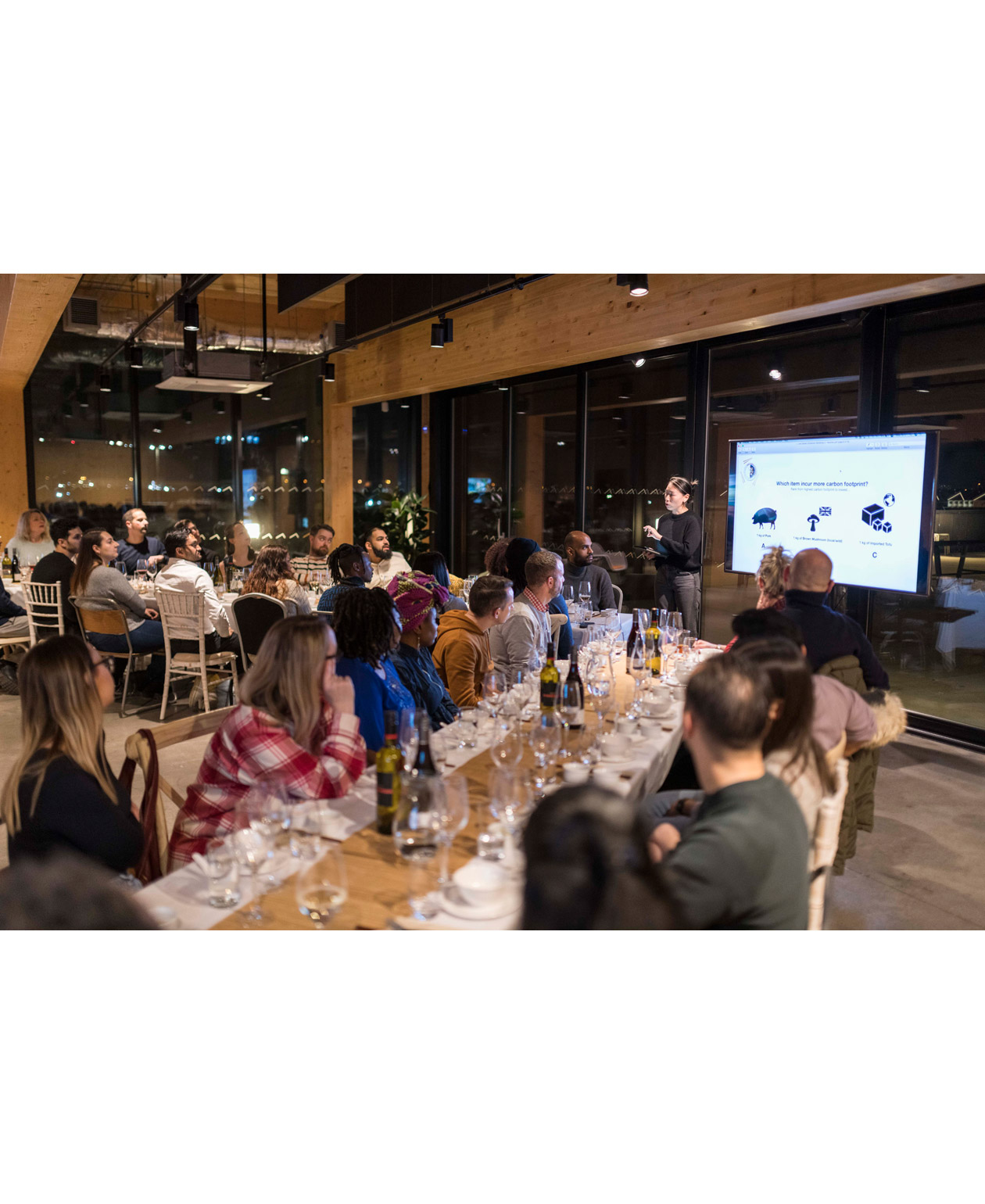
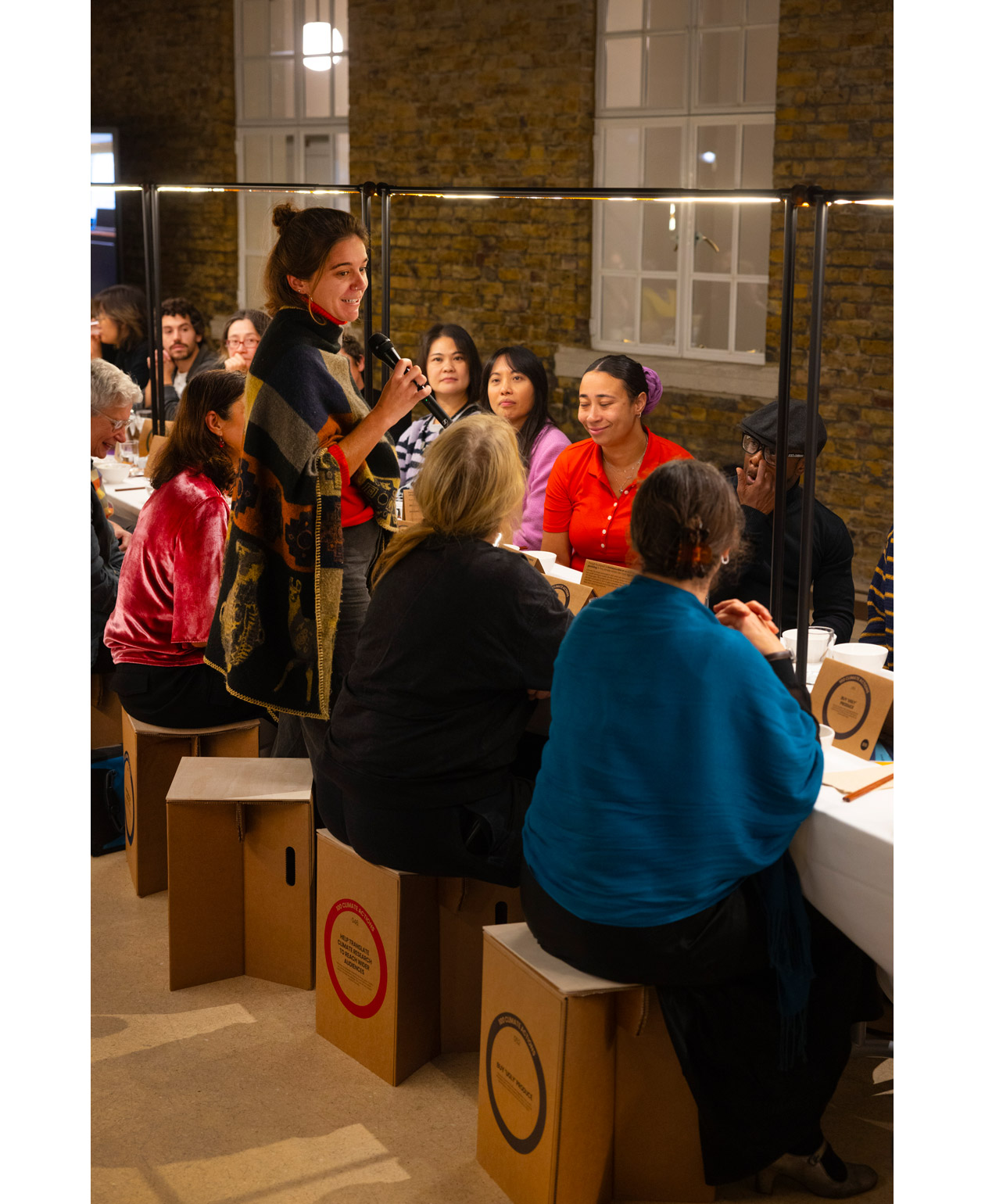
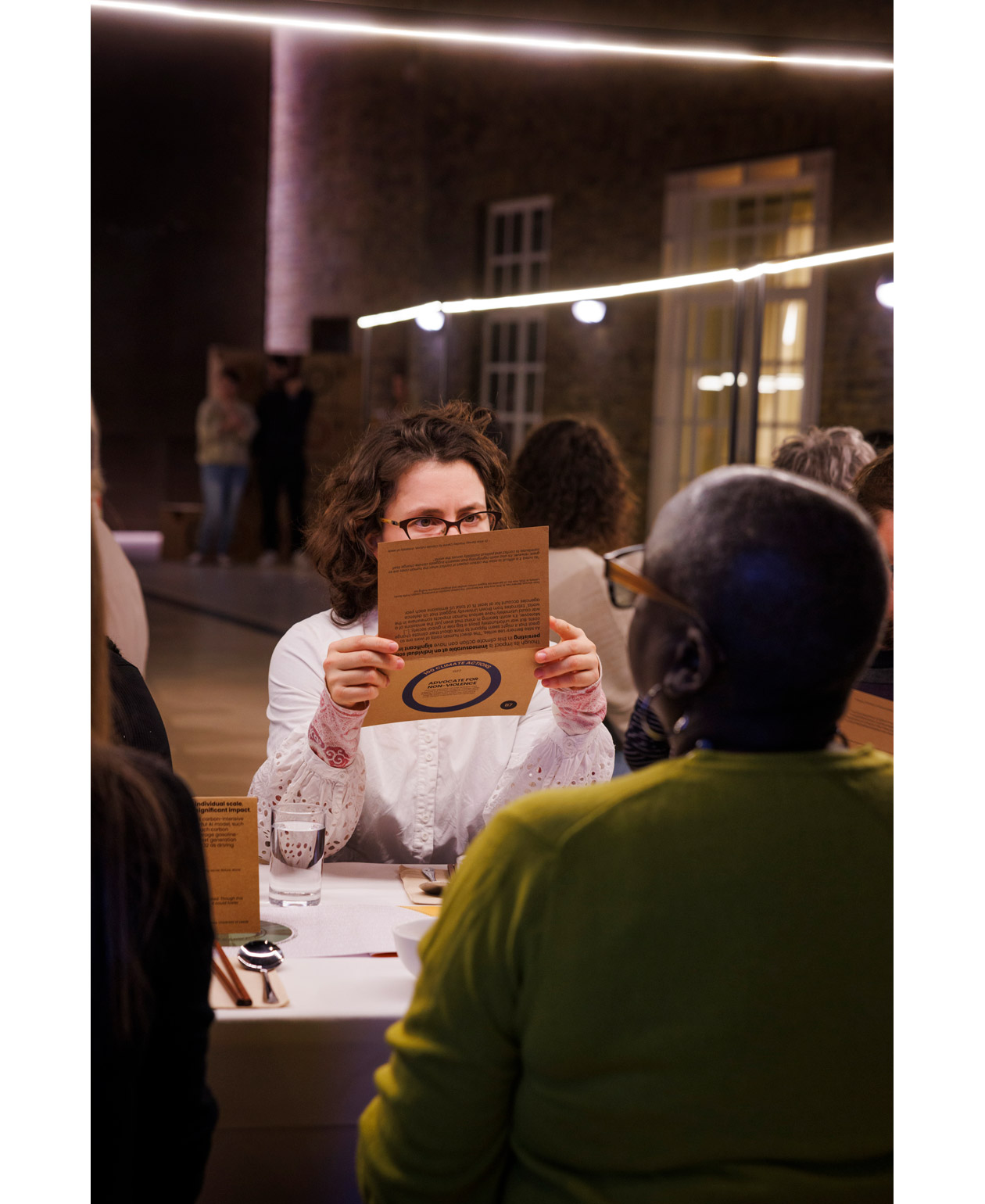
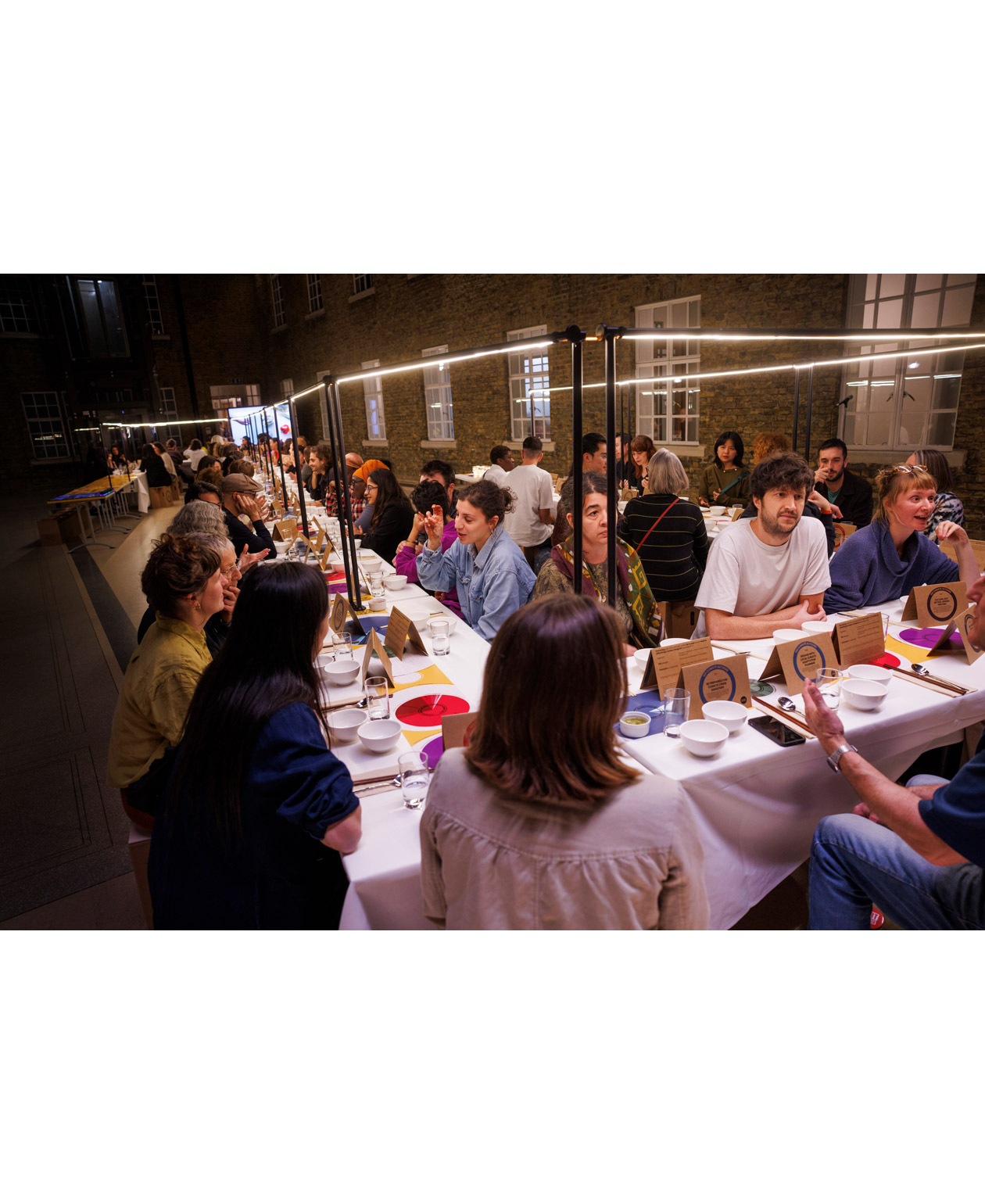
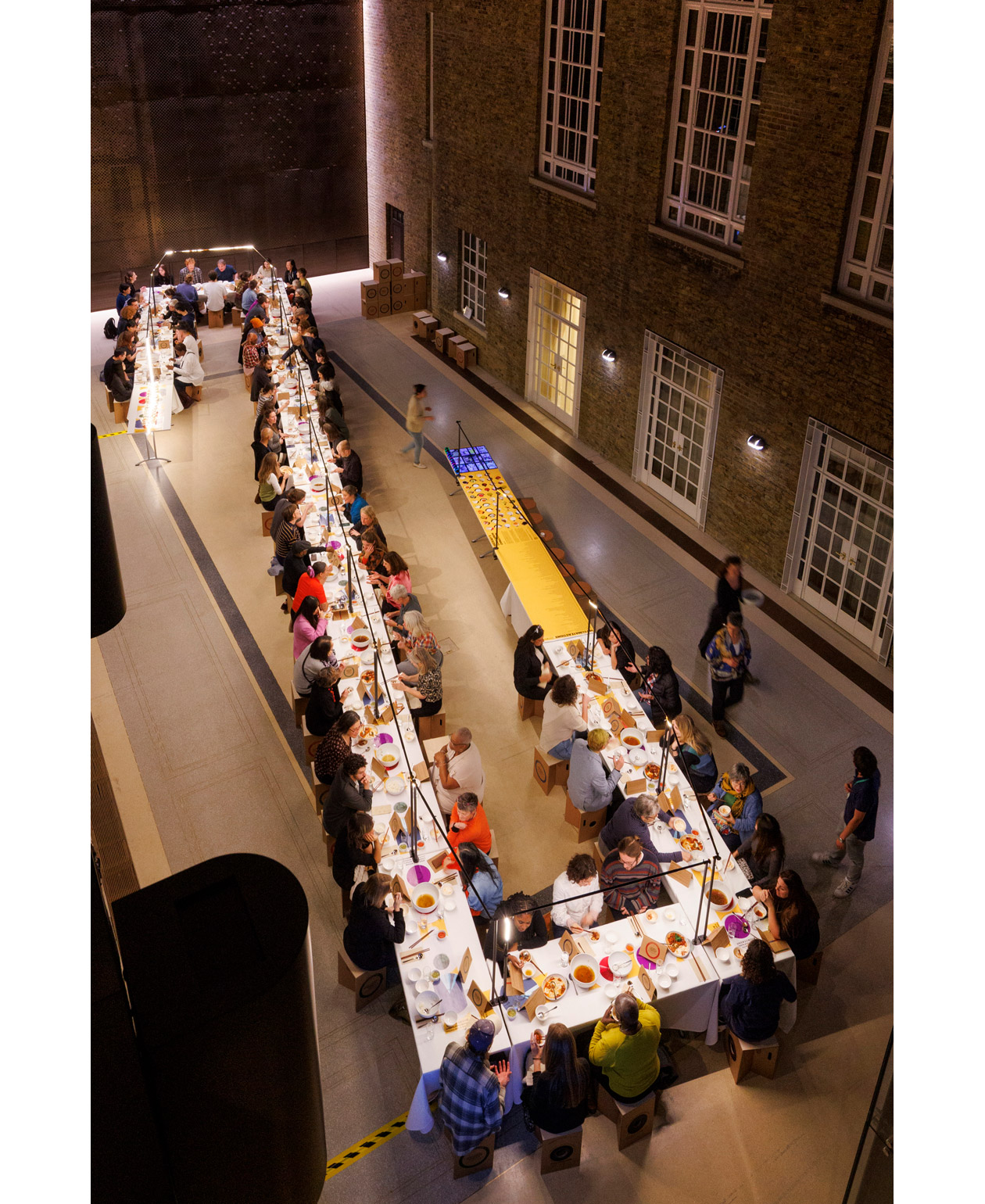
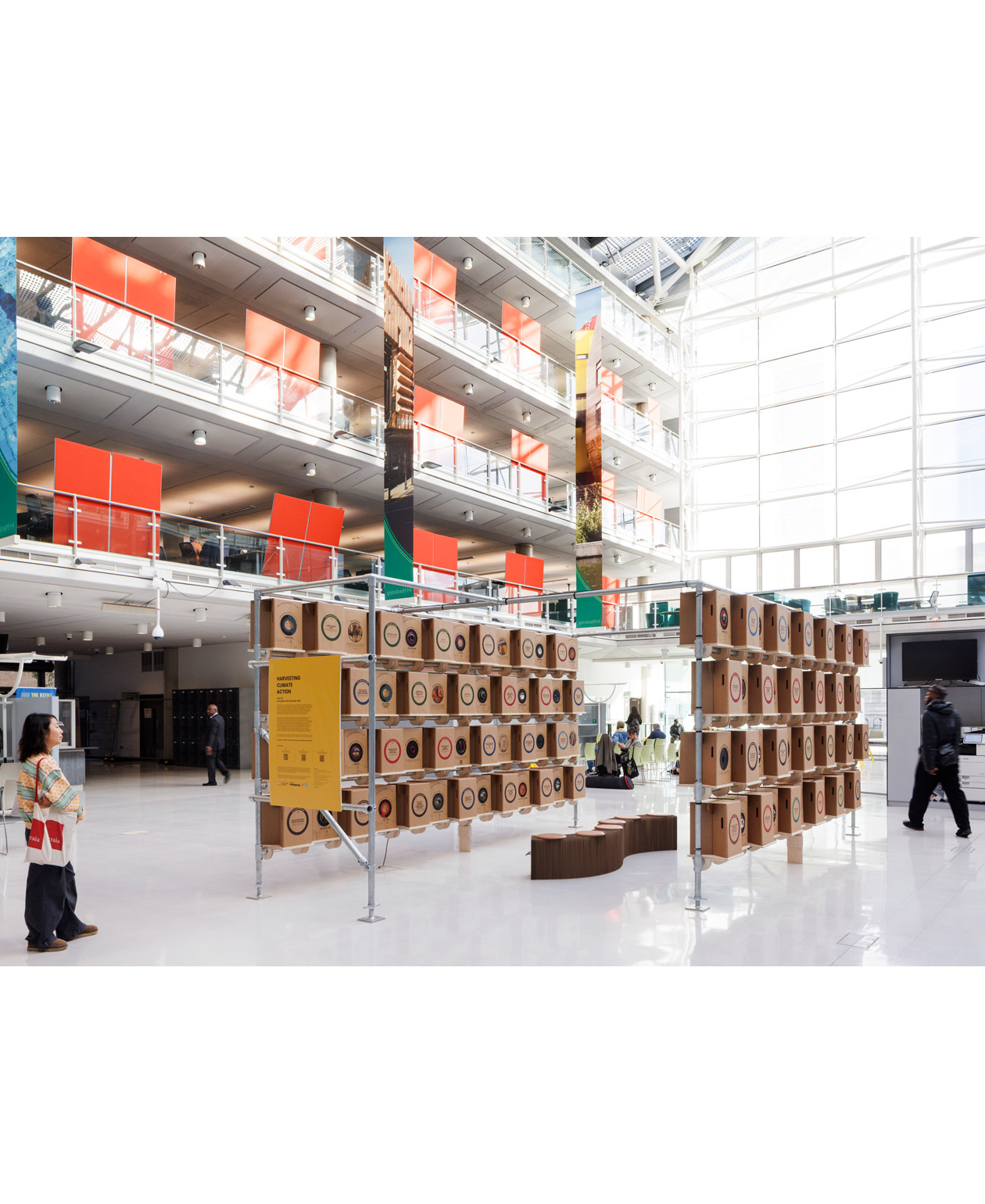
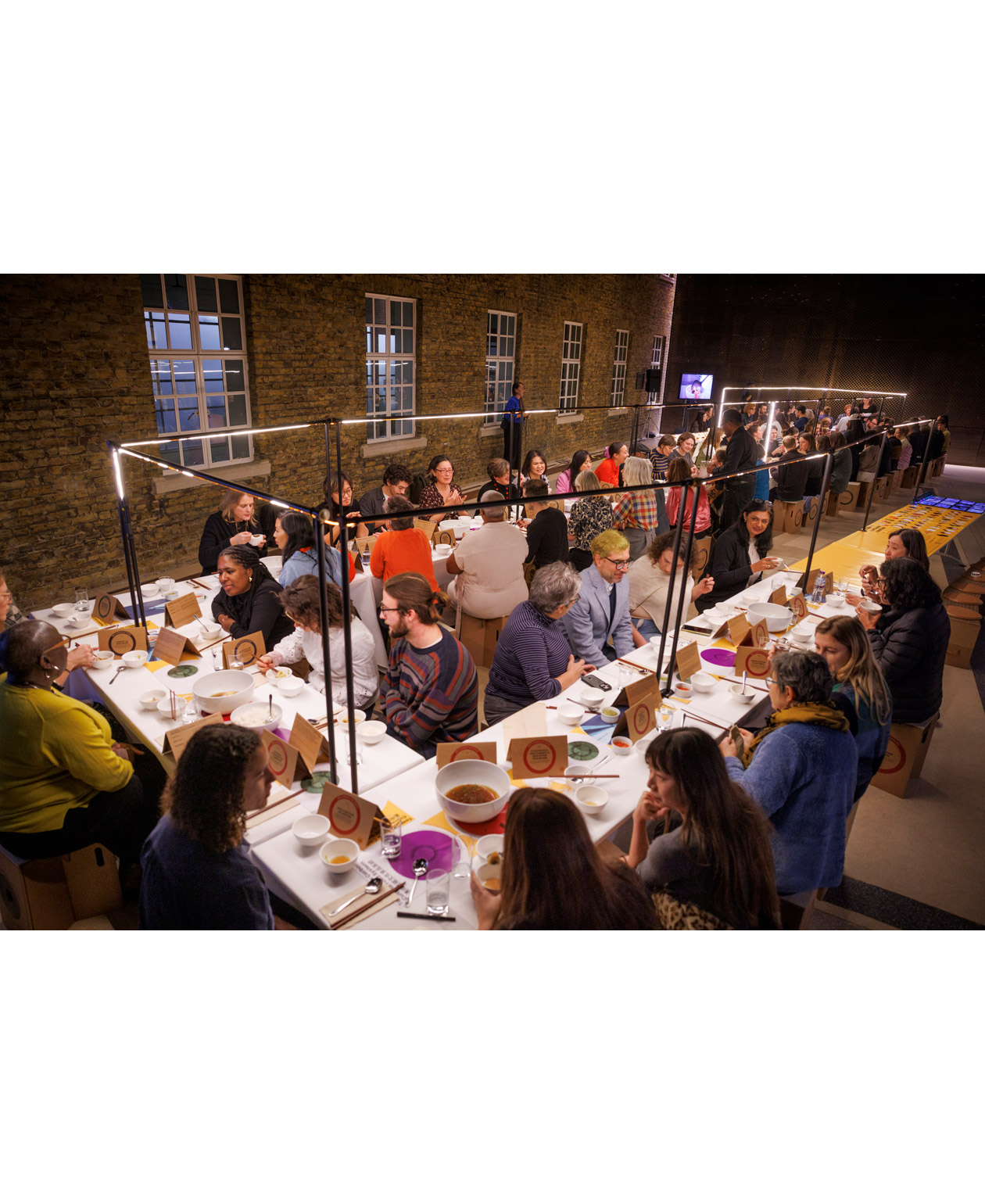
For six weeks, Hackney's municipal building became an interactive space for climate deliberation, visited by ~12,000 public visitors. The installation then deconstructed into a live banquet for 100 participants – residents, scientists, civil servants and the Mayor each harvested a stool, sat with strangers, embodied a climate action, and deliberated over a locally-produced low carbon feast, before carrying their stools home as artefacts of climate responsibility. Audiences go beyond merely viewing the exhibition, actively participating in its construction and deconstruction. By harvesting a stool at the banquet, sitting with strangers, eating low carbon food, discussing climate action, and carrying the stool home, the objects shift into daily life, allowing participants to become part of the ongoing project and translating exhibition experiences into everyday practice. By designing even the installation and deconstruction as participatory processes, visitors are connected not as passive recipients of information, but as active agents directly engaged in climate action.
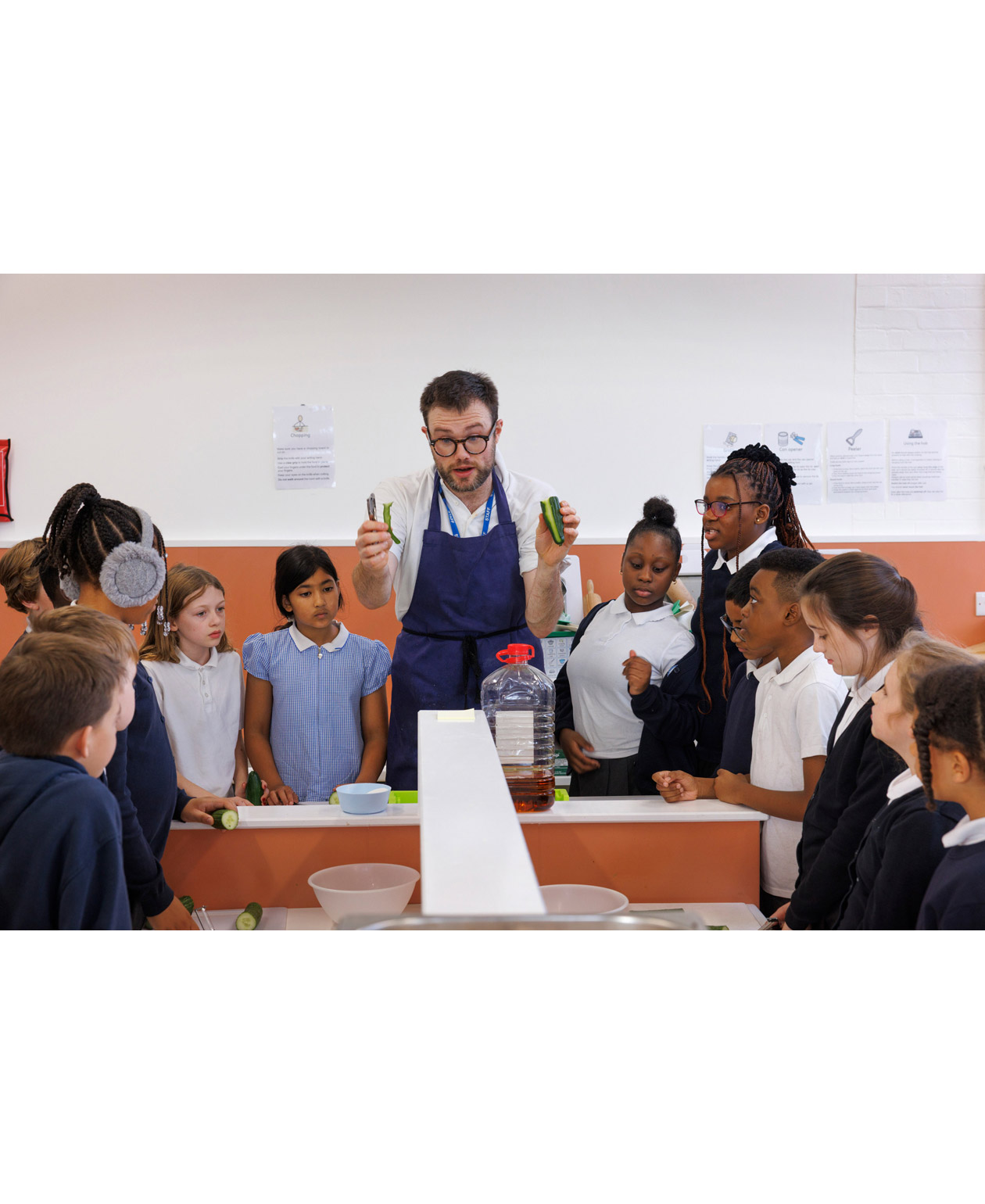
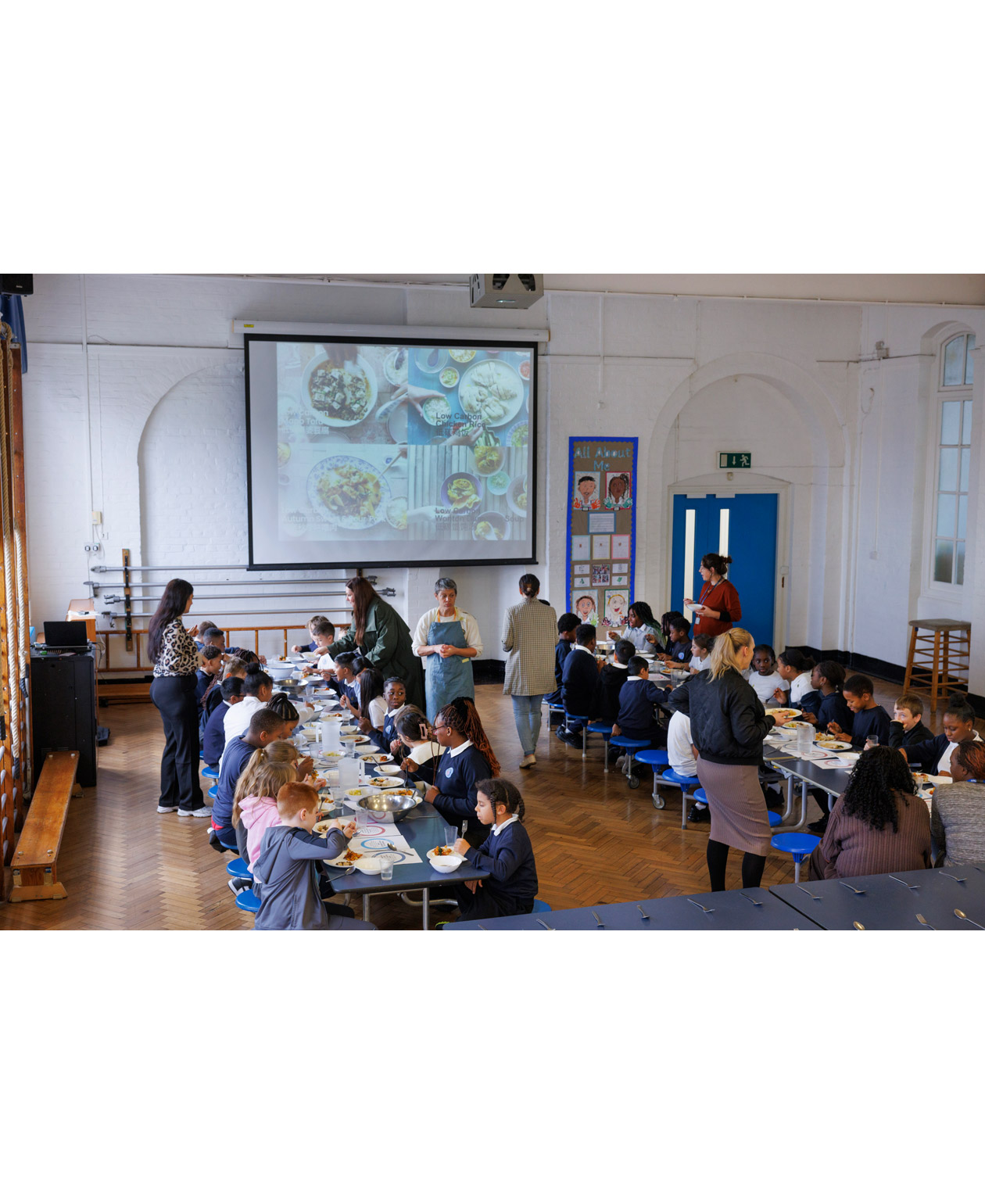
HCA directly supports Hackney's Climate Action Plan. The deliberation model developed in the project is utilized in the practical work of Hackney's Climate Change Team, and the “100 Climate Actions” toolkit has been made publicly available for any citizen to use. Furthermore, the “Low Carbon Children's Banquet” has become an annual educational program at a local primary school. By ensuring that the experiences and tools created in the exhibition extend into administration and education, the project creates a participatory structure that goes beyond a one-off event.
These activities support Hackney's goal of reducing food-related emissions by 38% by 2030, engaging ~12,000 installation visitors, 100 banquet participants (residents, scientists, civil servants, and the Mayor), 60 children at the Children's Banquet, and 40 growing workshop participants. This creates an opportunity for citizens of diverse generations and cultural backgrounds within a single district to experience and discuss climate issues together, demonstrating the potential of social design in addressing climate change by linking civic participation to concrete local climate goals.
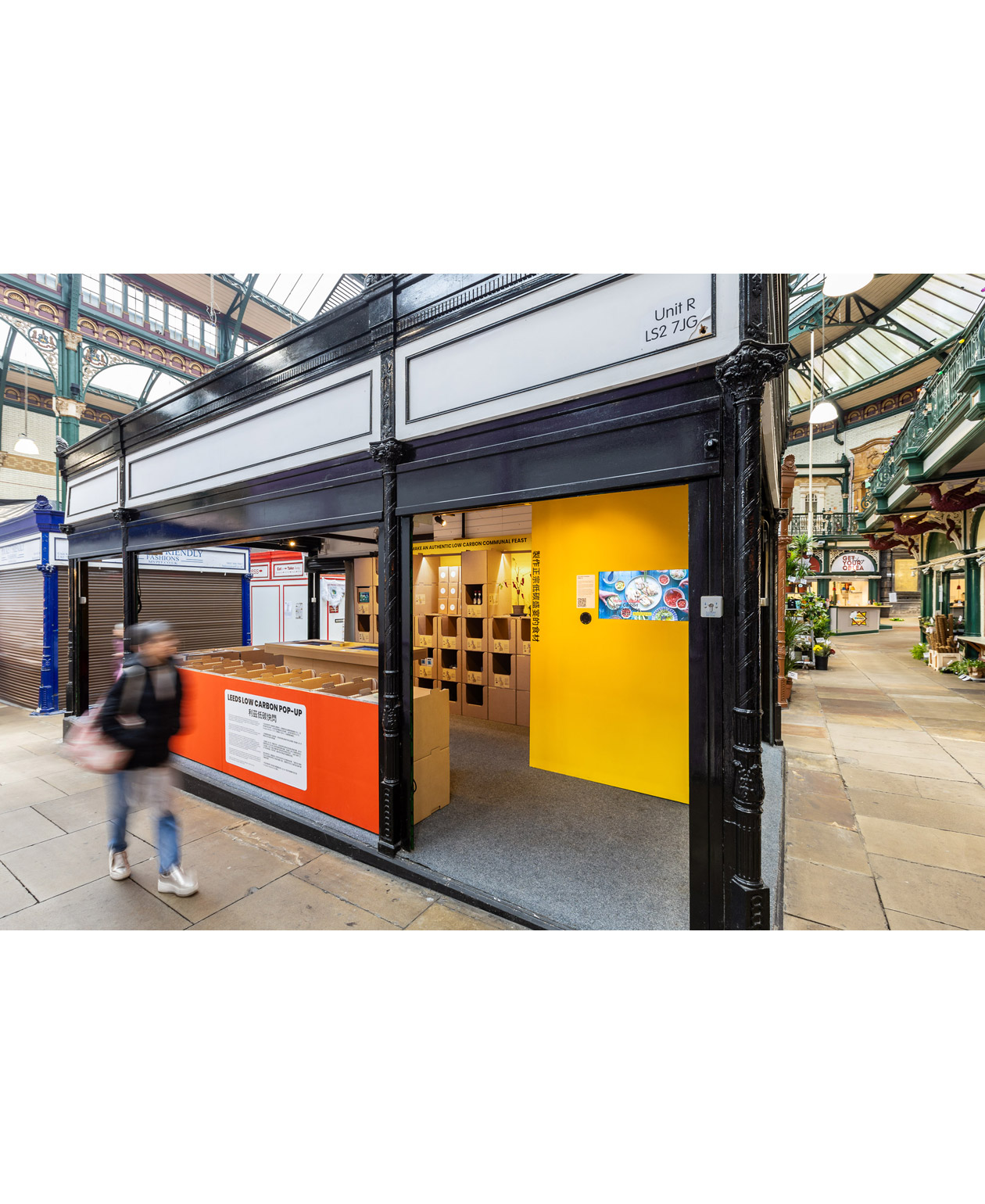
The wider Low Carbon Chinatown initiative, connected to this project, has been tested across multiple UK cities and exhibited internationally. This demonstrated that the approach of understanding climate issues and driving civic participation through the medium of food culture can be successfully applied across different cities and cultural environments.
The framework combining food culture, carbon data, and collective deliberation can be adapted by other regions to fit their own cultures and climate targets. By combining the “100 Climate Actions” toolkit, civic deliberation, and shared meals, it connects climate change beyond scientific information to everyday local experiences and practices. Rather than merely repeating a specific exhibition format, it expands into a participatory design method that links local food culture, climate data, and policy goals, thereby presenting a climate action model where civic participation translates into real local policies and education.