


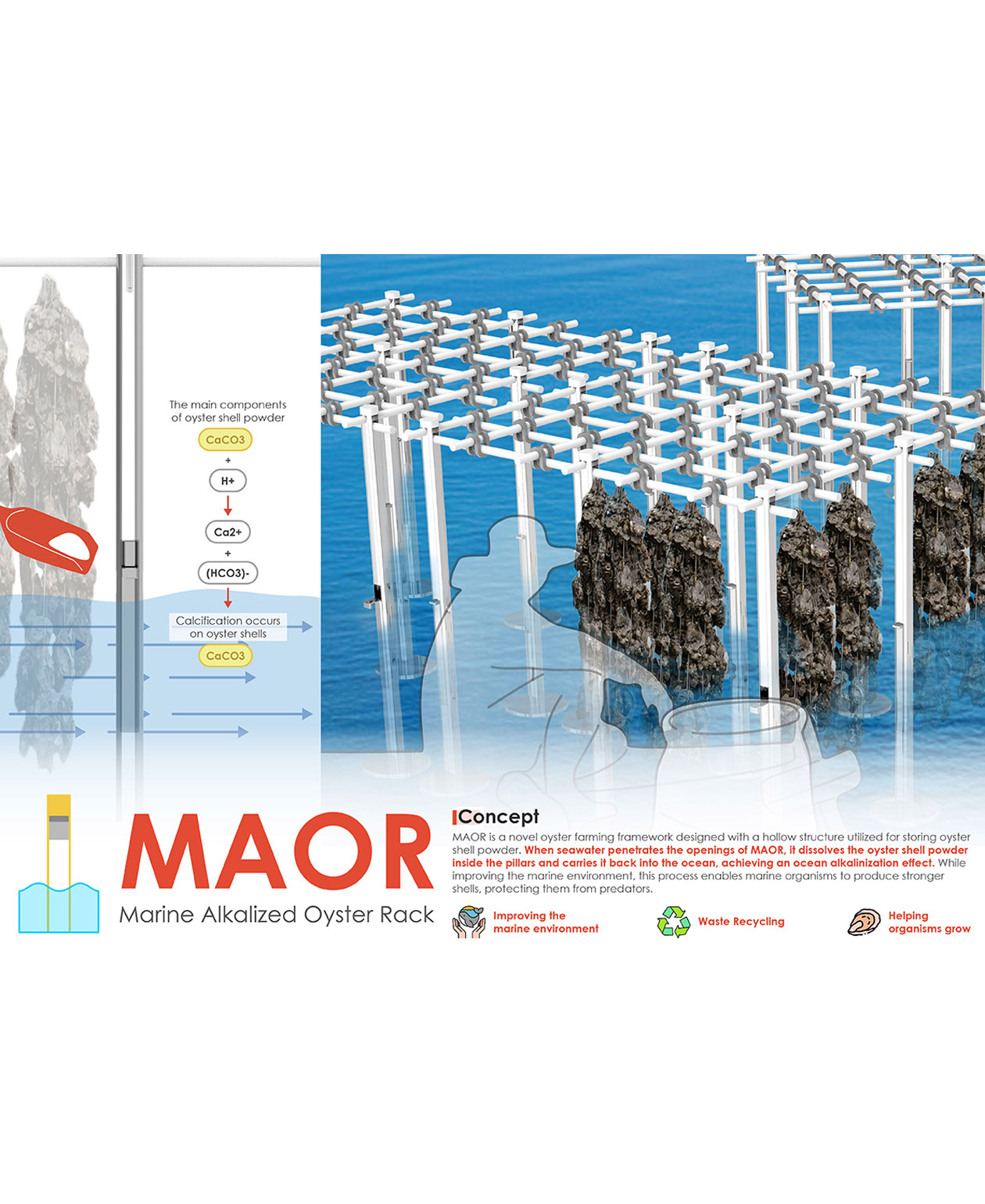
MAOR MAOR is a novel oyster farming framework designed with a hollow structure utilized for storing oyster shell powder


- Nationality
- Taiwan
- Group
- Guo Yi-Rou / Yeh Lo-Ying / Advised by Prof. Kai-Chu Li
About Project
MAOR is a new oyster farming framework designed to help oysters grow while responding to ocean acidification by utilizing waste oyster shells. It is designed to fill the inside of a hollow farming frame with oyster shell powder, and as seawater passes through the gaps in the structure, it gradually dissolves it and releases it into the ocean. Its key characteristic is combining the function of improving the marine environment into existing oyster farming facilities.
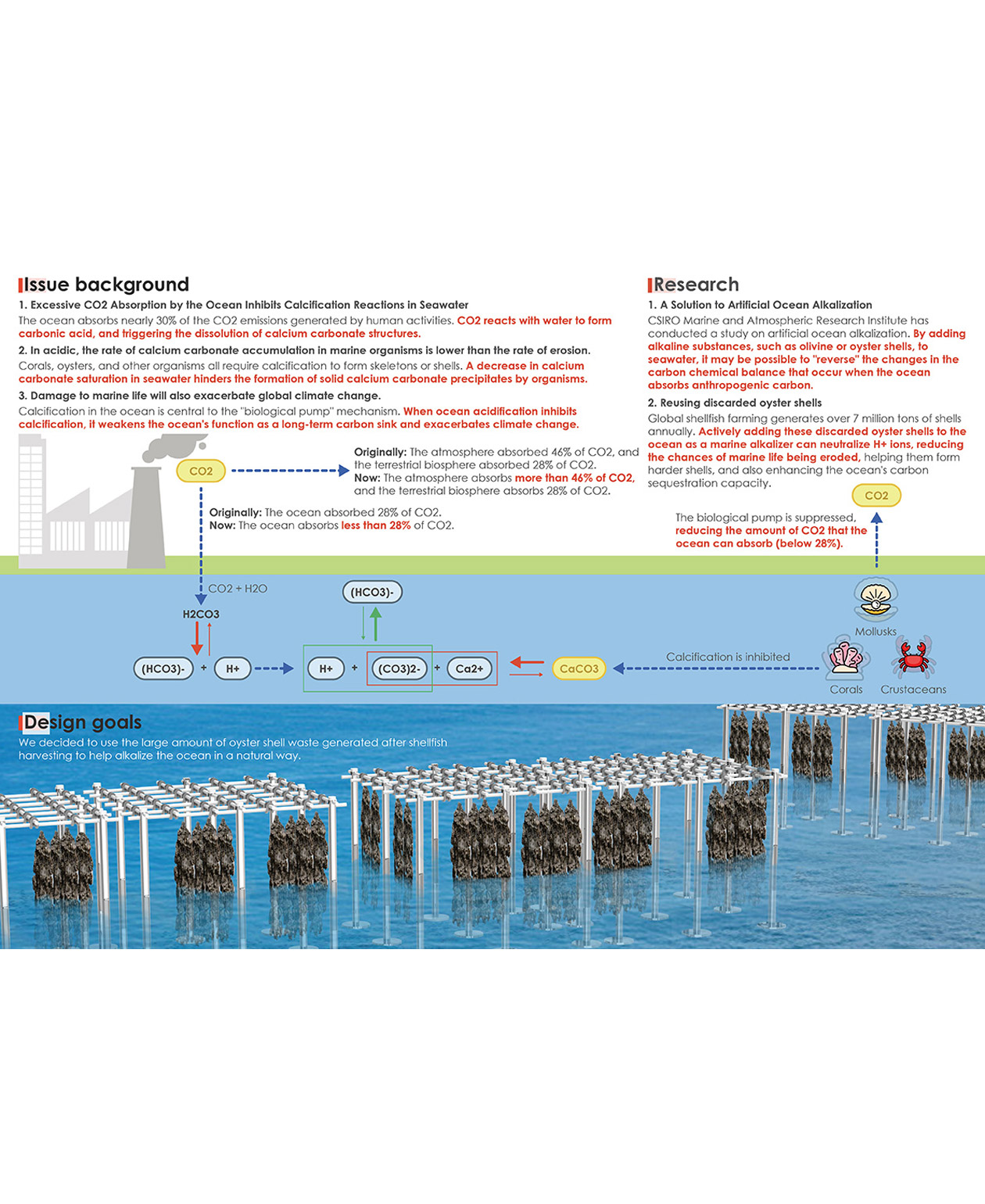
The ocean absorbs about 30% of carbon dioxide emissions generated by human activities, during which seawater acidification progresses. Carbon dioxide absorbed into seawater forms carbonic acid and increases the concentration of hydrogen ions, affecting the calcium carbonate structure required for oysters and other marine life to build shells. As acidification worsens, the rate of calcium carbonate dissolution becomes faster than the rate of formation, which can make it difficult for marine organisms to form shells.
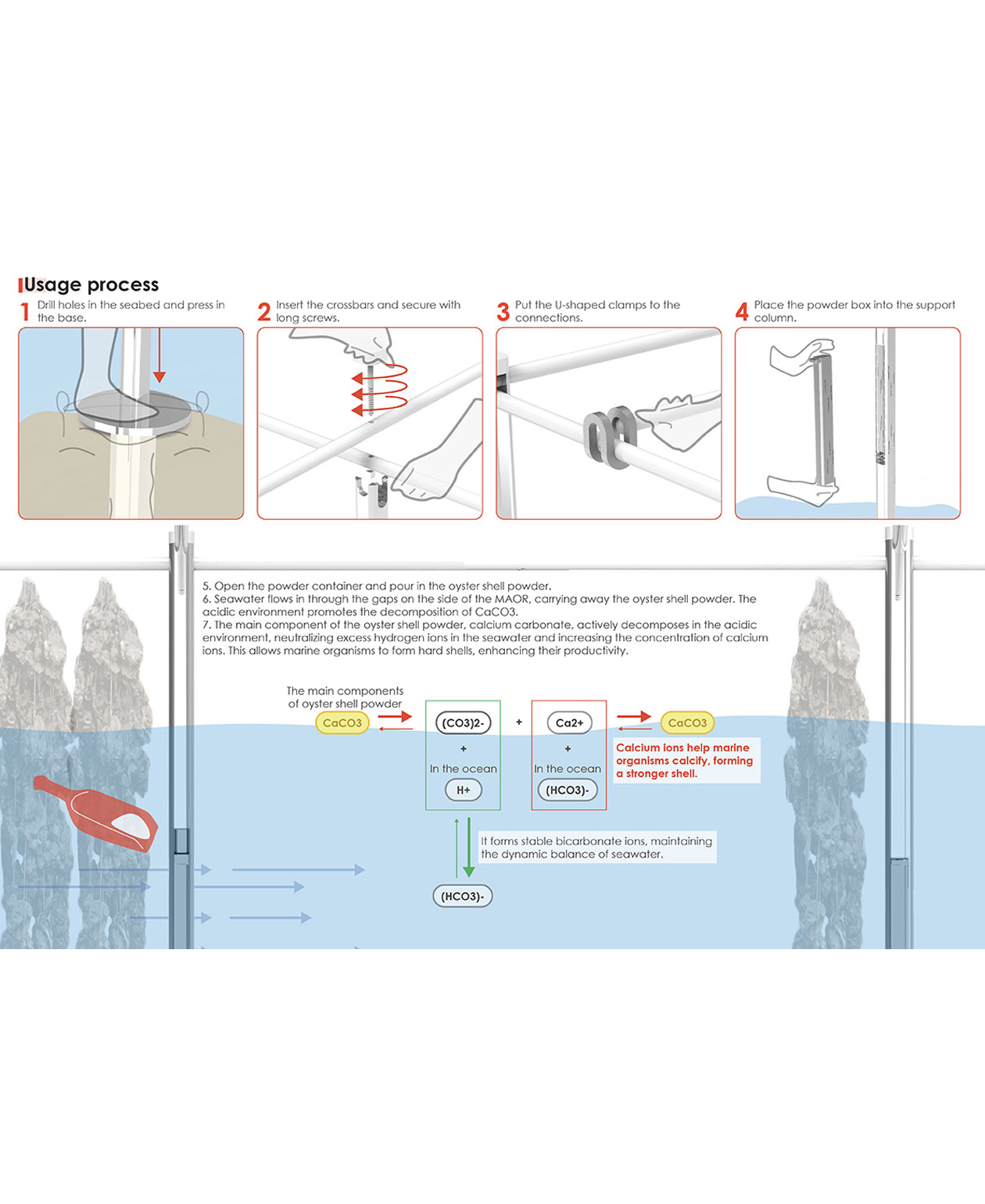
MAOR aimed to solve this problem by reusing waste generated during the oyster farming process. When seawater enters through the slits on the sides of the farming frame, the oyster shell powder filled inside comes into contact with the seawater. Calcium carbonate (CaCO₃), the main component of oyster shells, dissolves in acidic environments to neutralize excessive hydrogen ions and increase the concentration of calcium ions, helping oysters and other marine life form shells.
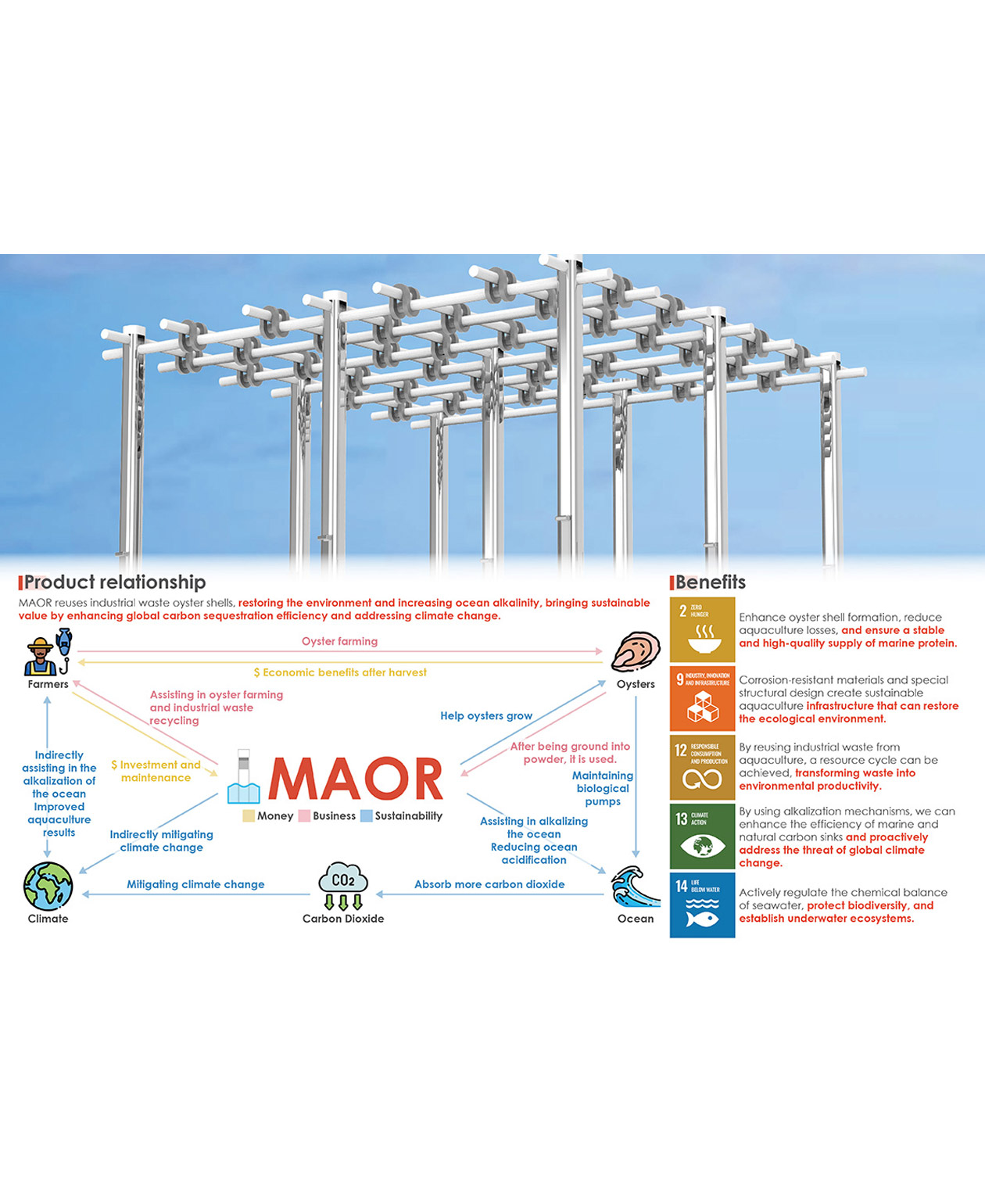
The core of the design lies in transforming oyster shells, which used to be discarded during the farming process, into a resource reused in the farming environment rather than a separate disposal target. By operating a facility that produces oysters while simultaneously storing oyster shell powder and supplying it to seawater, it connects aquaculture, waste utilization, and marine environment management into a single system. It also shows a circular design approach in that discarded resources are reused in the production process.
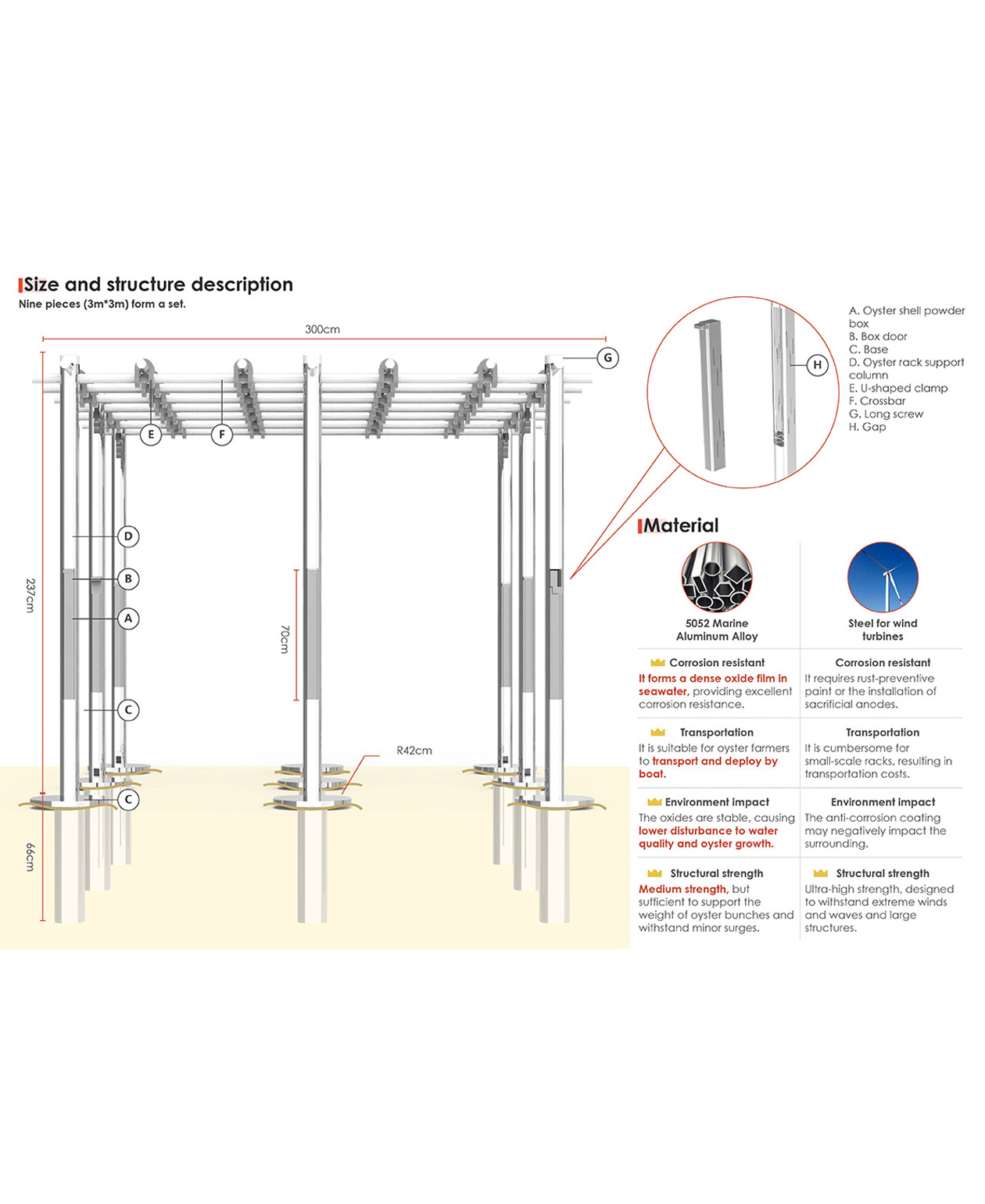
The farming frame was manufactured using 5052 marine-grade aluminum alloy. It has high corrosion resistance to seawater and structural strength, is easy to transport and install, and can be used for a longer period than traditional bamboo farming frames. The hollow pillars and side slits serve to support the structure while simultaneously storing oyster shell powder and contacting seawater.
This structure connects not only to improving the marine environment but also to the productivity of the aquaculture industry. By mitigating seawater acidification and supporting oyster shell formation, it aims to create a more stable growth environment and increase oysters' marketability and the economic sustainability of aquaculture. The social role of design can also be confirmed in that it considers environmental problems and fishing village production activities together by reusing regional oyster shell waste in the farming process.
MAOR is designed for fixed rack-suspension aquaculture methods and can be applied to oyster production regions such as Taixi Township, Yunlin County, Taiwan. There is also potential to expand to regions with high oyster production and similar farming methods, such as France, New Zealand, Thailand, and Hong Kong. By reusing regional oyster shells as aquaculture resources, it proposes a sustainable aquaculture design that addresses waste treatment, ocean acidification, and aquaculture productivity within a single structure.