


OMEX A modular autonomous vehicle system that swaps day-time passenger transport for night-time freight transport, maximizing resource use without idle time



- Nationality
- Germany
- Individual
- Vincent Ackermann
About Project
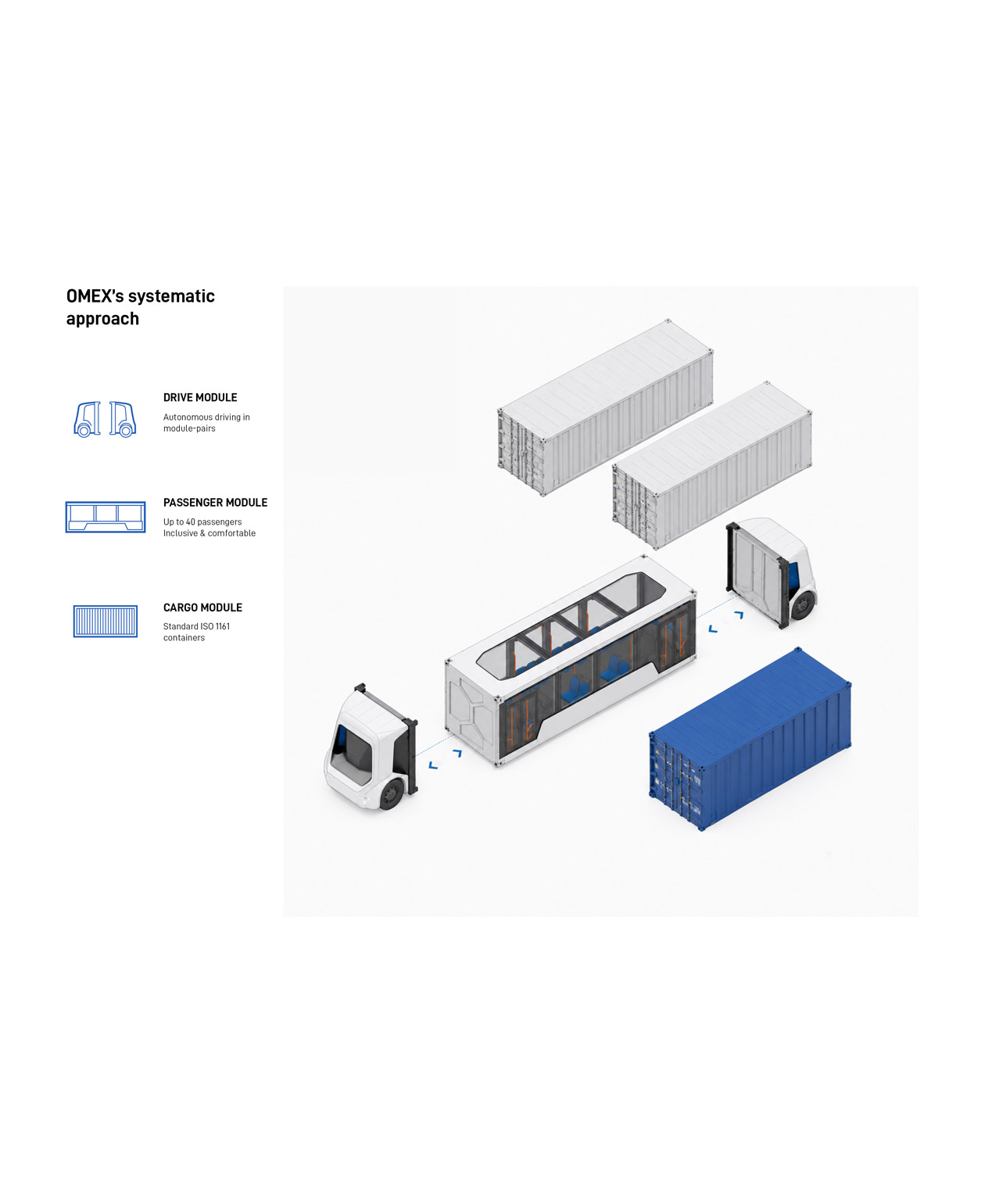
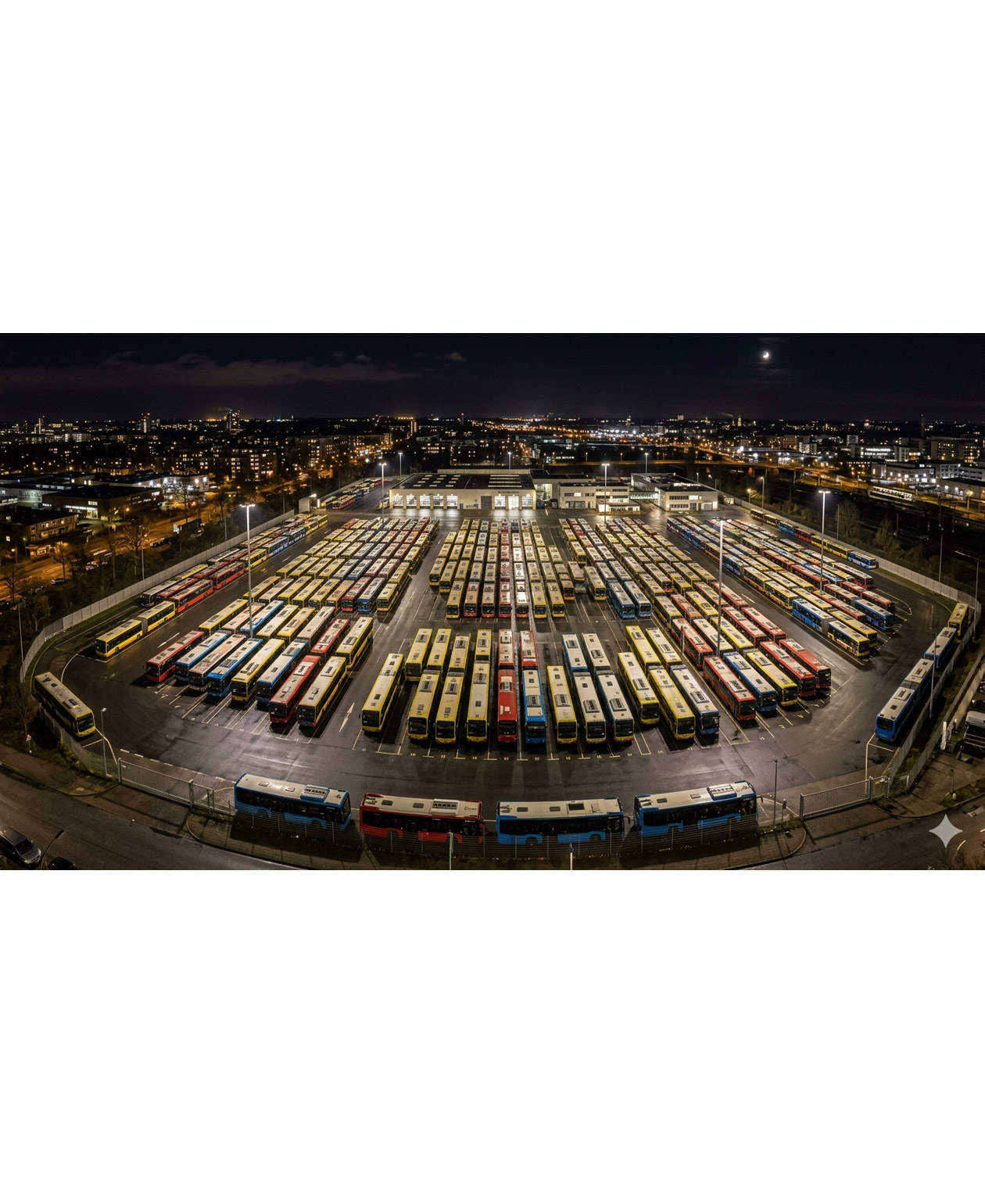
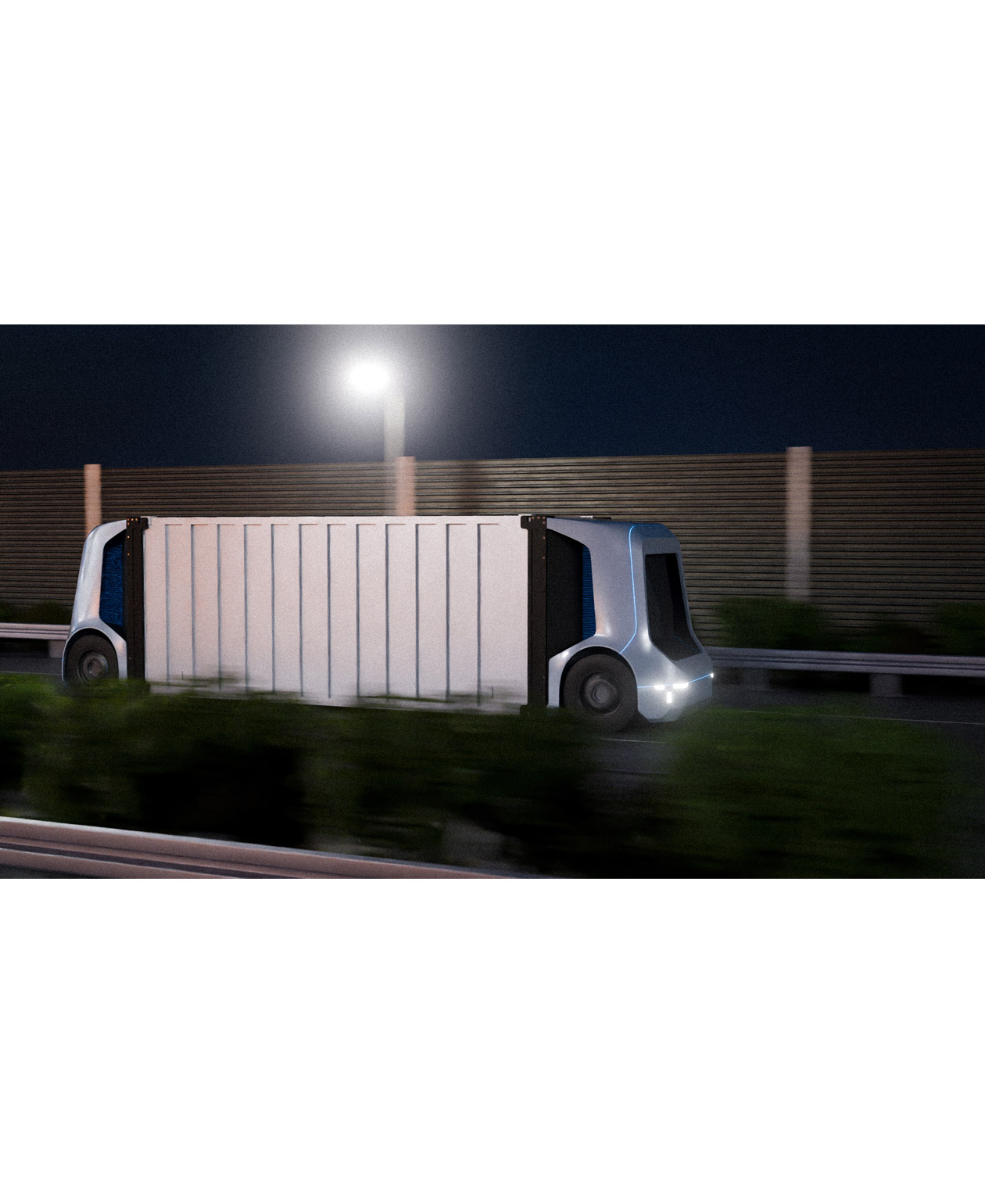
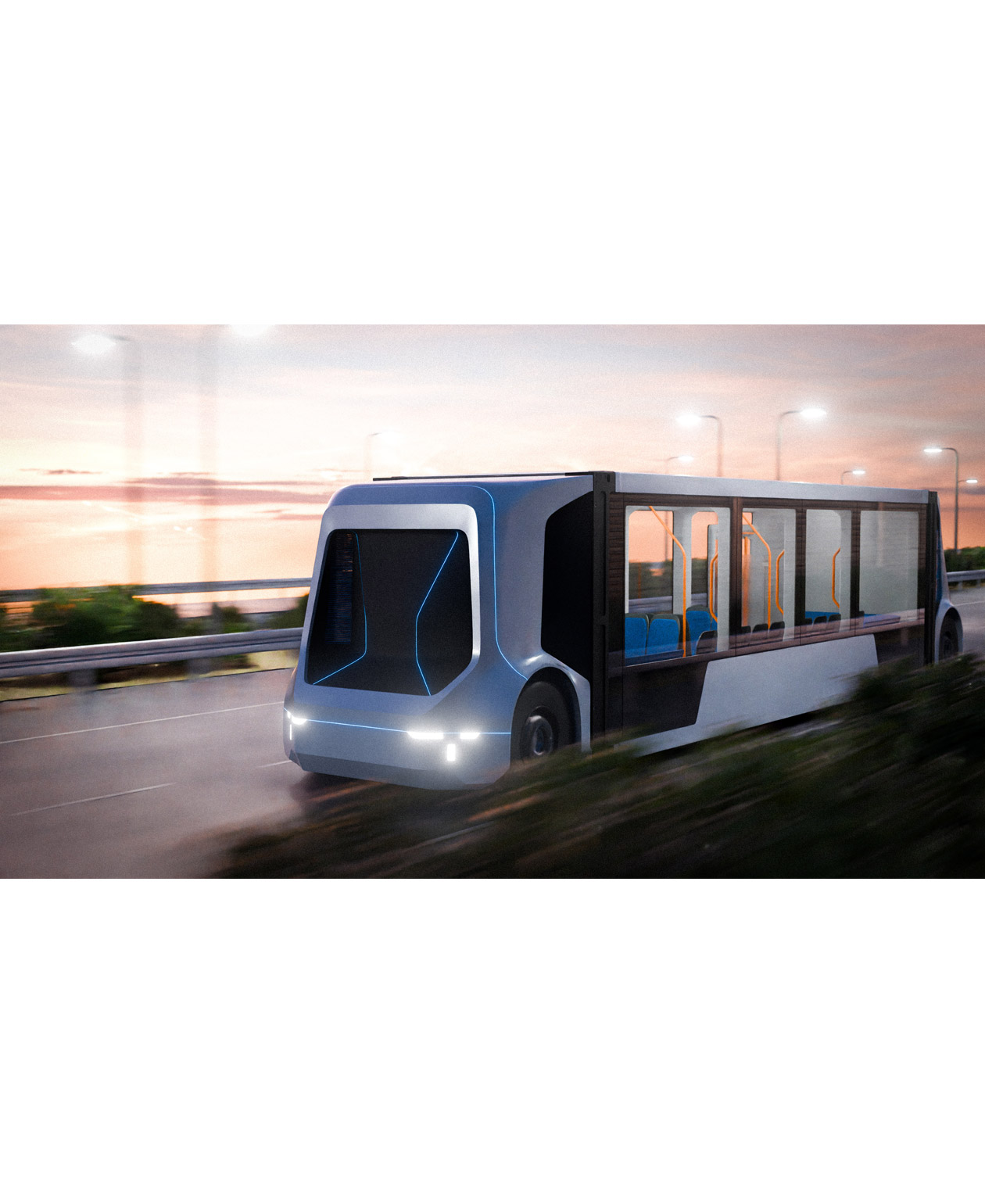
OMEX is a modular, autonomous vehicle system that unites public passenger transport and urban freight logistics on a single platform. It addresses a structural inefficiency in mobility: public buses often stand idle at night, while freight transport depends on separate fleets, external cranes, and fixed infrastructure. Both consume material and energy without being used to their full potential, which OMEX solves by using one shared vehicle type for both tasks: it carries passengers during the day and goods at night, achieving near-continuous use without downtime.
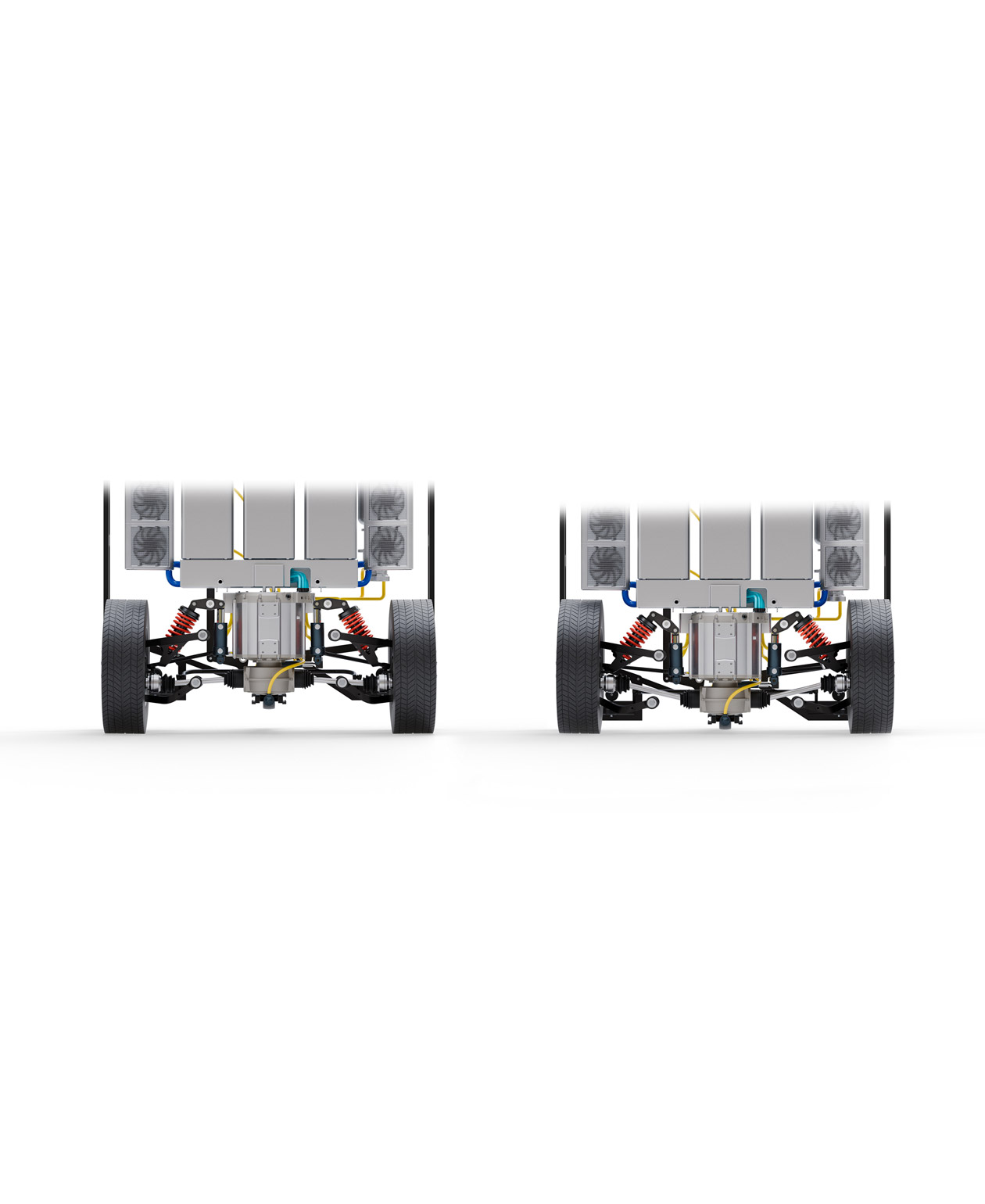
Two symmetrical, decoupled drive units dock to either end of a passenger module or standard ISO container, eliminating the need for a fixed vehicle body. Instead of separate vehicle types, two symmetrical, decoupled drive units dock onto either end of an interchangeable module, eliminating the need to manufacture completed vehicles separately for each purpose. By replacing only the central module according to the required time and purpose, a single driving system can be used together for both passengers and logistics.
OMEX's creative leap is treating one industrial standard, the ISO-1161 container corner fitting, as a universal interface for both freight and people. Developed in Germany, the concept builds on the established ISO-1161 corner-fitting standard rather than replacing it, extending an industrial logistics standard into public mobility to connect passenger and freight transport within a single system. Because OMEX builds on the globally standardized ISO-1161 container interface rather than a proprietary one, the concept transfers directly to any city or country already using ISO freight infrastructure, enhancing compatibility and ease of application to other cities and regions.
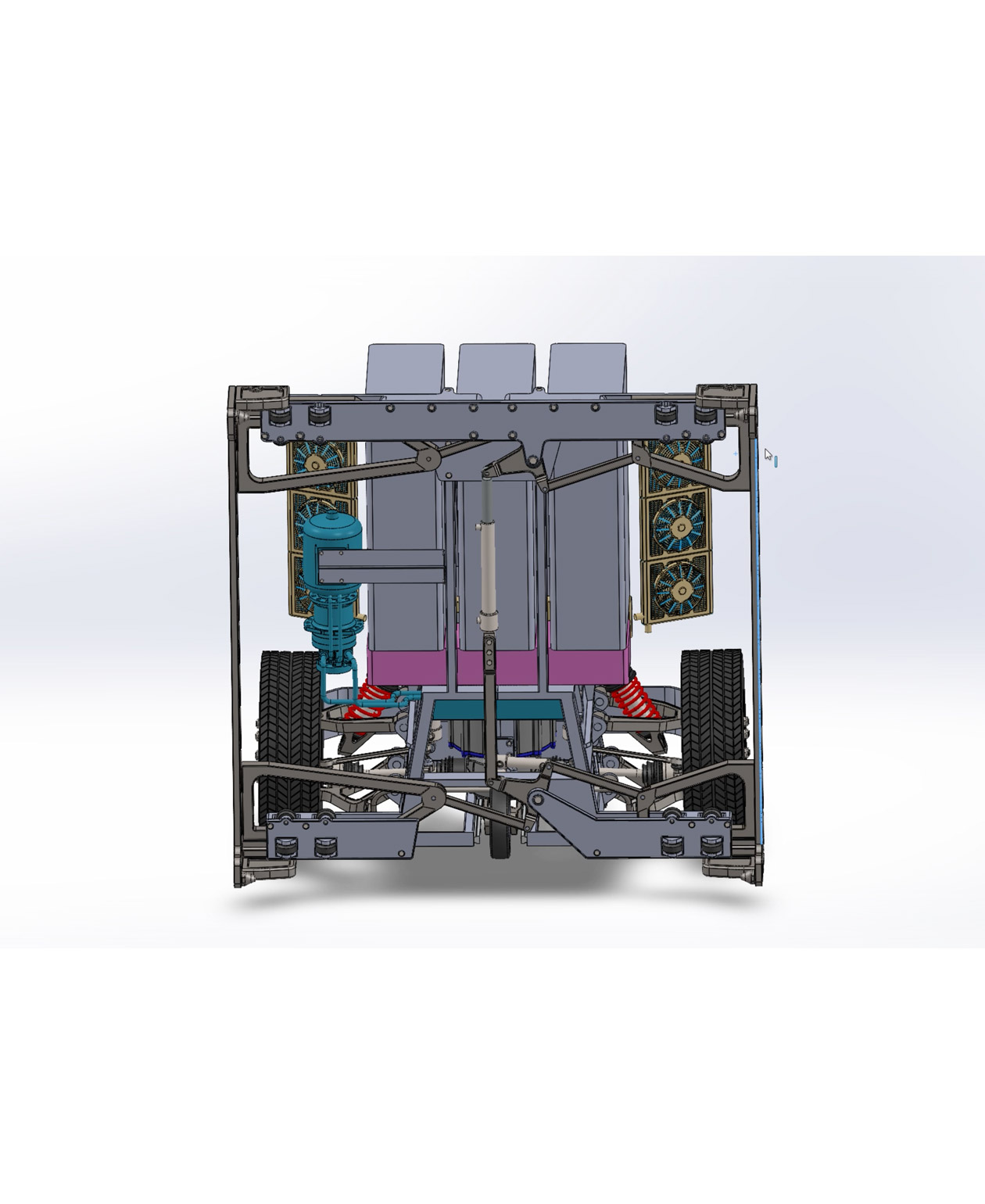
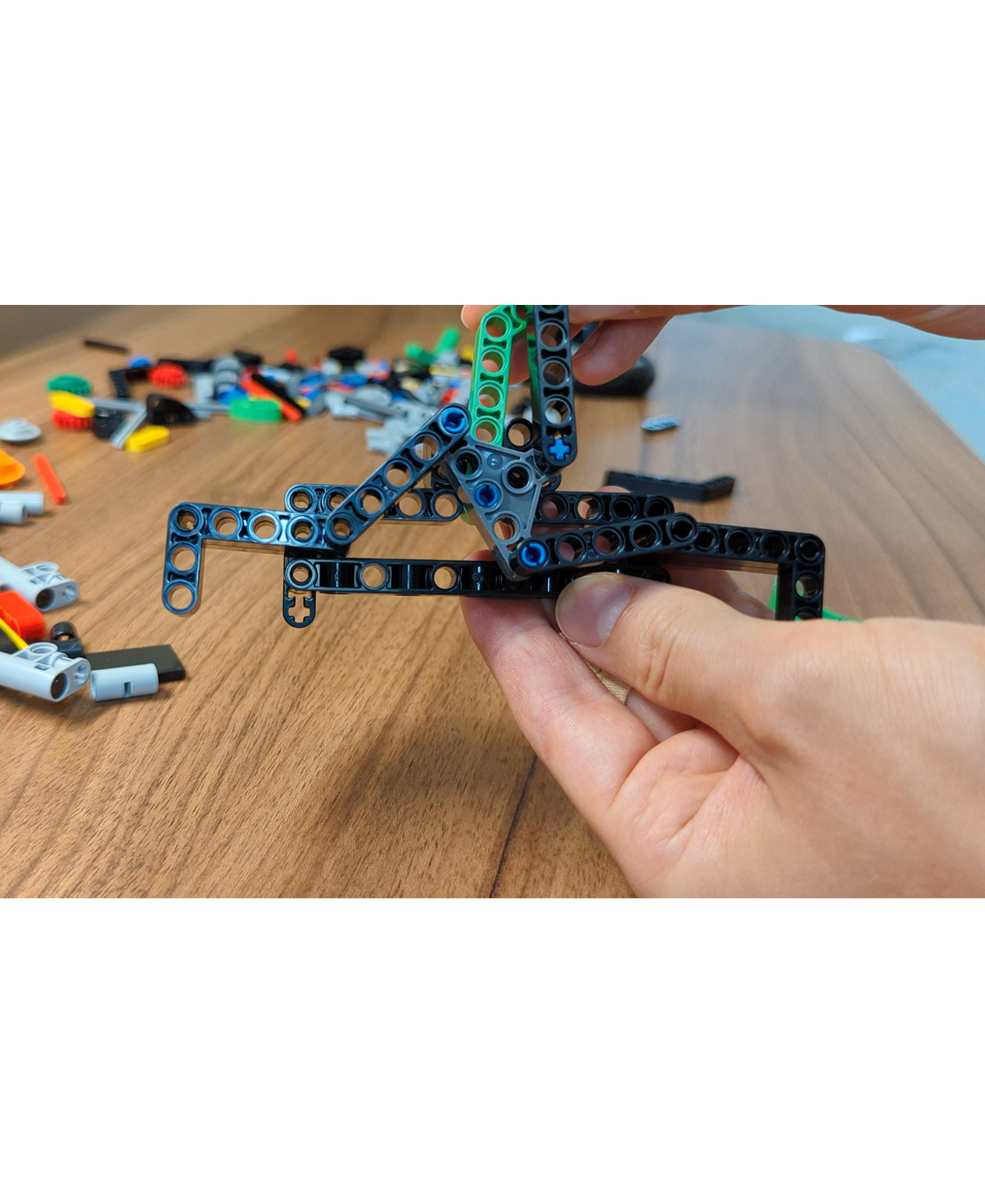
A height-adjustable chassis is also an important design element. A height-adjustable chassis lets the system grip and lift cargo directly off the ground by lowering the body, with self-centering gripper arms compensating for misalignment. Removing the need for cranes entirely, it can be utilized even at small or decentralized logistics hubs where large-scale facilities are difficult to equip.
The same height adjustment also enables step-free boarding for passengers, improving accessibility. When using the passenger module, adjusting the vehicle height enables step-free boarding and alighting, allowing wheelchair users and people with reduced mobility to use it more easily. It applies a single structural device to the disparate demands of freight operation efficiency and public transit accessibility.
OMEX changes resource utilization methods by switching functions according to time zones rather than fixing vehicles to a specific use. During peak commuting hours, more vehicles are available for public transport; at night, when passenger demand decreases, the same drive units can be utilized for freight transport. Rather than operating separate passenger and freight vehicles individually, it increases the usage efficiency of vehicles and parts, reducing idle time to lower resource and energy consumption.
Its scalability is both technical and economic: shared components across passenger and freight units lower production and maintenance costs. Based on common components, manufacturing and maintenance systems can be simplified, and by connecting with existing ISO logistics infrastructure, the burden of building new foundational facilities can also be reduced. Combined with autonomous driving technology, it can evolve into an urban mobility system that flexibly distributes passenger and logistics functions according to time-based demand.
OMEX goes beyond operating a single vehicle longer, reconstructing the fixed vehicle types of conventional “buses” and “trucks” themselves into combinations of modules and functions. Combining international standards, modular structures, and height-adjustment technology, it simultaneously enhances public transit accessibility and logistics efficiency, proposing a new transportation and logistics system that utilizes urban vehicles and infrastructure more effectively.