


RE:Play Green Hero A public space transformation project turning urban areas into play-based learning environments for circular economy and social sustainability




- Nationality
- Korea, Republic of
- Group
- Kyung Hee University, Dept. of Industrial Design
About Project
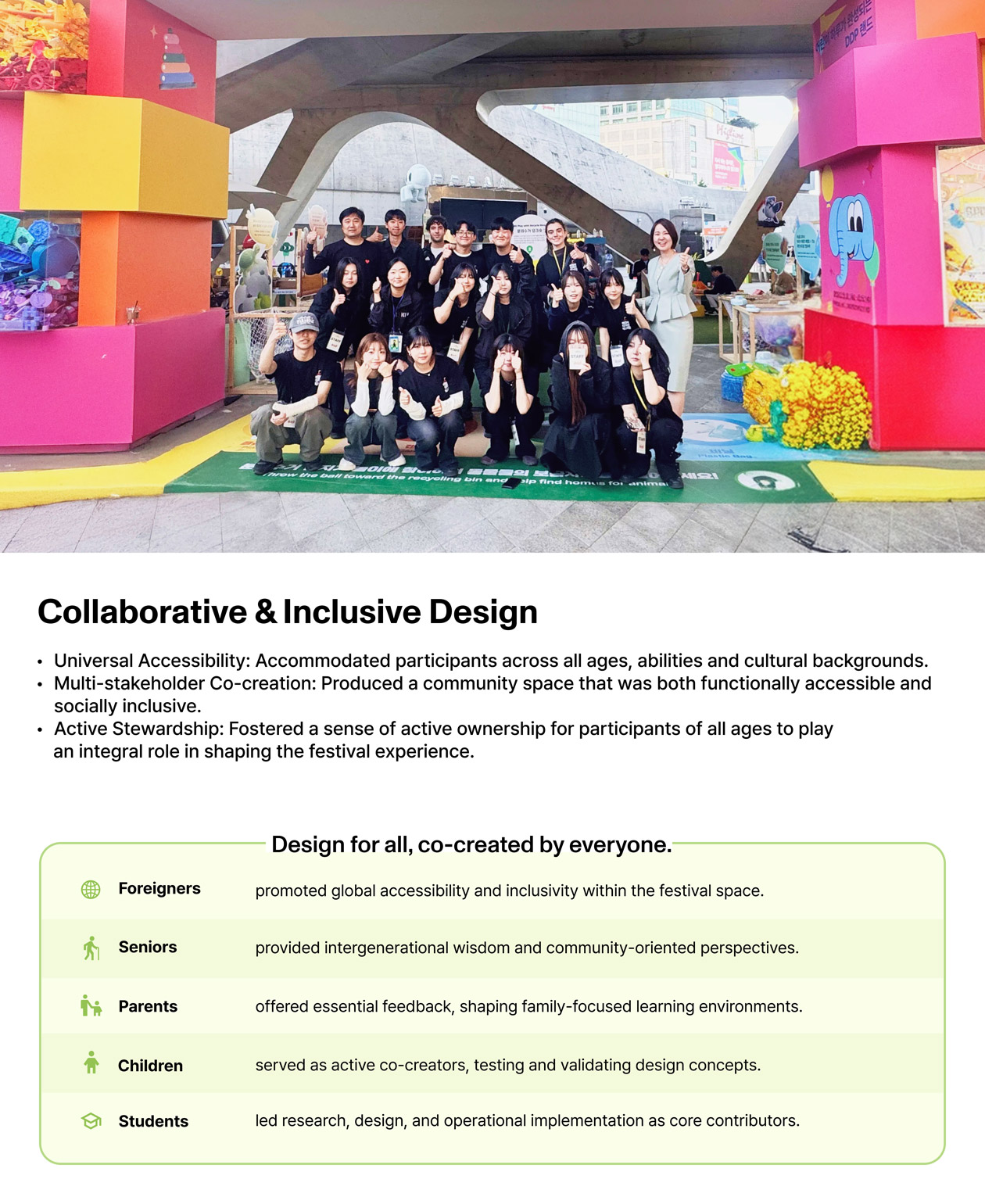
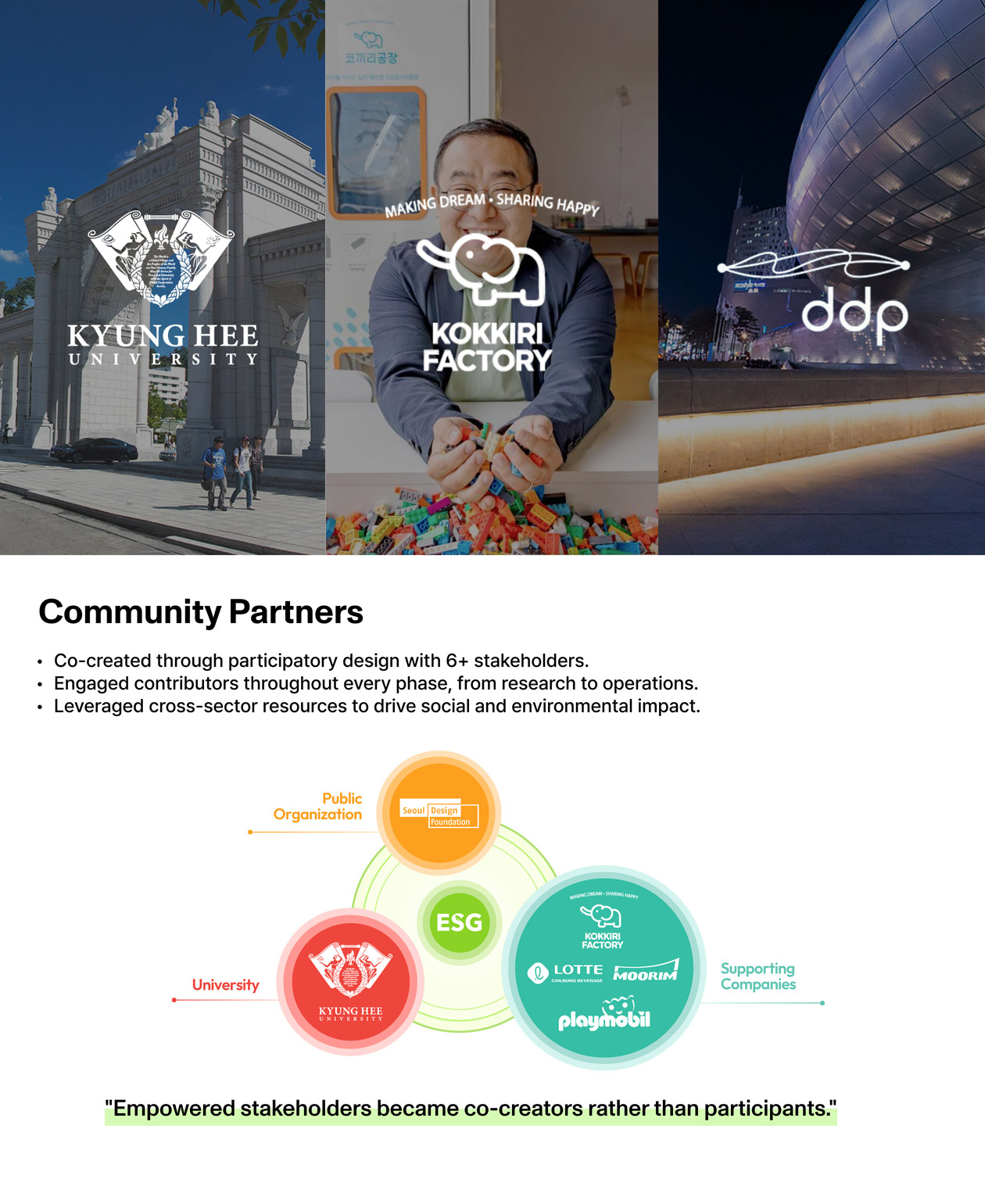
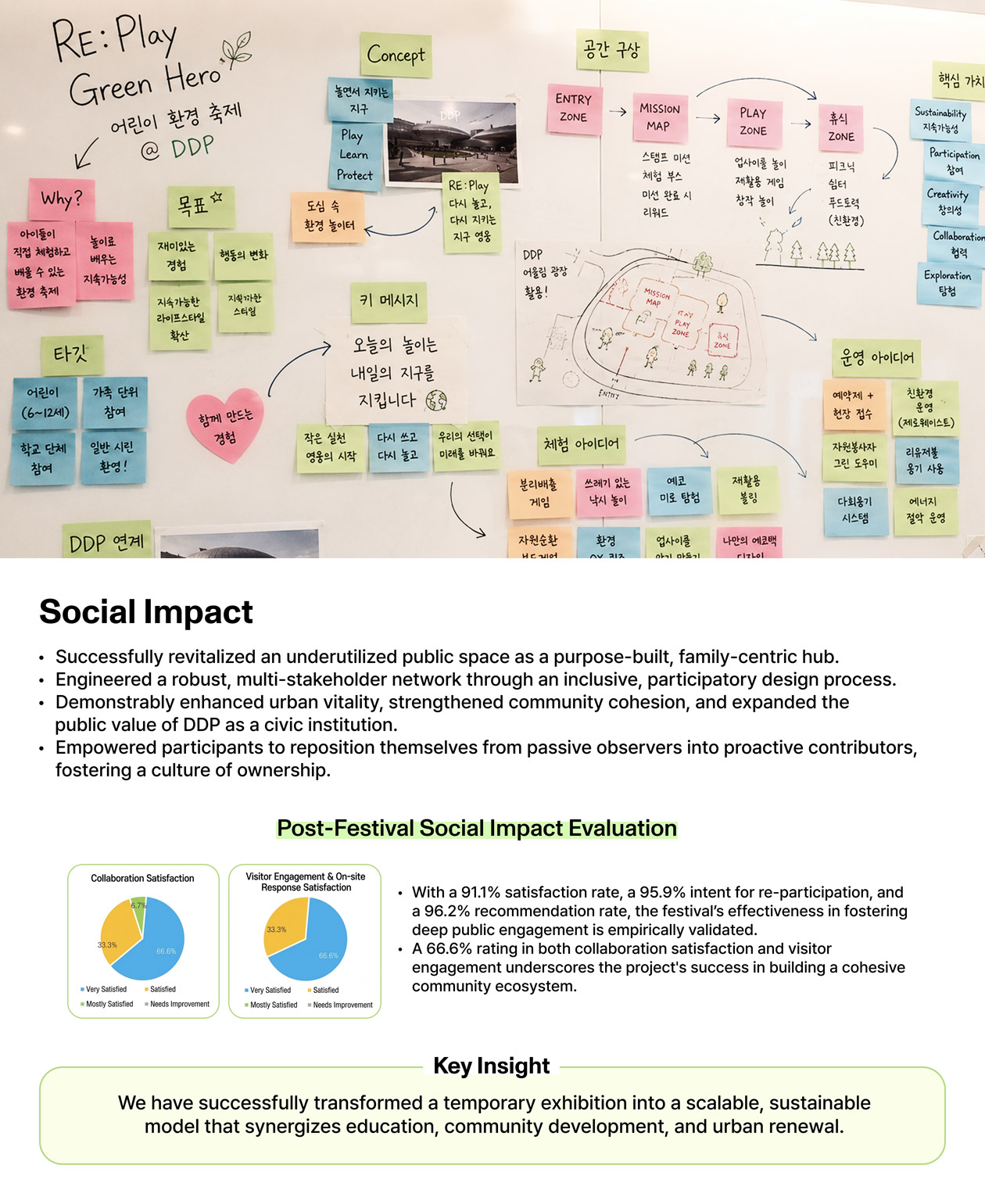
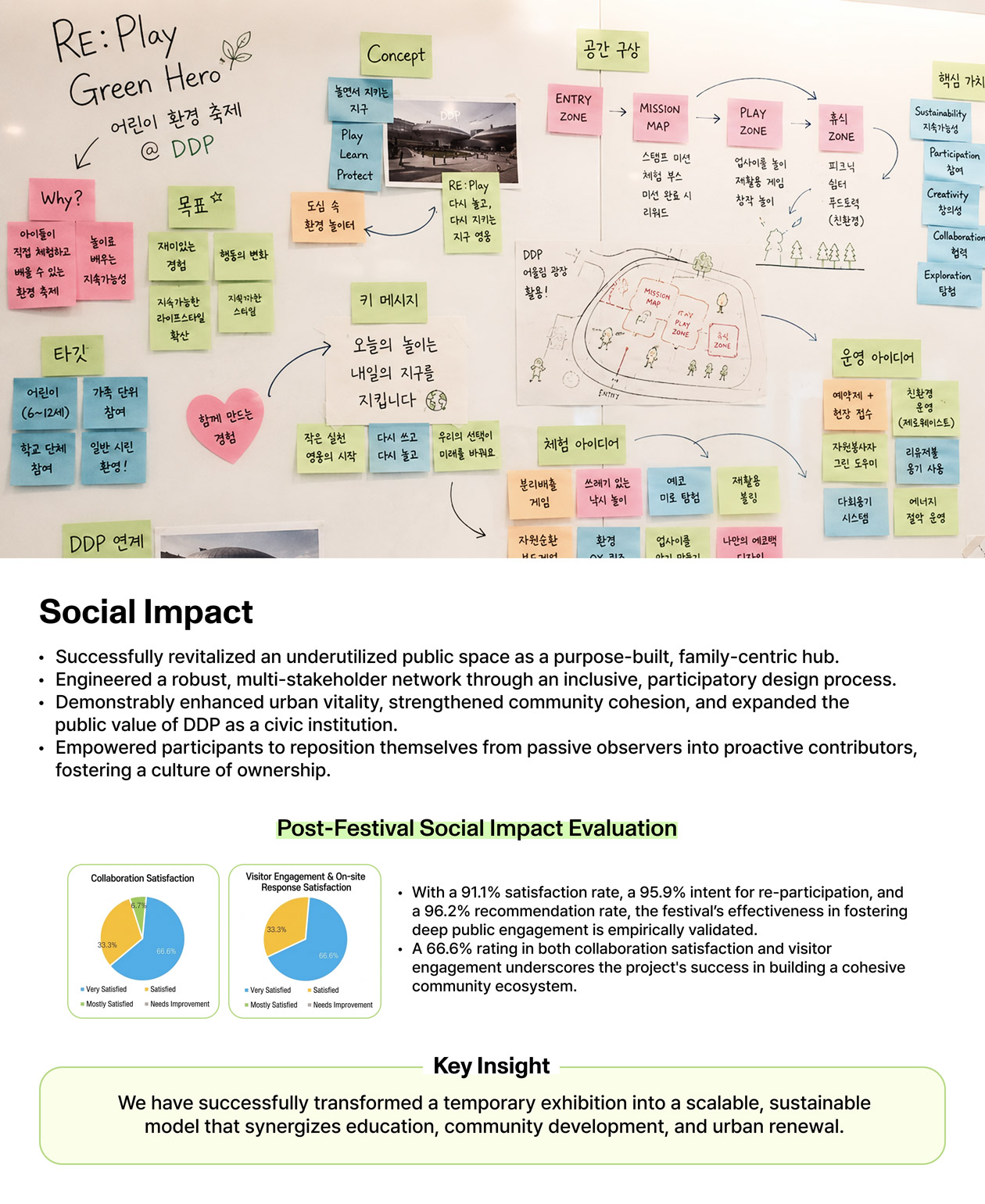
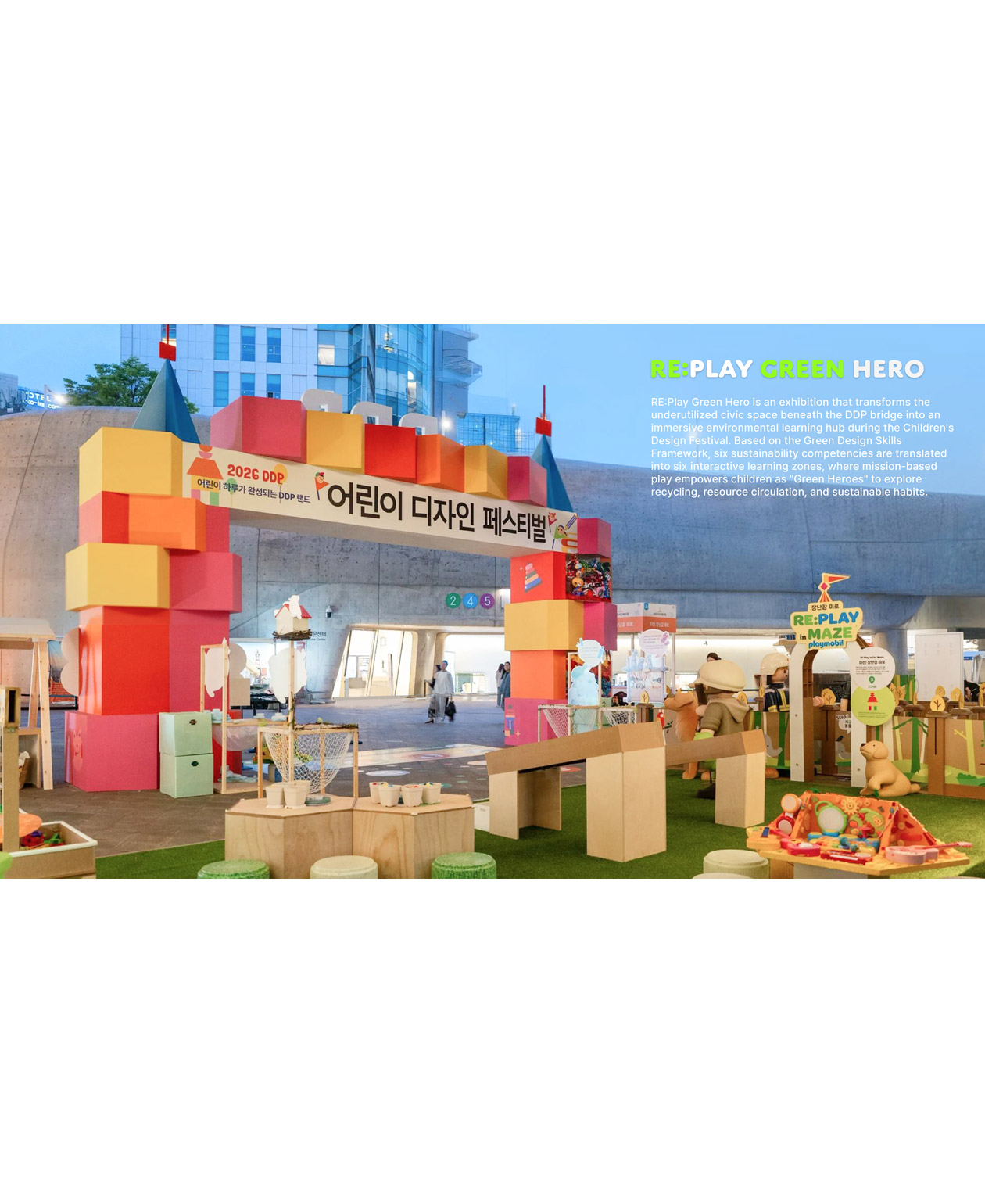
RE:Play Green Hero is an ESG experience exhibition designed to help children understand sustainability through play, exploration, and participation. The project was developed through collaboration among Kyung Hee University, the Seoul Design Foundation, public institutions, private organizations, parents, and children.
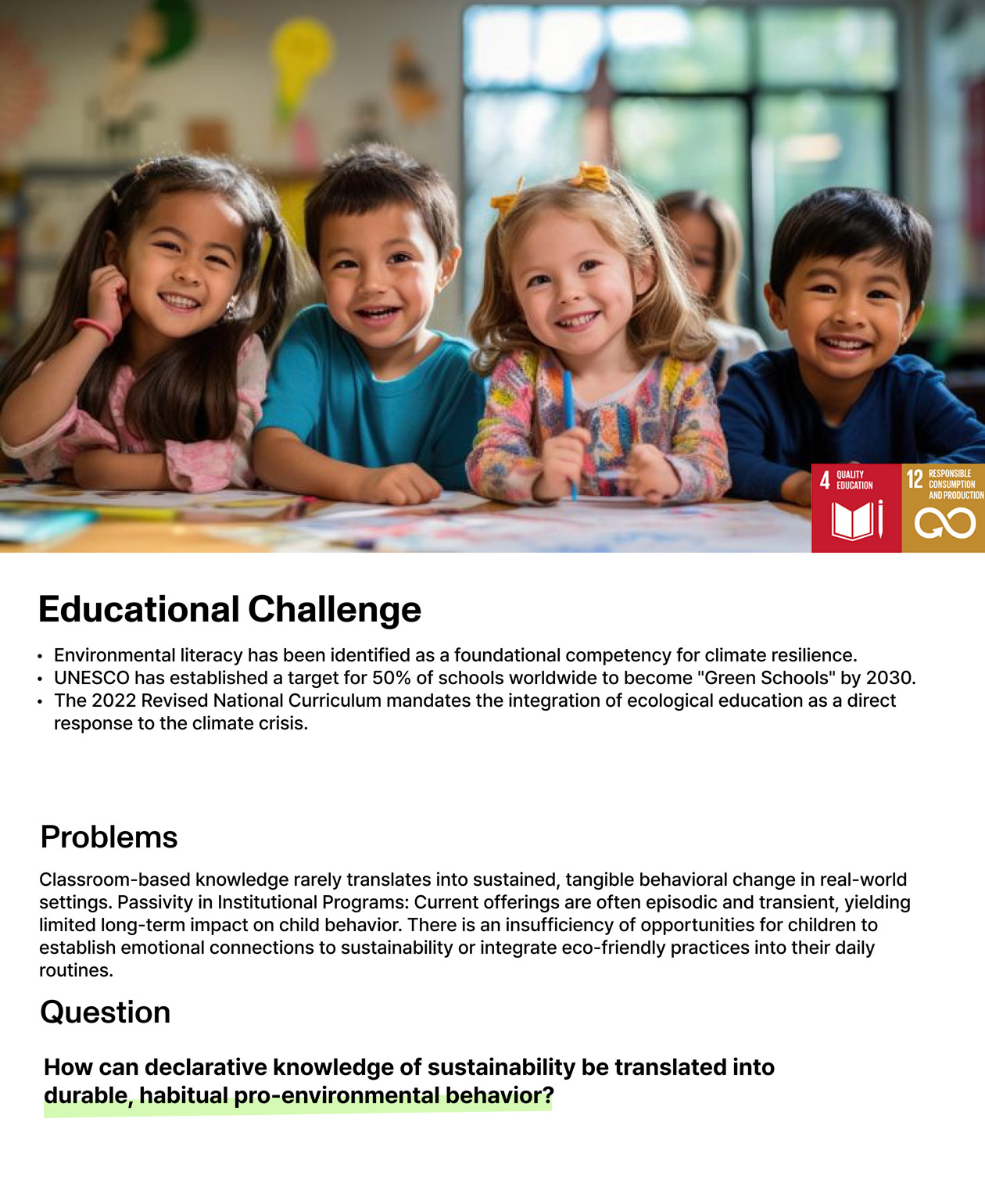
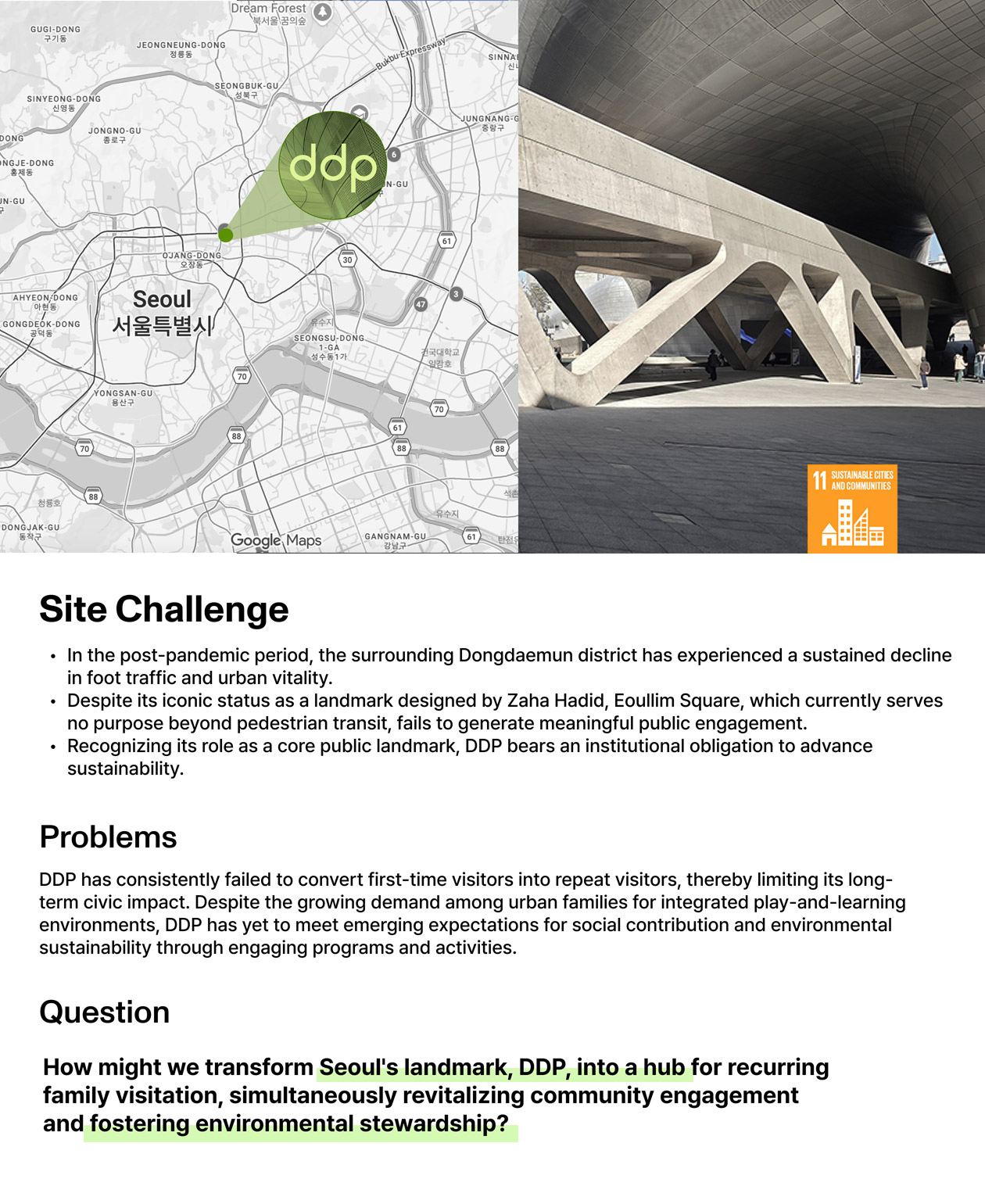
The project responds to two key challenges: the shortage of meaningful family-oriented urban experiences and the limitations of conventional environmental education, which tends to rely on passive instruction rather than direct, embodied experience. By transforming DDP’s urban public space into an interactive playground, children become active participants rather than passive learners, understanding sustainability through movement, play, and self-directed action. Rather than merely conveying environmental messages, the core of the project lies in designing the experience itself to drive behavioral change.
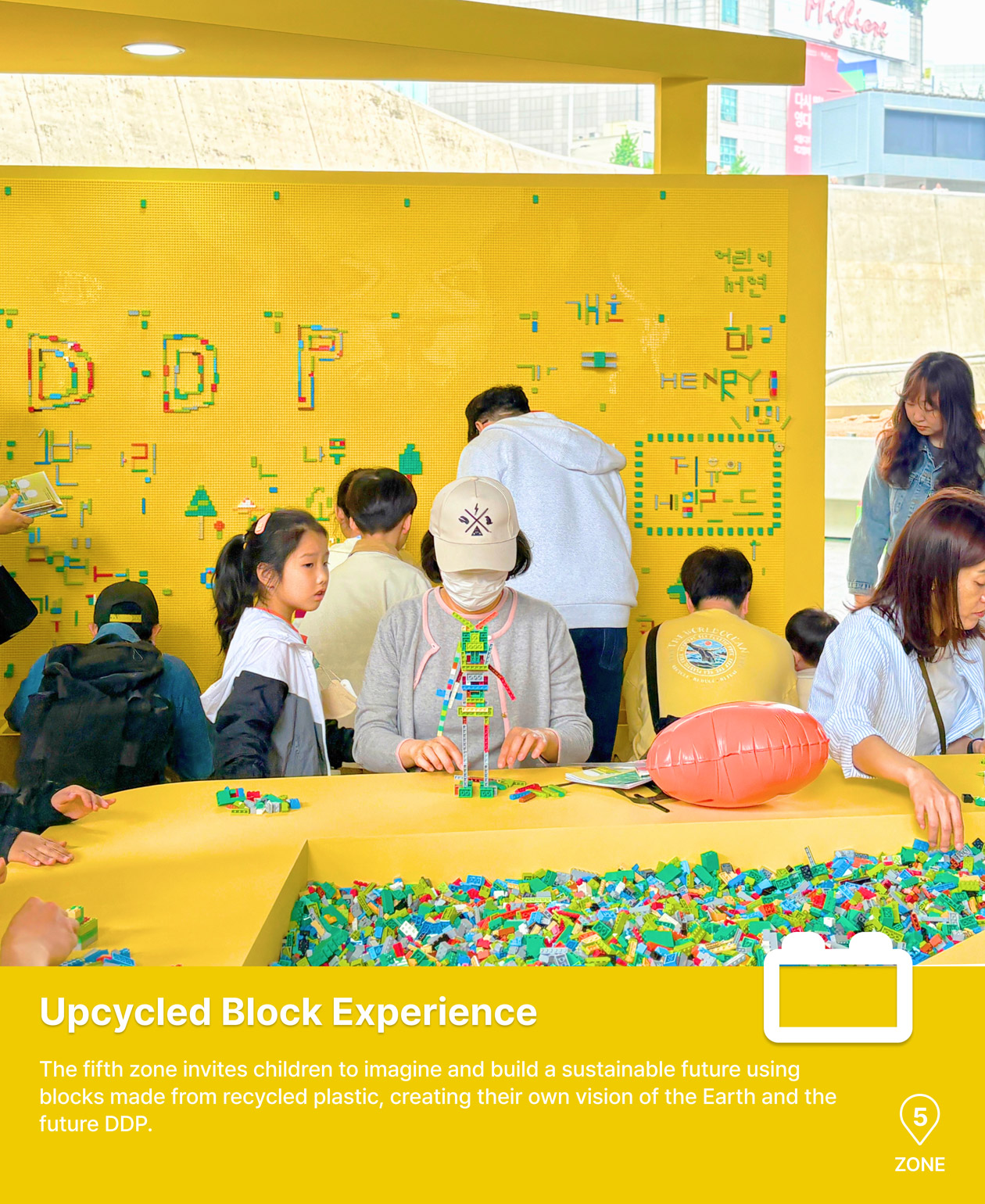
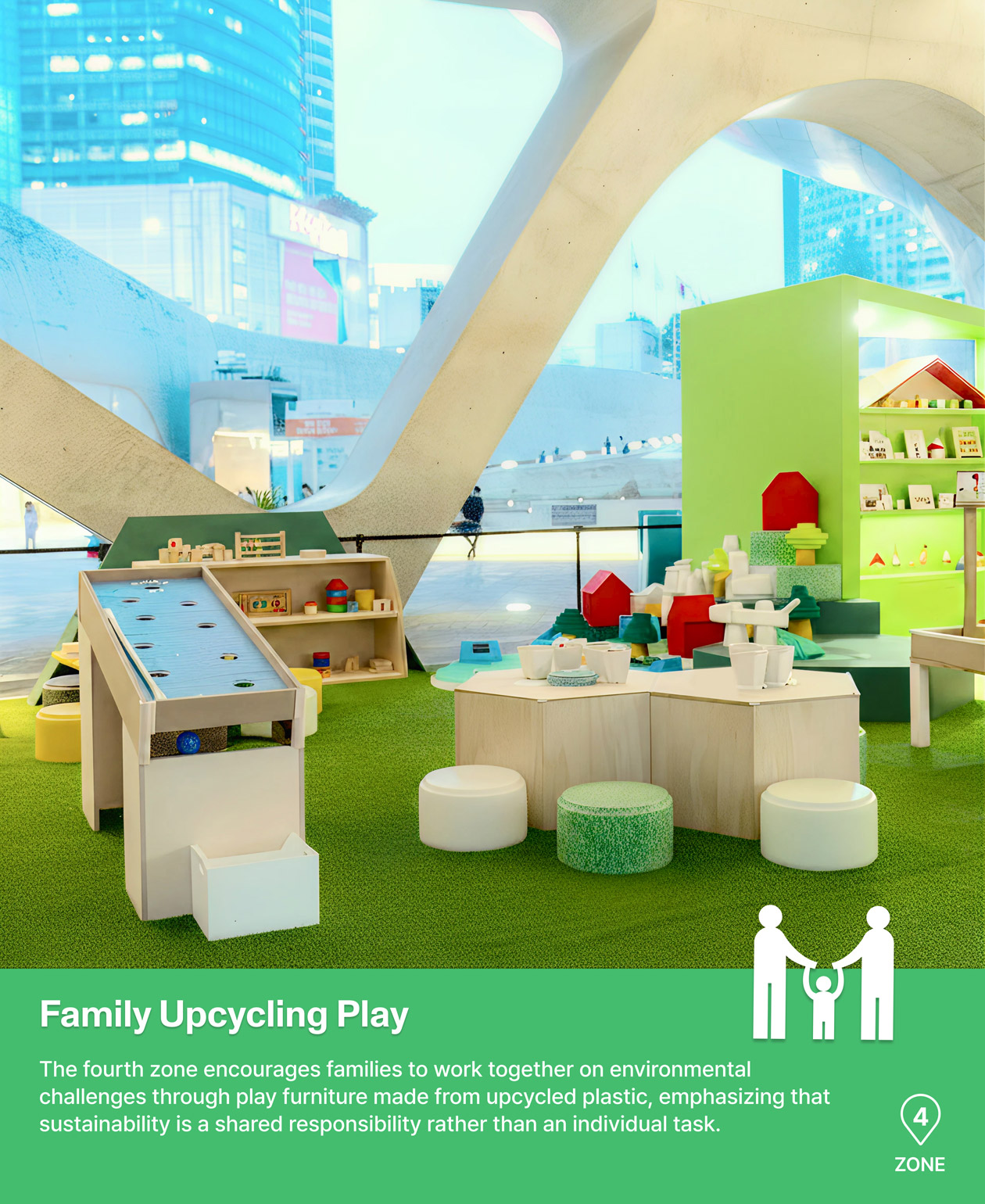
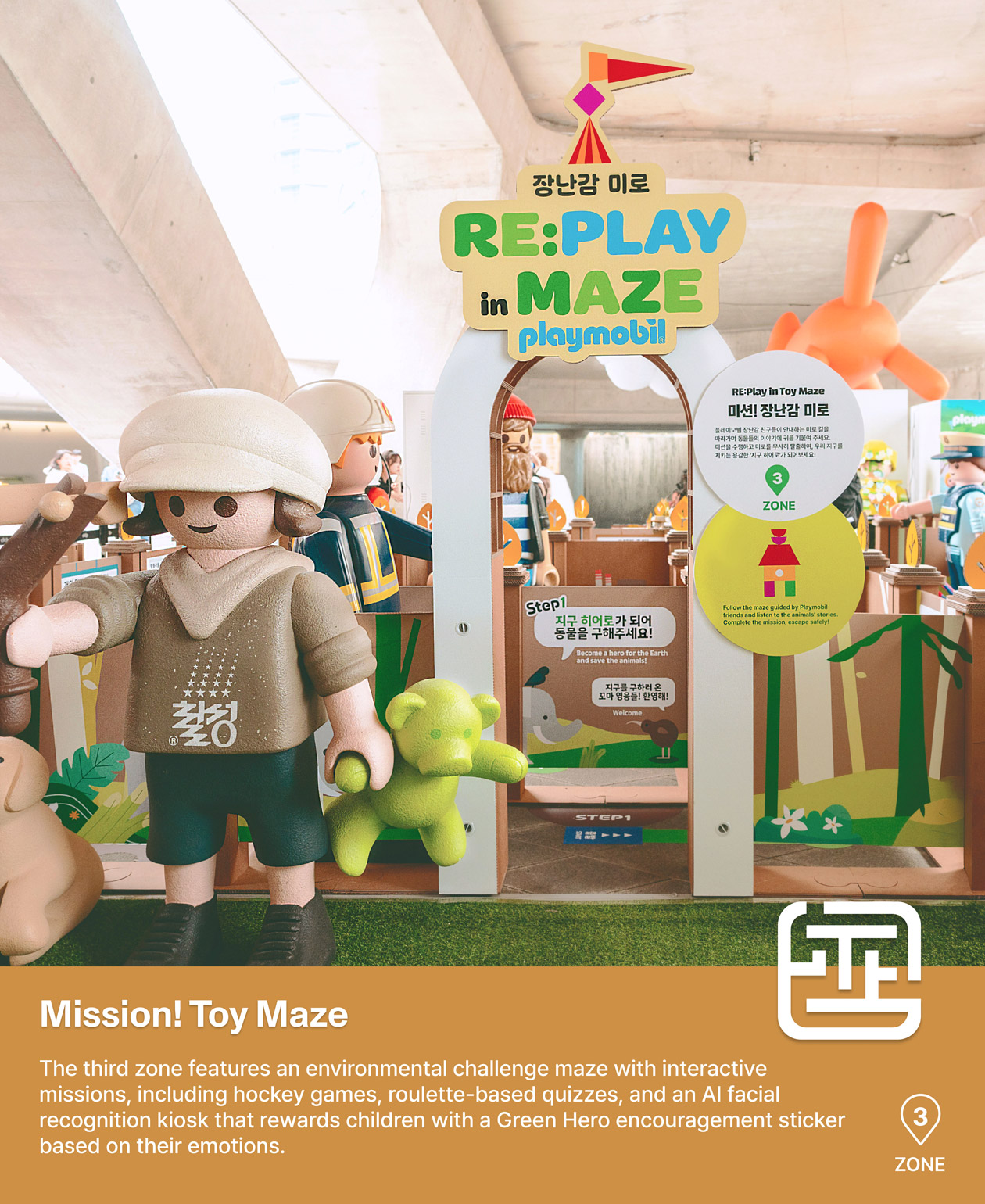
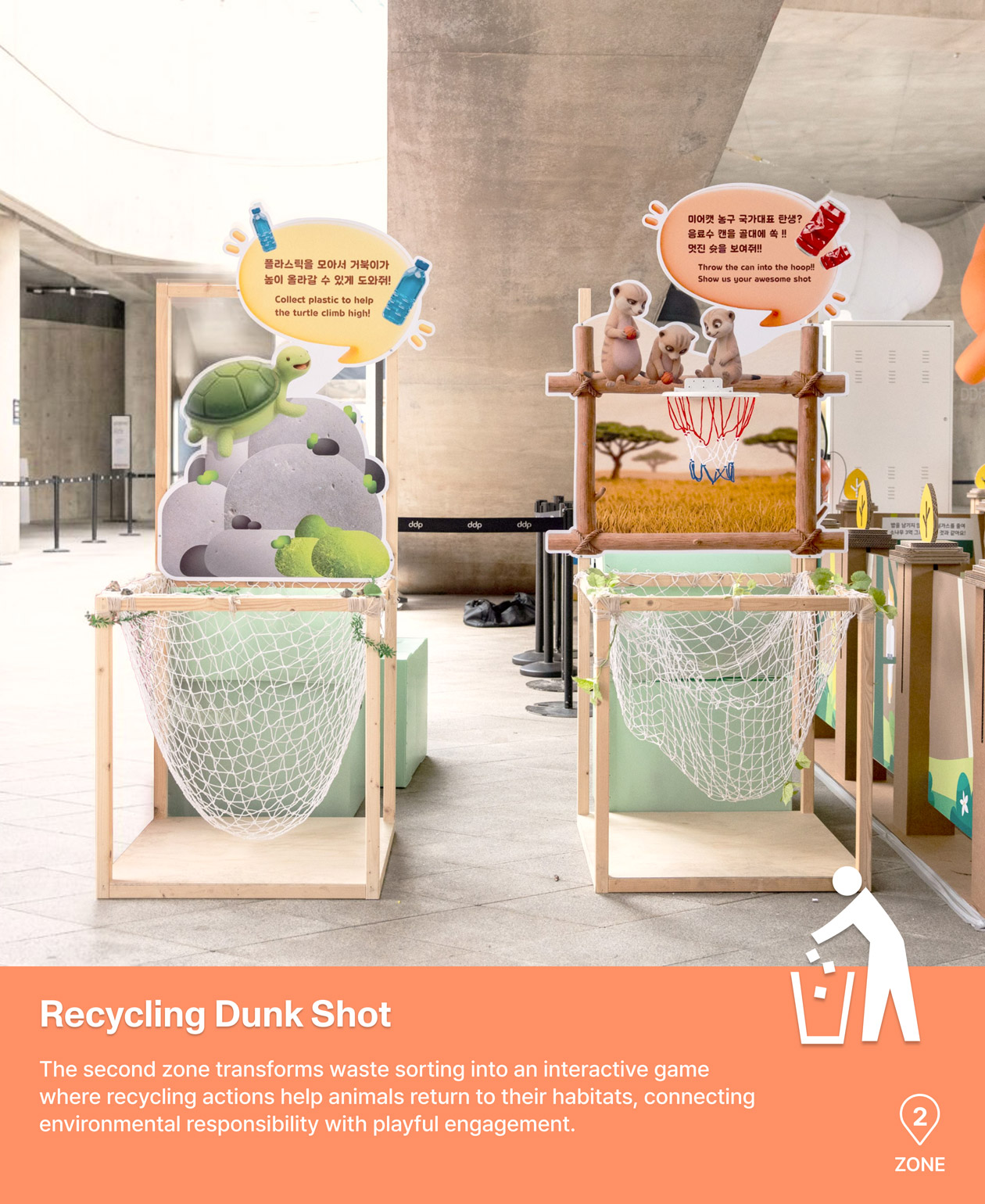
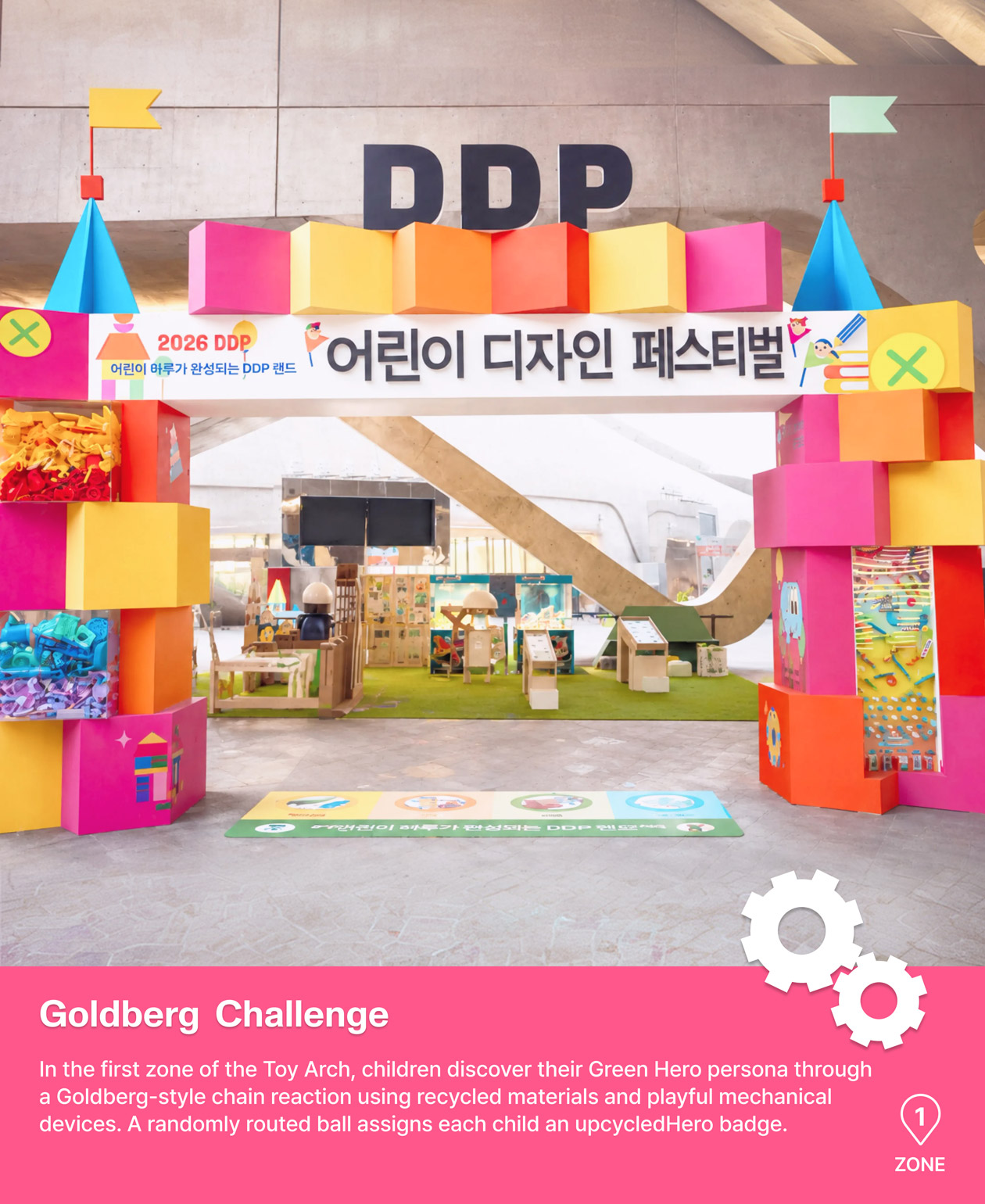
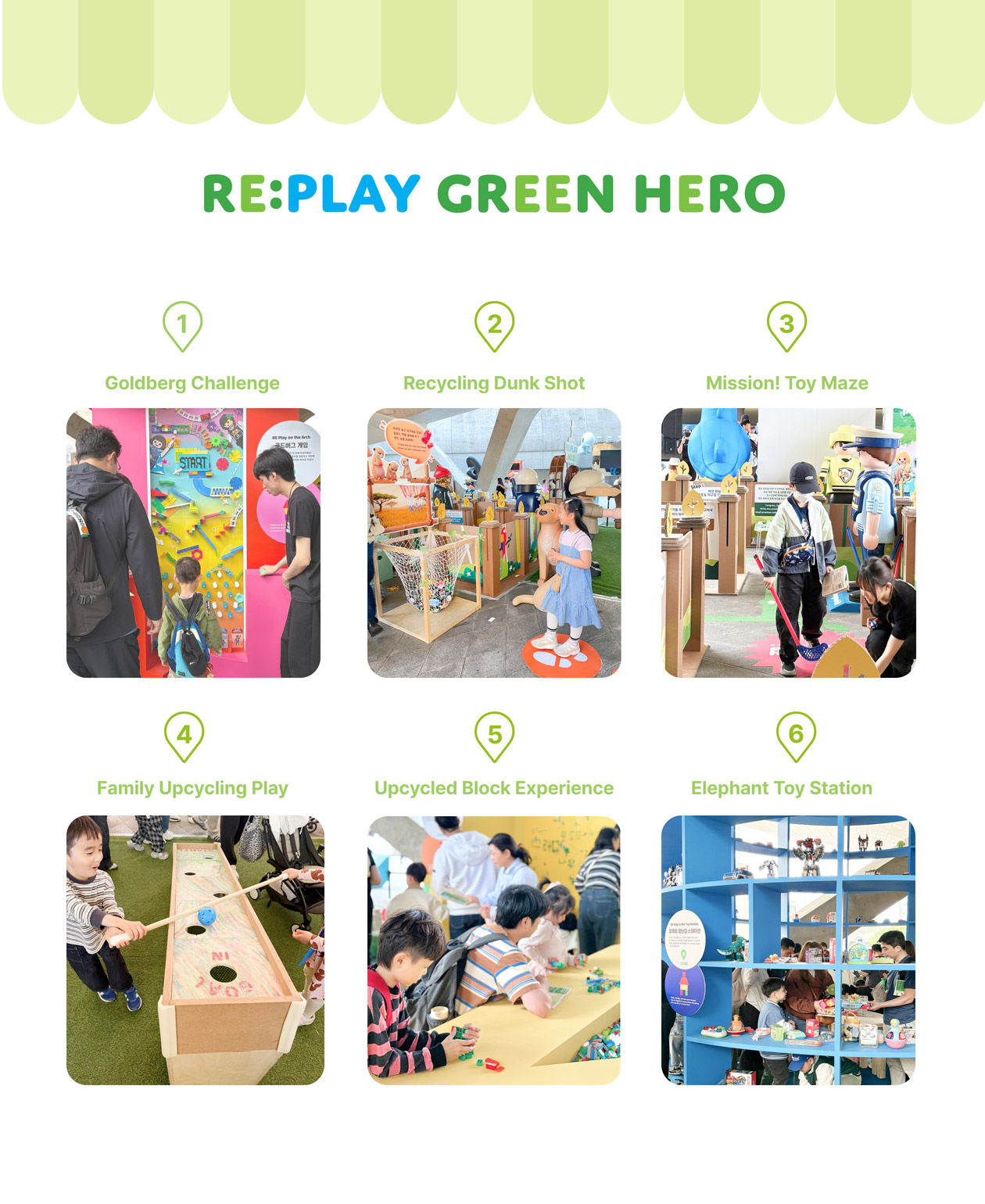
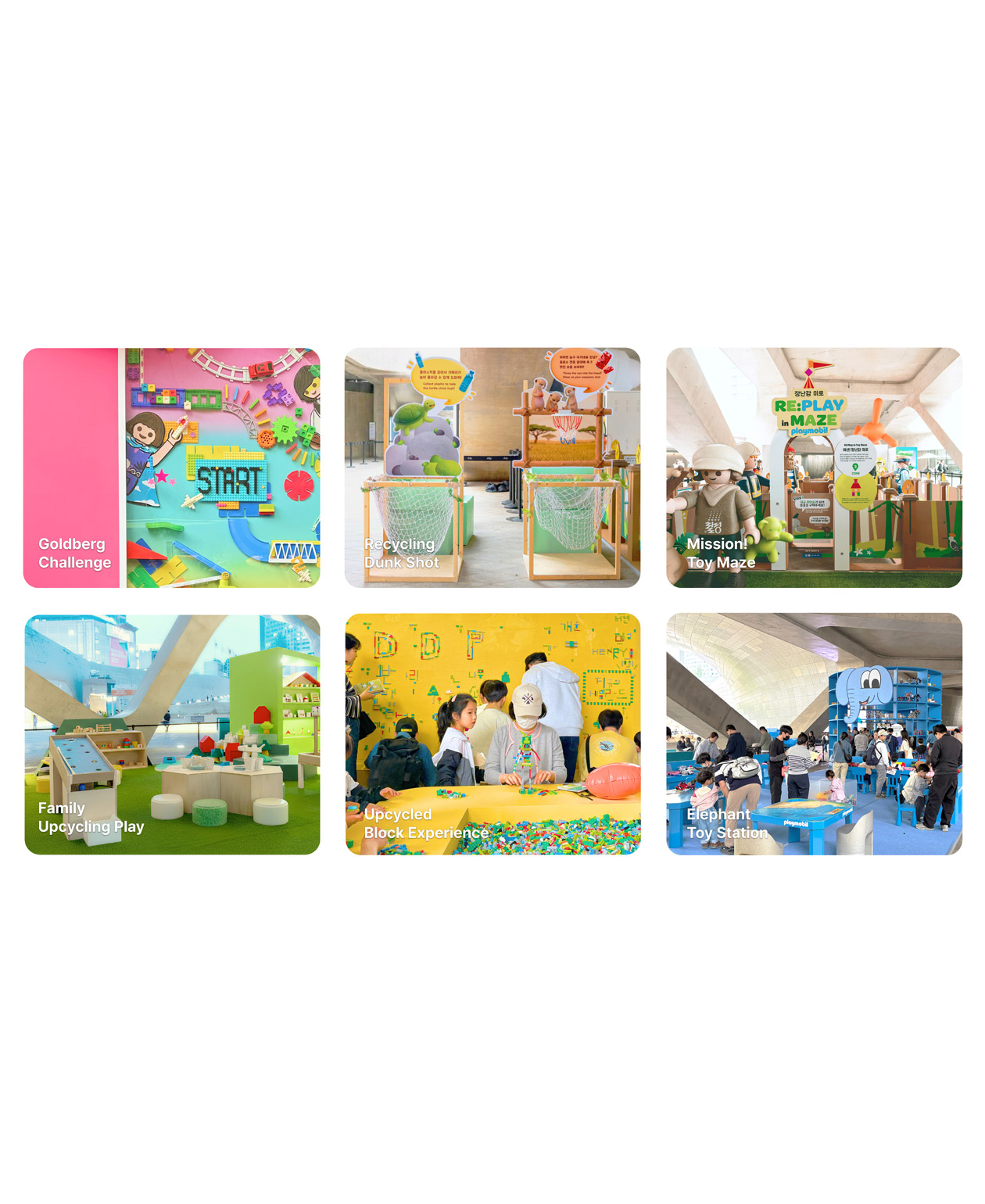
Based on the six competencies outlined in the Design Council's Skills for Planet Map, the experience was organized into six themed zones. Through recycling games, upcycling workshops, collaborative missions, toy exploration, and resource-circulation experiences, children move through a narrative-driven space and engage in hands-on activities to learn the value of environmental responsibility, reuse, and collective action. Each zone is structured so that play and learning are seamlessly integrated into a single continuous experience.
The project aims to create harmony between people, society, and the environment by encouraging sustainable behaviors while providing enjoyable educational experiences for families.
Rather than conveying sustainability through textbook lectures and static information panels, RE:Play Green Hero reimagines environmental education as an immersive, narrative-driven play journey. It is a participatory approach that allows children to experience and choose through their bodies rather than merely understanding environmental issues through explanations.
The project combines environmental sensitivity, experiential learning, participatory design, and nudge design principles to encourage voluntary behavioral change. Children learn by completing missions, solving challenges, creating new things with upcycled materials, and experiencing resource circulation firsthand. A narrative-based spatial journey connects six activity zones into a single cohesive experience, enabling environmental awareness to organically evolve into concrete action. By connecting space, content, and the flow of play, it shifts sustainability from “making children know” to “making them do it themselves.”
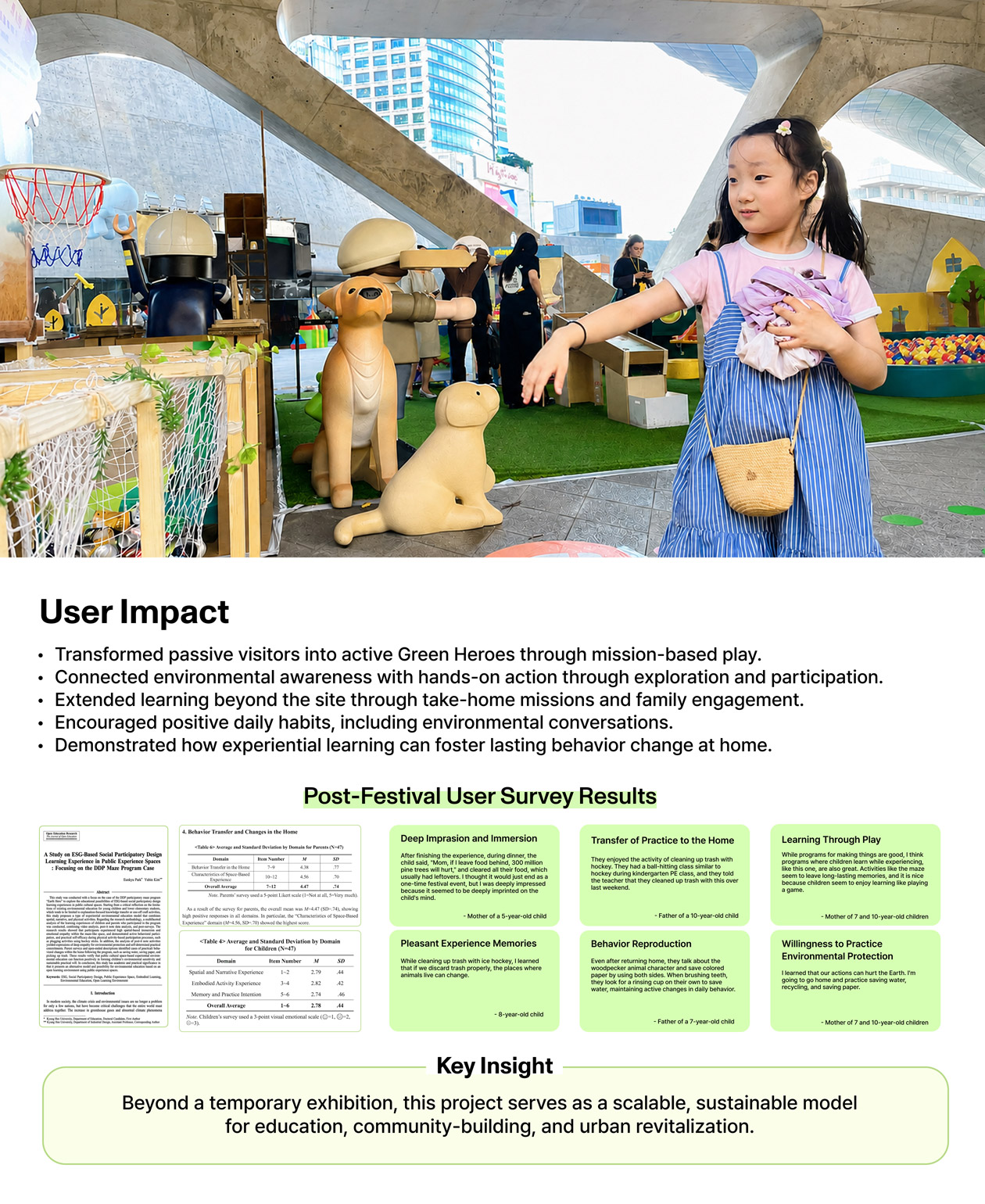
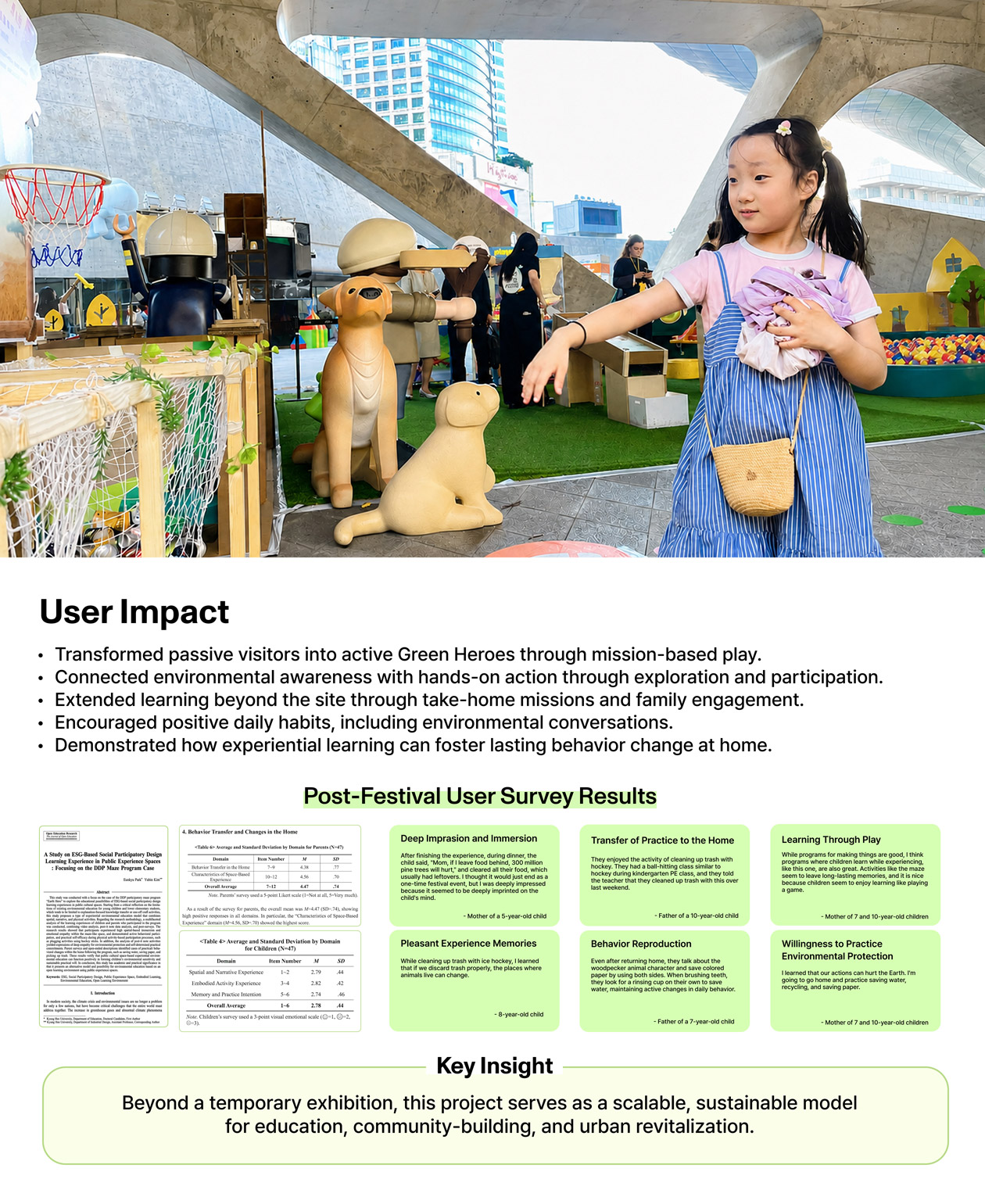
The project encourages children to translate environmental awareness gained from the exhibition into everyday actions. Feedback from participating families indicated that children continued to engage with sustainability topics at home after the exhibition, demonstrating positive behavioral changes such as reducing waste, conserving water, and practicing recycling. This demonstrates the potential for experiences within the exhibition space to extend into everyday practices.
By involving families, educational institutions, public organizations, and private partners, the project expands environmental responsibility beyond the exhibition space into everyday life and the local community. This shows that carefully designed playful experiences can inspire long-term behavioral change and heighten community interest and participation in sustainability. Furthermore, through a participatory structure created by diverse stakeholders, it expands environmental education from individual learning to community practice.
RE:Play Green Hero presents a scalable model for sustainable urban education that can be adapted to various locations such as parks, museums, schools, festivals, and public spaces. By combining play, environmental education, and community participation, this approach can be tailored and expanded to fit different regions and cultural environments.
The project aims for cities where sustainability is not only learned as knowledge but directly experienced and practiced. Through ongoing refinement, research, and cross-sector partnerships, it aspires to develop into an educational platform that helps future generations practice sustainable lives through everyday actions.