


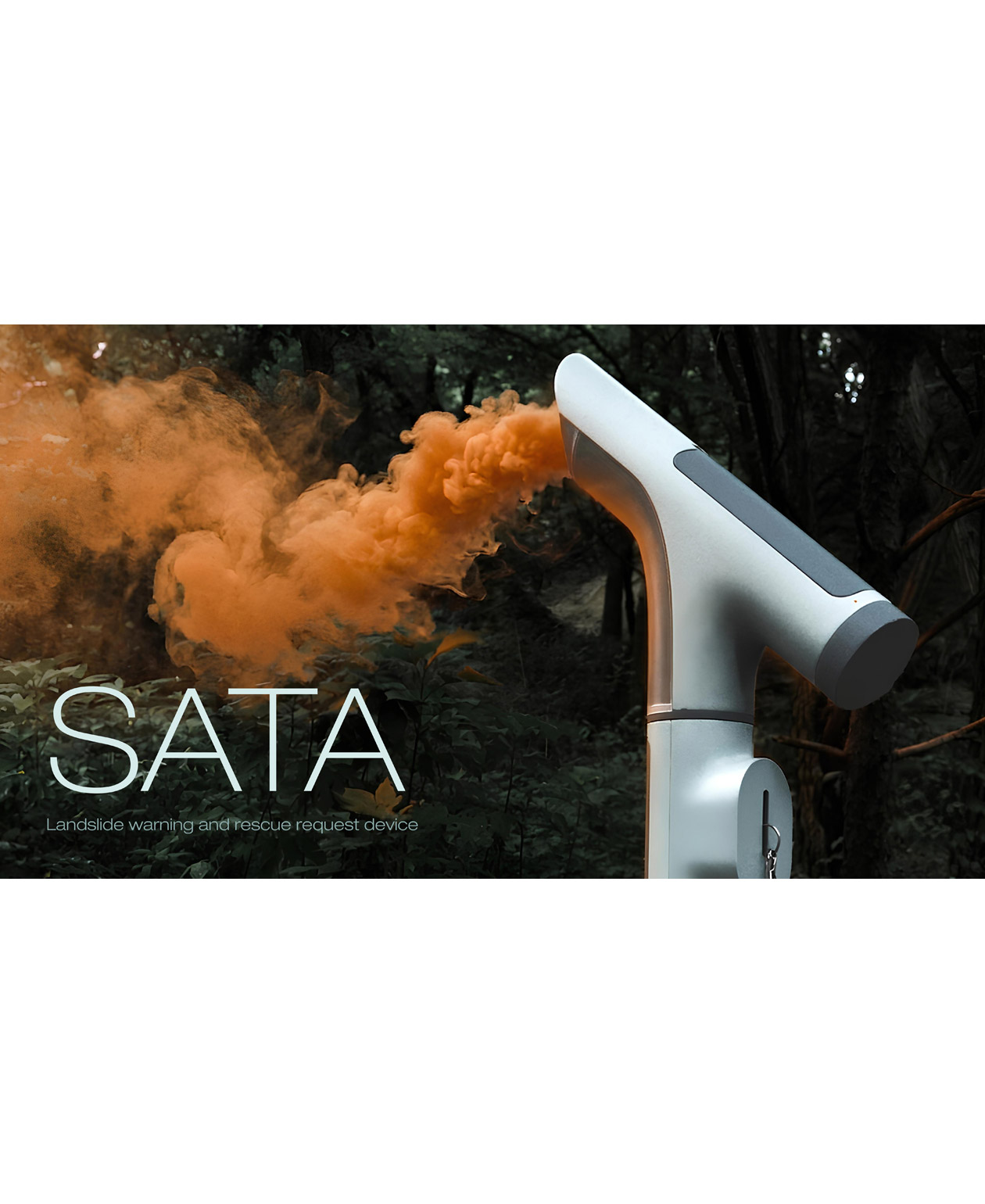
SATA (landslide warning device) This field warning-rescue device utilizes smoke's wide visibility to protect lives from climate landslides, forest disasters, and information blind spots



- Nationality
- Korea, Republic of
- Group
- SATA
About Project
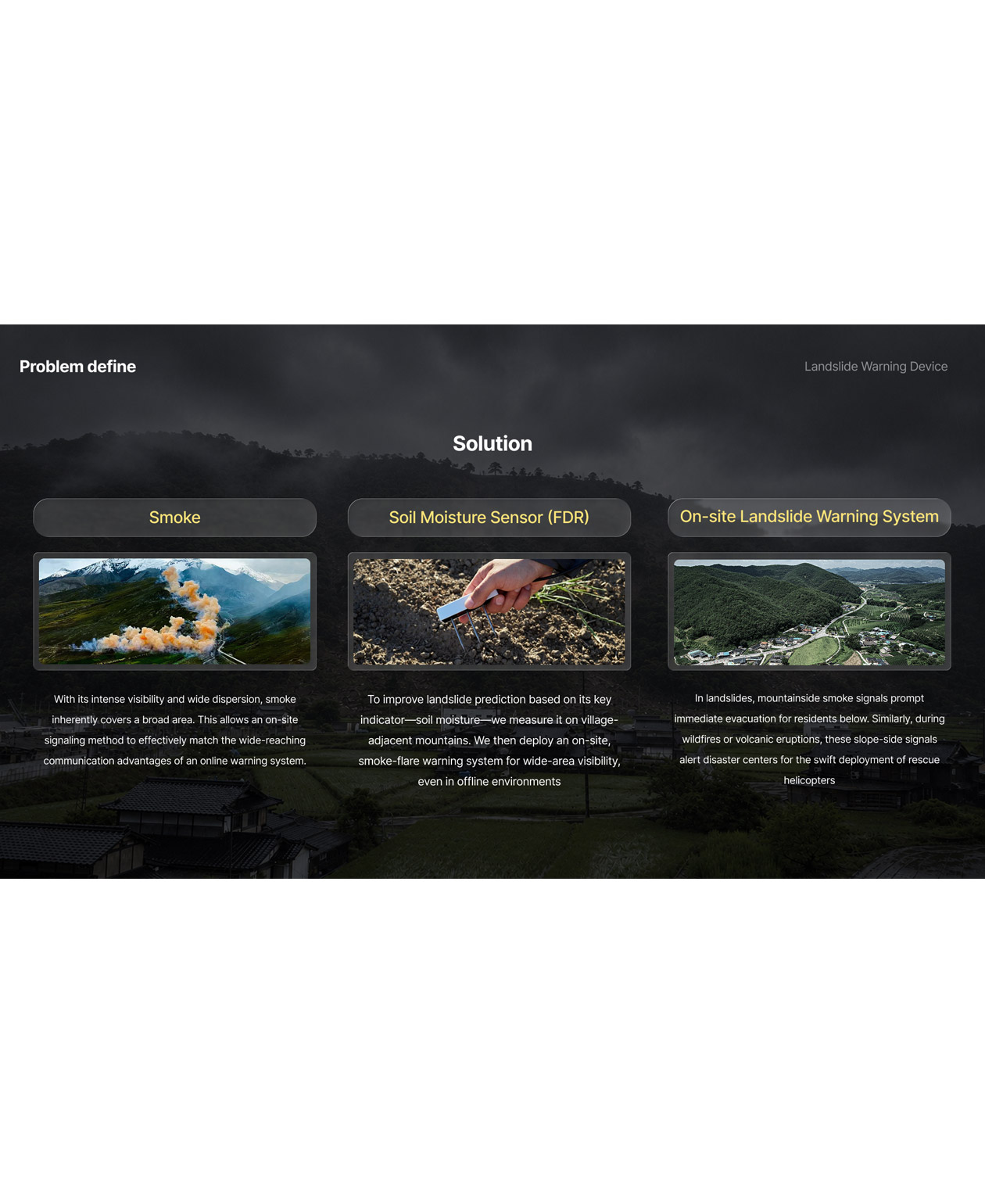
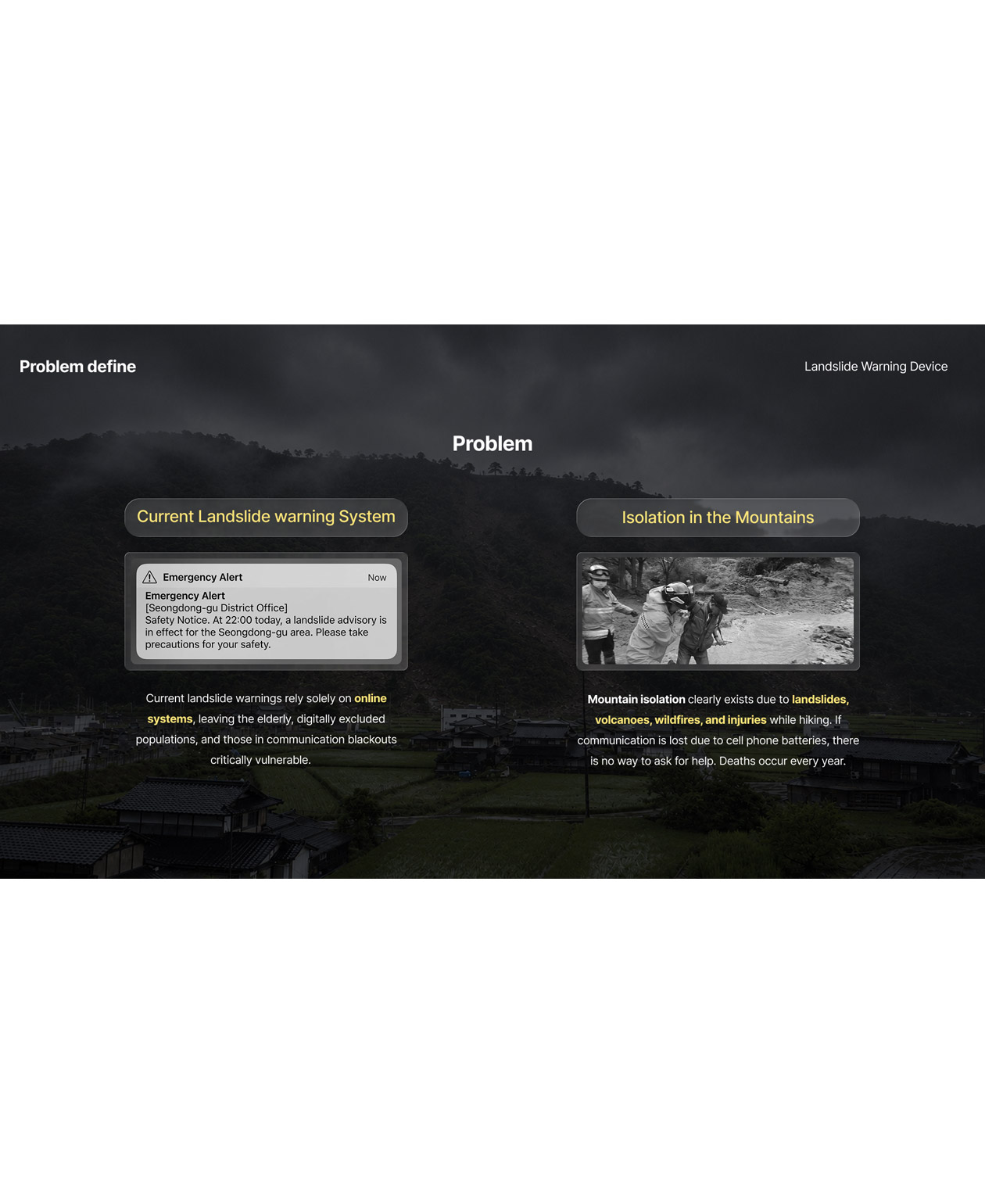
SATA (landslide warning device) is a forest disaster response device designed to provide immediate on-site warnings of landslide risks and enable rescue requests even in mountain accident situations where communication networks are cut off. Current landslide warnings rely heavily on online systems such as emergency text messages, but landslide-prone areas are often inhabited by many elderly residents who are unfamiliar with digital devices, and some areas lack smooth communication, raising the possibility that warnings may not be delivered in a timely manner. SATA supplements these information blind spots through an on-site warning device installed directly in the field.
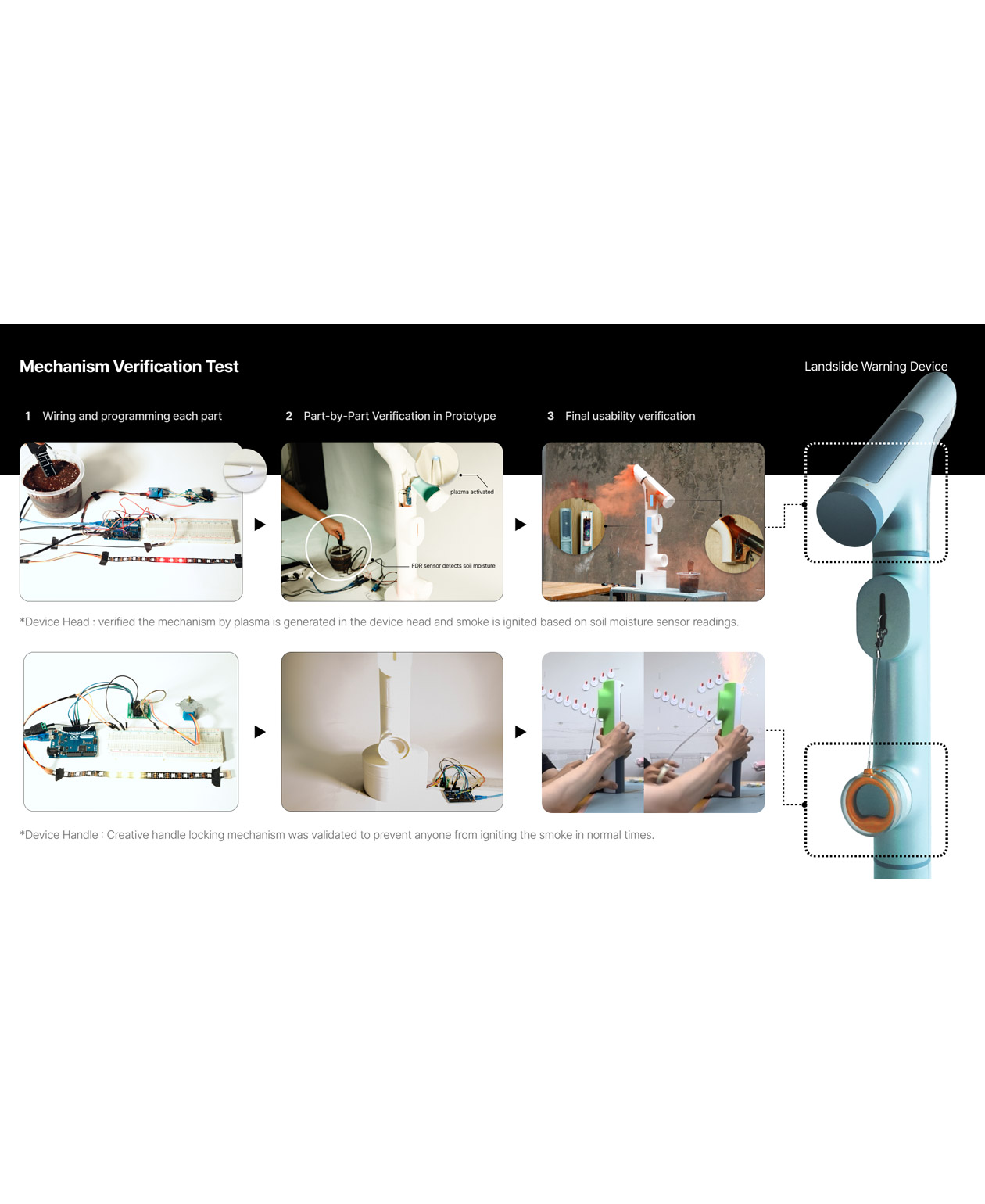
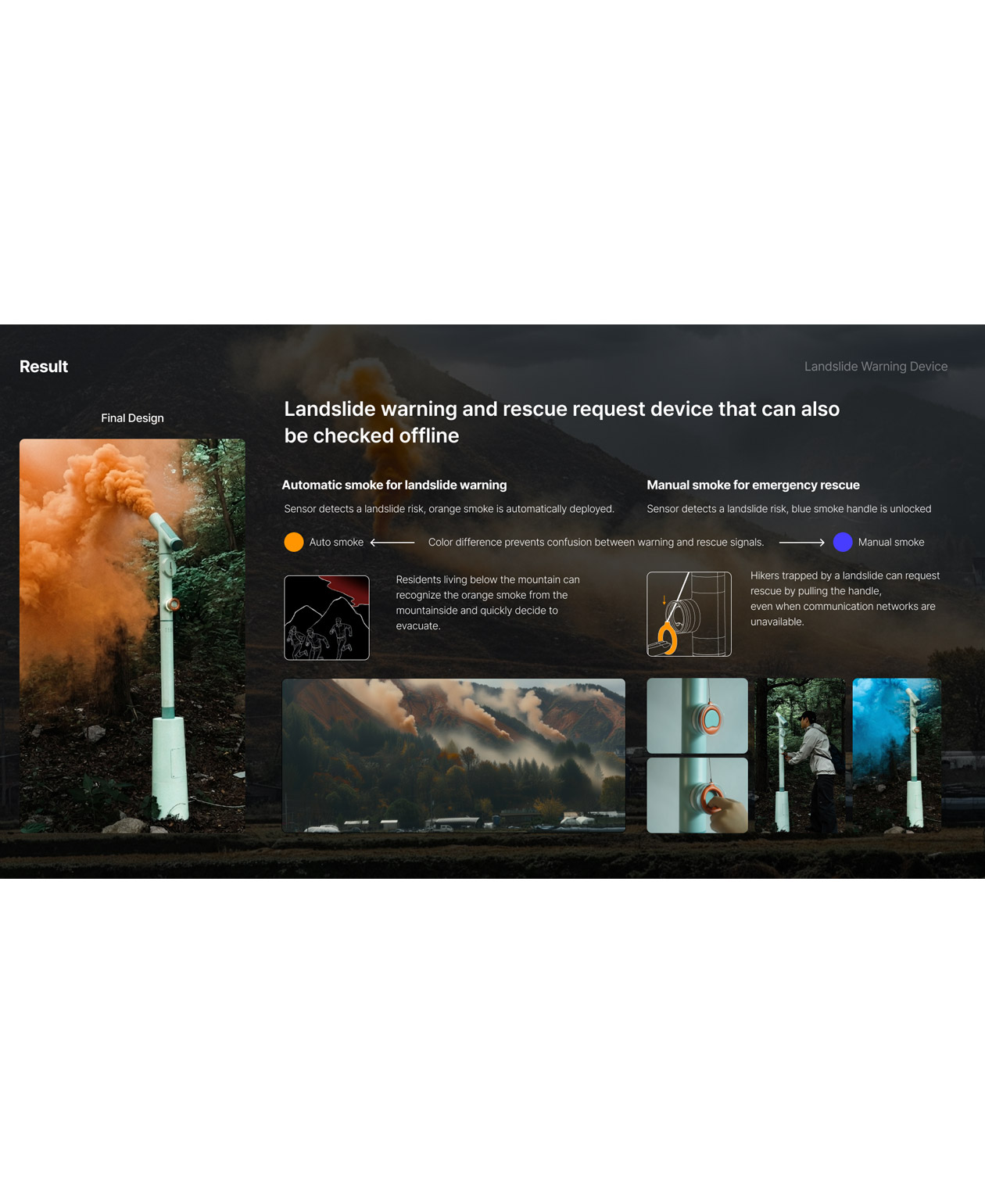
The most prominent feature of this device is that it utilizes 'smoke' as a medium for warnings and rescue requests. When soil moisture exceeds hazardous levels, highly visible smoke is generated from the device installed on the mountain, allowing nearby residents to quickly recognize the danger and evacuate. This method takes advantage of the fact that the danger can be visually confirmed from a long distance without having to connect to a communication network or check a separate digital device. When people are isolated due to a mountain accident, it can also be utilized as a rescue request device. If an SOS smoke signal is generated on the mid-slope of a mountain, disaster response agencies at the foot of the mountain can verify it and use it for dispatching rescue helicopters and the like. By utilizing the characteristics of smoke that spreads widely and can be verified from afar, it ensures that warnings and rescue signals are transmitted even in situations where the internet or mobile networks do not function.
SATA shows the character of social design for disaster safety in that it utilizes simple and intuitive visual signals instead of adding digital technology. In particular, it allows elderly people who have difficulty using digital devices or regions lacking communication infrastructure to recognize dangers without separate learning, thereby supplementing the information blind spots that existing online warning systems might miss. Rather than increasing the complexity of technology, it enhances the accessibility of safety information in a way that anyone can immediately understand. Furthermore, the device itself, which is permanently installed on the mountain, serves to continuously make residents aware of the landslide risks in that area. Because it is difficult to predict the timing and location of landslides, awareness of the danger may decrease during normal times. By placing the disaster response device in the everyday forest environment, SATA goes beyond alarms that operate only in emergencies to function as a public safety infrastructure that constantly reminds people of the necessity of disaster preparedness even in normal times.
As torrential downpours and landslide risks due to climate change increase not only in South Korea but also in various regions such as Japan, the United States, and Europe, the applicability of such on-site warning systems is also expanding. Because it does not rely on a specific communication environment, it can be applied to mountainous areas, regions with insufficient communication infrastructure, and areas with low accessibility to digital information due to aging populations. SATA combines soil state-sensing technology with long-used smoke signals to convey disaster information more directly. Rather than replacing advanced online warning systems, it supplements the information gaps that those systems cannot reach with on-site devices, thereby proposing a more inclusive disaster safety net for mountain residents and hikers in the era of the climate crisis.