


Sekar Djagad Joglo: Circular Cultural Infrastructure for Living Heritage A participatory adaptive reuse project transforming a threatened Javanese Joglo into living cultural infrastructure through circular construction and local collaboration
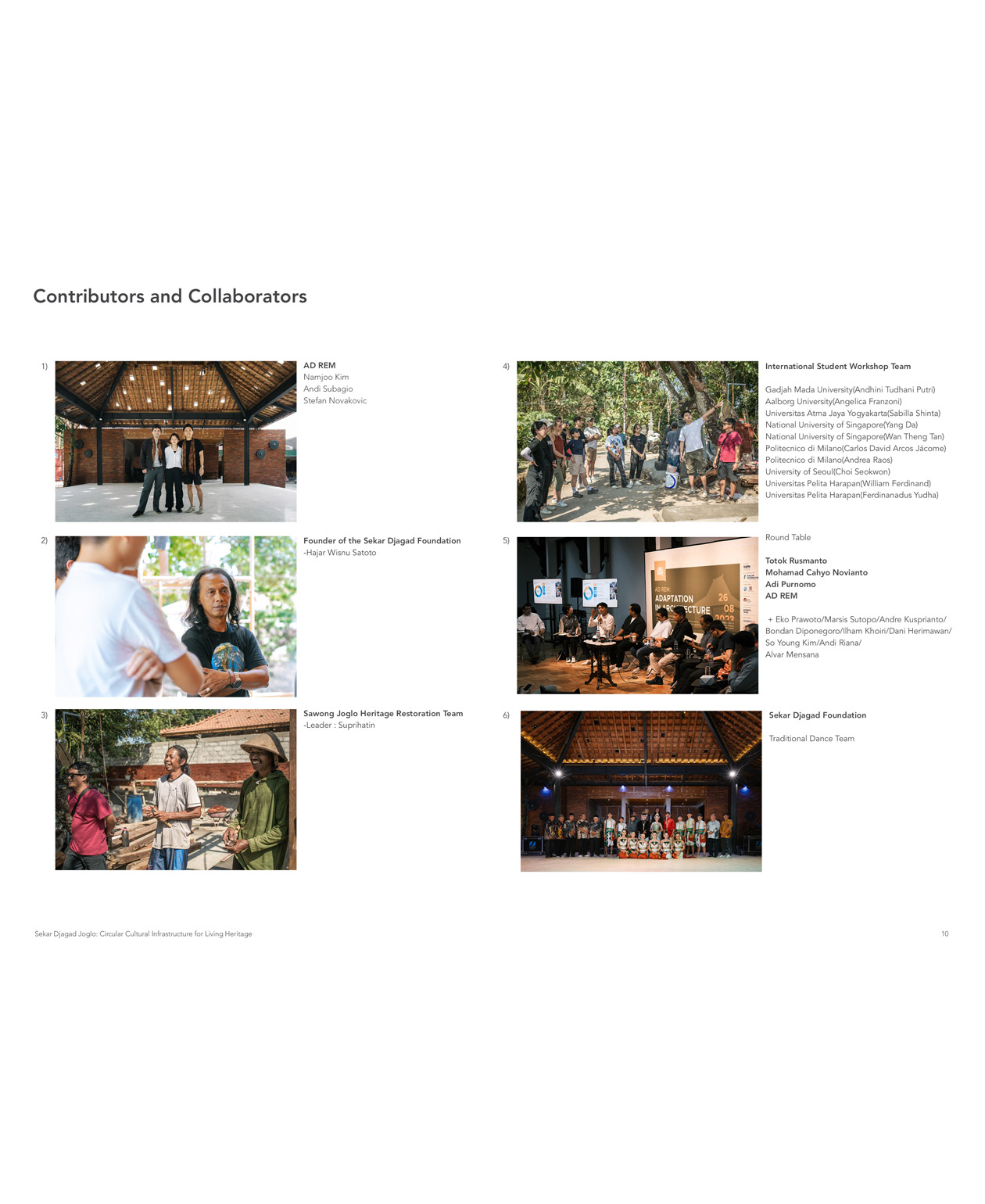


- Nationality
- Indonesia
- Group
- AD REM Collective
About Project
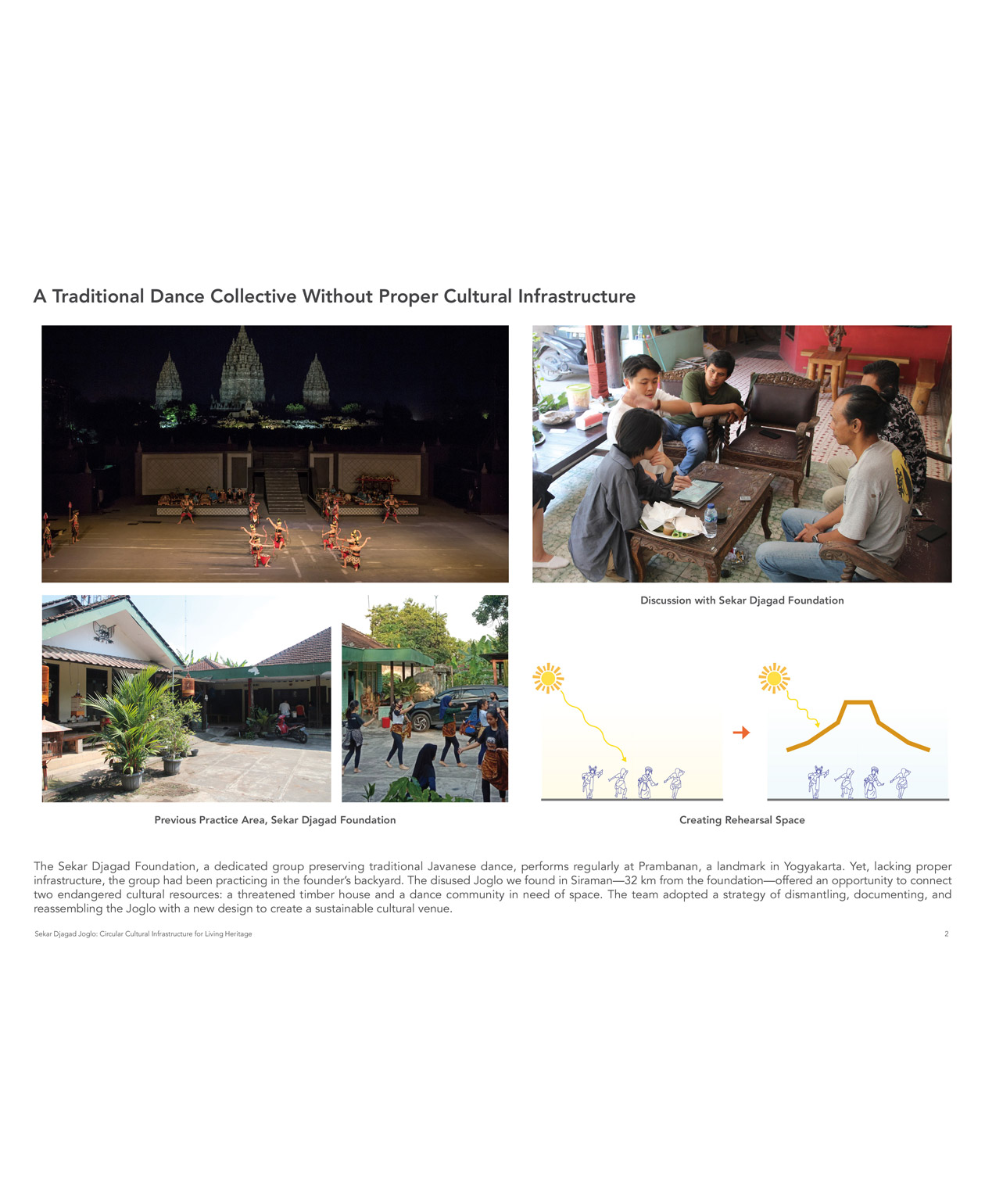
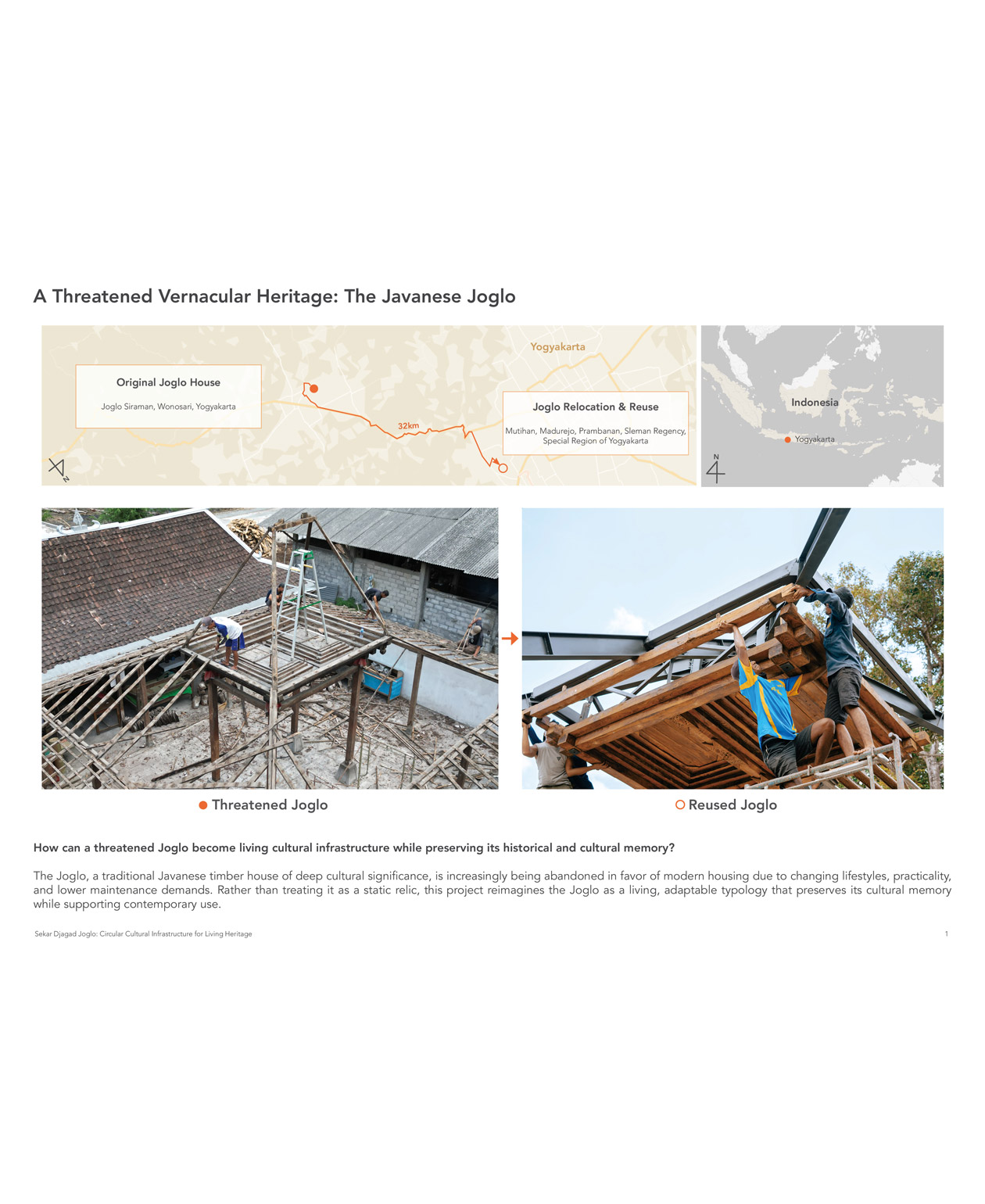
Sekar Djagad Joglo: Circular Cultural Infrastructure for Living Heritage is a participatory adaptive reuse project that turns two fragile cultural resources—a threatened Javanese Joglo and a traditional dance collective without proper rehearsal space—into living cultural infrastructure. The Sekar Djagad Foundation, dedicated to traditional Javanese dance, had been practicing in the founder's backyard, while disused Joglo houses faced demolition due to high maintenance costs and shifting lifestyles. The team relocated one such Joglo from Siraman, 32 kilometers away, for adaptive reuse, connecting threatened traditional architecture with necessary cultural activities to create a new purpose for both forms of heritage to endure together.
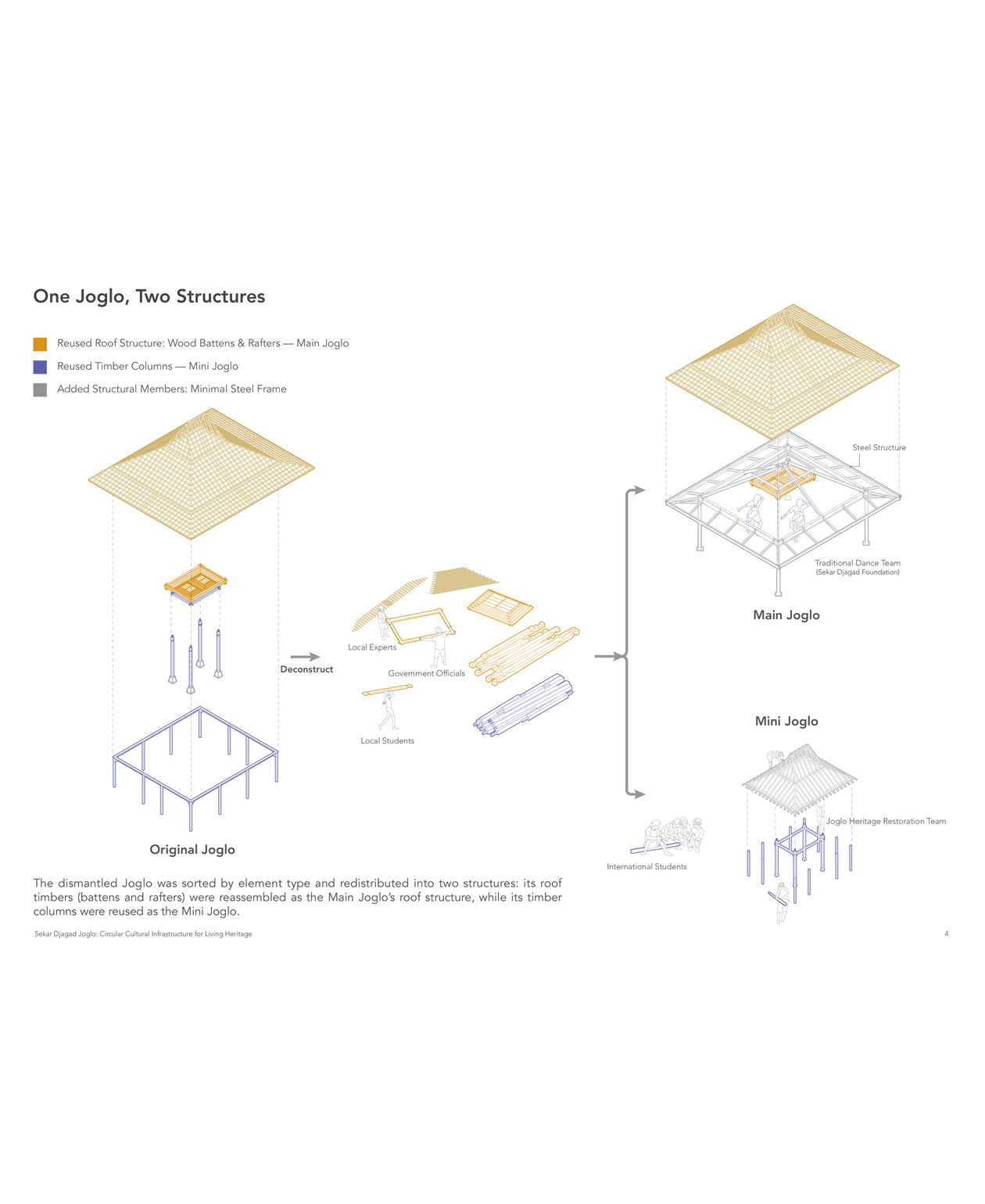
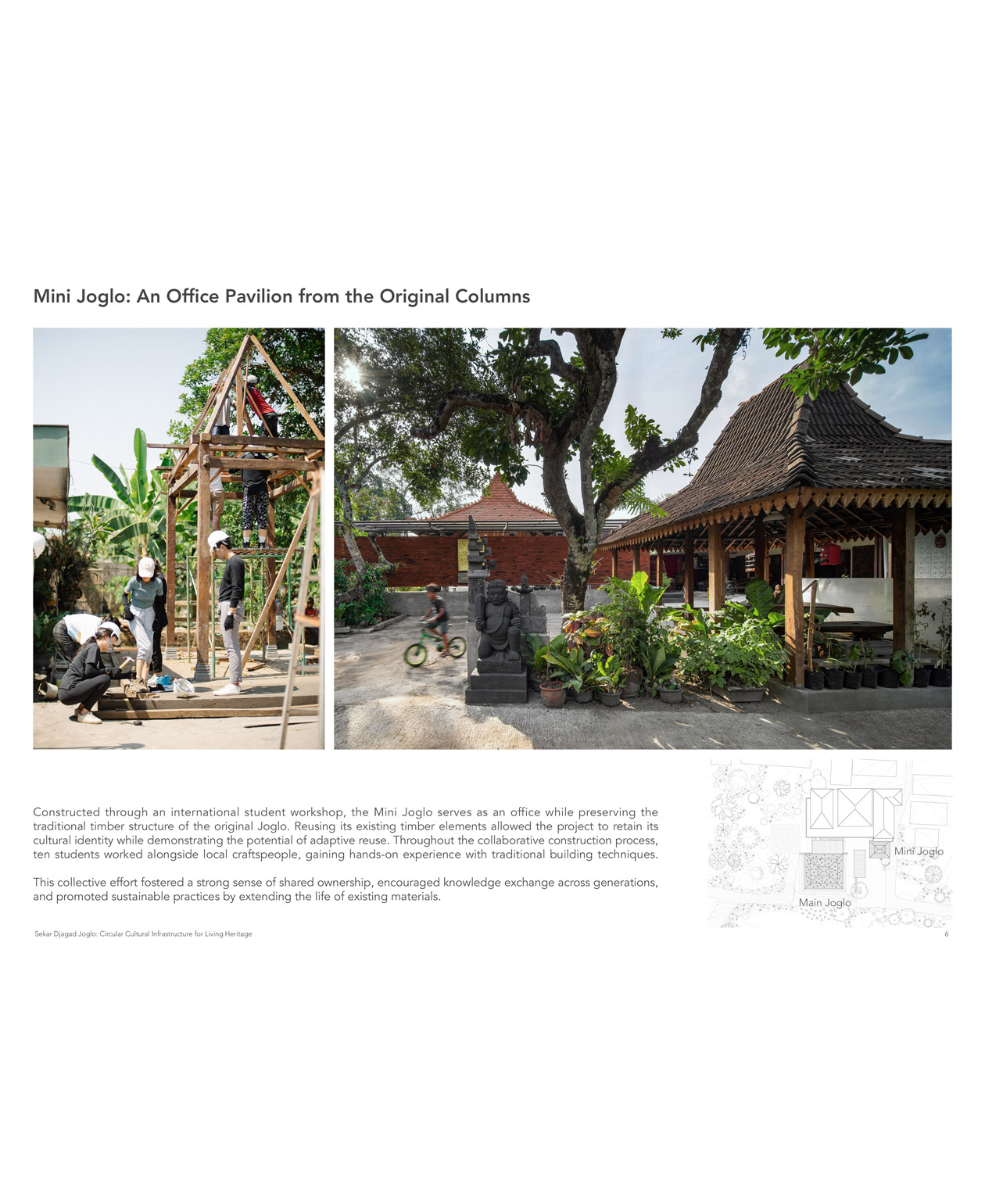
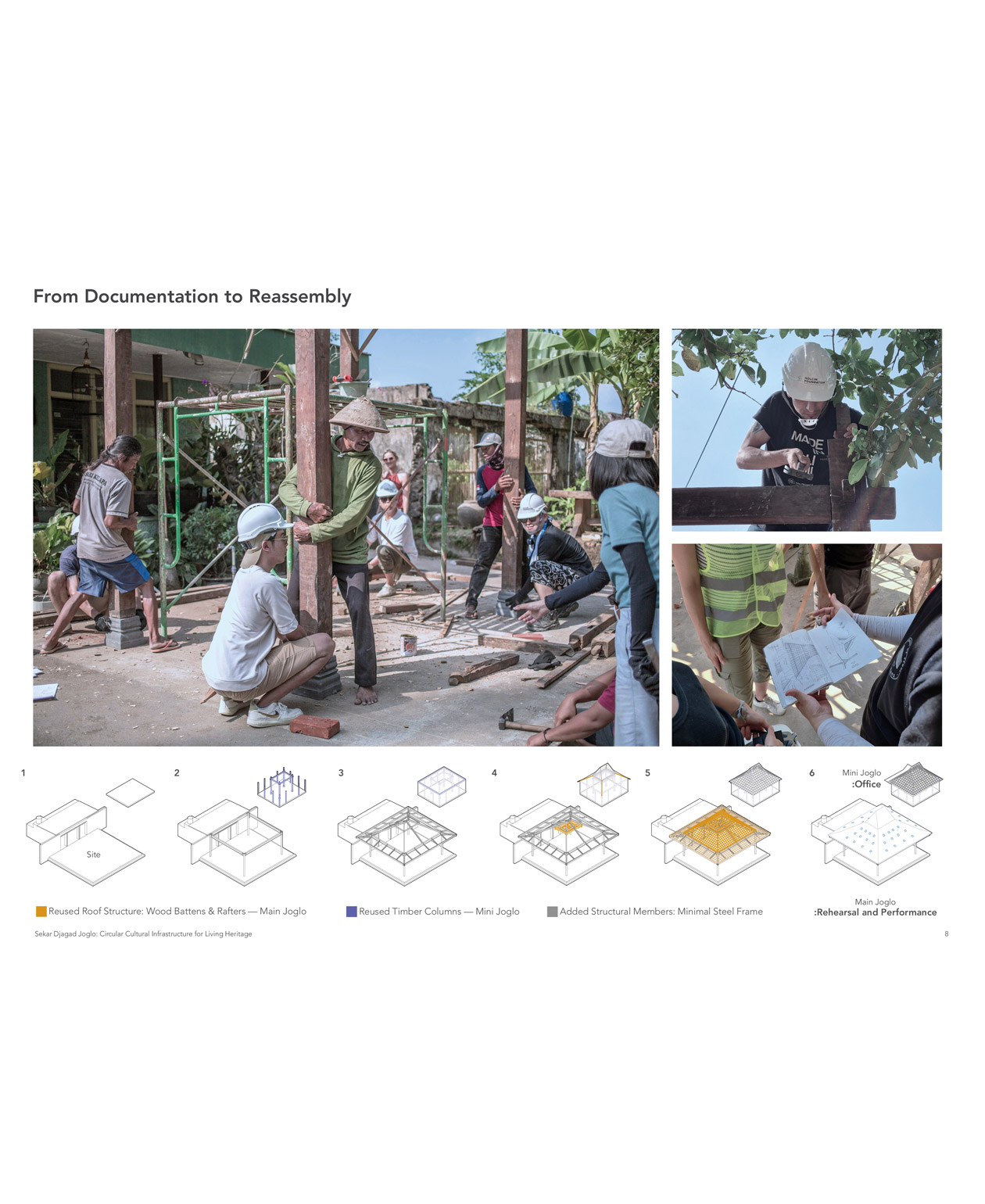
Initiated by AD REM Collective, an interdisciplinary team from Indonesia, South Korea, and Canada, the project combines community engagement with circular construction. The Joglo's dismantlable timber system allowed it to be carefully dismantled, labeled, transported, and reassembled with local craftspeople. Traditional timber knowledge was preserved, while a minimal steel frame opened the span needed for dance, combining elements to accommodate both traditional architectural traits and modern functional conditions rather than simply replicating the original structure. Sorted by element type, the original structure was redistributed into two buildings: its roof structure formed a main performance venue, while its twelve original columns became a secondary pavilion used for office space.
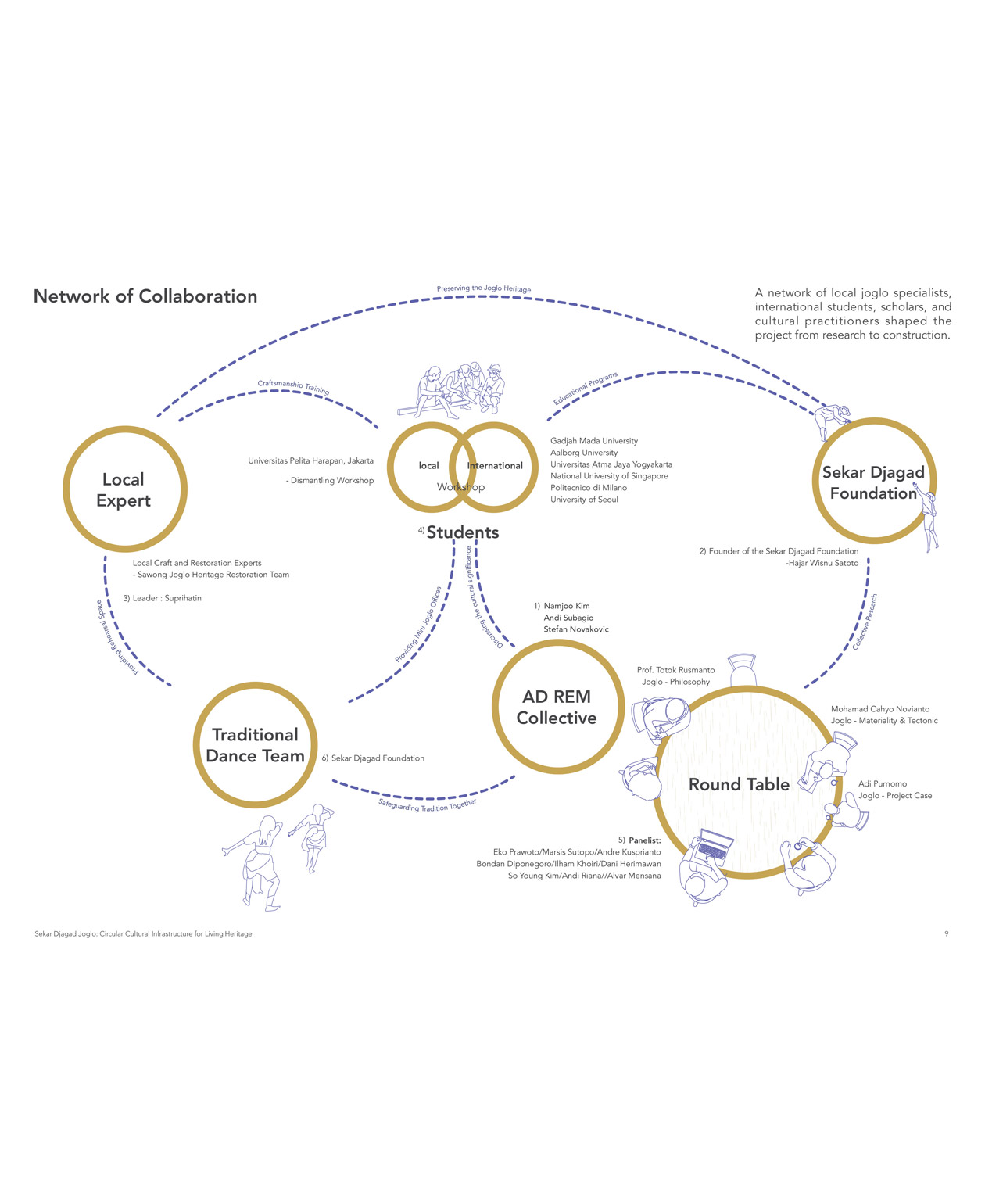
Through workshops with students, craftspeople, and researchers, the project became a site of learning, shared authorship, and cultural exchange, transforming the design and construction process itself into a participatory platform for sharing knowledge and skills. It now supports rehearsal, performance, gathering, education, and community life—demonstrating how adaptive reuse can connect people, society, and the environment.
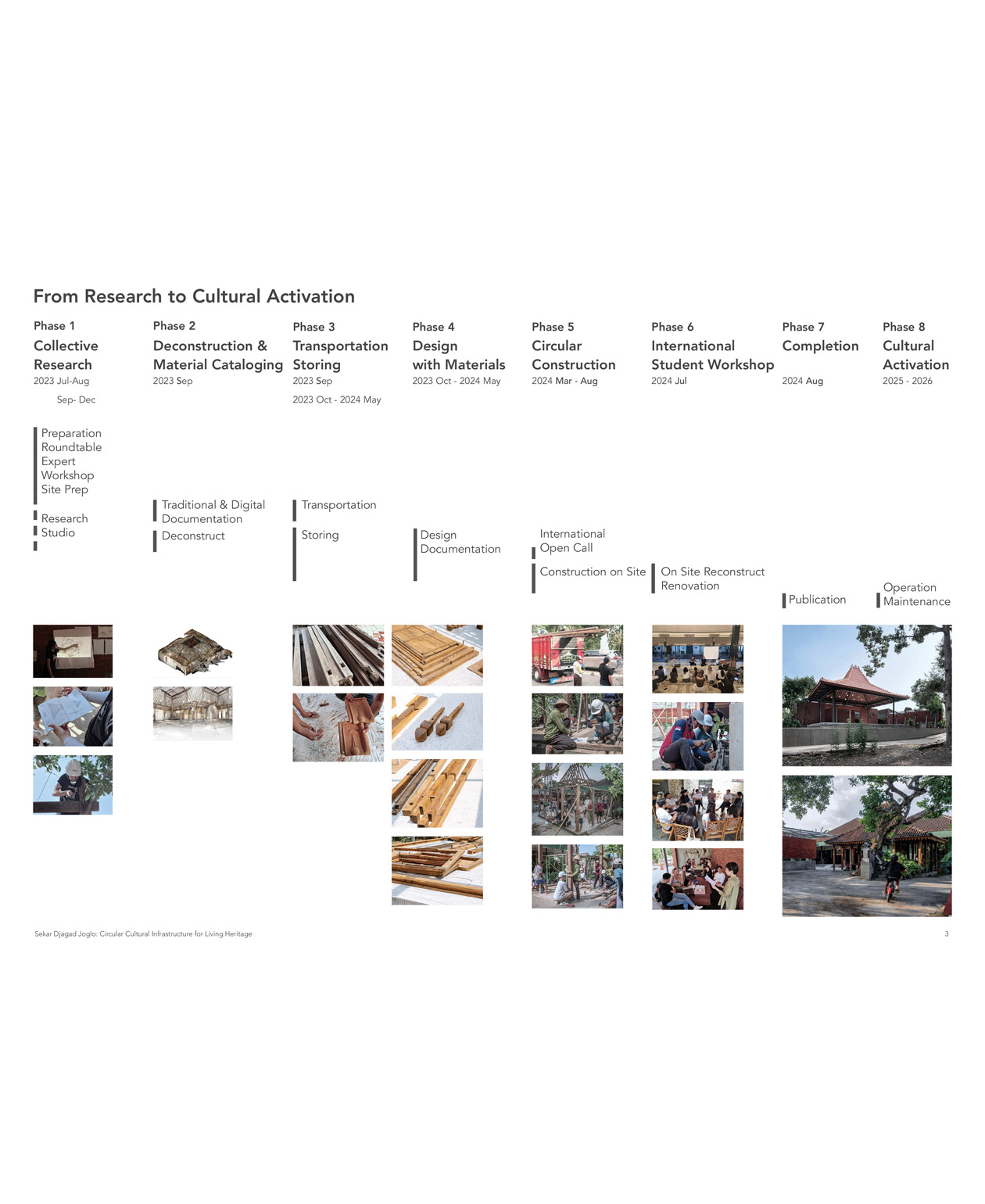
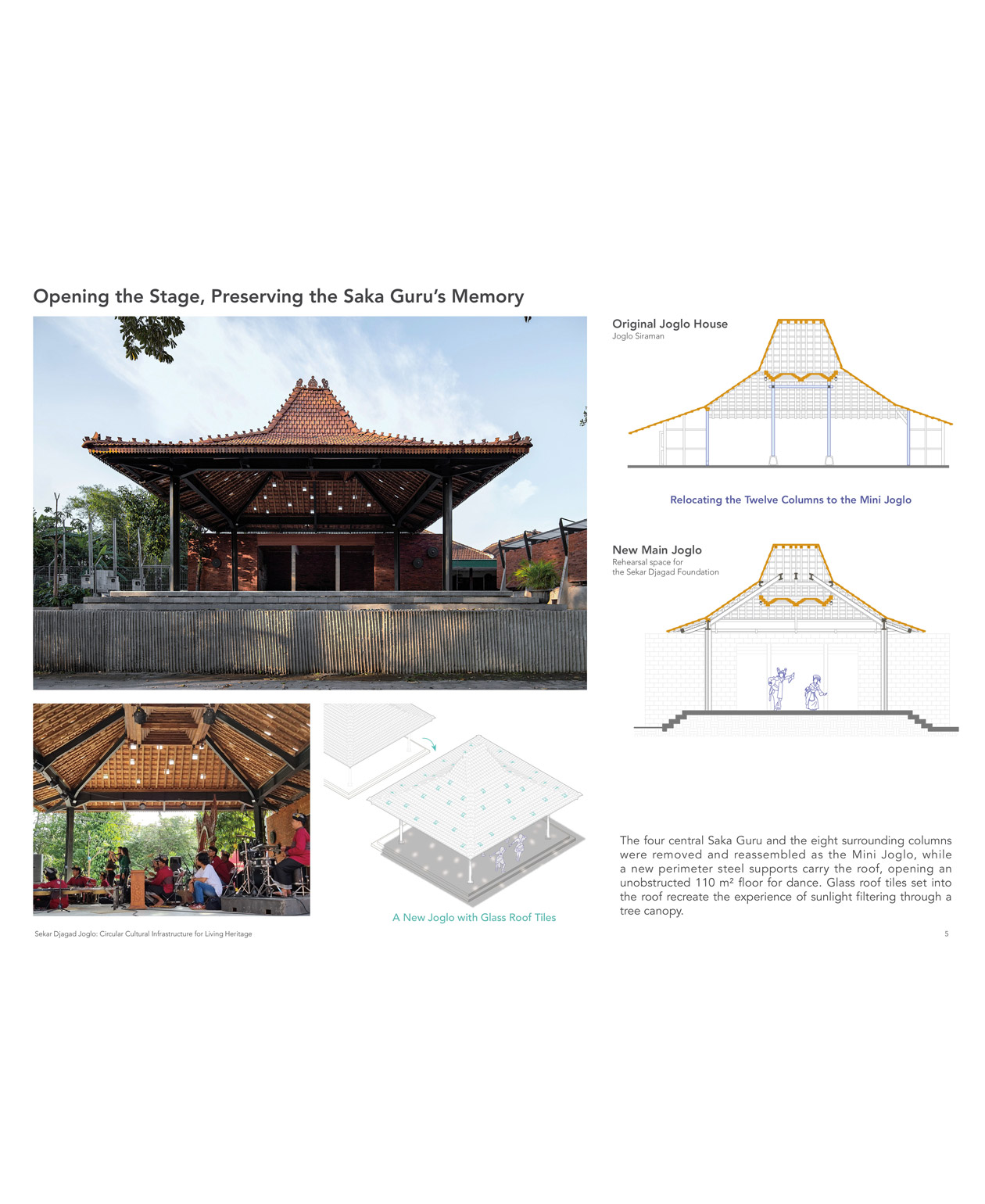
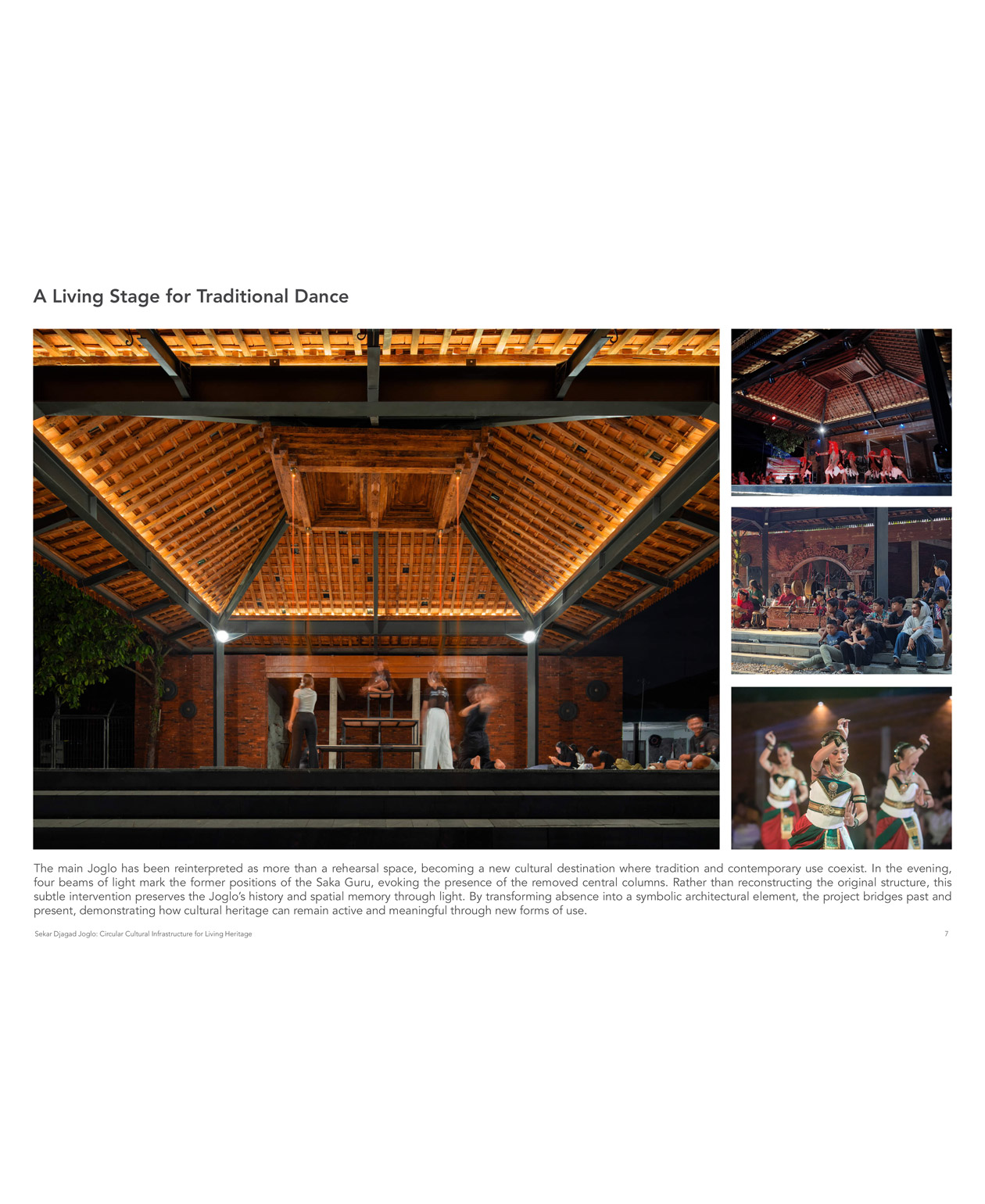
Rather than preserving the Joglo in place as a static object, the project adopted a circular ex-situ strategy rooted in Javanese timber architecture’s dismantlable logic. Each element was dismantled, digitally cataloged, transported, and reassembled at a new site. 3D scanning and material tracking turned the old structure into a usable design inventory. Combining traditional dismantling techniques with digital documentation technology increased the accuracy of the reuse process by identifying the locations and characteristics of existing materials. At the new venue, the twelve original timber columns, including the four Saka Guru, were reassembled as a secondary pavilion, while four perimeter steel supports opened an unobstructed 110 m² floor for dance. This material-driven process reframes conservation as creative transformation rooted in craft and cultural care.
Sekar Djagad Joglo transforms a threatened Joglo into a living cultural venue for traditional dance and community life. Key symbolic elements, including the tumpang sari, were faithfully reconstructed, and the twelve original columns were relocated to form a secondary pavilion. The former Saka Guru positions in the main venue are recalled through four beams of light, maintaining the memory of the disappeared structure within the new spatial experience while physically reusing existing elements. Built with ten international students and local craftspeople, the project became a site of learning and shared authorship. Now serving the Sekar Djagad Foundation, the space supports rehearsal, performance, meetings, and education, showing how circular construction can sustain tangible and intangible heritage.
Sekar Djagad Joglo proposes a scalable model for transforming threatened vernacular heritage into living cultural infrastructure. It reframes respect for tradition not as freezing the past, but as sustaining the knowledge, labor, and everyday practices that keep culture alive. Its framework—observe, dismantle, catalog, relocate, reassemble, and activate—views buildings not as fixed outcomes, but as resources that can be disassembled, moved, and reused, offering a circular approach applicable to other regions facing the loss of built and intangible heritage. As climate pressure, modernization, and cultural erasure intensify, the project shows how endangered traditions can become resources for learning, gathering, performance, and community life, bridging past and future, place and people, architecture and care.