


THE COLLECTOR A sustainable system project generating energy and potable water to reduce costs and pollution while improving community quality of life


- Nationality
- Ecuador
- Individual
- Jose Gomez
About Project
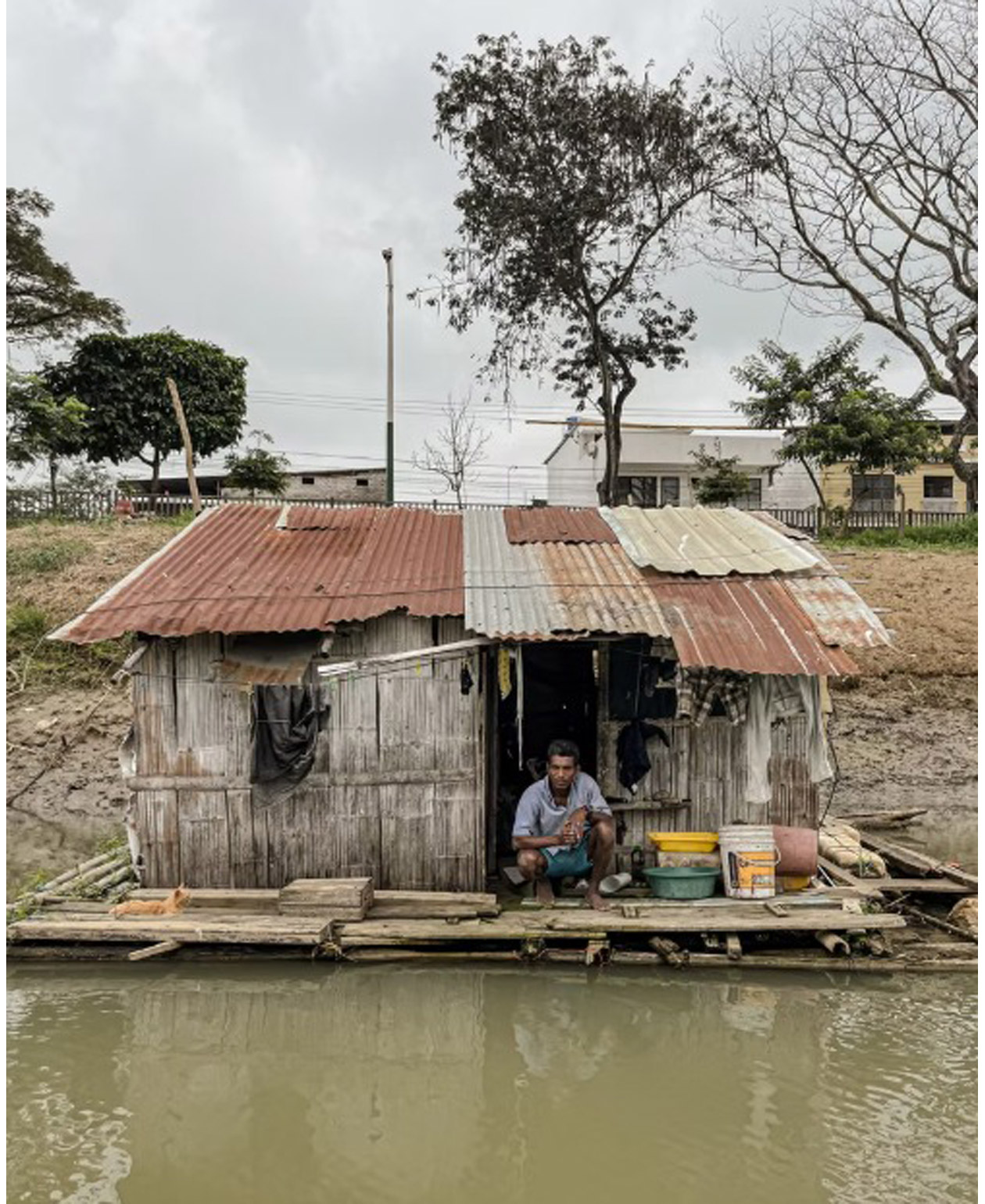
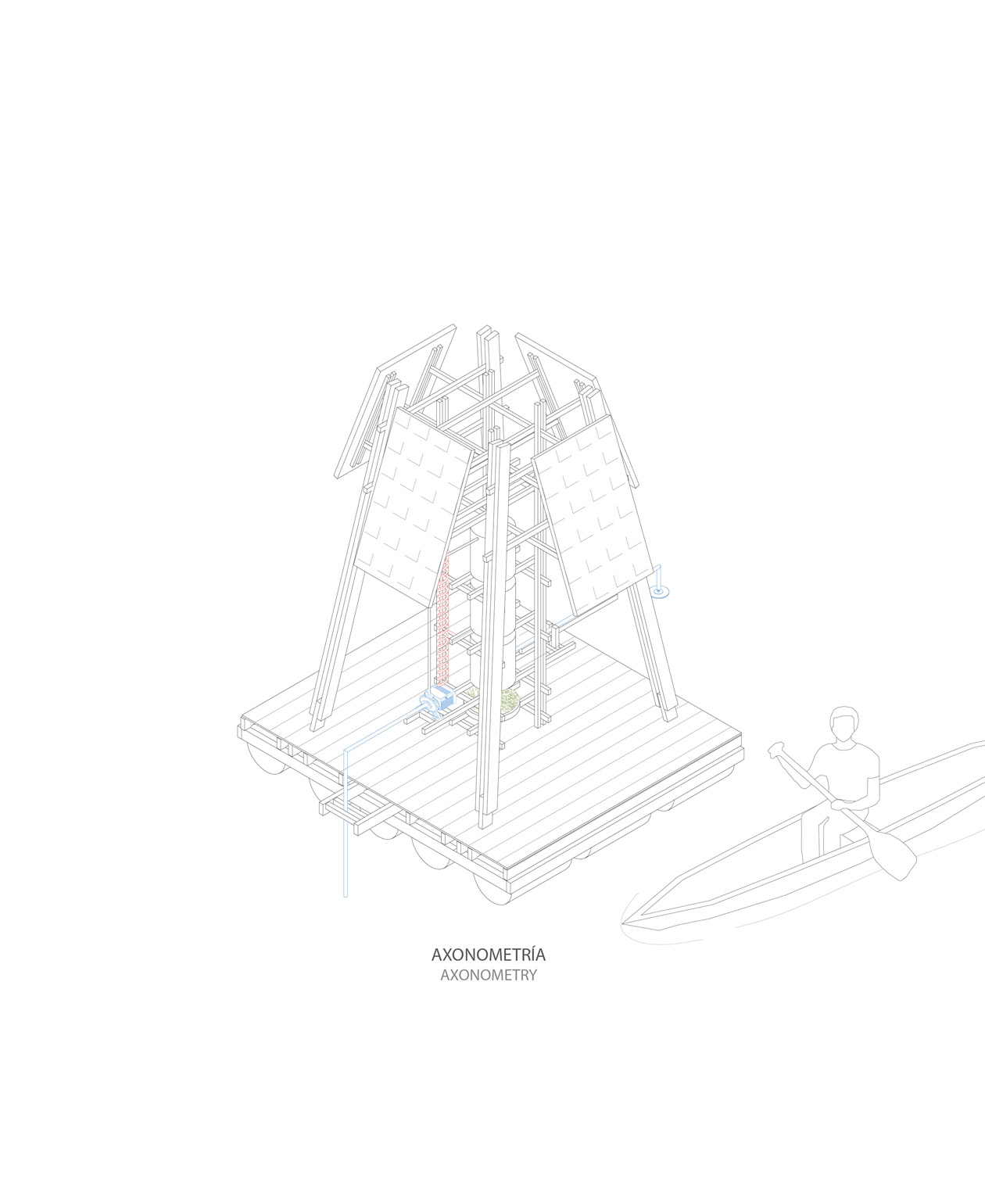
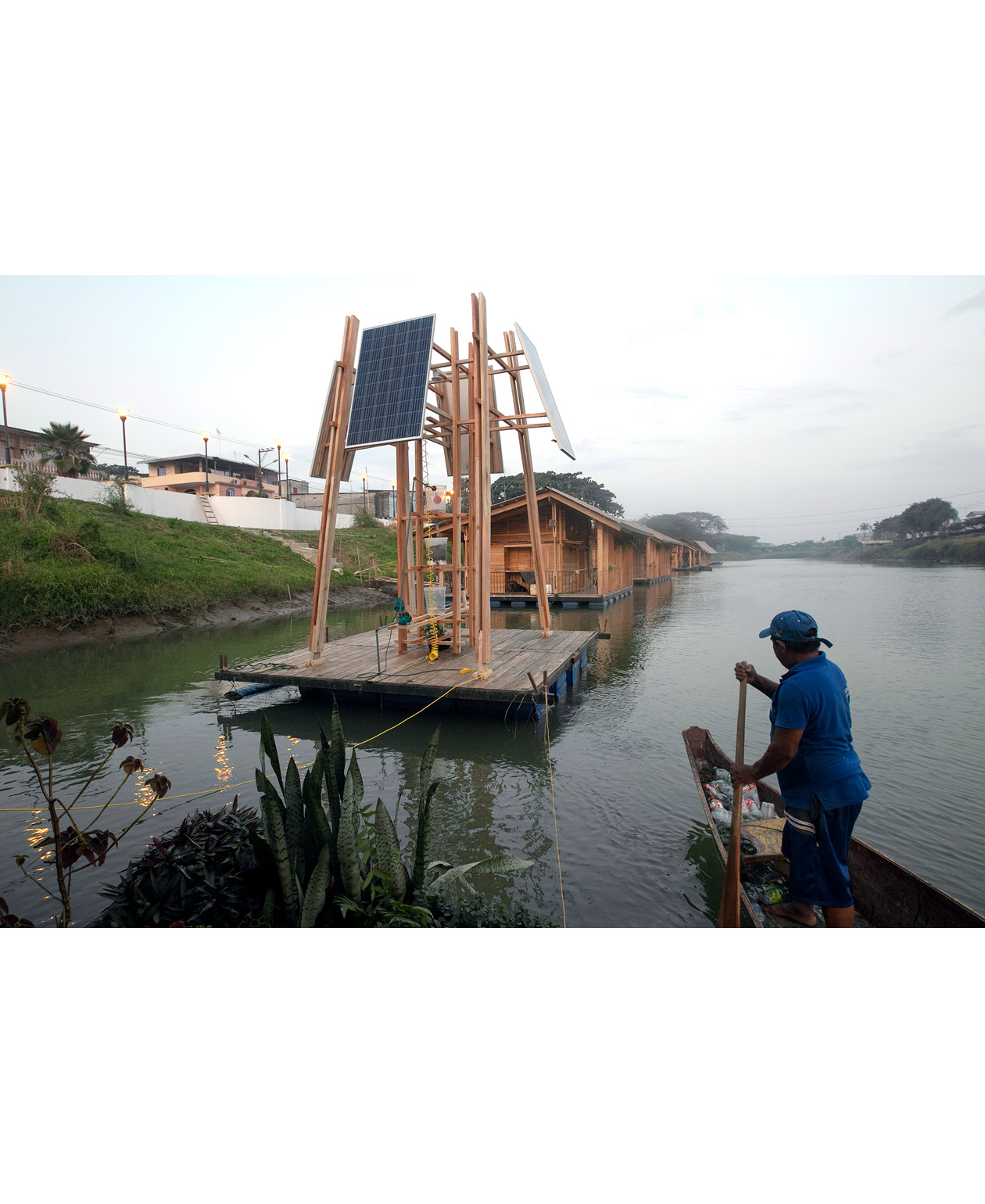
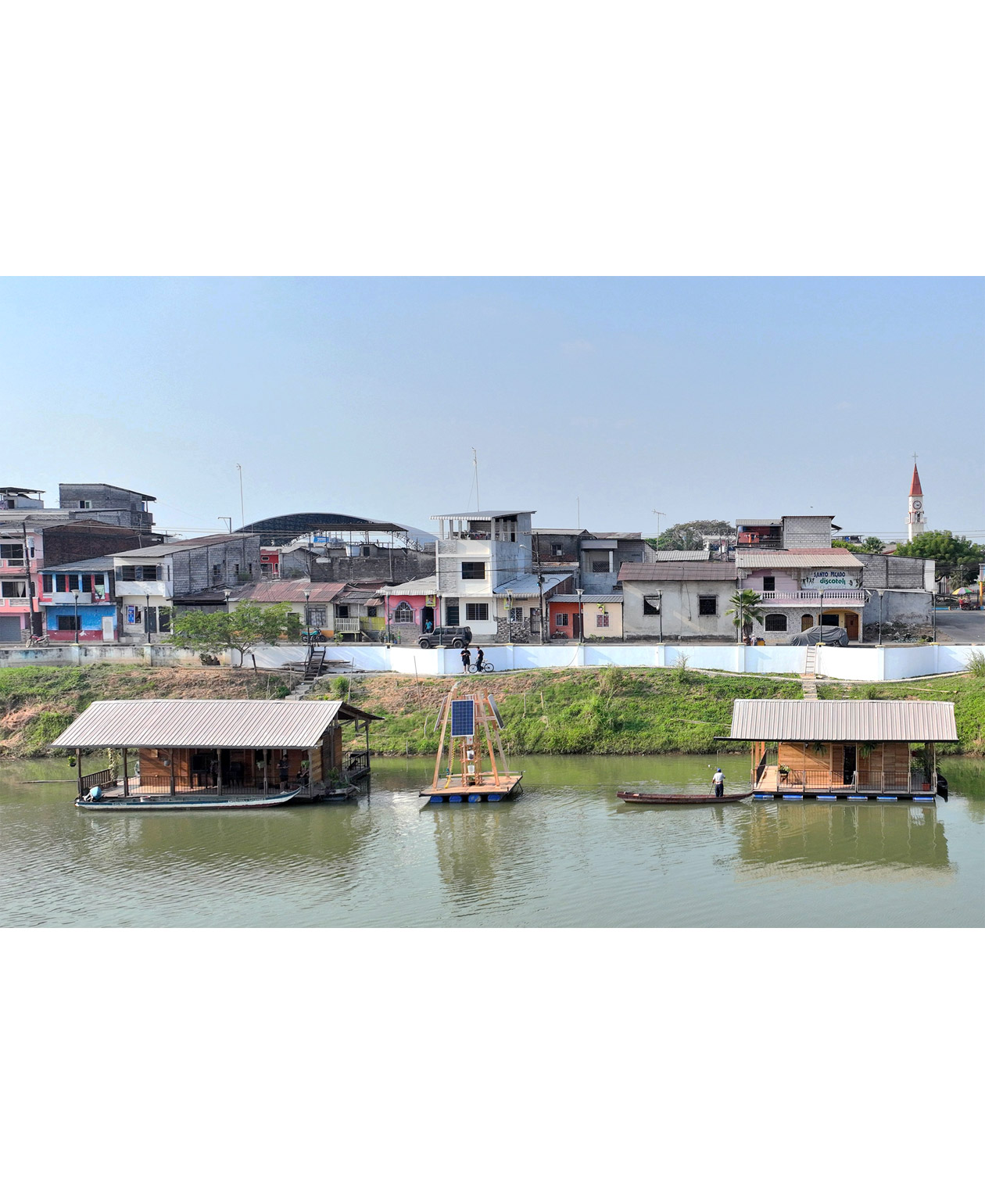
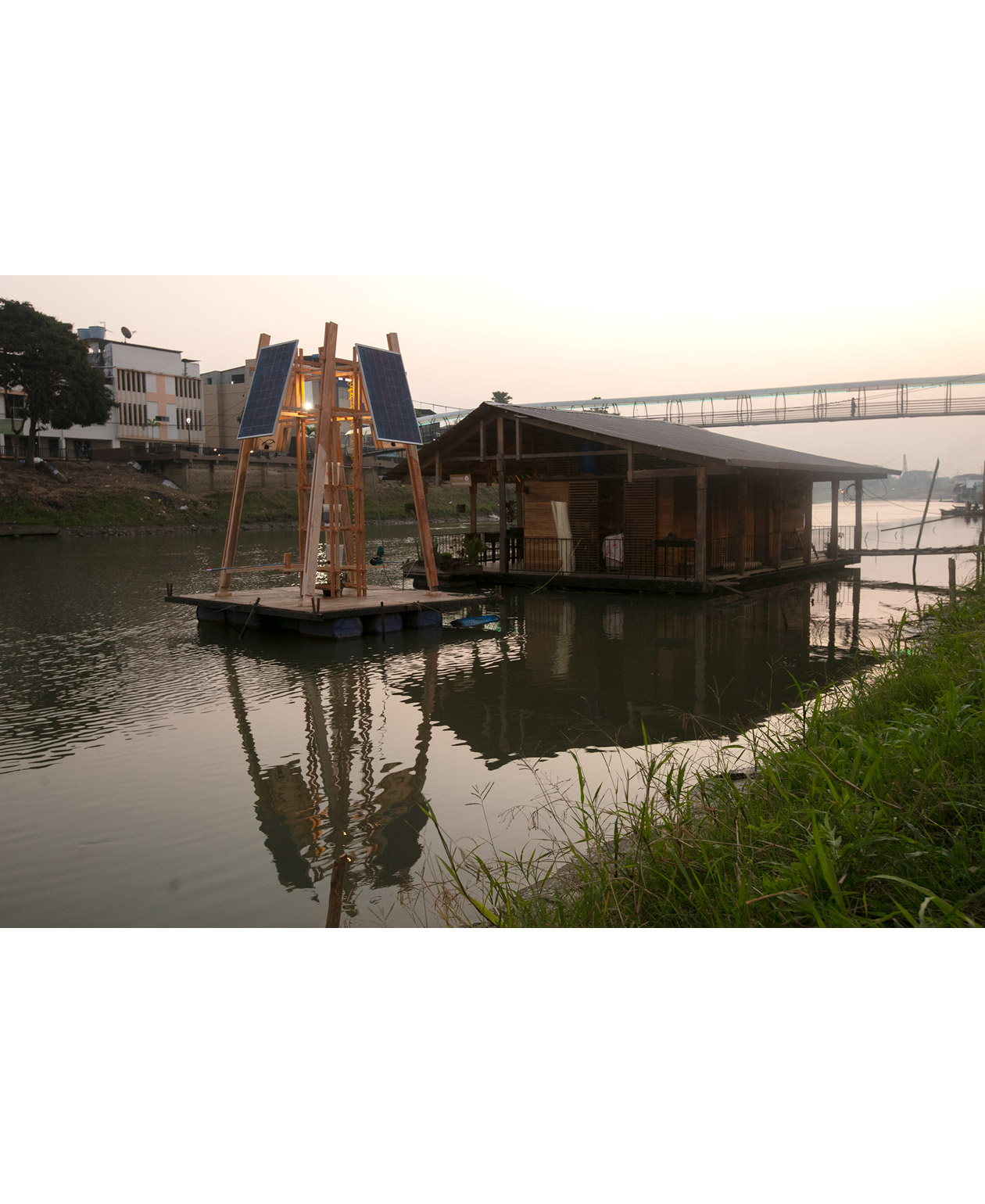
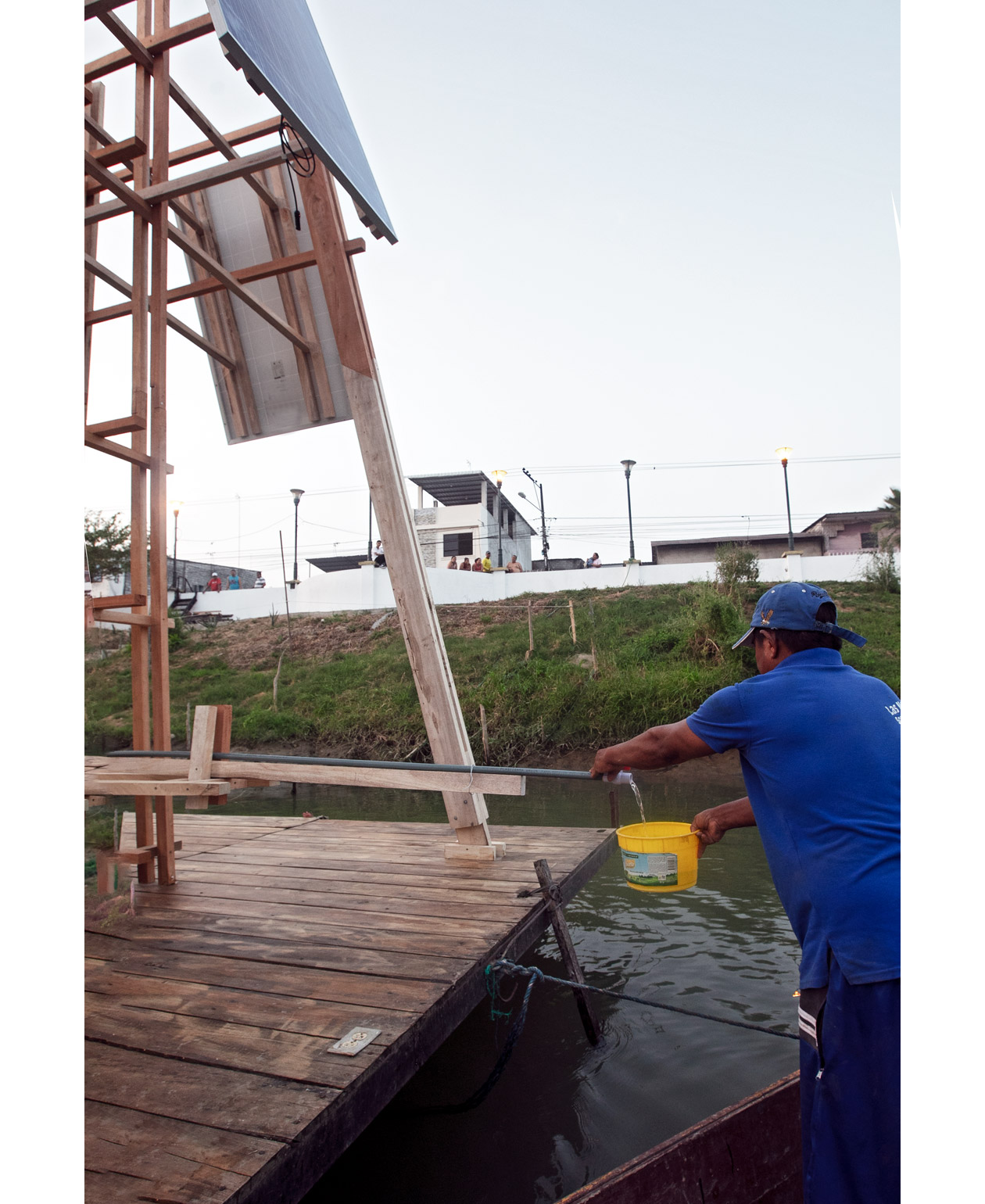
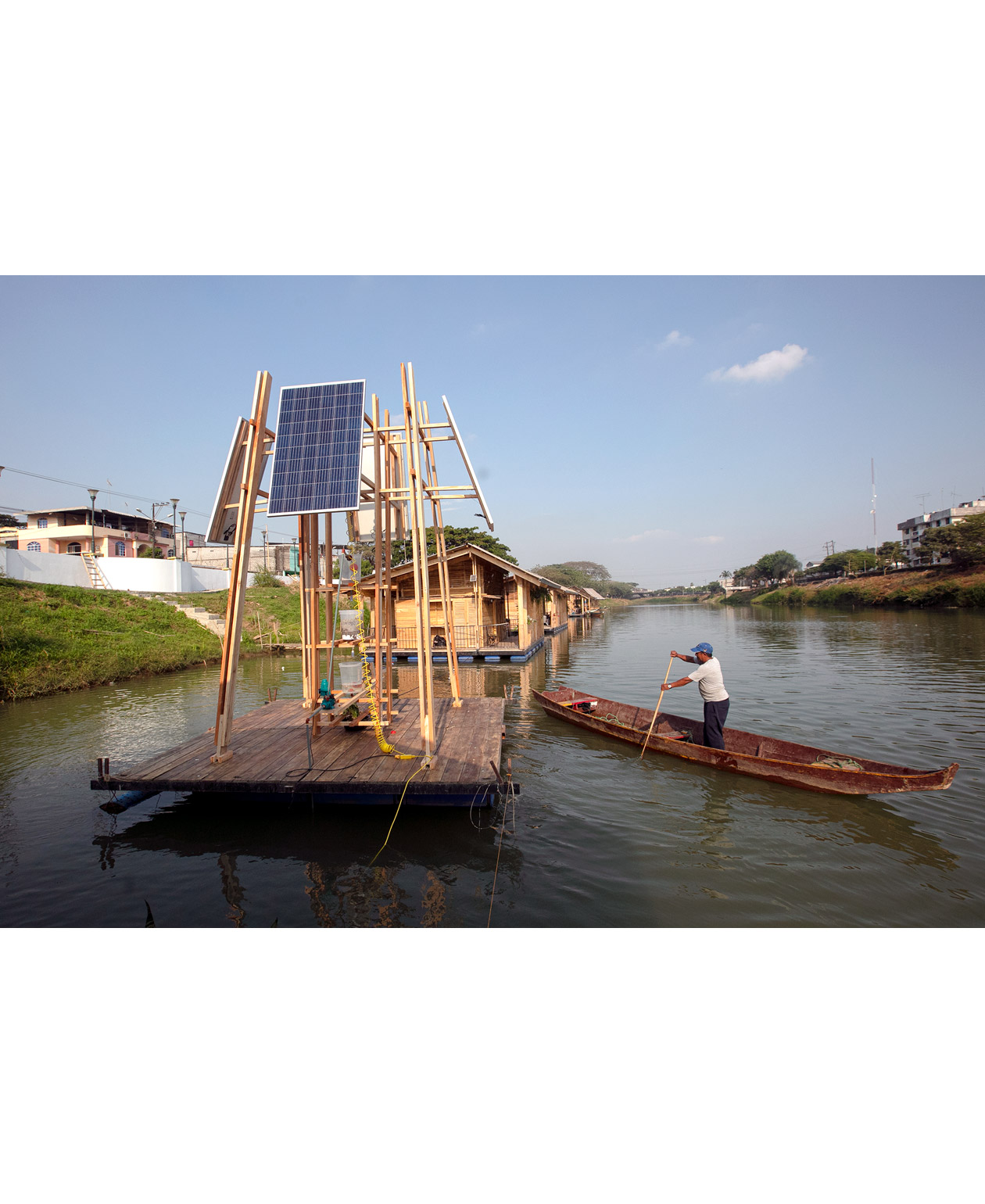
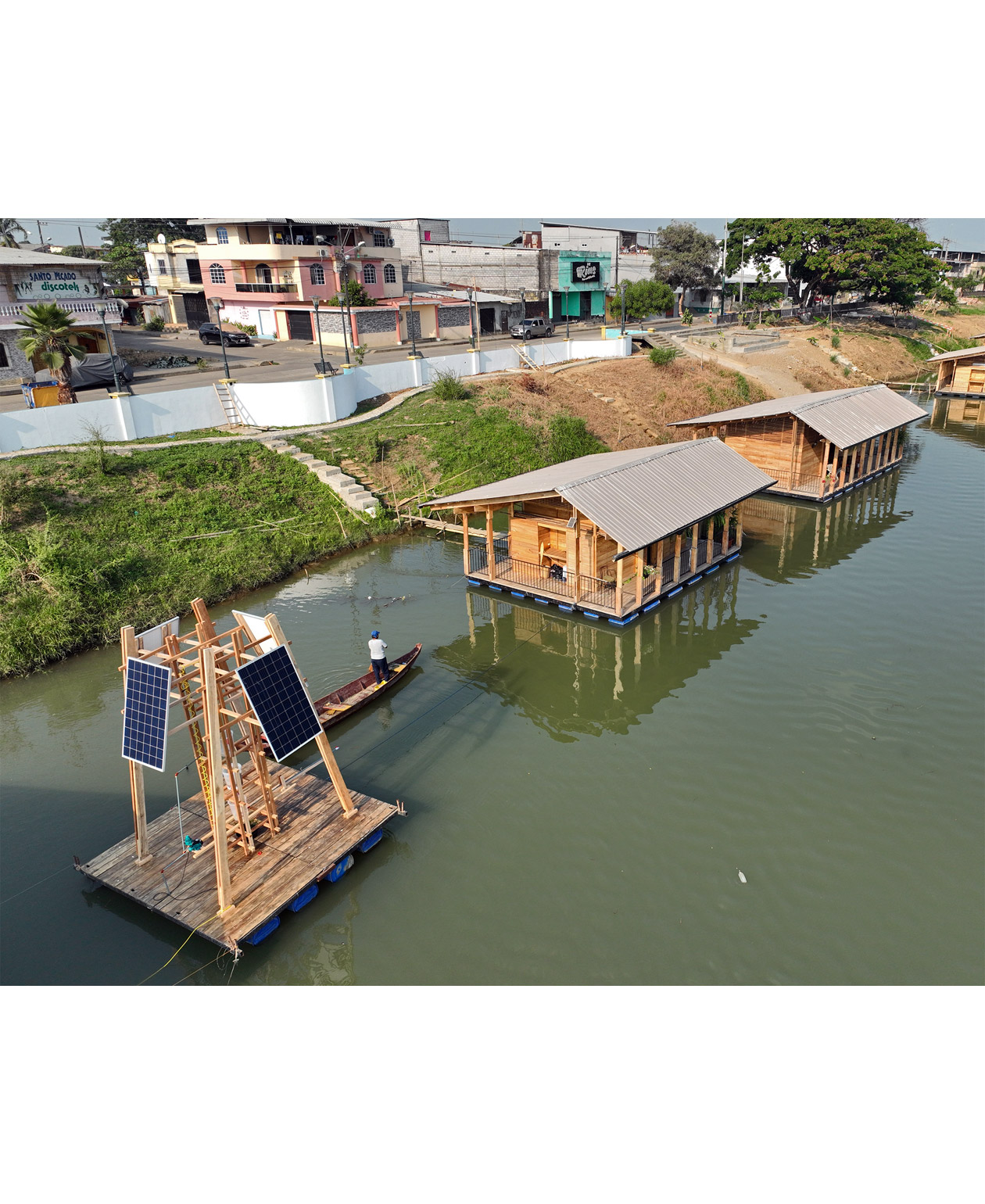
THE COLLECTOR is a floating platform developed to provide stable living infrastructure for the riverine community of Babahoyo, Ecuador. It generates an average of 17 kWh of energy per day and purifies 180 to 280 liters of potable water to supply up to four floating households. By allowing multiple households to use it together, it reduces water and electricity expenses by 80–90%, saving $350 to $600 annually per household—about 20% of a family's income—while also decreasing fossil fuel use and polluted water discharge into the river. It integrates individual facilities that produce water and electricity into a single shared floating structure, forming a communal infrastructure tailored to the local lifestyle.
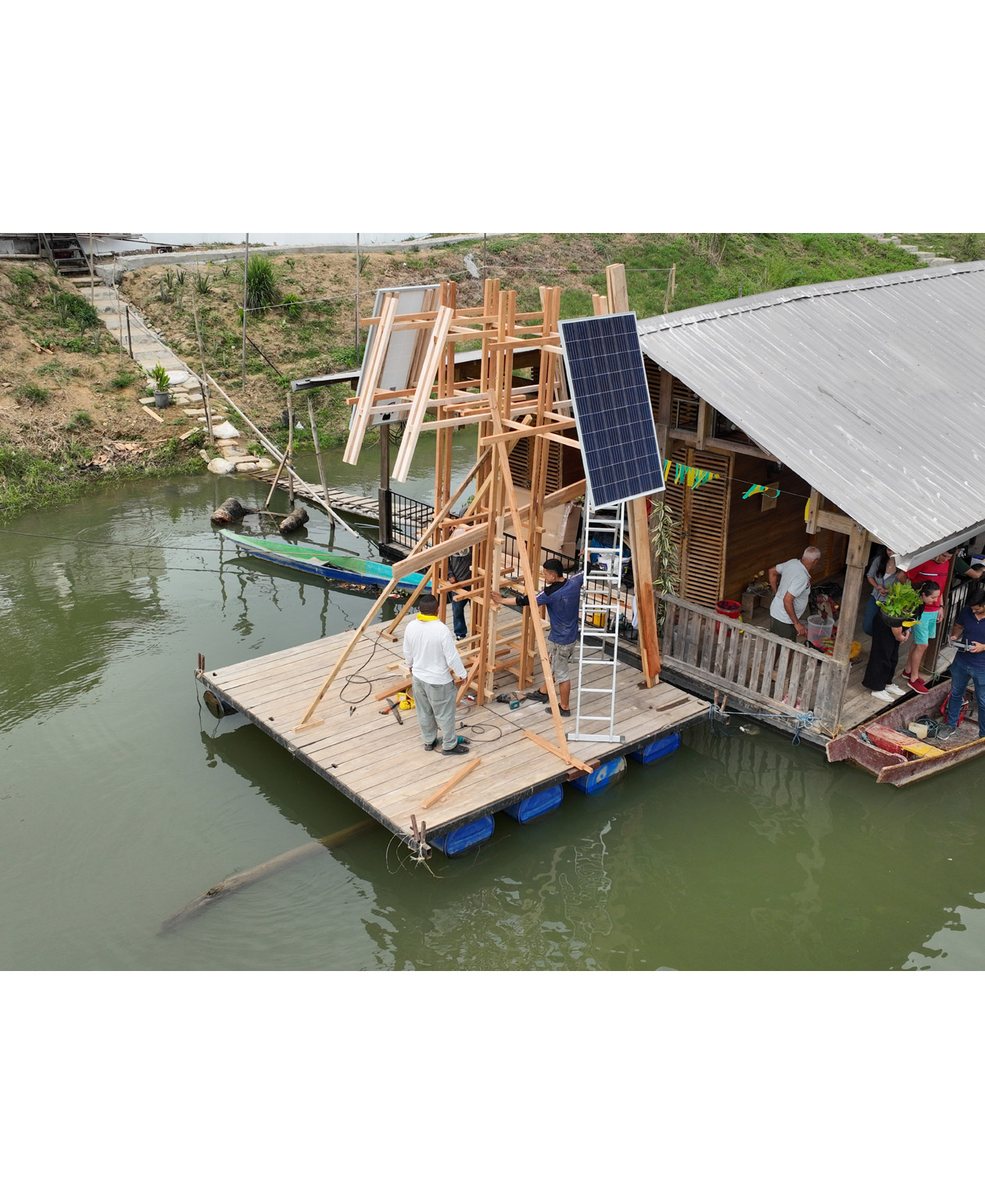
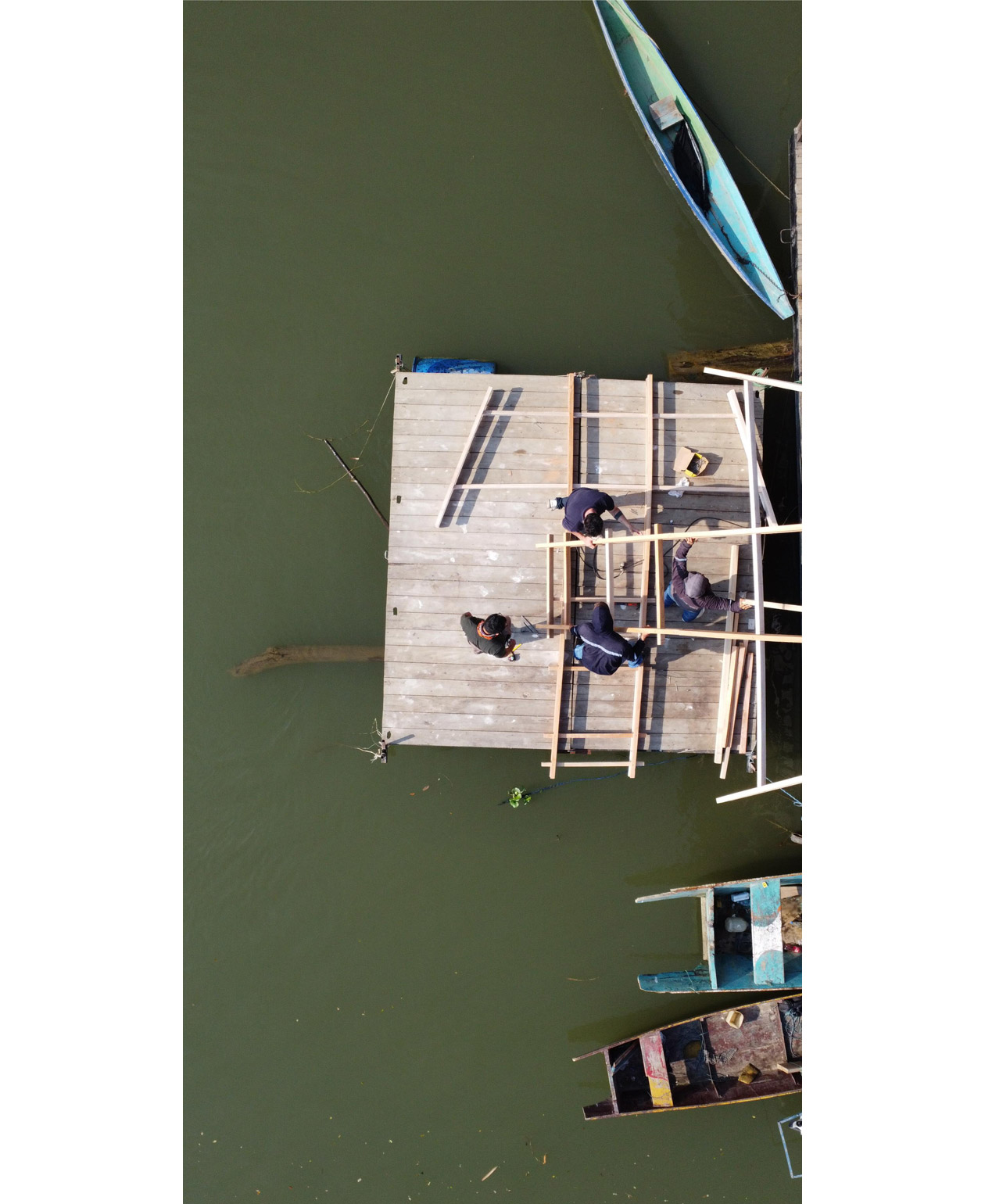
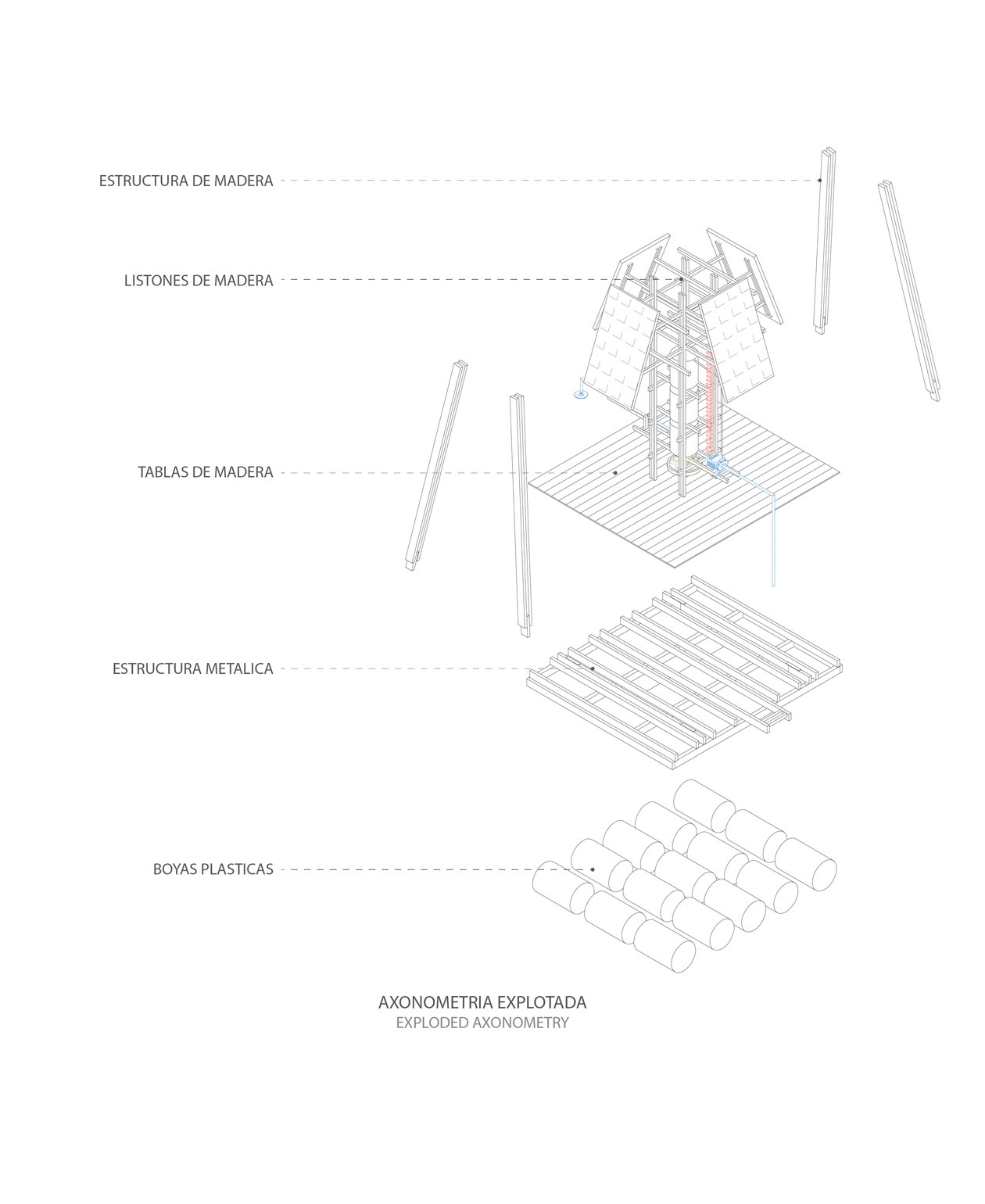
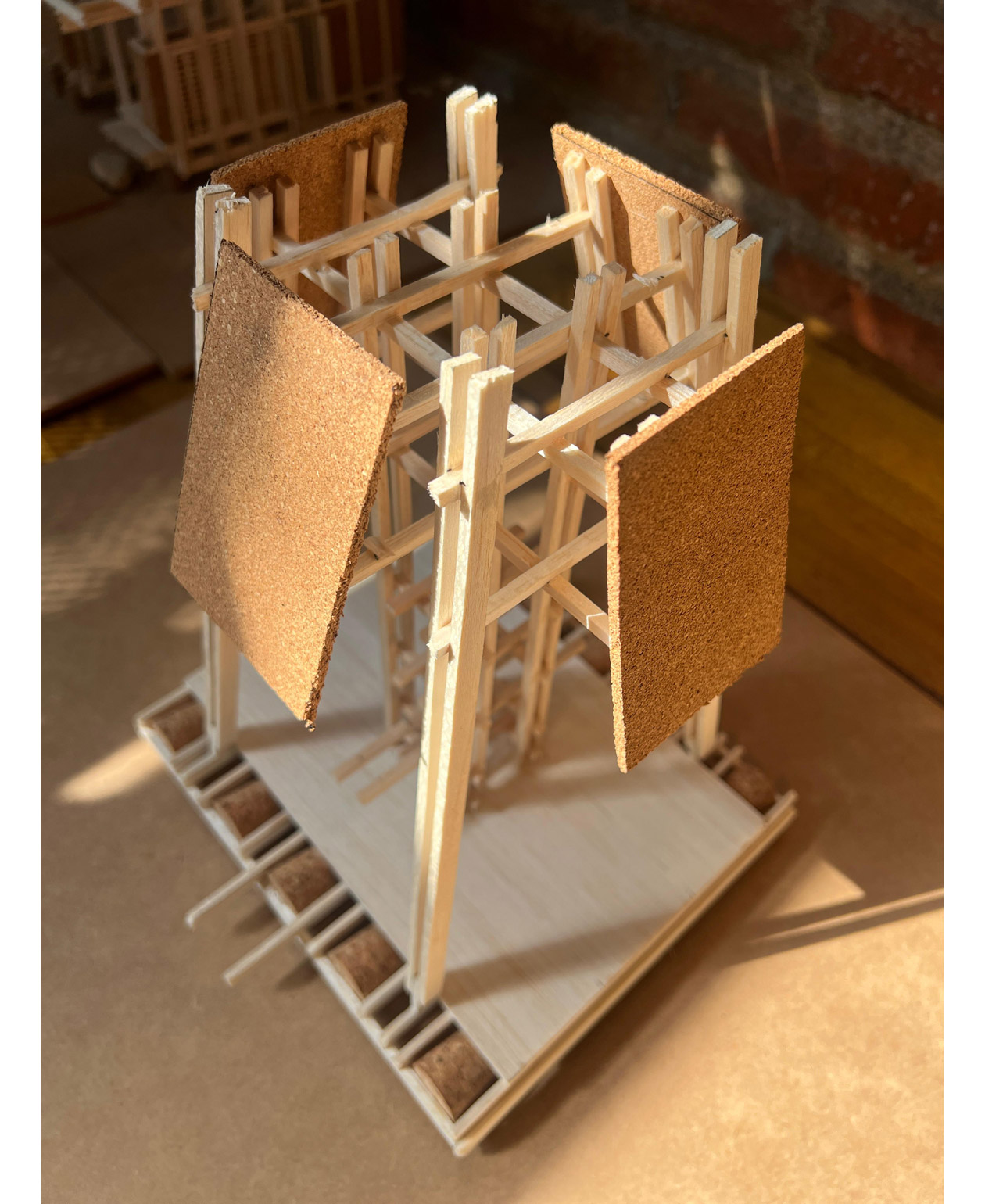
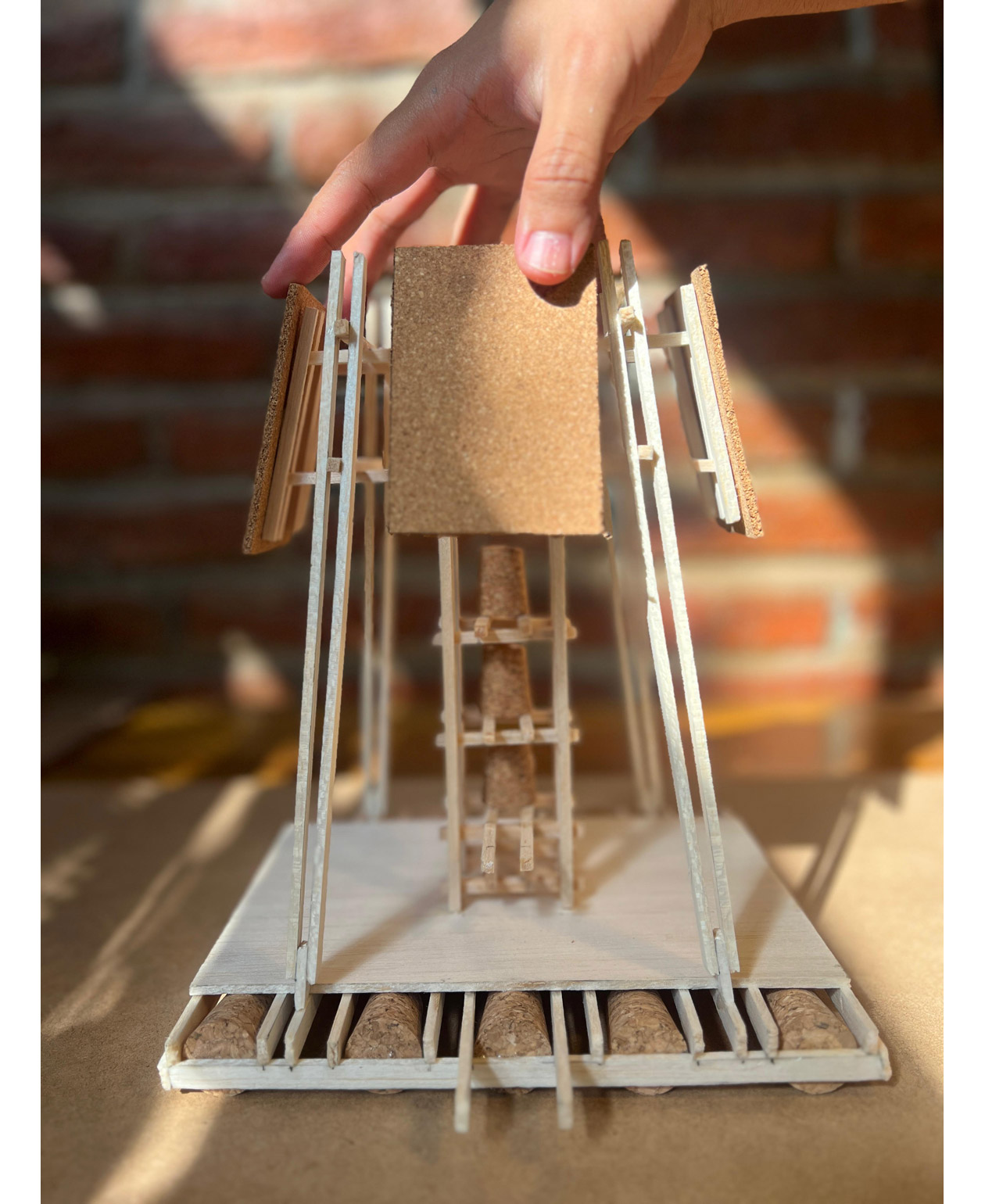
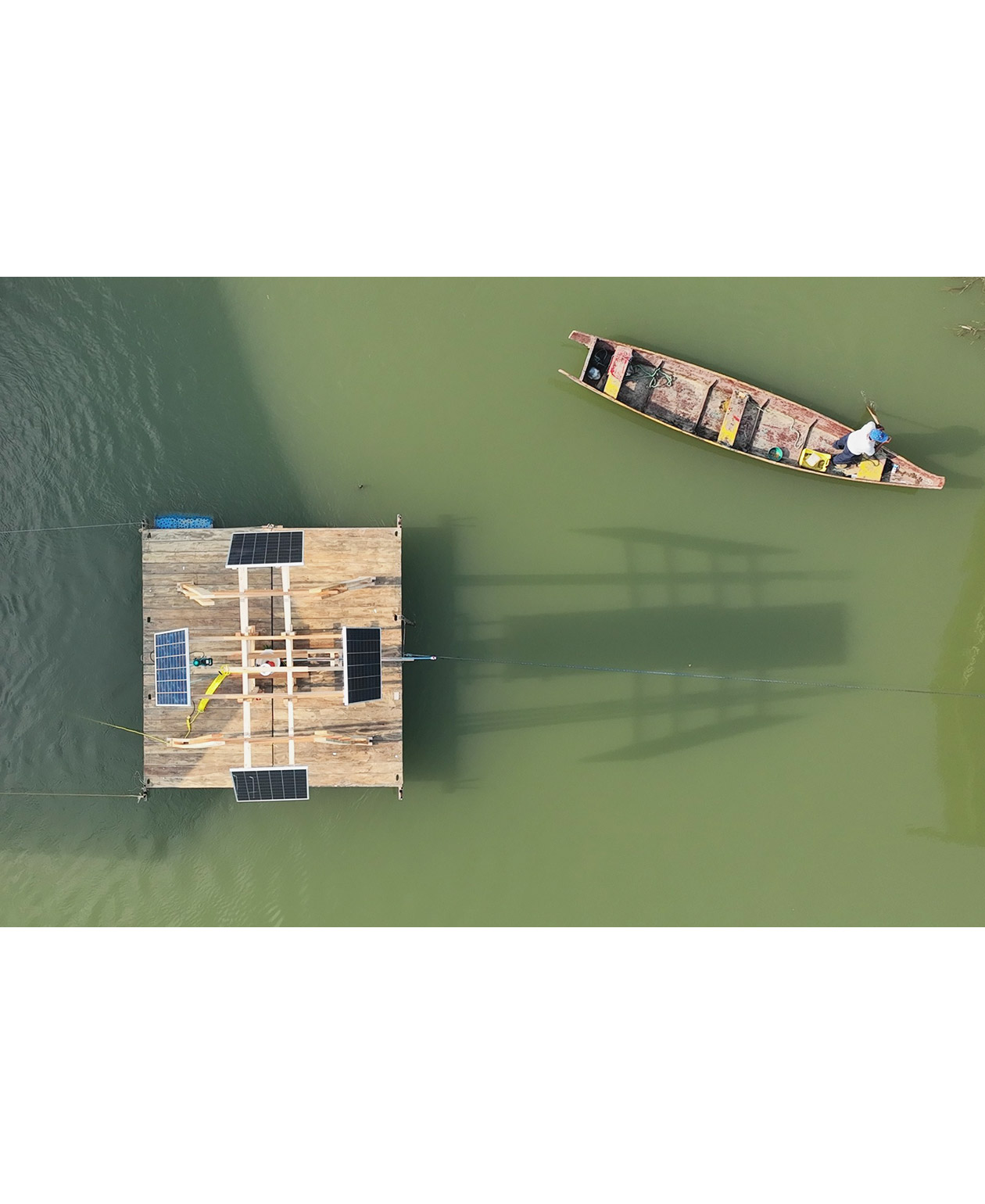
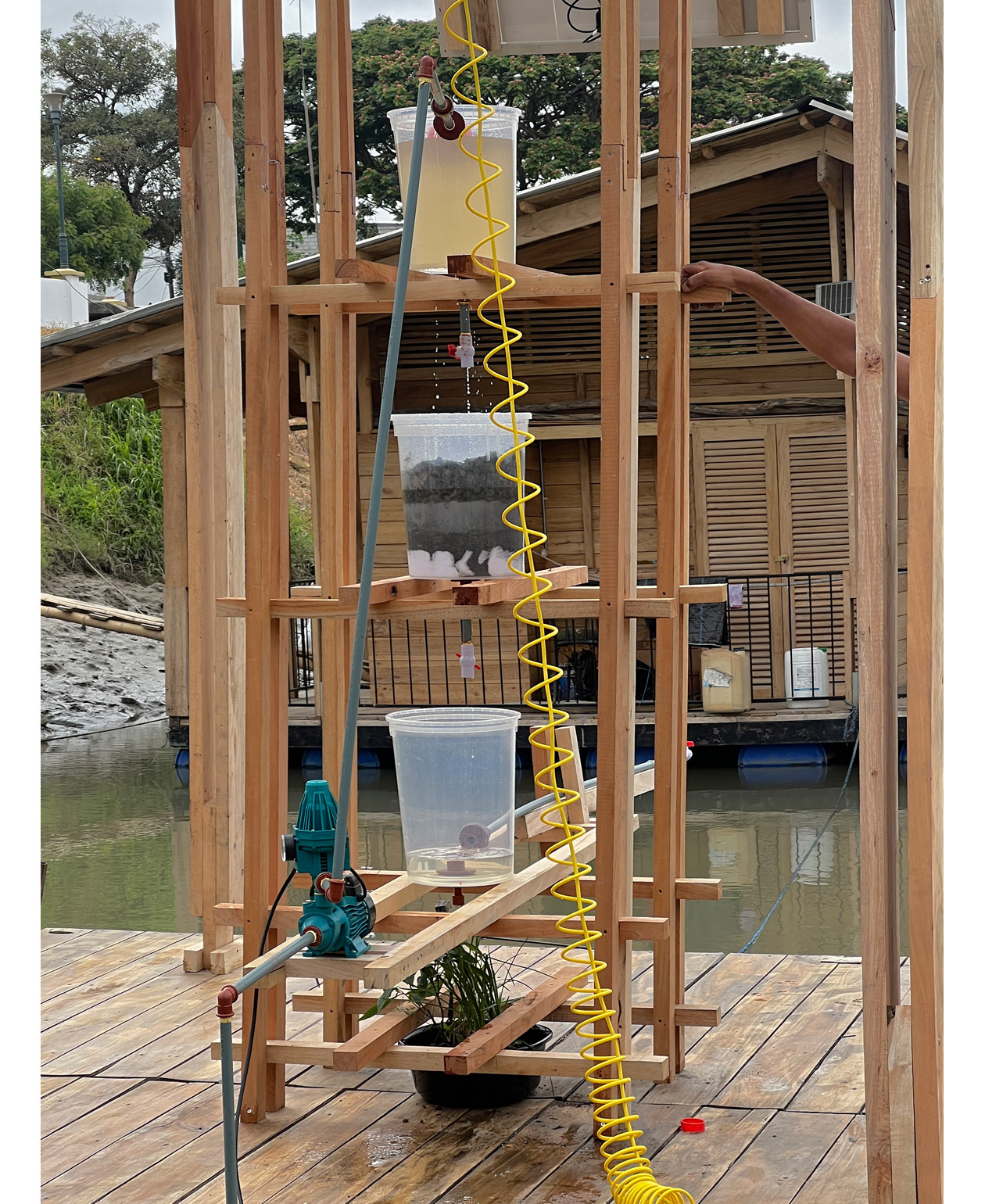
Built on a 3.60 × 4.20-meter platform, THE COLLECTOR uses local wood and recycled plastic tanks. Its structure is organized through modular inclined trusses, allowing easy transport, assembly, and replication, while respecting local construction methods and available materials so that it can be built in other locations. By sourcing materials locally and using local construction methods, maintainability and expandability were also taken into consideration. At the center of the platform, a vertical filtration tank filled with layers of sand, gravel, and activated carbon purifies river water into clean water, which is used not only for drinking but also for a small community garden. The power generated from four solar panels is used on the platform, and the excess amount is supplied to nearby homes. It is characterized by the intensive arrangement of daily necessities by connecting water purification, energy production, and food cultivation within a limited platform.
Instead of individual households preparing basic living services such as water and electricity separately, this project builds them as public infrastructure shared by local residents. This is a social design approach that transforms the issue of installing individual facilities into a shared system where multiple households produce and distribute resources. Through this, it lowers financial burdens while responding to ecological and economic challenges, proposing a way to sustainably access water and energy even in areas lacking basic living services.
Based on traditional floating architecture, this system combines solar power generation and river water purification technologies while maintaining Babahoyo's local lifestyle. Rather than replacing the existing floating lifestyle with new facilities, it demonstrates a design approach that responds to local culture and environment by adding modern living technology based on those spatial characteristics. It supplies drinking water and electricity and supports small-scale food production to improve residents' health and living environments while reducing household expenses and environmental burdens. Another characteristic is that it connects local architectural culture with modern technology, developing a structure that can be expanded as needed and applied to other environments. Through this, it helps the local community secure necessary resources on its own and continue stable living despite climate change and economic difficulties.
Building on the success of the project, discussions are underway with private companies to develop an independent water filtration system for individual households, with implementation targeted for the end of 2026.
This floating infrastructure is designed to be applicable not only in Babahoyo but also in various regions around the world experiencing climate crises, a lack of basic living services, and geographic isolation. While maintaining the use of locally available materials and direct participation by residents, it can be applied to fit the environment and conditions of each region. Based on a modular structure, local materials, manufacturing methods, and required functions can be adjusted, presenting a system that can be modified according to local conditions rather than simply replicating a completed building. Furthermore, by expanding into sustainable infrastructure that directly produces and shares water and energy locally, it demonstrates a new role for architecture in enhancing residents' self-reliance and climate change resilience.