


The Magical Stars “WEAVING THE FUTURE, EMBRACING THE ORIGIN” A heritage-driven circular design solution reviving vanishing Lanna bamboo craftsmanship through parametric design and reusable modular construction


- Nationality
- Thailand
- Group
- BAMFEST, Faculty of Architecture, Chiang Mai University in collaboration with Central Chiang Mai Airport
About Project
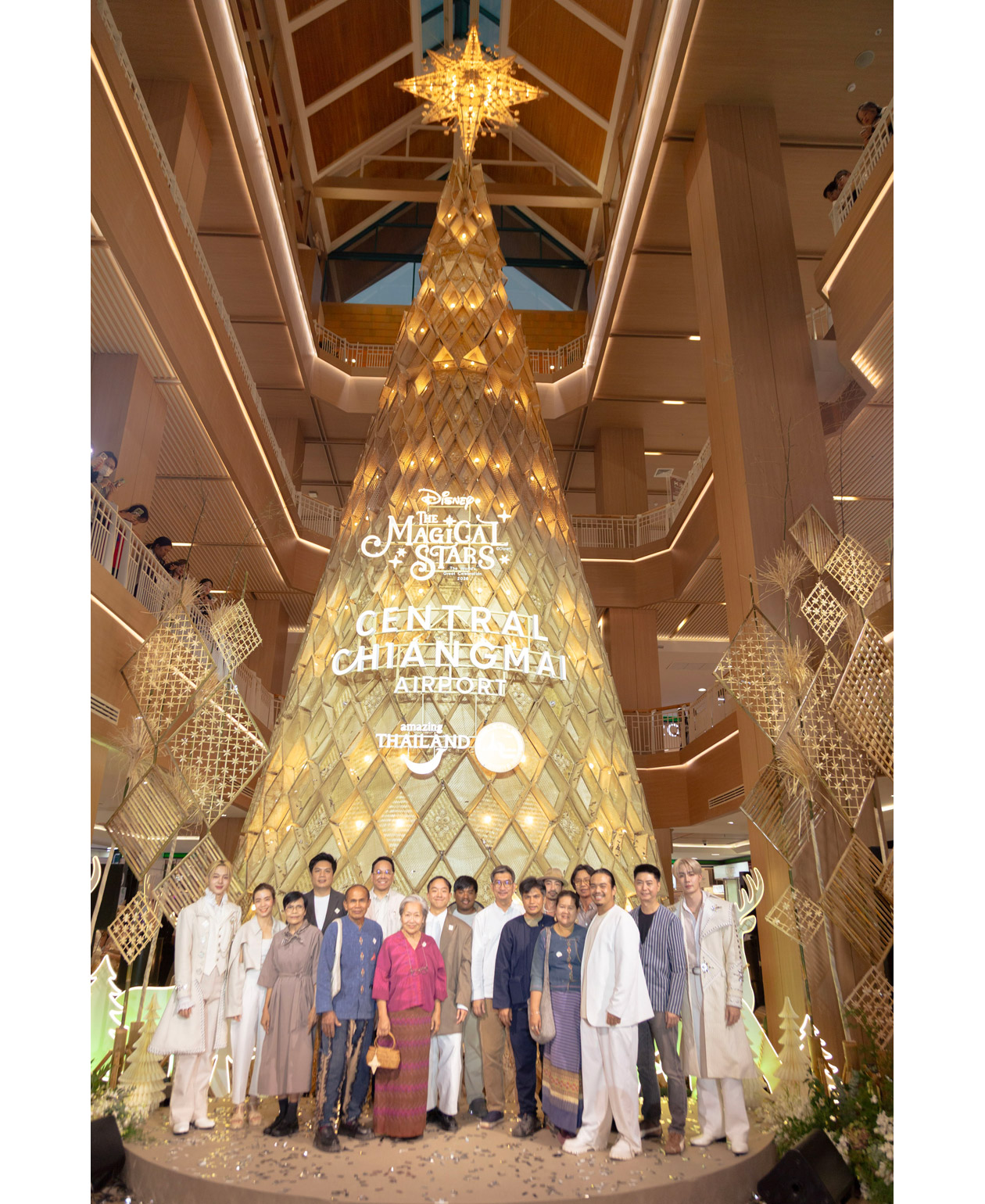
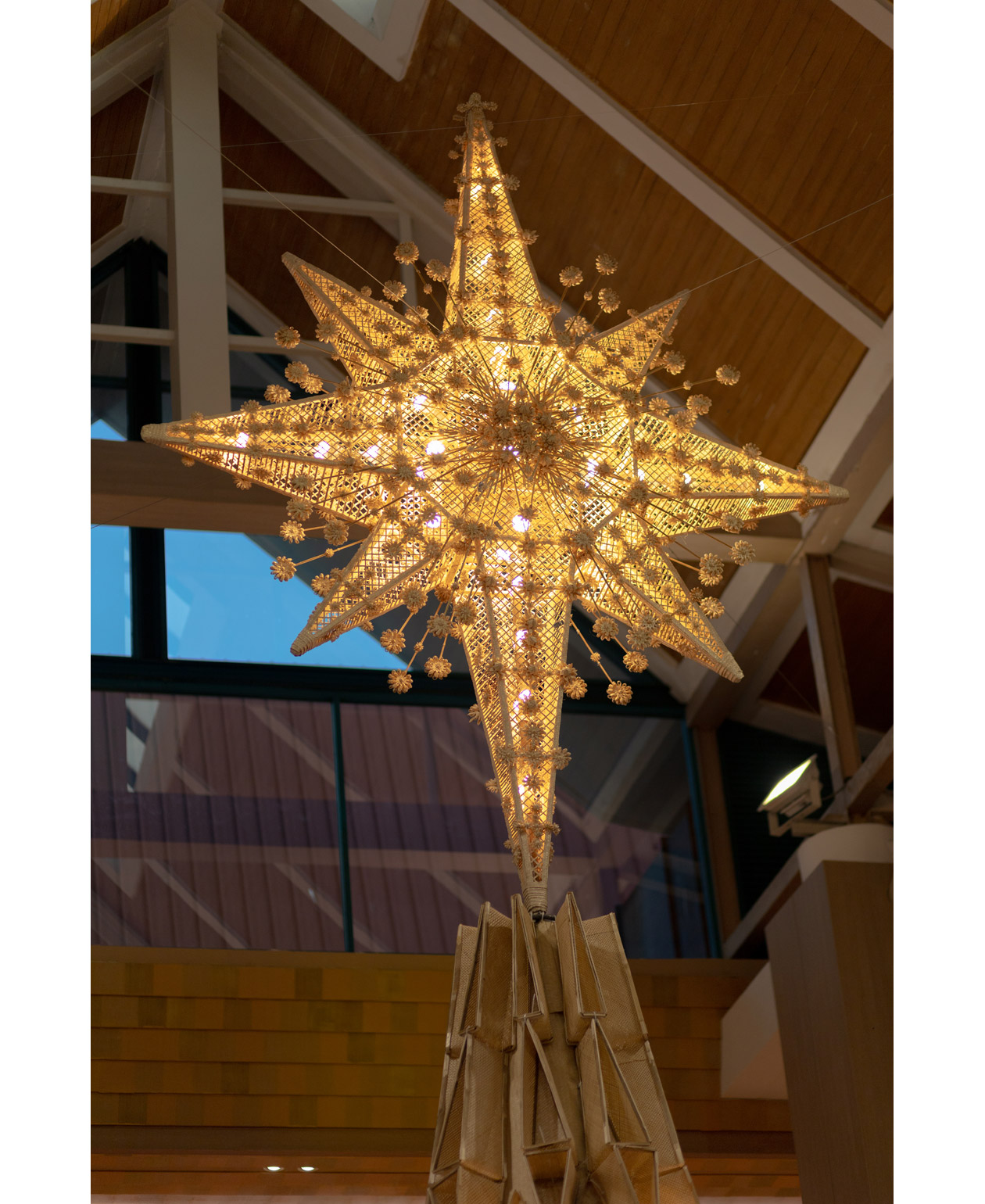
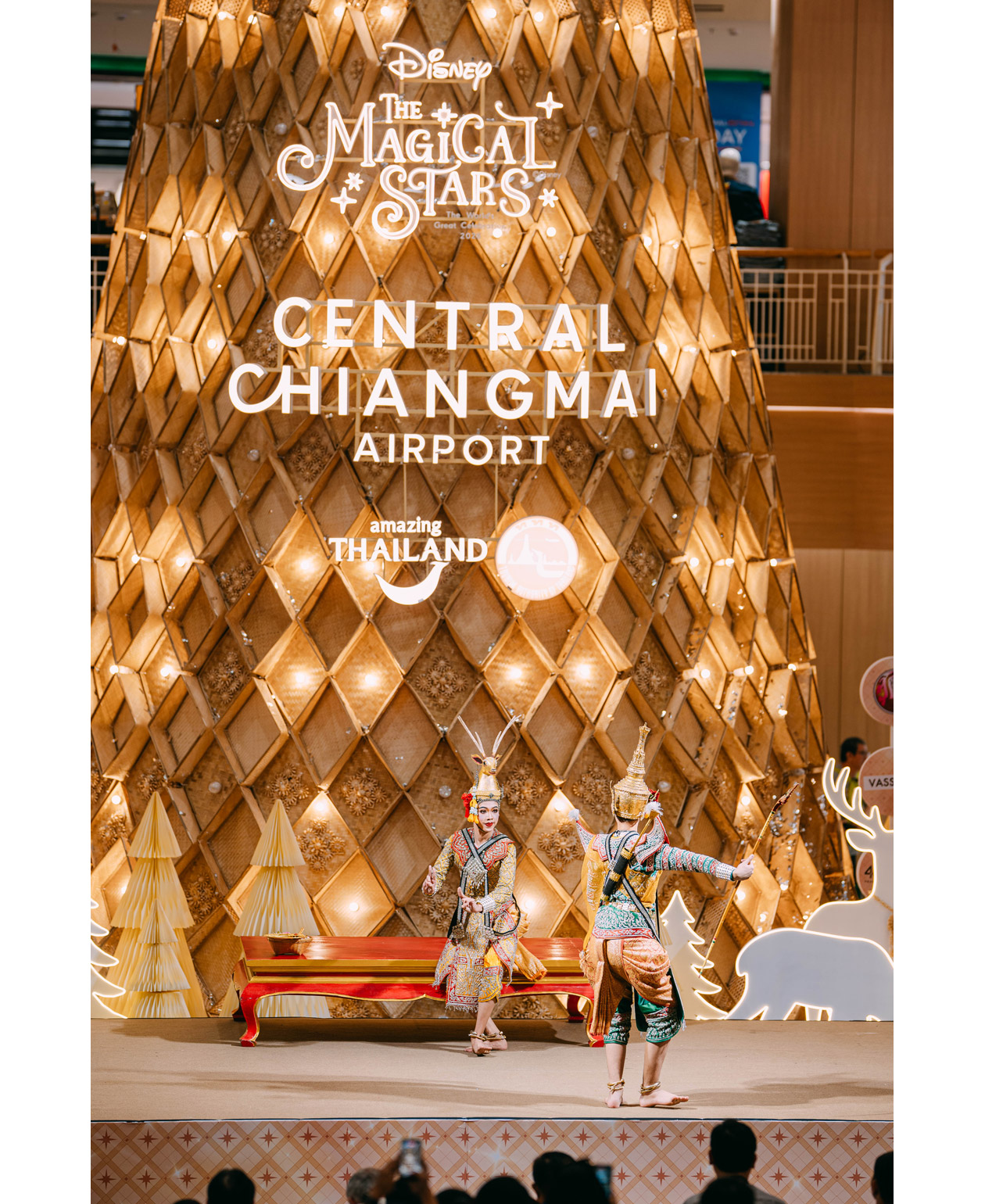
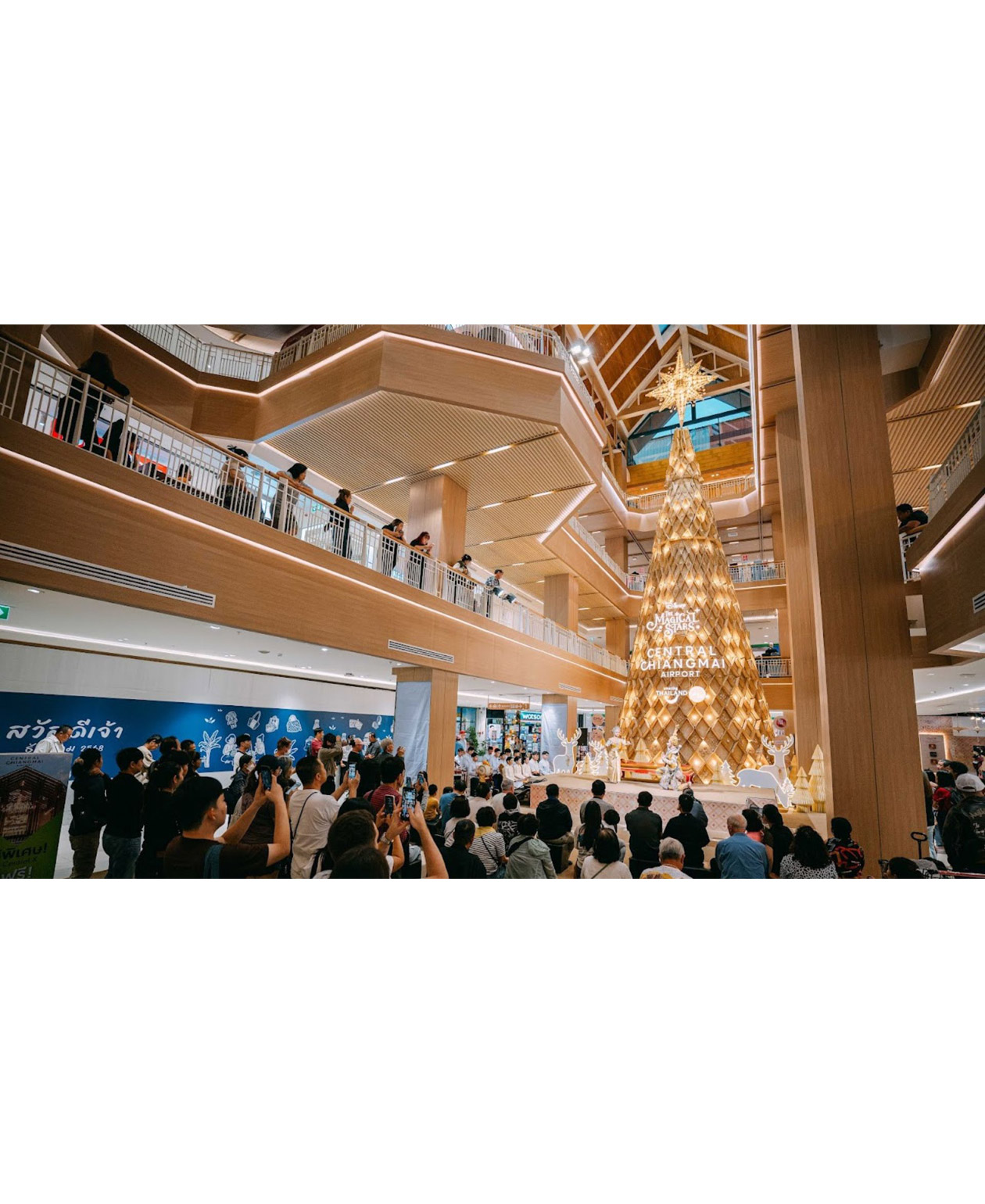
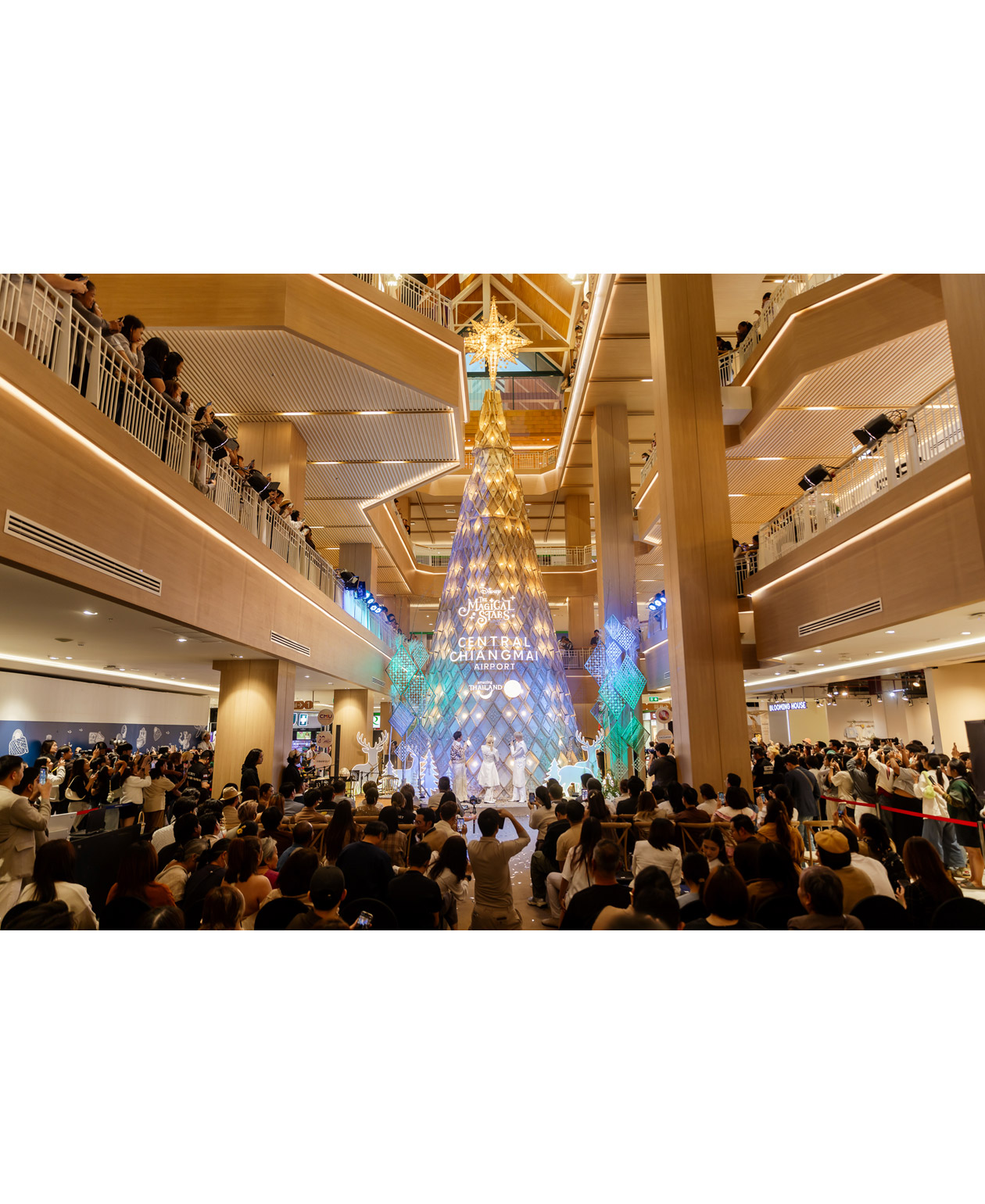
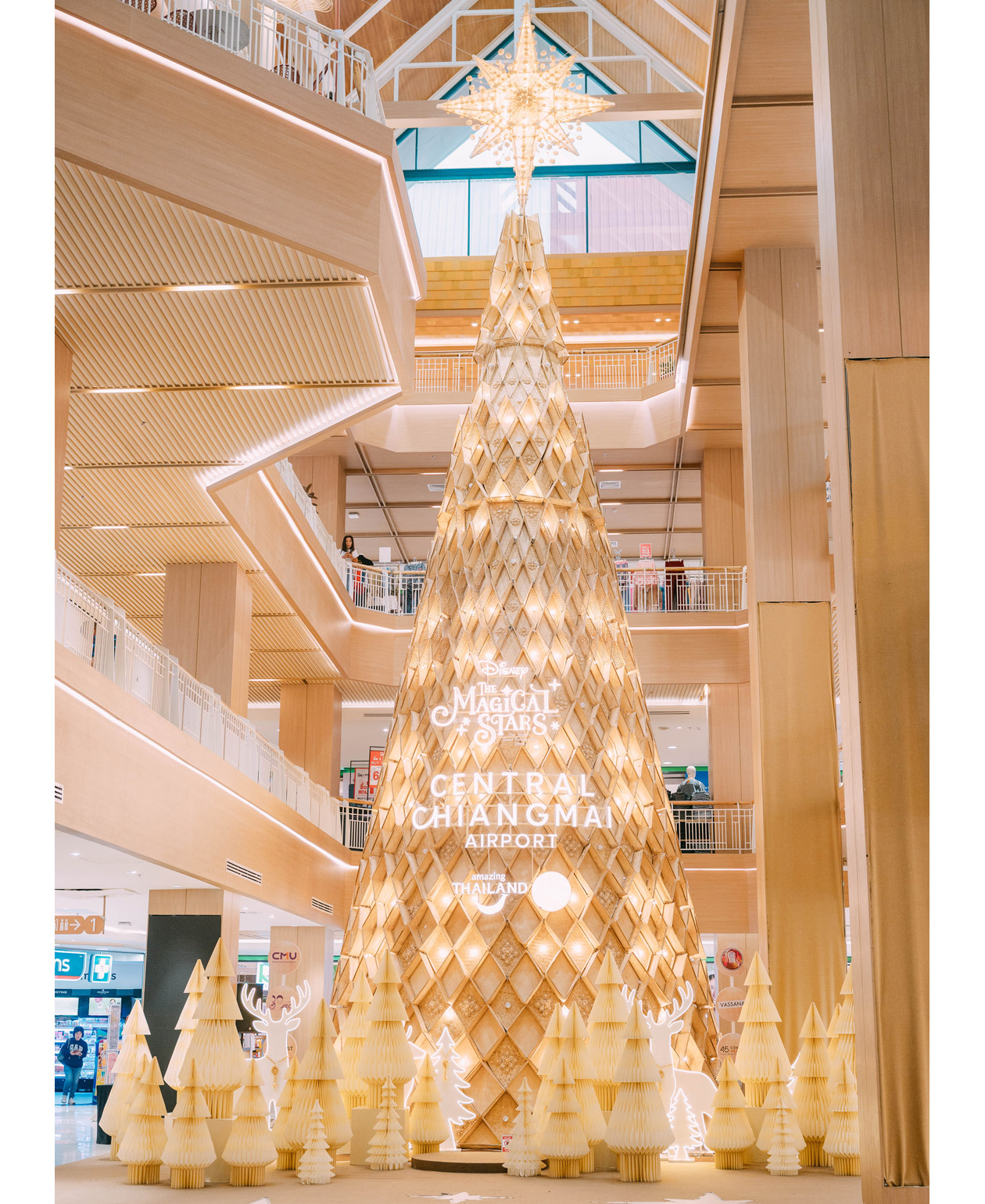
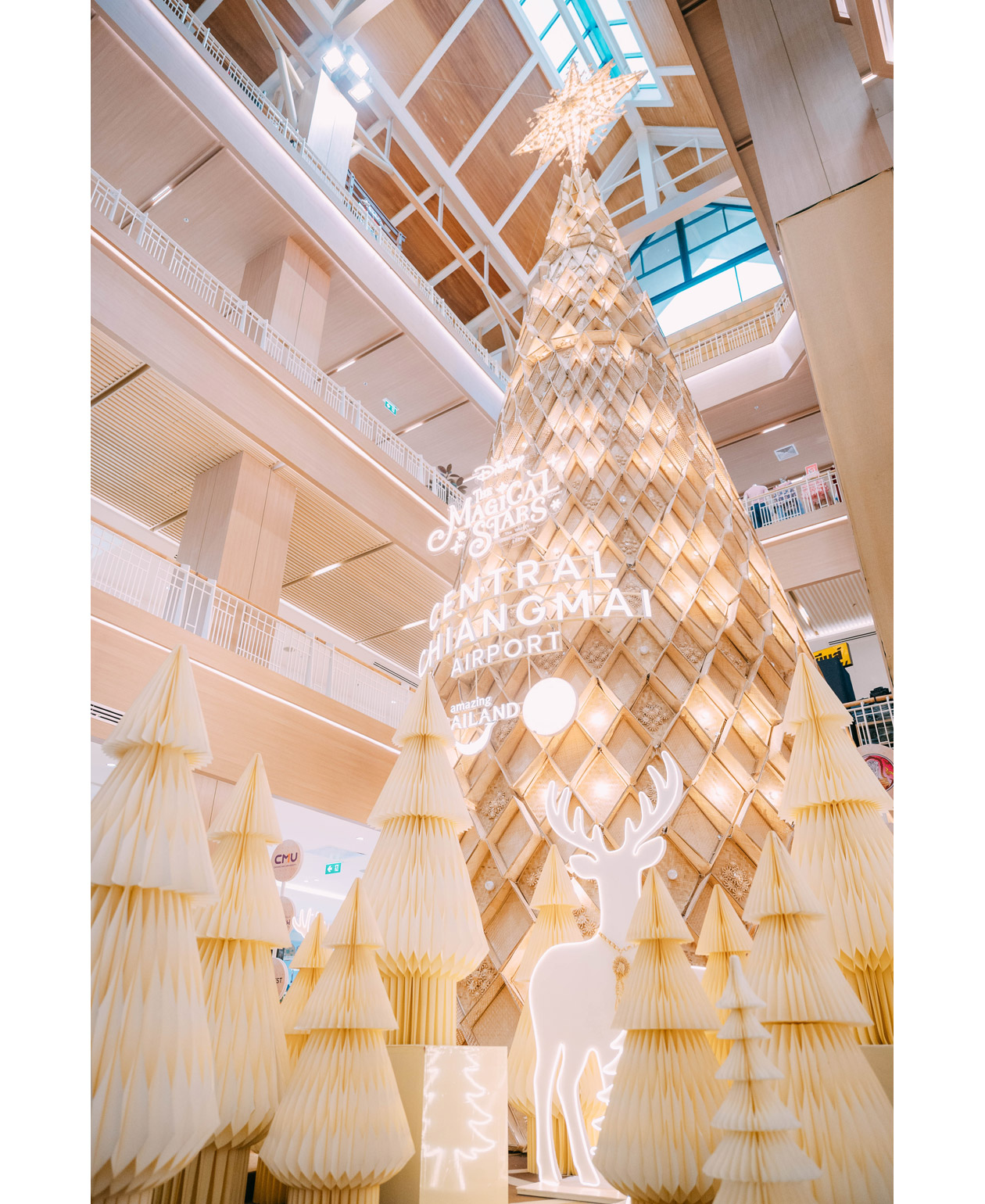
The Magical Stars “WEAVING THE FUTURE, EMBRACING THE ORIGIN” is a 15-meter bamboo Christmas tree installed at Central Chiang Mai Airport in Thailand. It was planned to continue the traditional Lanna bamboo-weaving technology of the Lanna region, which is disappearing due to aging and generational disconnection, while simultaneously reducing the environmental burden of year-end decorations made from synthetic materials that are used once and discarded. This is a project that applies local materials and craft techniques to modern spatial design, considering everything from production to post-use.
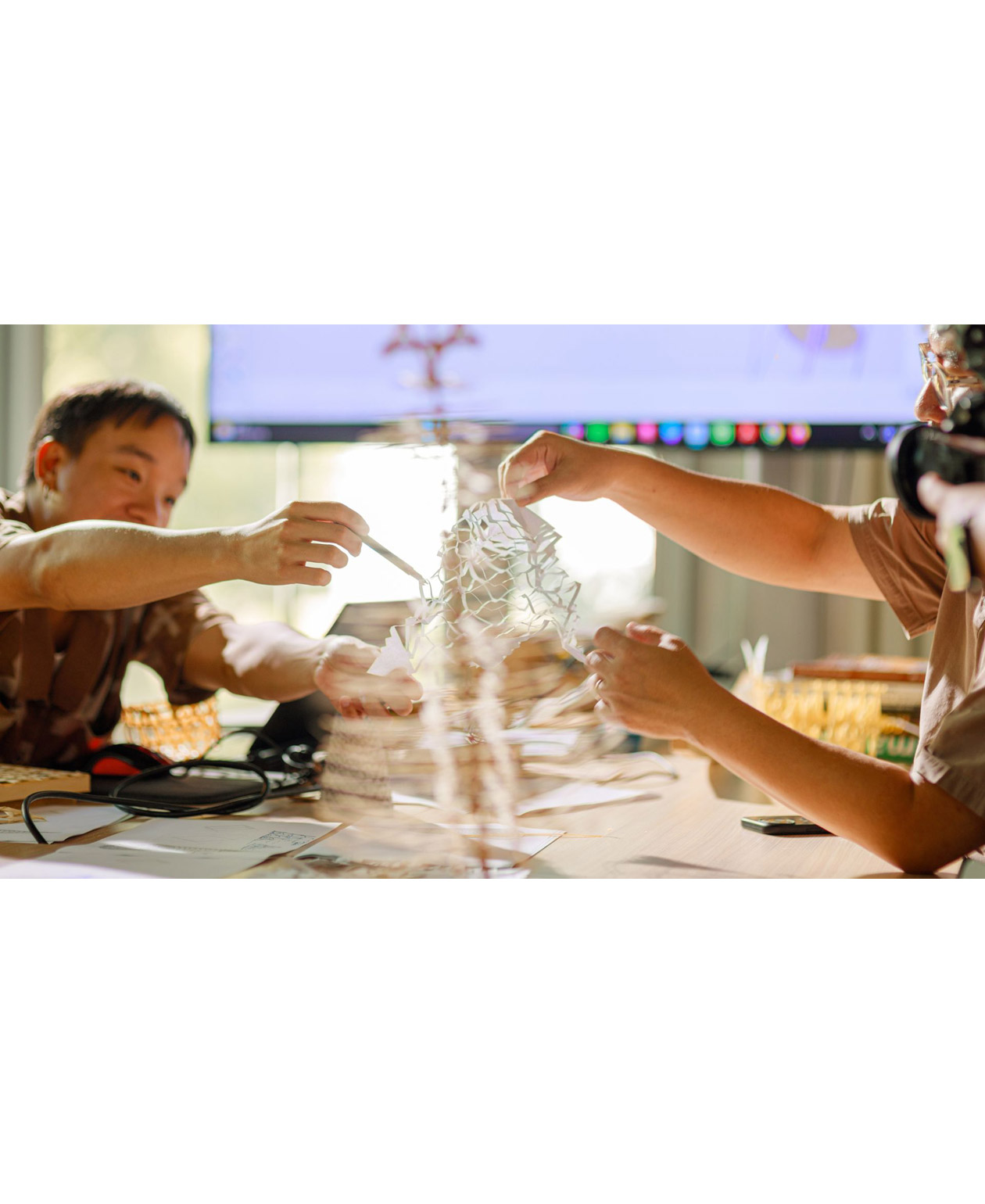
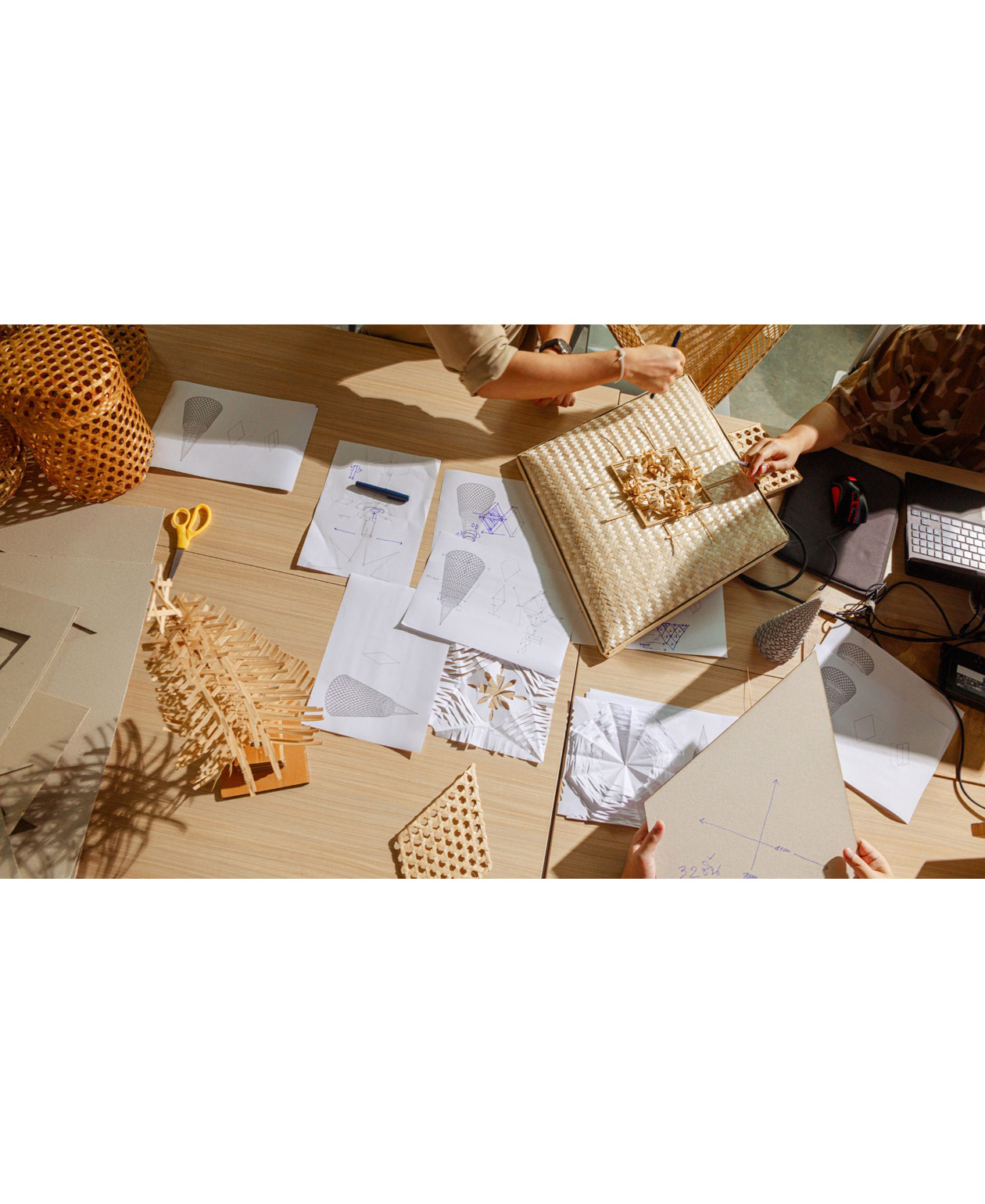
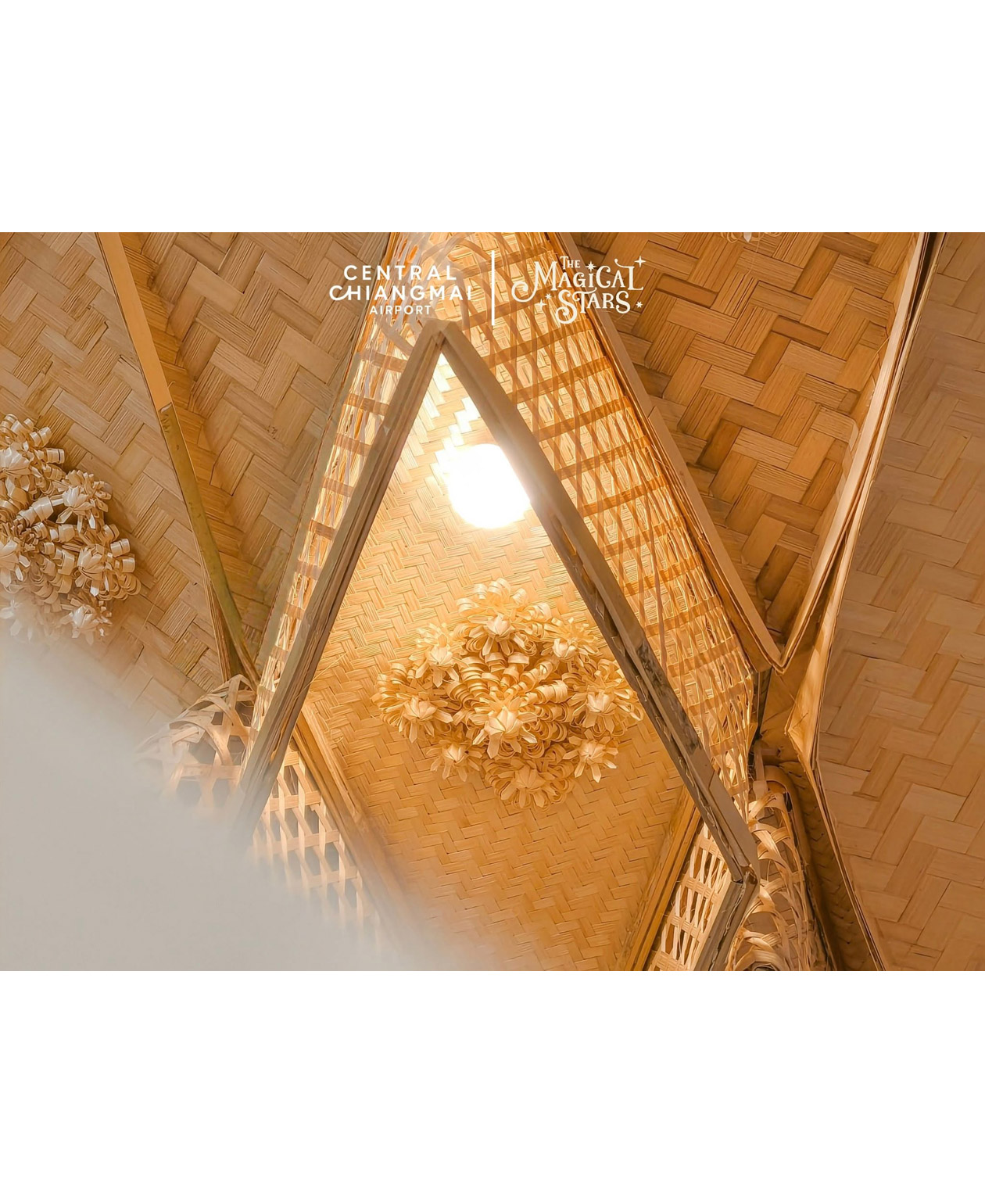
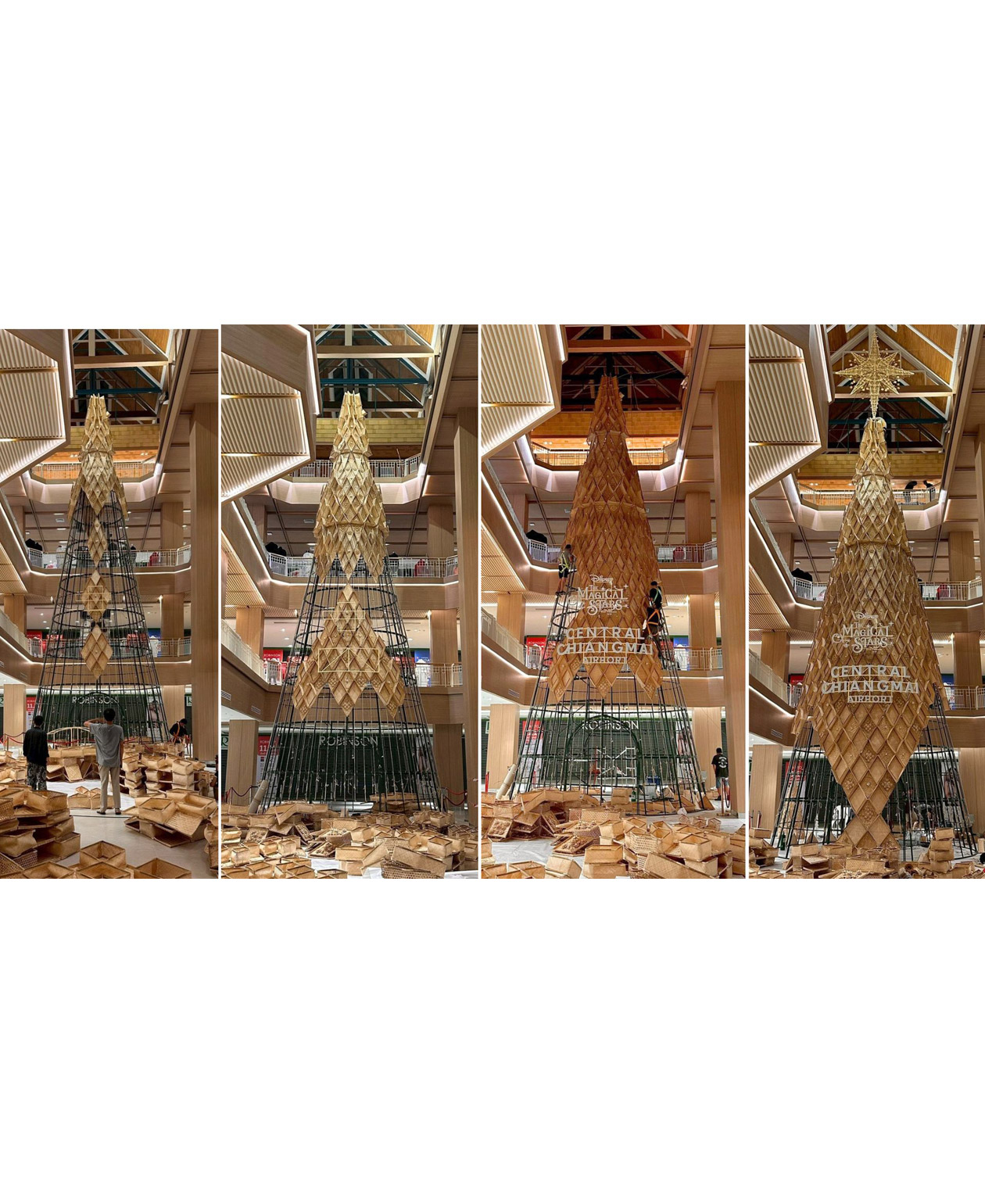
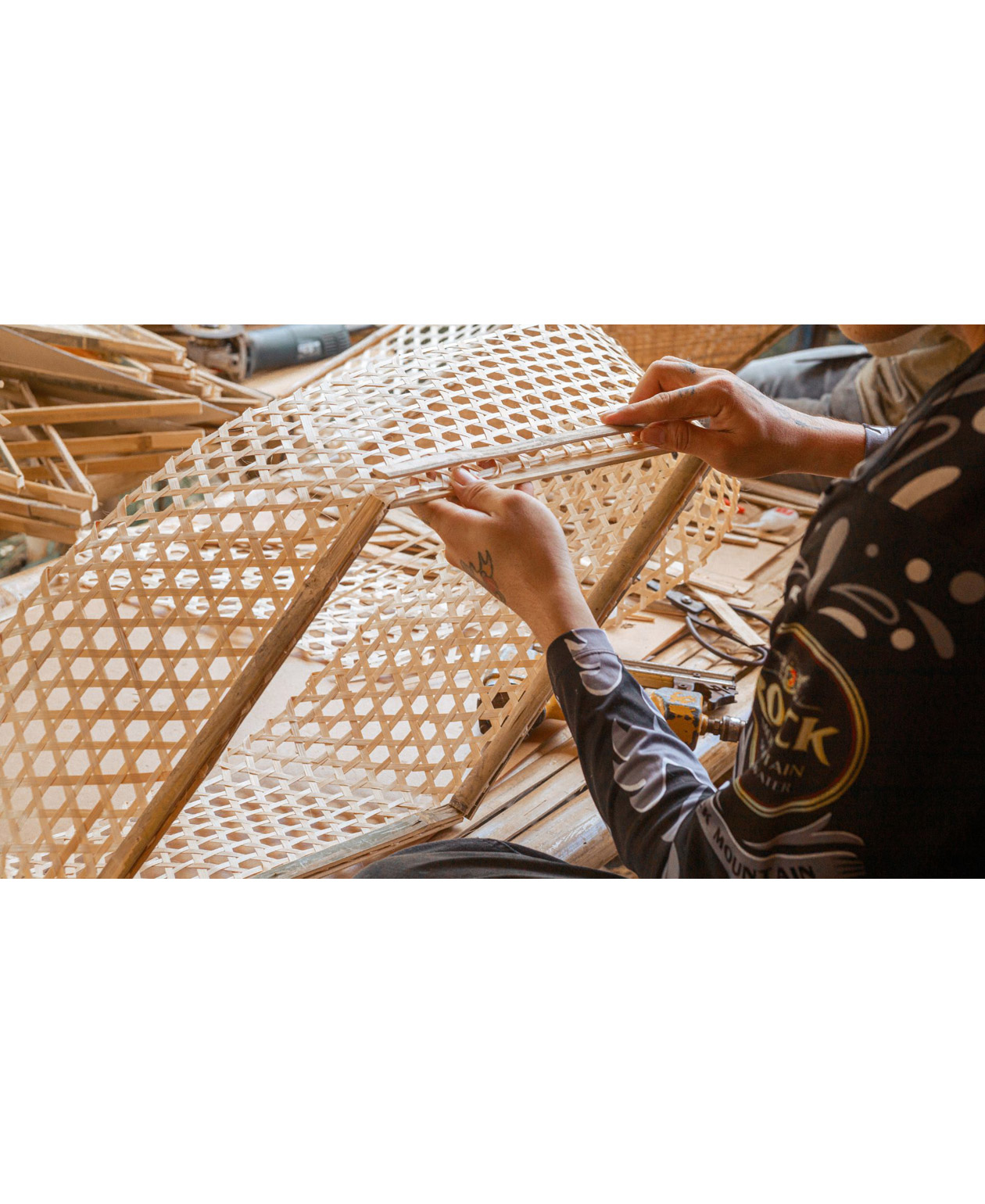
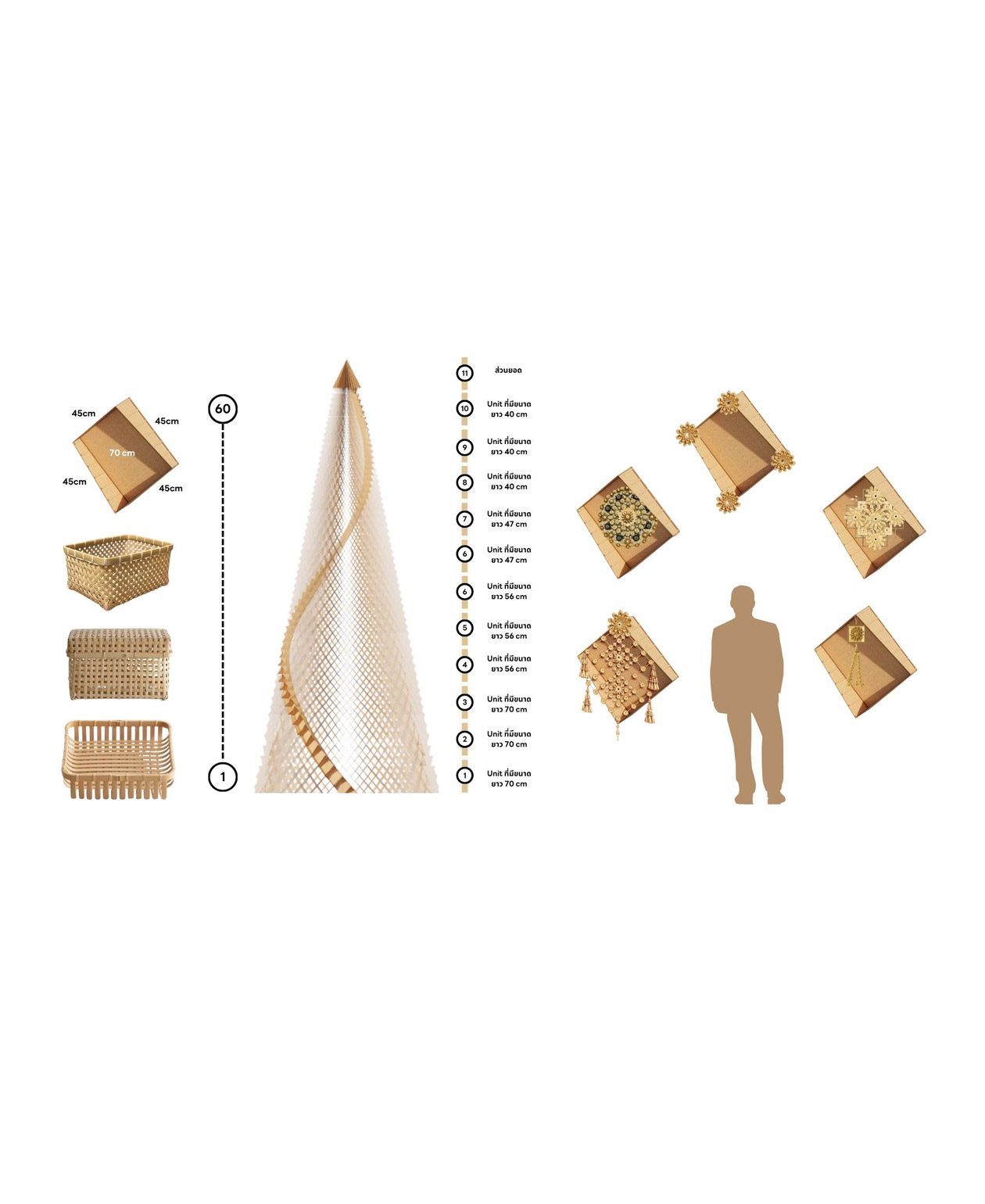
Bamboo was selected as the main material because it is a fast-growing, renewable resource that does not require separate chemical treatment. BAMFEST at Chiang Mai University's Faculty of Architecture utilized Parametric Design to design 25 types of diamond-shaped bamboo modules whose sizes change step by step. A total of 1,088 modules were stacked in a spiral to complete a single conical structure. By combining repeatable modules and size variations, individually handcrafted elements were enabled to scale up into a 15-meter structure.
The overall form was inspired by “Tung Sai Mu,” a traditional festival decoration of the Lanna region. Rather than simply reproducing the traditional form and weaving method, it reinterpreted them into a modern installation called a Christmas tree, and combined digital design with artisan-made handmade bamboo modules to realize precise sizes and structures. By combining traditional craft principles with digital design, handcraft technology was expanded into large-scale spatial structures.
The star on top of the tree and ornaments were designed by Sawin Sayma, founder of VASSANA, a Thai bamboo craft brand. Through the participation of a designer with experience collaborating with Dior, traditional bamboo weaving technology was connected with modern design, while actual production was centered around local craft communities.
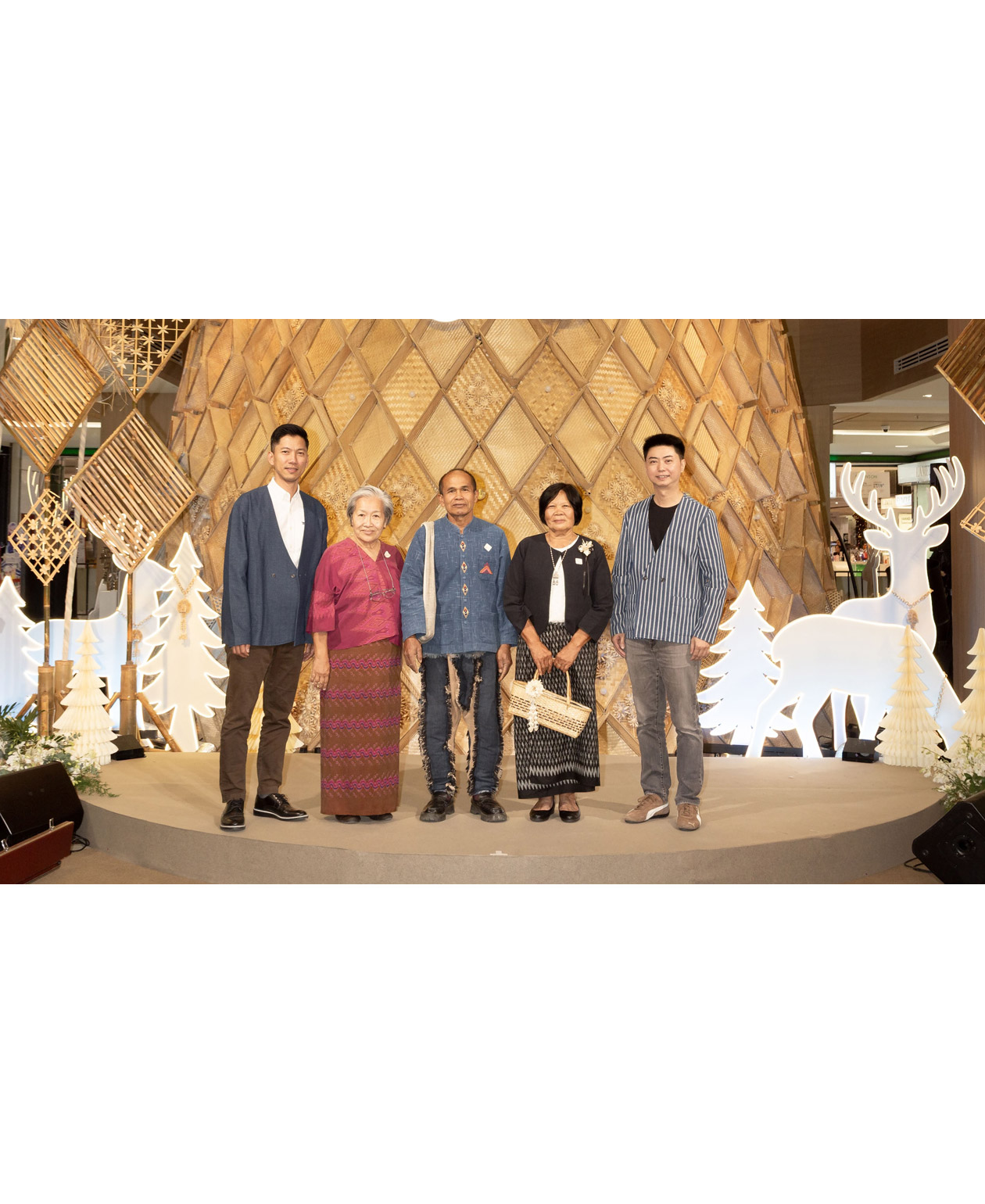
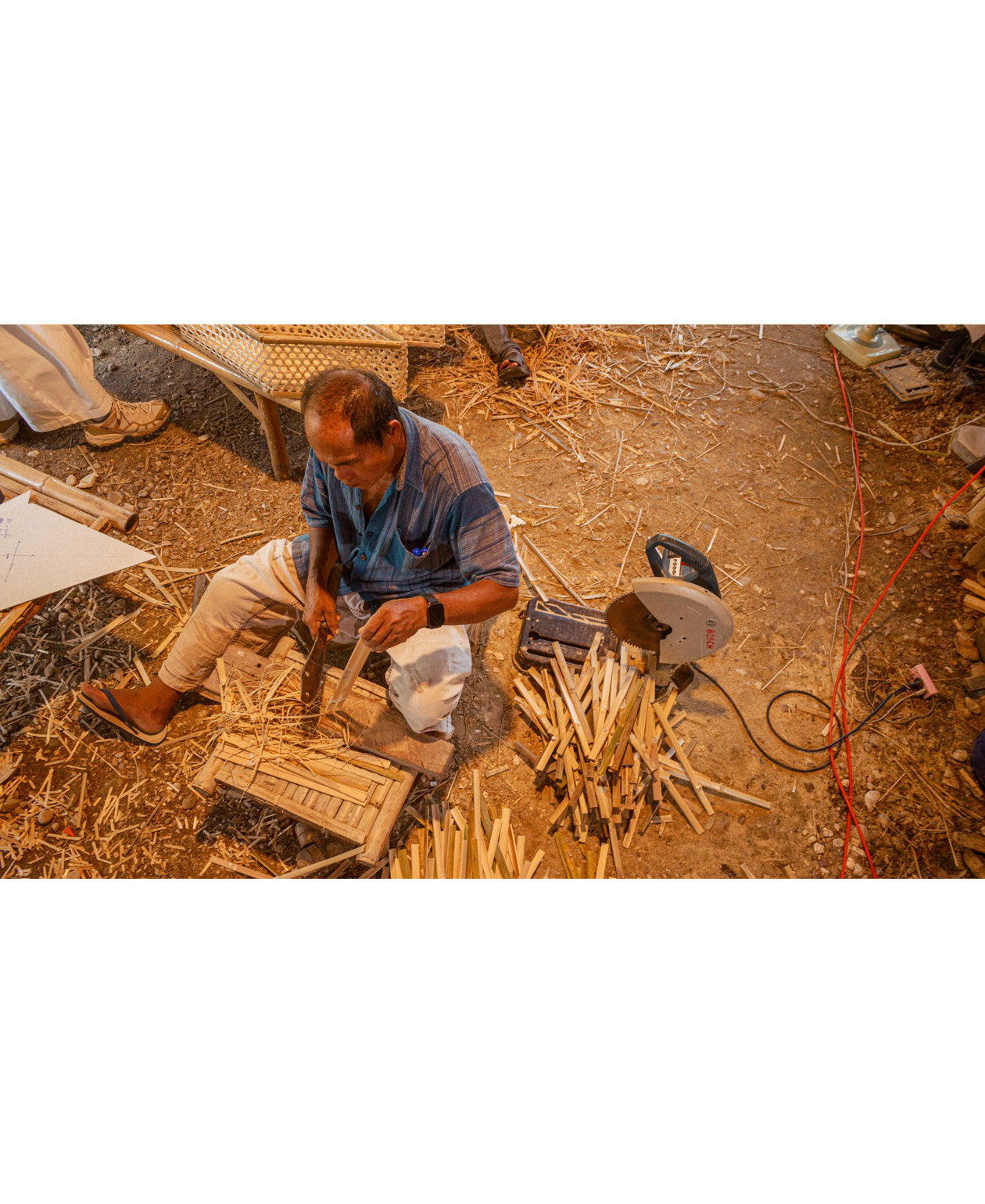
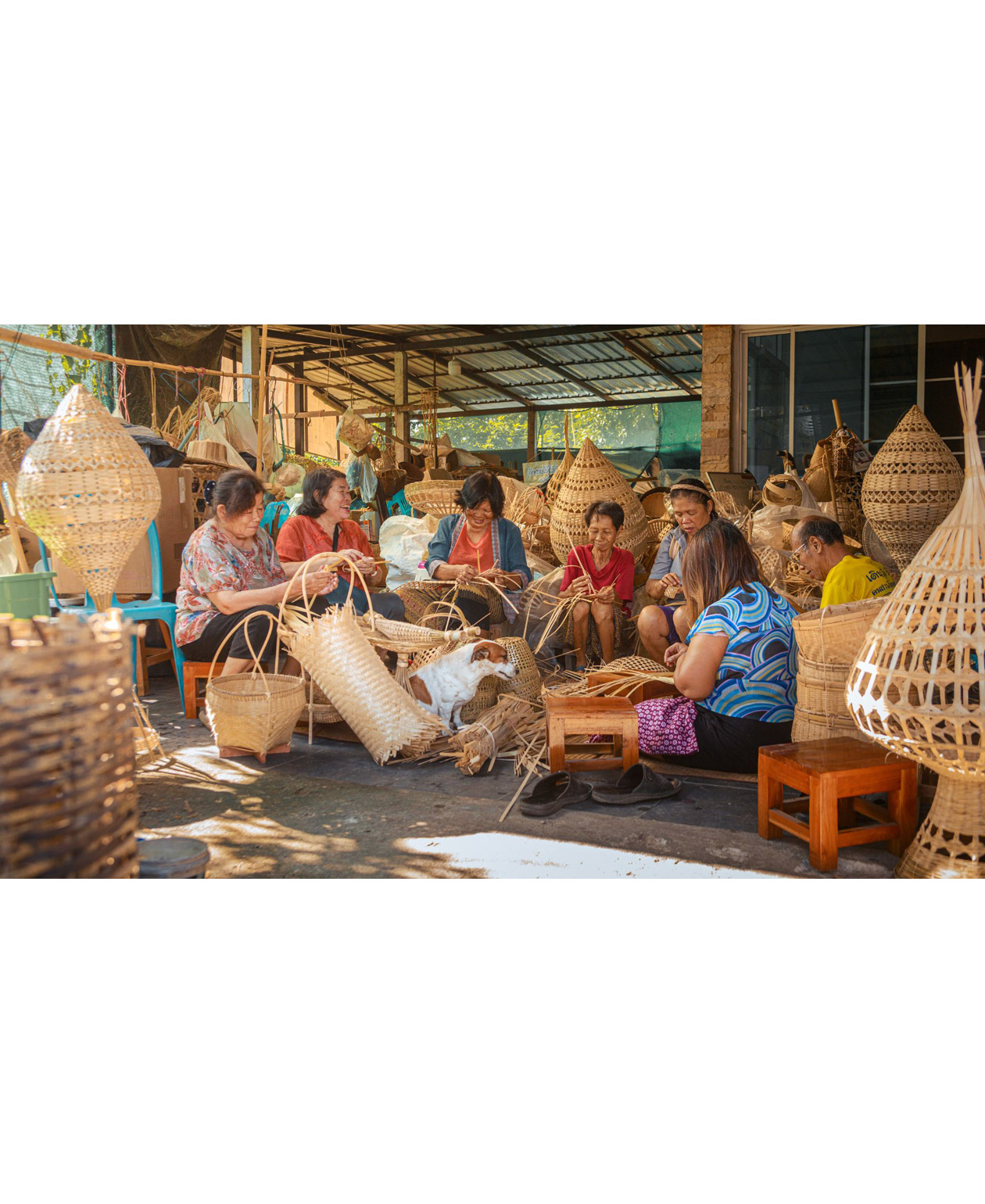
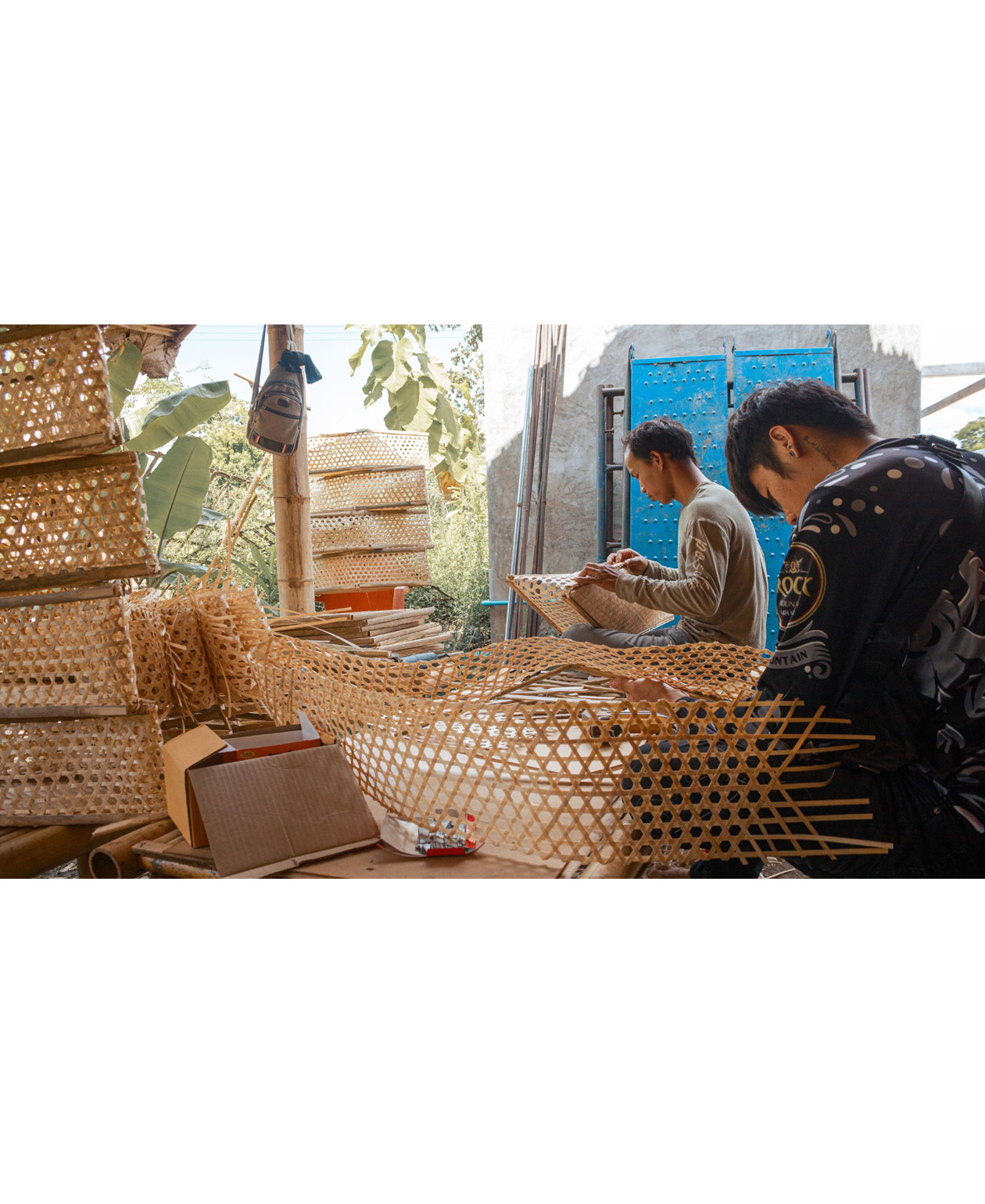
More than 16 artisans from 3 bamboo craft communities in the Chiang Mai region participated in the production. Artisans did not just remain in the role of simply producing completed designs, but participated as collaborators in the design process from prototyping to actual production. Work was conducted in a way that coordinated digital design with the material knowledge and manufacturing techniques accumulated by the artisans. Through this, regional traditional technology was applied to modern architectural installations, providing direct work and income to residents possessing craft skills.
During the 60-day exhibition period, an average of about 24,000 people visited the installation daily, and it recorded over 1,294,184 reactions on social media. By applying regional traditional craft to a Christmas installation in a large commercial space, it publicized bamboo weaving technology to many people and demonstrated that traditional craft can also be utilized in modern spaces and designs.
The installation was designed considering even after its dismantlement. The 1,088 bamboo modules were produced not as single-use disposable structures, but as individually reusable units, and after the exhibition ended, they were reused as gift boxes and educational teaching aids for local schools. By considering the second use of the modules from the design stage, the lifecycle of the temporary installation was extended beyond the exhibition, thereby reducing waste and increasing the utilization period of materials and craft.
What this project proposes is a way to include not only regional materials, but also the people and technologies handling those materials into the process of modern design. Instead of borrowing only the form or image of traditional crafts, it allowed artisans to participate from prototyping to final production, enabling locally accumulated technology and modern design methods to jointly create the outcome.
BAMFEST aims to expand this method to other regions in the future through international festivals and academic exchanges. It is a method of designing structure and form using parametric design, while craft communities possessing each region's materials and traditional technologies participate in actual production. Through this, it shows a way for artisans' skills and roles to be sustained while utilizing various traditional weaving technologies facing the risk of disappearance in modern architecture and spatial design.