


WindGuard – Roads as Renewable Power Plants WindGuard transforms roadside anti-glare posts into renewable energy nodes using traffic and natural wind for sustainable smart mobility



- Nationality
- Taiwan
- Group
- PEI-SHAN LI
About Project
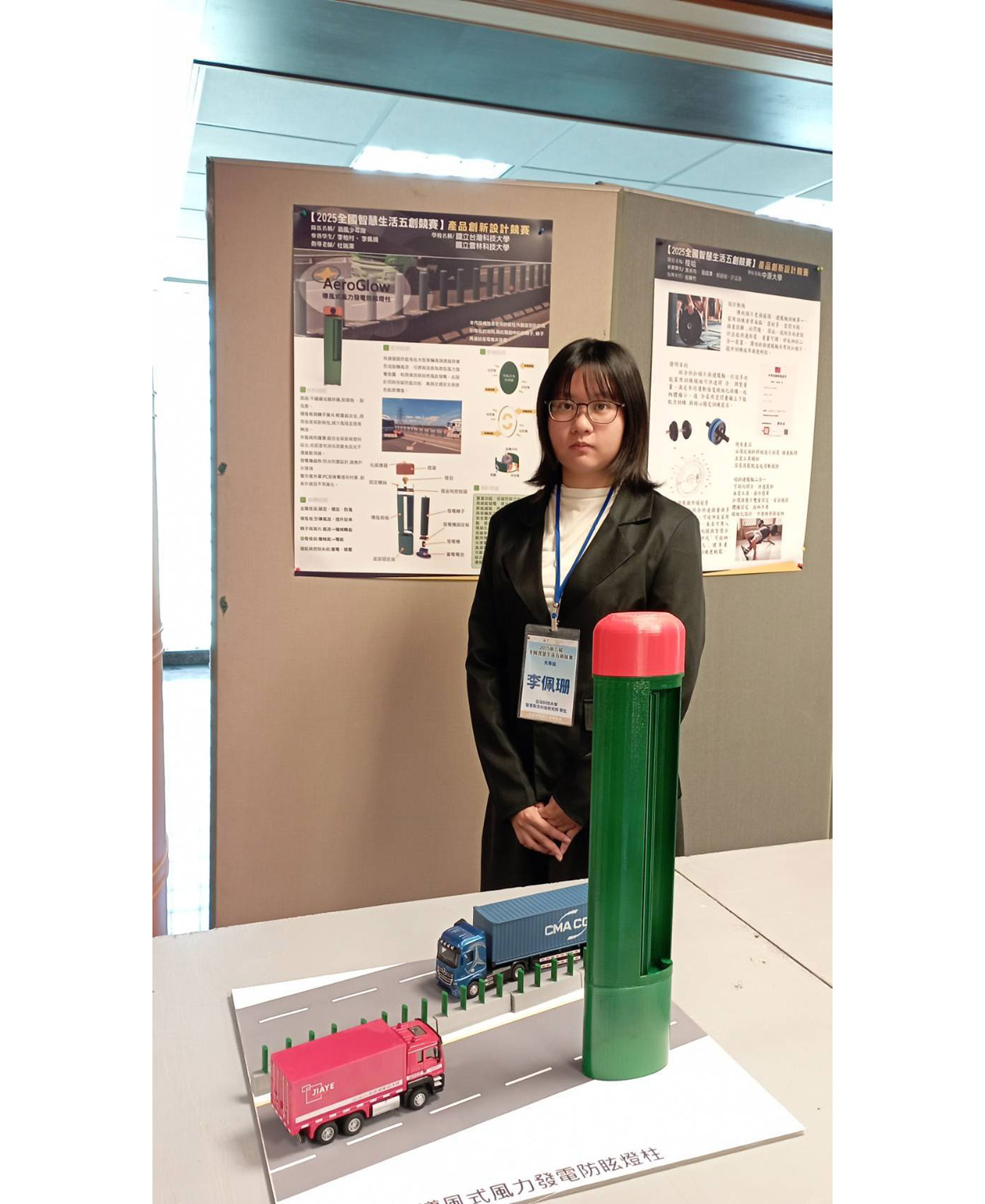
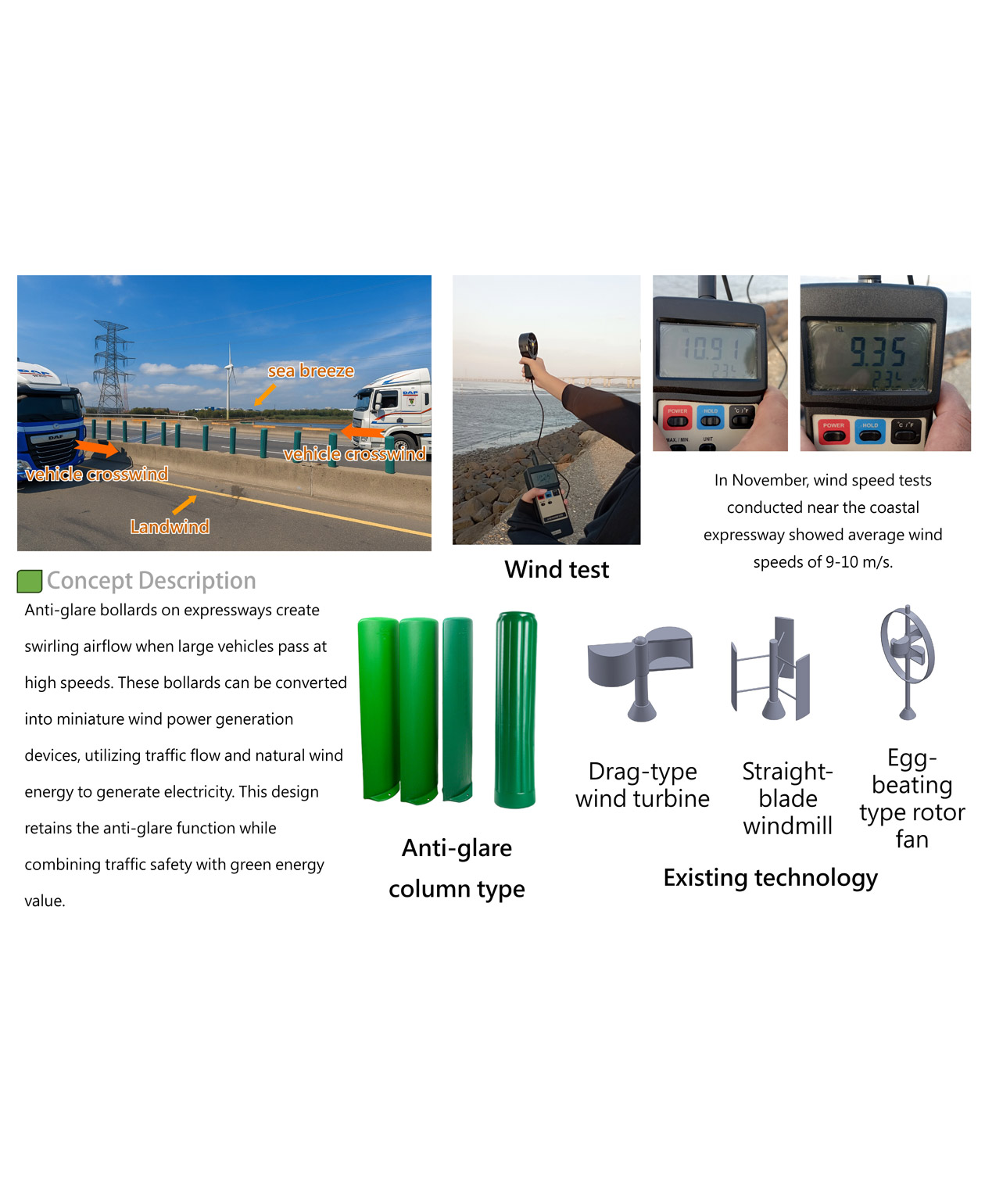
WindGuard (Roads as Renewable Power Plants) is a smart infrastructure project that converts roads into decentralized renewable energy production spaces by combining small-scale wind power generation functions with existing road facilities. Cities worldwide face increasing energy demand, carbon emissions, and aging infrastructure. Roads are among the largest public assets in every city, yet they function mainly as transportation corridors. WindGuard proposes a method of generating power without securing a separate site by utilizing existing roadside anti-glare facilities.
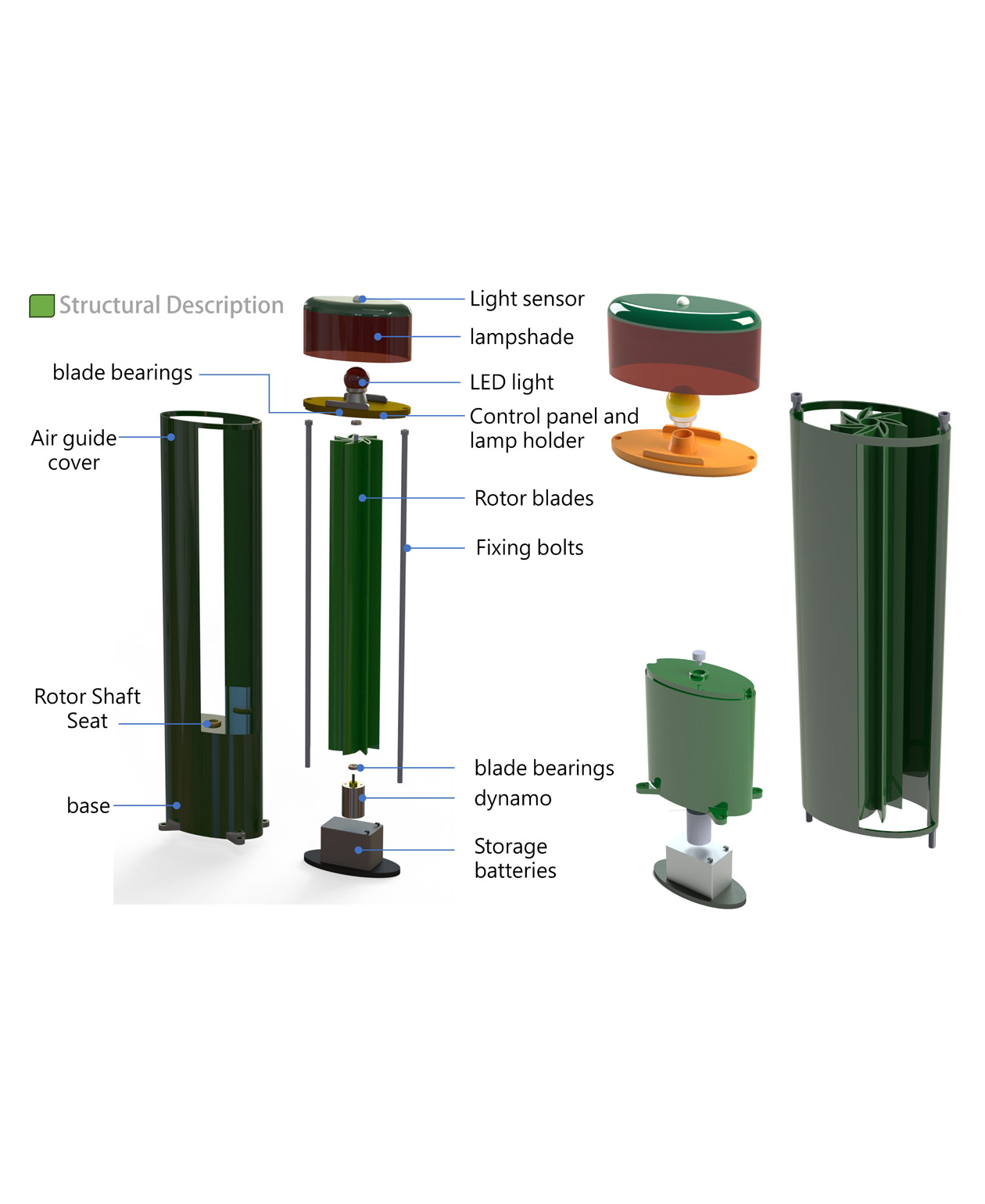
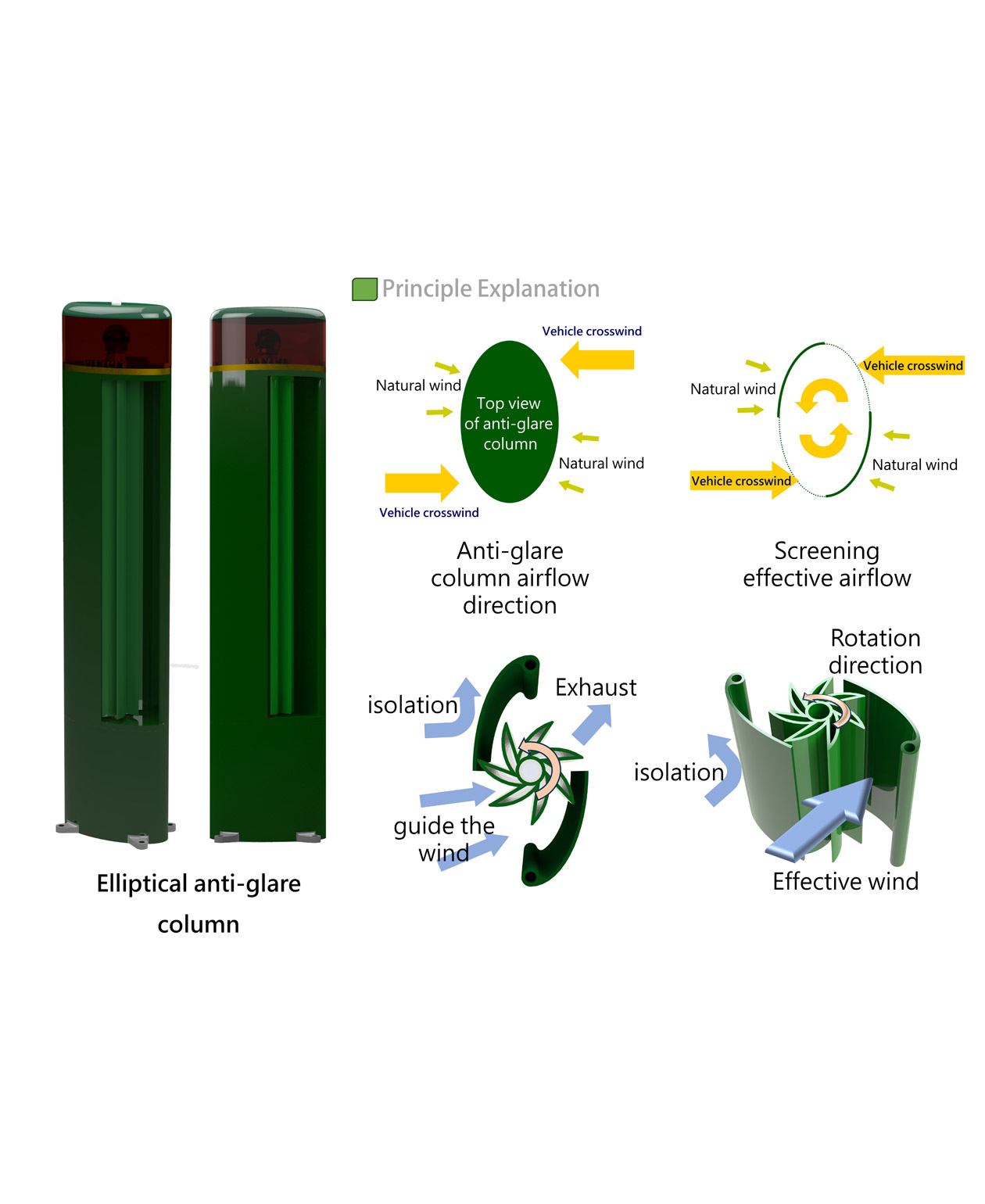
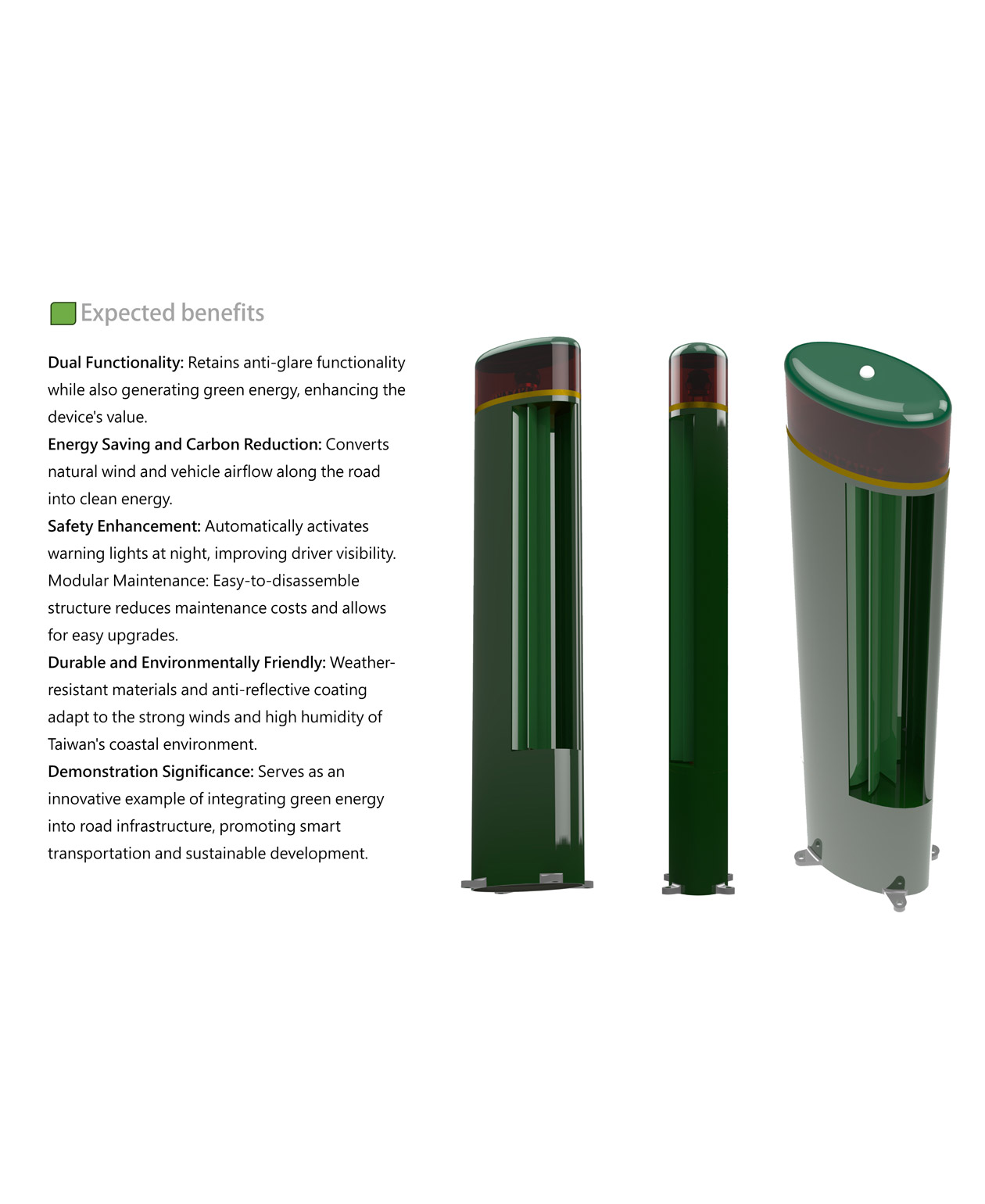
WindGuard integrates an aerodynamic guiding structure and vertical-axis micro wind generators to utilize natural wind and the airflow created by moving vehicles for power generation. The wind gathered through the guiding structure operates the internal generator, and the produced electricity can be supplied to various smart city facilities such as road lighting, traffic sensors, and environmental monitoring devices.
It is also characterized by being designed in a way that applies modules to existing road facilities, eliminating the need for large-scale wind power facilities or separate power generation sites. It adds energy production functions while maintaining the functions of existing anti-glare facilities, and multiple modules can be installed consecutively as needed. By combining energy storage devices and smart energy management systems, it can be operated as self-reliant road infrastructure that stores and uses the generated electricity on-site.
The core of the design lies in transforming road facilities from passive infrastructure that consumes energy into active public infrastructure that directly generates electricity. By integrating power generation and electricity supply functions into existing facilities for traffic safety, a single structure performs multiple roles. Rather than adding new facilities, it is a method of efficiently utilizing resources and space by expanding the form and function of already existing urban infrastructure.
This decentralized structure lowers dependence on central power grids and enables the on-site production of necessary energy around roads. At the same time, it includes renewable energy production within the everyday transportation environment to reduce carbon emissions and supports the operation of smart city systems that collect traffic and environmental data.
WindGuard can be applied to roads of various scales and conditions based on a modular structure. It presents a different approach from conventional large-scale centralized power generation in that individual devices are not merely used as single power generation facilities, but can be distributed across multiple roads and expanded into an energy network for the entire city. In the future, we plan to expand into a system that more efficiently manages power generation and energy use by linking with technologies such as solar power generation, hydrogen energy storage, AI-based energy management, and digital twins. WindGuard demonstrates new possibilities for utilizing urban public infrastructure as a renewable energy production resource by combining energy production and smart city services while maintaining the functions of existing road facilities.