


ZEEV: A V2X Service for Converting EV Surplus Energy into Tradable Assets ZEEV transforms EVs into ESS by connecting surplus power and insufficient charging infrastructure through autonomous robots and a V2X platform








- Nationality
- Korea, Republic of
- Group
- ZEEV
About Project
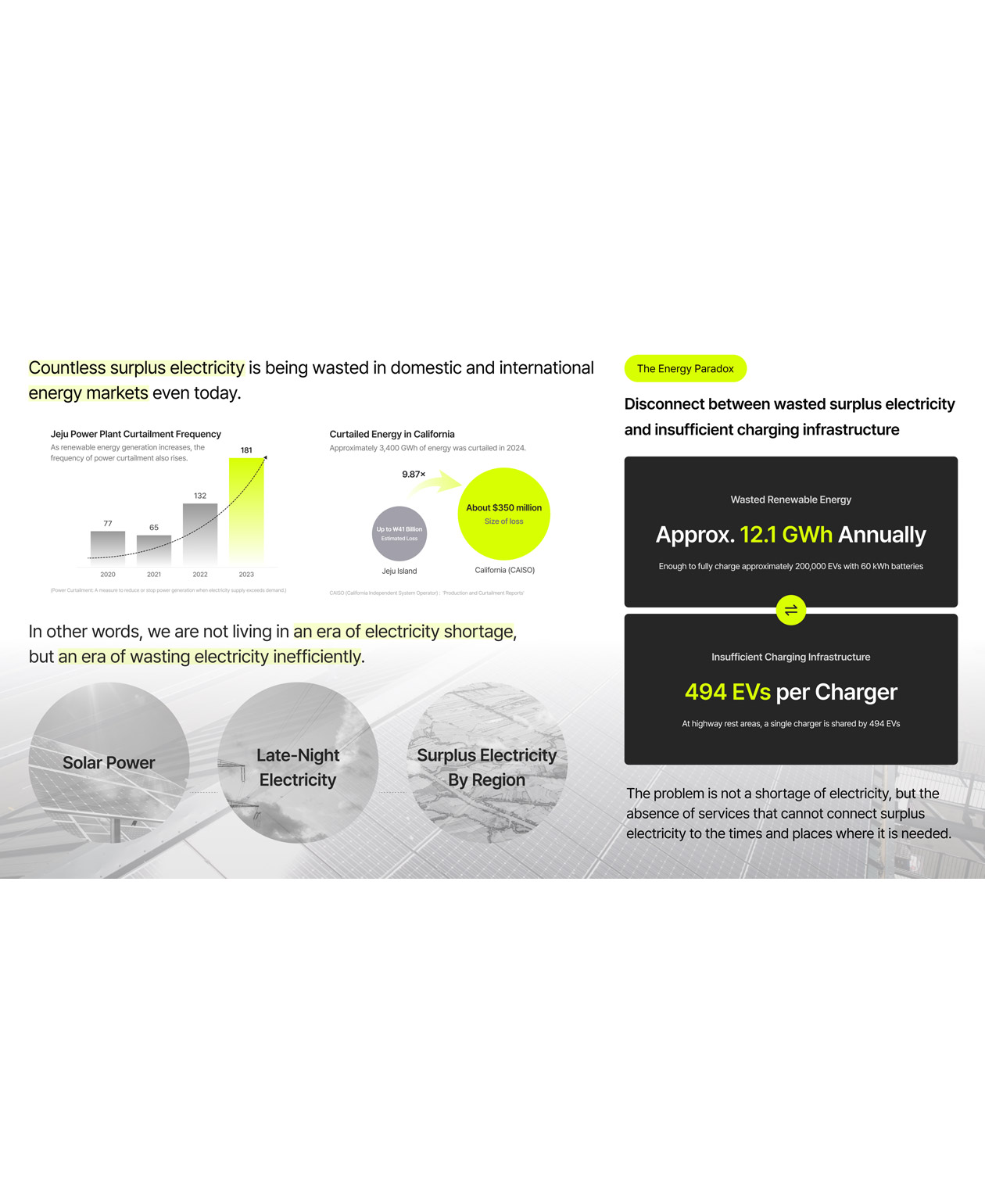
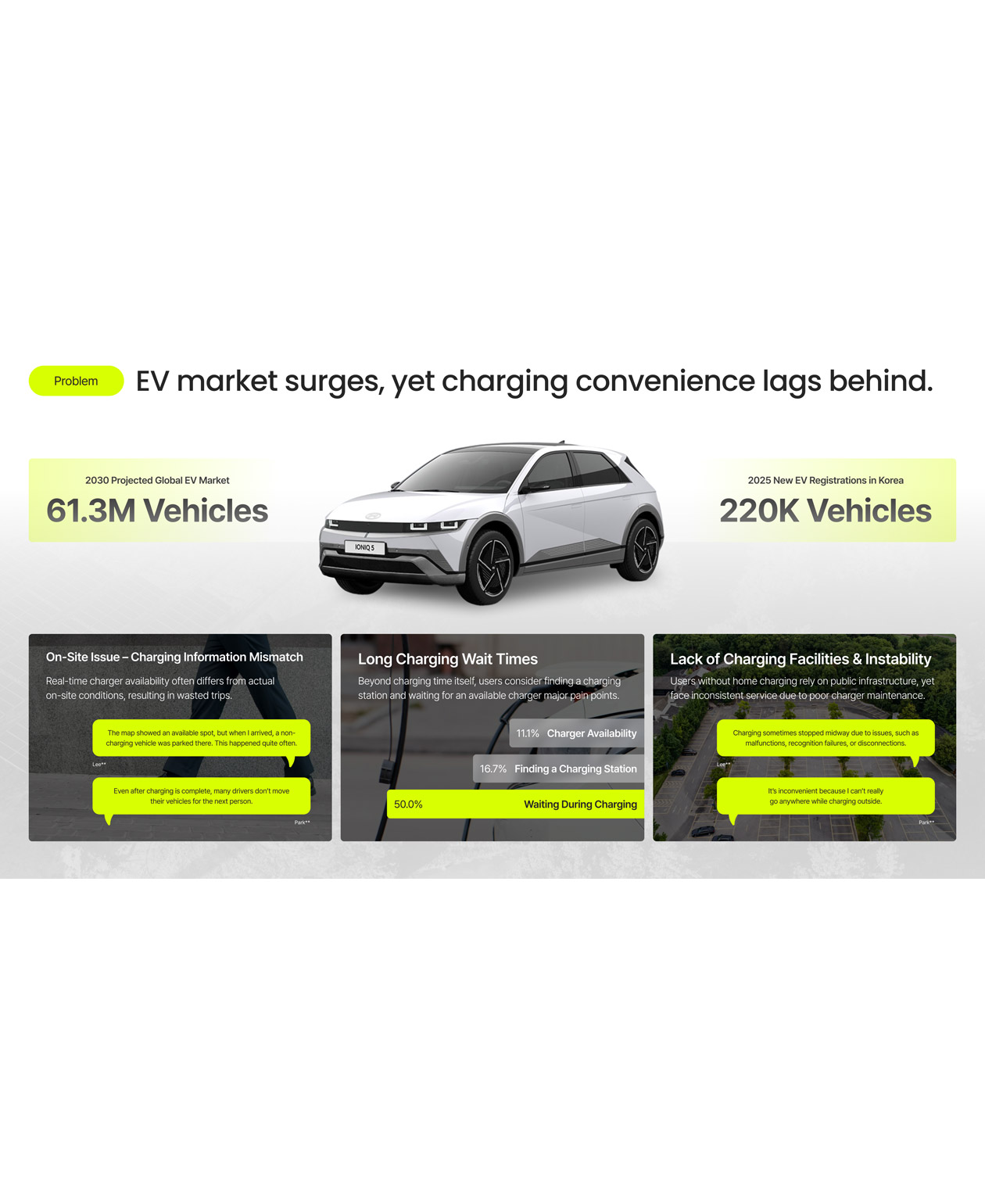
While EV adoption accelerates as its global count has climbed close to 80,000,000, 73% of users suffer from unreliable charging infrastructure, prolonged waiting times, and fragmented payment systems. Concurrently, rapid renewable energy expansion faces a severe constraint: due to production-demand imbalances and lack of storage, massive amounts of clean power are wasted. In California alone, this curtailment discards approximately $350,000,000 worth of renewable energy annually. ZEEV resolves this structural inefficiency by connecting insufficient infrastructure with surplus power into a circular ecosystem. An idle EV battery holds enough electricity to power an average household for ten days, yet remains vastly underutilized. ZEEV transforms these stagnant vehicles into mobile Energy Storage Systems (ESS). Driven by the autonomous charging robot ZEEVRO, which automates bi-directional power transfers, and an integrated App/IVI software suite for seamless P2P trading and automated settlements, ZEEV redefines energy mobility. EVs absorb discarded clean energy and feed it back to vehicles, buildings, or the grid. This allows users to eliminate charging stress while turning their parked cars into revenue-generating eco-assets. Consequently, everyday parking spaces become decentralized energy hubs. We connect every stakeholder from home to fleet businesses, powerplants and government, and empower cities with a flexible, zero-waste power circulation model.
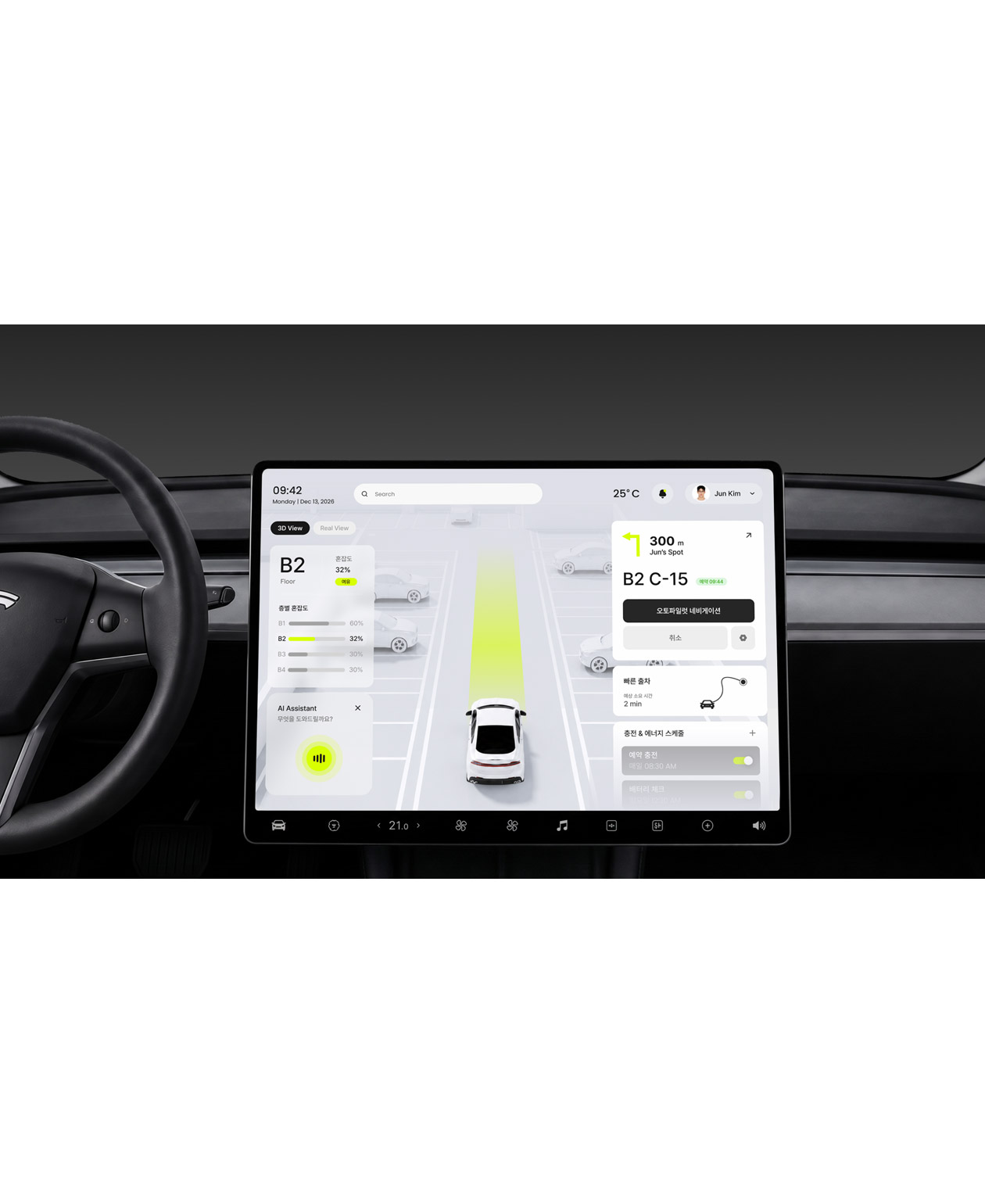
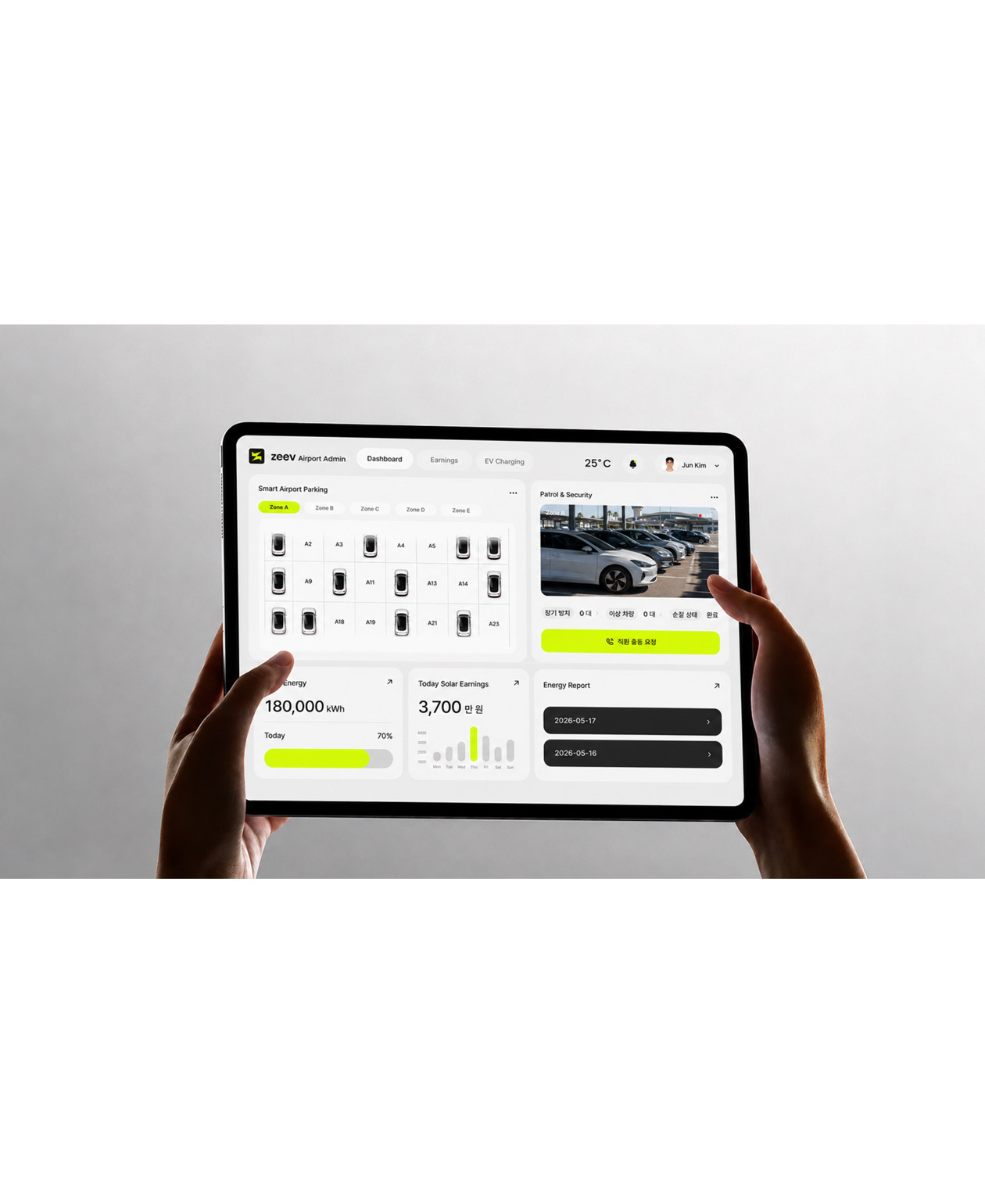
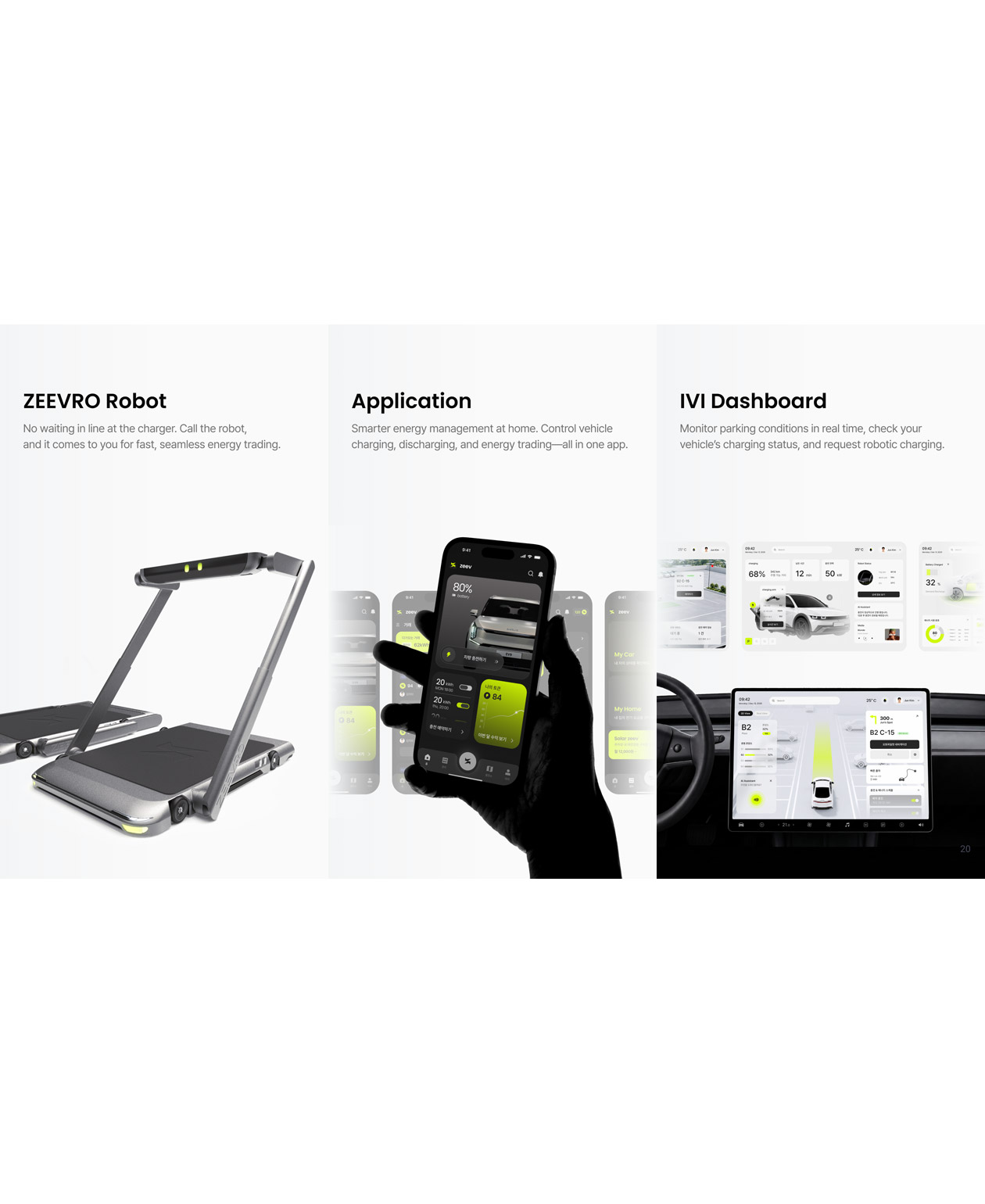
ZEEV’s core innovation reverses the conventional model in which cars seek chargers: ZEEVRO autonomously approaches parked vehicles. Using wired and wireless docking, environmental cameras, and safety monitoring, the robot performs bidirectional charging. The app and IVI convert electricity into tokens redeemable for maintenance fees and utility bills, while coordinating driving schedules, battery status, energy trading, charging, discharging, and settlement. The station consolidates energy and operational data. Integrating robotics with a digital trading platform bridges spatial and temporal gaps between surplus power and demand. Its phased model—P2P trading, solar subscriptions, and B2B hubs—turns parking time into energy circulation and value creation.
ZEEV integrates sustainable energy participation into everyday parking rather than requiring separate action. Drivers gain convenient charging and economic value from unused battery capacity, while renewable producers secure flexible storage for electricity that would otherwise be curtailed. At the city level, surplus energy is absorbed and reused. In Jeju, active participation by just 1,200 EVs could help stabilize the power grid during peak periods. As participation grows, parked vehicles become part of a distributed grid, reducing grid strain, accelerating renewable adoption, and minimizing waste. ZEEV redefines energy as a shared, circular resource benefiting individuals, communities, and the environment.
ZEEV is manufacturer-agnostic, scaling from a single parking facility into a global energy network. After validation in Jeju, home to 42,000 EVs, it can expand to cities worldwide, including China with 38 million EVs and Europe with 15 million. Even at an average 70 kWh capacity, 80 million EVs represent a 4.9 TWh mobile virtual power plant already deployed on roads. As each vehicle becomes a node for storing, sharing, and trading clean energy, ZEEV aims to establish a global standard beyond grid limitations, transforming idle batteries into the foundation of a distributed, renewable-powered future.